God of War III Story Explained: The Fall of Olympus and Kratos's Final Gift of Hope

📋 Quick facts
- Game
- God of War III
- Developer
- Santa Monica Studio
- Release year
- 2010 (March 16, 2010)
- Original platform
- PlayStation 3
- Genre
- Action-Adventure
- Director
- Stig Asmussen
- Music
- Gerard Marino, Cris Velasco, Ron Fish, Mike Reagan, Jeff Rona
- Notable feature
- Finale of the original Greek trilogy; opens with a battle on Gaia's body as she climbs the mountain and closes Kratos's Olympian era
- Previous entry
- God of War II (2007)
- Next entry
- God of War (2018)
The war begins at the exact moment it left off. At the end of God of War II, Kratos stood on Gaia's back, leading the Titans freed from the Great War of old straight up Mount Olympus to overthrow Zeus. There is no prologue, no quiet moment: God of War III opens with the largest assault in the history of the series — and closes the entire Greek era of Kratos.
But this is not simply the story of a son killing his father. Kratos is trapped between two powers that both see him as nothing but a tool: the gods want him dead, and the Titans only need him as the spearhead. And at the center of everything lies a secret buried since the moment he opened Pandora's Box in the first game in the series: the weapon that can truly kill Zeus was never inside the box — it has been inside Kratos himself for ten years.
⚠️ Spoiler warning: This article retells the full story of God of War III, including the deaths of the Olympian gods, the secret of Pandora's Box, the source of Zeus's fear, and Kratos's final fate in Greece.
📌 Quick summary: Kratos climbs Olympus with the Titans, kills Poseidon and floods Greece, then is betrayed by Gaia and cast into the Underworld. He kills Hades, Helios, Hermes, Hercules and Cronos, and finds Pandora — the living key to Pandora's Box behind the Flame of Olympus. Pandora sacrifices herself, but the box is empty: the evils of old infected the gods, while Hope entered Kratos. He kills Zeus, then impales himself to give Hope to mankind instead of Athena.
Chapter 1: The Titans climb the mountain and the death of Poseidon
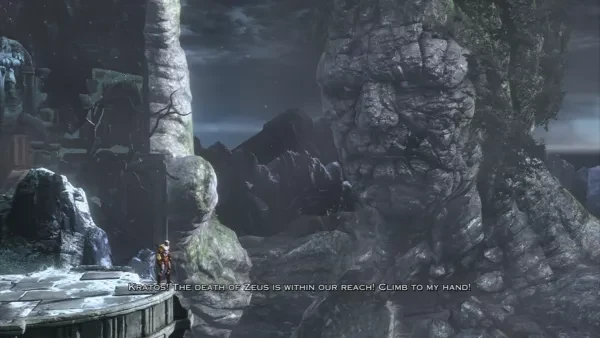
Zeus opens the war by urging the gods to set aside their grievances and "wipe out this plague" named Kratos. In answer, the Titans climb the slopes of Olympus. Hades charges the Titans in giant form, Helios rides his sun chariot across the sky, Hercules leads soldiers onto Gaia's arm — and Poseidon plunges down like a spear of water, driving through the chest of the Titan Epimetheus before becoming a colossal water entity guarded by his Hippocampi sea-horses.
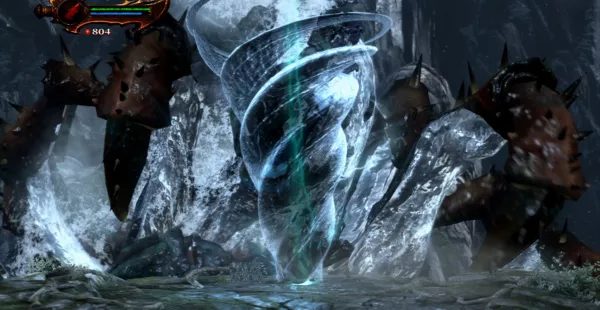
Poseidon is the Titans' greatest threat, so Kratos faces him personally on Gaia's body: he uses her as a foothold to weaken the god, until Gaia holds Poseidon fast for him to drag the god out of his giant form. Poseidon curses the one who dared defy Olympus — and Kratos answers by gouging out his eyes and snapping his neck, throwing the corpse into the sea. The Sea God's death brings immediate catastrophe: the waters rise without end, drowning nearly all of lowland Greece. From the very first fallen god, the game shows the price of this revenge: every god who dies takes a pillar of the world down with him.
The first victory brings Kratos and Gaia to Zeus's pavilion. But the King of the Gods is waiting. A massive lightning blast tears away much of Gaia's arm and hurls them both from the peak.
Chapter 2: Gaia's betrayal and the river of the dead
Gaia catches the mountainside with her remaining arm. Kratos drives the Blade of Olympus into her back to hold on and calls for help. Her answer is one of the coldest lines in the series: Kratos was only a pawn of the Titans, and now that they have reached Zeus, the pawn is no longer needed. Gaia shakes him off. Kratos falls straight into the Underworld — betrayed again by the very power that saved him, at the very threshold of victory.

Kratos plunges into the River Styx. Its souls drain nearly all his strength and ruin the Blades of Athena, while the Blade of Olympus is lost beneath the black water. Climbing ashore, he meets an unexpected presence: the spirit of Athena. After sacrificing herself to take the blade meant for Zeus in the previous game, Athena says she has "ascended to a higher existence" and seen truths once hidden from her. She gives him the Blades of Exile and reveals the true path to killing Zeus: first, he must extinguish the Flame of Olympus — the fire guarding the weapon that can end the King of the Gods.
In the Underworld, Kratos also first hears Pandora's voice through the bronze statues shaped like her — and starts, because that voice sounds so much like Calliope, his dead daughter. He meets Hephaestus, the smith god exiled by Zeus to a forge in the realm of the dead, who only laughs and warns him the Flame of Olympus can burn both man and god to death. But his immediate destination is clear: Hades is waiting for him, carrying an old, mounting debt — the God of the Dead has never forgotten that Kratos killed his wife Persephone, his niece Athena, and his brother Poseidon.
Chapter 3: The Underworld — killing Hades and taking the Claws of Hades
Passing the three Judges of the Underworld and the Chain of Balance that binds the realm of the dead to Olympus, Kratos enters Hades' palace. The God of the Dead makes no secret of his intent: Kratos's soul is a debt he means to collect. In the dark cavern, Hades tries again and again to hook Kratos's soul out of his body with his own Claws of Hades.
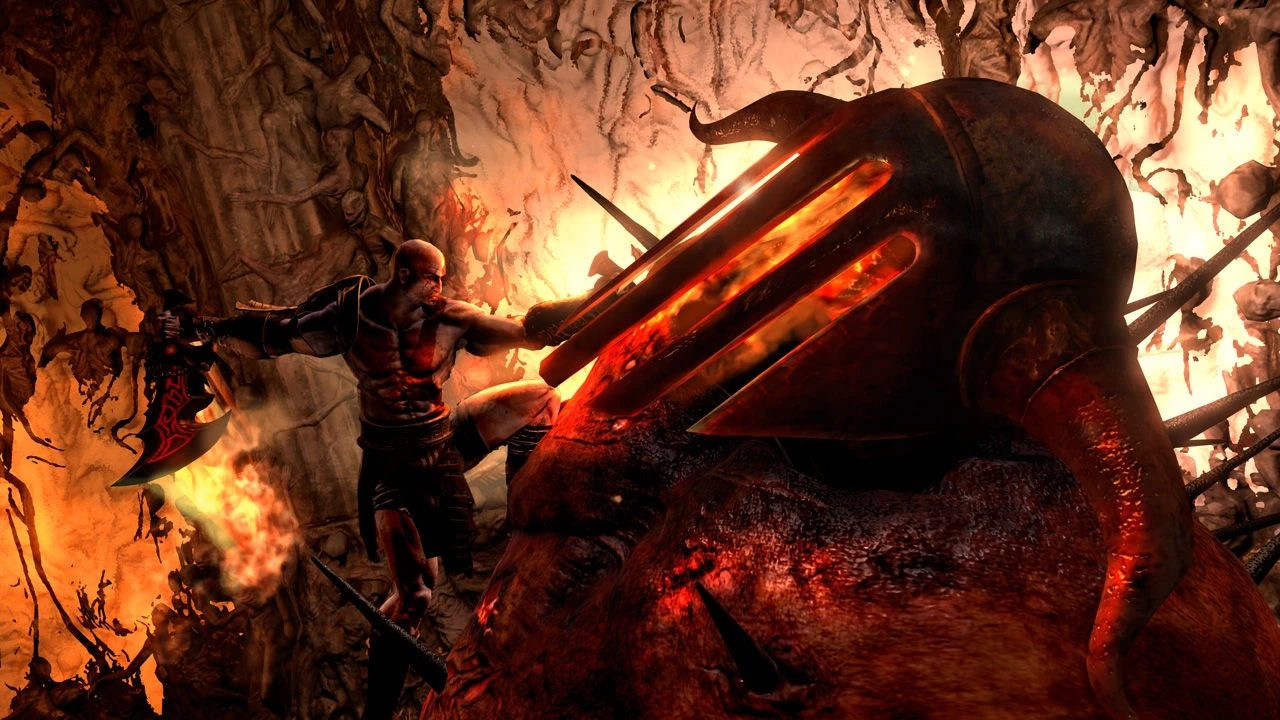
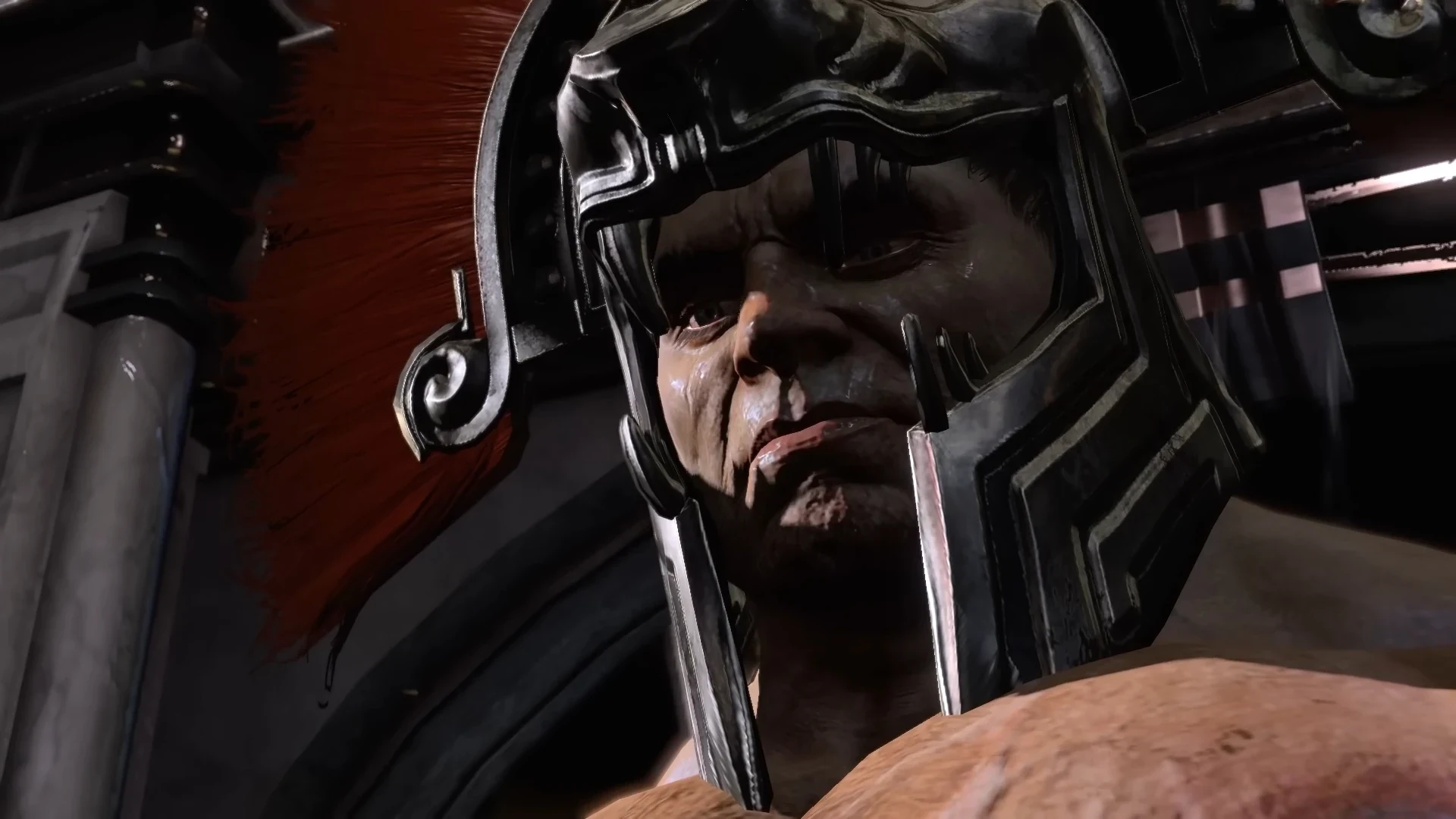
Kratos tears off Hades' helm, seizes the Claws and — in a deeply ironic ending — uses that very weapon to rip Hades' own soul from his body and absorb it. The Lord of the Dead dies by his own art of soul-stealing, and the Underworld loses its ruler: countless souls now wander with nowhere to go, no judgment, no order between life and death. With the soul of a god, Kratos activates a Hyperion Gate to escape the Underworld and begins his second climb of Olympus — this time alone, against gods and Titans alike.
On the way up, he finds the wounded Gaia begging for help. Kratos answers her betrayal with a single slash: he severs the arm she clings to the mountain with, and lets her fall to her apparent death. From this moment, there are no more alliances. Only one man, and a mountain full of gods who must die.
Chapter 4: Helios and Hermes — when the sun goes out and plague spreads
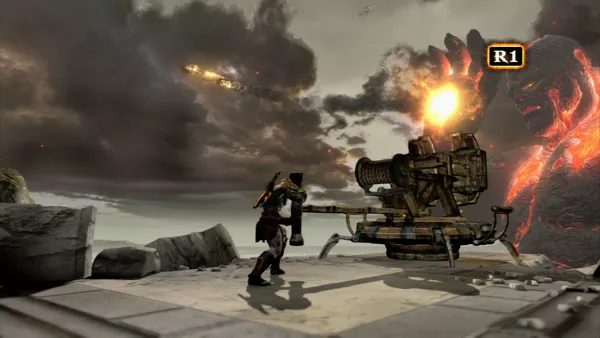
At the city of Olympia below the mountain, Kratos shoots down Helios's chariot with a giant ballista, sending the Sun God crashing into the arms of the fire Titan Perses. Helios — gravely wounded, helpless — tries to bargain with a promised secret, then uses one last blinding flare to defend himself. It is useless. Kratos tears his head off with his bare hands. That head becomes an item: a light to see in darkness and reveal hidden doors. And Greece, from that moment, sinks into eternal darkness: the sun never rises again.
The next target is Hermes, the arrogant messenger god. He mocks Kratos throughout the chase across the rooftops of Olympus — until his overconfidence leads him into a trap and a wounded leg. Kratos cuts off both legs of the god of speed and takes the Boots of Hermes. Hermes's death releases plague upon the world, gnawing at the Greeks who survived the flood and the darkness. The sea, the light, the dead, health itself — the foundations of the world crack one by one beneath Kratos's feet.
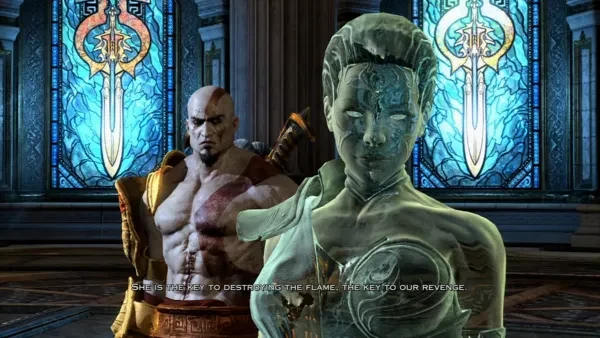
At the Chamber of the Flame, Kratos finally sees Pandora's Box hovering within the Flame of Olympus — a fire no one can touch. Athena confirms: only Pandora, the girl Hephaestus created, can quench it, because she is the living key to the box.
Chapter 5: Hercules — the thirteenth labor
At the Forum, Kratos meets Hera — the drunken, bitter Queen of Olympus. She ignores his demand to be shown the way to Pandora, insults the little girl, and summons her champion: Hercules, the legendary hero, a mountain of muscle with the Nemean lion gauntlets on his hands.
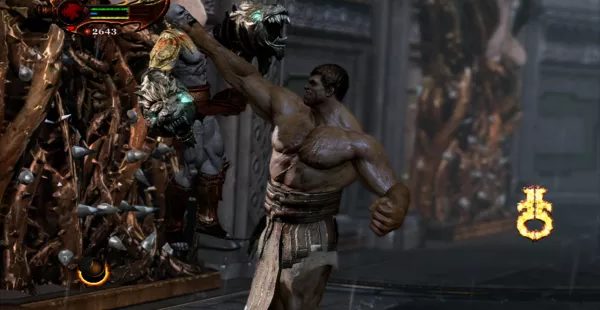
Before they fight, Hercules pours out a lifetime of envy. While he was cleaning the Augean stables, Zeus chose Kratos to kill Ares. While he was fetching a golden apple in his twelve labors, Kratos was crowned God of War. Hercules declares that killing Kratos will be his thirteenth labor, in exchange for that throne. Kratos — rarely — offers his brother a way out: Zeus has no favorites; step aside. Hercules refuses. The fight ends when Kratos takes the Nemean Cestus and uses them to cave Hercules's face in. Greece's greatest hero dies by his own emblematic weapon — not out of ambition, but because he spent his whole life craving recognition from a father who never acknowledged him: the same wound Kratos carries, rotted in a different way.
Chapter 6: Hephaestus, Cronos and the secret of Pandora
Through the chamber of Aphrodite — the only god indifferent to the war — Kratos returns to Hephaestus's forge. This time the smith god tells him everything: after the Great War, he forged Pandora's Box to hold the evils born of the god–Titan war, and created Pandora from the heart of the Flame of Olympus as the key to open it — a creation "neither living nor dead" in the shape of a girl. He loved her as his own daughter, and to protect her he lied to Zeus that placing the box on Cronos's back was safest. When Kratos took the box and killed Ares, Zeus — already infected by Fear — went mad: he beat Hephaestus into deformity, tortured the truth out of him, kidnapped Pandora into the Labyrinth, and exiled the smith god to the Underworld forever.
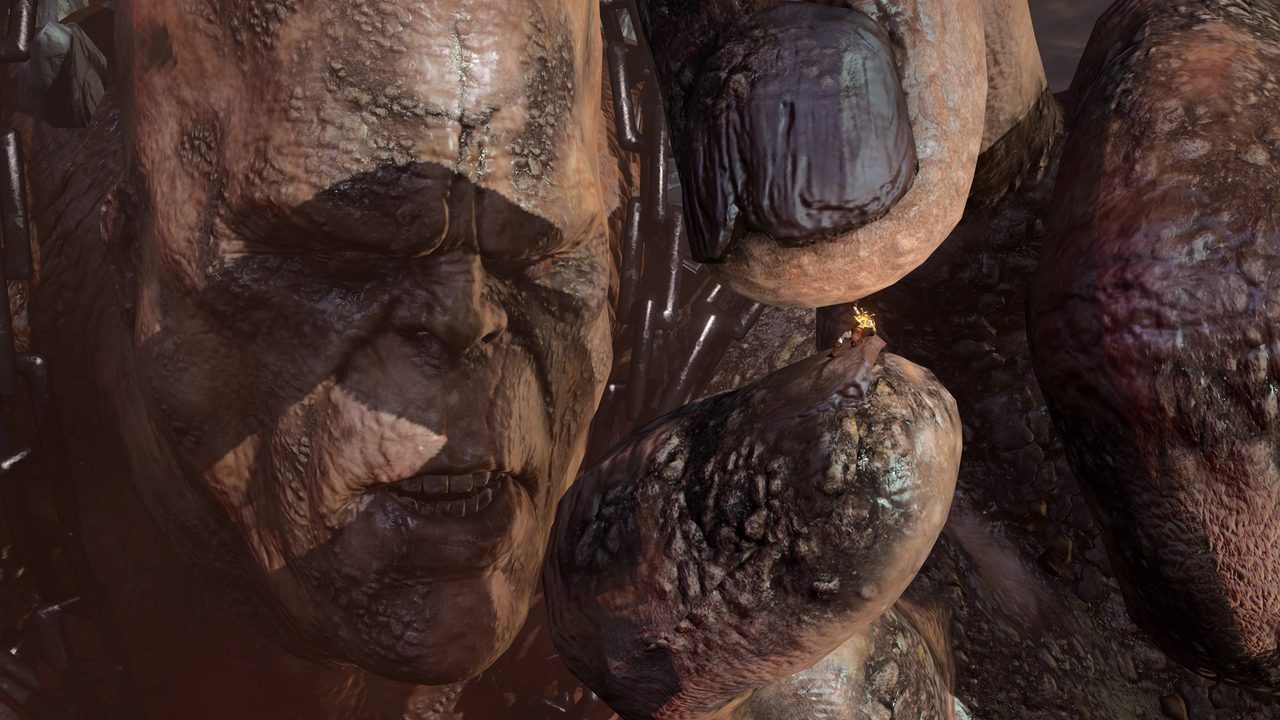
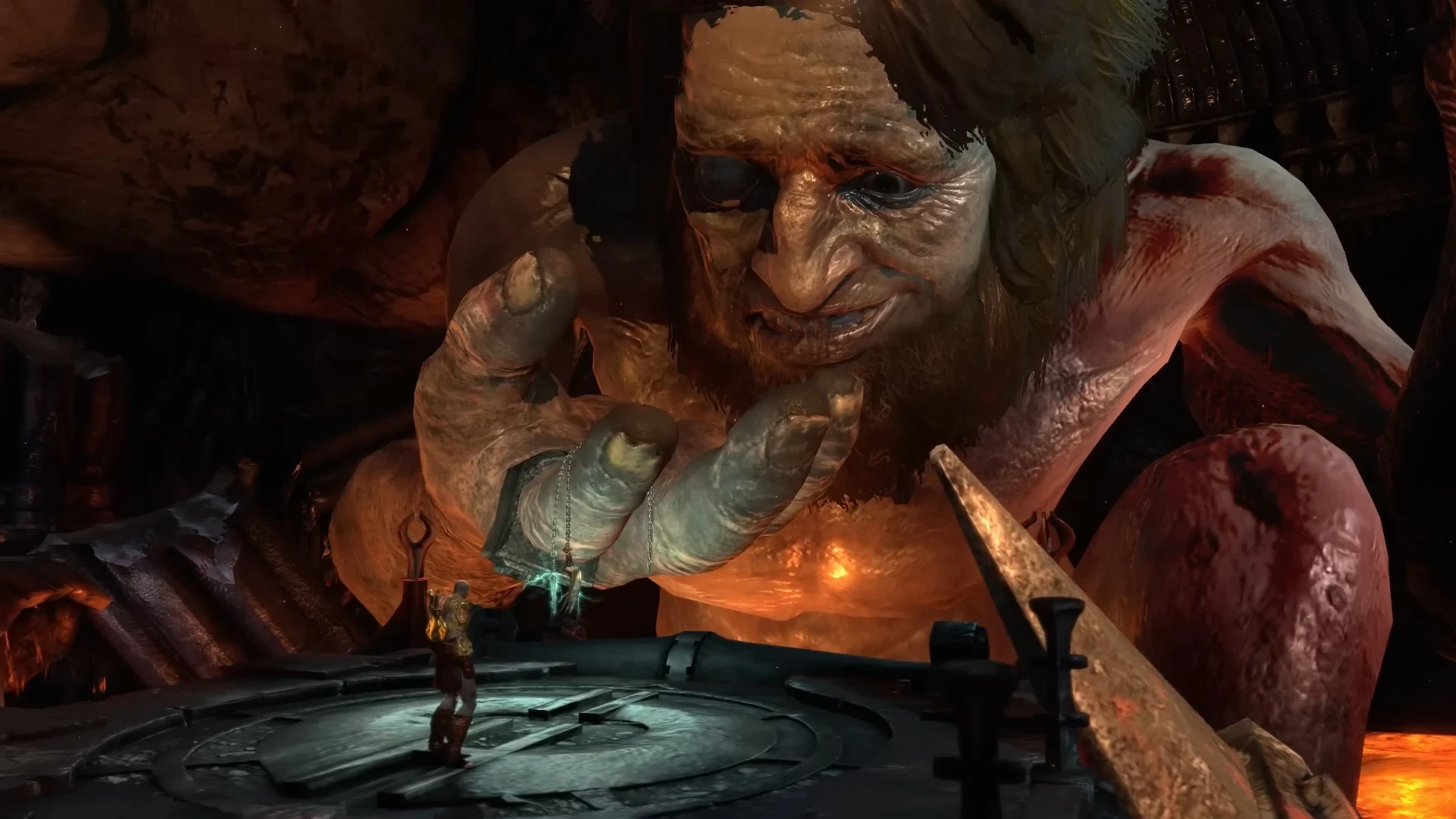
Hephaestus offers to forge a new weapon, on condition Kratos brings back the Omphalos Stone from Tartarus. It is a trap dressed as help: the stone lies inside Cronos, and Hephaestus is certain Kratos will die at the giant Titan's hands — and Pandora will be safe. Cronos has his own debt to settle: he blames Kratos for all his torment since the box was taken from his back. The battle rages across Cronos's body and ends when Kratos drives the Blade of Olympus through the skull of the Titans' old king.
Hephaestus finishes the Nemesis Whip from the stone, then immediately betrays him: he electrocutes Kratos with his ring in one last attempt to save his daughter. Kratos breaks free, and the anvil of Hephaestus's own forge impales the smith god. Before dying, he asks for only one thing: spare Pandora. Kratos bears him no hatred — he later tells Pandora that Hephaestus did what every father should: protect his child.
On the way to the Labyrinth, Kratos passes through Hera's Gardens. The Queen of Olympus, mad with bitterness, insults Pandora again. Kratos snaps her neck on the spot — and with the death of the goddess who governed plant life, every plant in the world withers.
Chapter 7: The Labyrinth, Pandora and the empty box
The Labyrinth is a colossal floating cube-structure built by the architect Daedalus on Zeus's orders to imprison Pandora. Daedalus — the father who lost his son Icarus to Kratos in the previous game — dies in despair on learning his son is gone. Inside the Labyrinth, after defeating Skorpius, the giant scorpion queen guarding the place, Kratos finds Pandora: a small, strangely calm girl who has waited for him for a very long time.
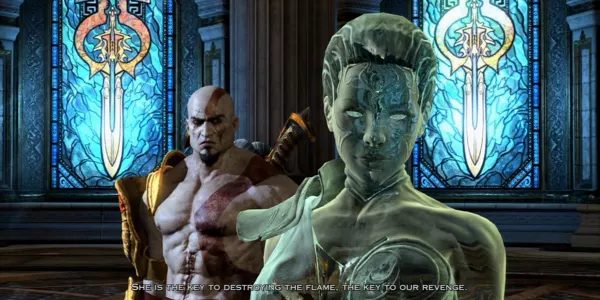
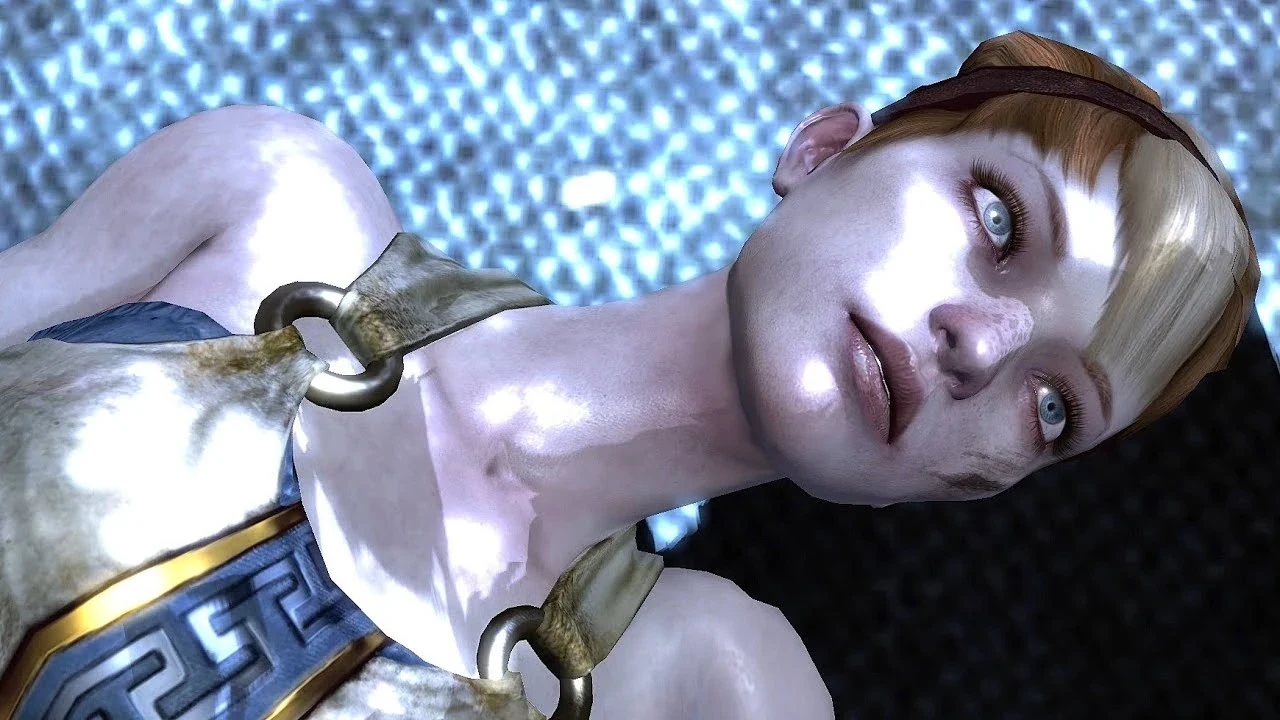
To raise the Labyrinth to the top of Olympus, Kratos must return to the Underworld, neutralize the three Judges and break the Chain of Balance. Along the way, Pandora tells him about Hope: "Hope is what makes us strong. It is why we are here. It is what we fight with when all else is lost." Kratos dismisses it — he calls hope a thing for the weak. But he cannot help seeing Calliope in this girl, and for the first time in a long while, his "tool of revenge" begins to have a face.
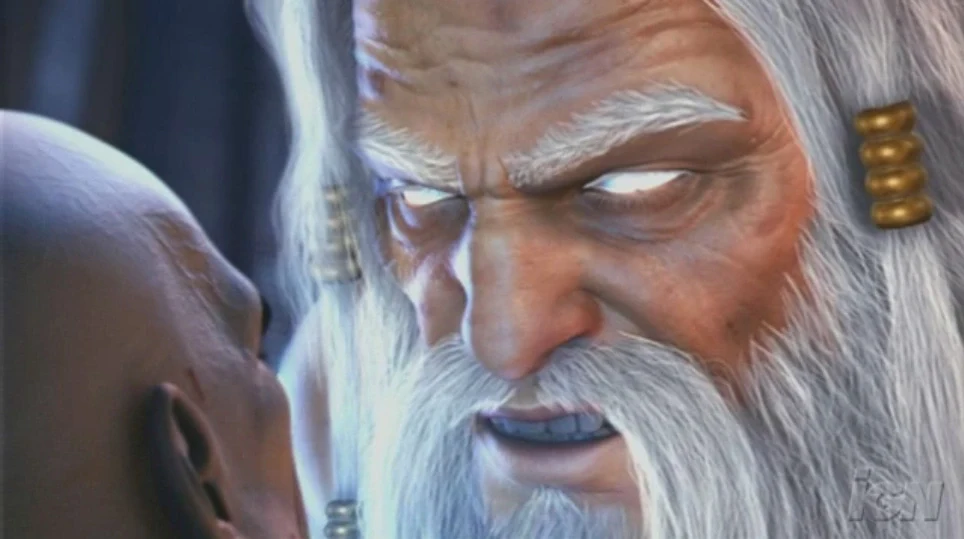
At the Chamber of the Flame, the tragedy peaks. Zeus appears to stop them; after a short fight, Kratos buries him under rubble and turns to Pandora — and changes his mind. He takes her hand and vows to find another way. Zeus, just freed, strikes the exact fuse: he taunts Kratos not to "fail her like you failed your family." Rage makes Kratos let go and lunge at Zeus — and Pandora, free in that moment, willingly steps into the Flame. She vanishes. The fire dies. Kratos opens Pandora's Box for the second time in his life... and it is empty. Zeus laughs in his face: another failure of the Ghost of Sparta.
Chapter 8: The battle inside Gaia's heart, Kratos's mind and Hope
The final father–son battle begins outdoors, on a fatefully familiar platform — until the ground shakes: Gaia is not dead. She has returned to kill both men who betrayed and used her. Kratos and Zeus flee into an open wound in her chest, and the fight continues beside Gaia's heart. Kratos ends both lives in a single blow: he drives the Blade of Olympus through Zeus's chest, pinning him to Gaia's heart. Gaia dies. Zeus, apparently, dies with her.
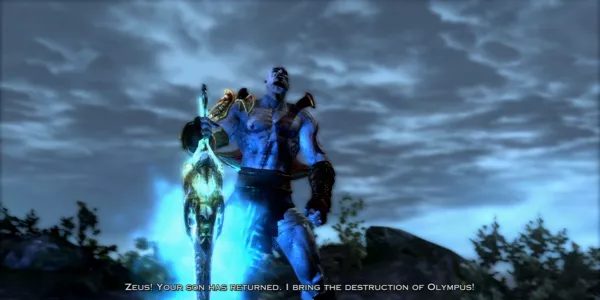
But as Kratos pulls the blade free and turns away, Zeus's spirit — an astral form of pure hatred and Fear — rises and attacks. It strips Kratos of his weapons and his will, drowning him in the darkness of his own mind: a void full of his sins — the family he murdered, the innocents who died because of him, Pandora just vanished. Kratos nearly gives up. The one who leads him out is Pandora's voice, and the shades of Lysandra and Calliope. For the first time in his life, instead of running or raging, Kratos faces his guilt — and forgives himself. In that moment, the power buried for ten years rises: Hope.
Kratos wakes with glowing eyes, forces Zeus's spirit back into his body, and beats Zeus to death with his bare hands. The reign of Olympus ends. Standing in a ruined Greece, Kratos faces his final visitor: Athena. She demands he return what he took from Pandora's Box. Kratos says the box was empty. And Athena finally understands the whole truth: long ago, when Zeus sealed the evils of the Great War into the box, she placed inside it the most powerful weapon in the world, just in case — Hope. When Kratos opened the box to kill Ares, the evils escaped and infected the gods, while Hope entered Kratos, buried deep beneath his guilt until today. Now Athena wants it, to rule mankind herself.
Kratos refuses. "My vengeance ends now." And before Athena's stunned eyes, he impales himself with the Blade of Olympus. A column of blue light bursts into the sky: Hope is released, scattered to all mankind — people drowning in a world with no gods left to shelter them, now holding the one thing that can help them stand on their own. Athena furiously pulls the sword from his chest and leaves, abandoning the Ghost of Sparta on a mural of a phoenix. After the credits, the camera returns to that spot: a trail of blood stretches to the edge of the cliff — and Kratos's body is gone.
The fates of the characters
Kratos: Completes his ten-year revenge and, for the first time, forgives himself, giving Hope to mankind. His body vanishes after the final scene; years later he appears in the North in God of War (2018).
Zeus: Dies at his son's hands, closing the father–son killing cycle that stretches back to Ouranos and Cronos. The Fear he caught from Pandora's Box turned him from a harsh king into a paranoid tyrant willing to destroy everything to keep his throne.
Gaia: The guide becomes the betrayer, and dies when her heart is pierced by the Blade of Olympus at the same moment as Zeus. After this game, the Titans are all but extinct.
Athena: Survives as a higher spirit, but her ambition to become the sole supreme god of the new world is stopped by Kratos. She leaves empty-handed — and remains one of the series' great mysteries.
Pandora: Vanishes in the Flame of Olympus, but her spirit becomes the torch that leads Kratos out of the darkness of his own mind — the only person who truly "saved" him in the Greek era.
Hephaestus: Dies on the anvil of his own forge, after trying to protect his daughter to his last breath.
Hercules: Dies in the arena by his own Nemean Cestus — the thirteenth labor is never recorded.
Common misconceptions
Was Zeus always an evil tyrant?
Not exactly. According to Athena at the end of the game, when Kratos opened Pandora's Box to kill Ares, the evils sealed away since the Great War escaped and infected the gods. Zeus caught Fear — the fear that the "marked warrior" would topple Olympus — and his growing paranoia drove him to trick and kill Kratos.
That said, the game does not use this detail to whitewash Zeus. He still struck first, still tortured Hephaestus and kidnapped Pandora. The evil amplified a fear already present in a king willing to do anything to keep his power — exactly like his father Cronos, who once swallowed his own children out of the same fear.
Was Pandora's Box really empty at the end of the game?
The box truly is empty when Kratos opens it the second time — but not because it always was. The first opening, in the first game, released everything inside: the evils rose and infected the gods, while Hope — the "weapon" Athena secretly placed inside — entered Kratos directly, buried for ten years beneath his rage and guilt.
This is also why Athena insists on demanding "what Kratos took from the box": she assumed he was deliberately keeping Hope for himself. In truth, until the journey through his own mind, Kratos did not even know it existed.
Did Kratos die at the end of God of War III?
The game deliberately refuses a definite answer. Kratos impales himself with the Blade of Olympus and collapses — but the post-credits scene shows his body gone, with only a trail of blood leading to the cliff's edge. The detail implies he survived, later confirmed indirectly when he appears in the Norse lands in God of War (2018).
Was Pandora a real human being?
Pandora is an artificial creation forged by Hephaestus from the heart of the Flame of Olympus — in his words, she is "neither living nor dead." That in-between nature is exactly why she is the only being who can step into the Flame and quench it. But in emotion and choice, the game treats her as a complete person: she knows fear, knows hope, and chooses her sacrifice herself.
Theories & mysteries
What did Athena really want? Athena's "ascension to a higher existence" remains one of the series' biggest mysteries. She helps Kratos wipe out Olympus, then demands Hope so she can rule alone — many players believe Athena herself was infected by one of the evils (most often guessed to be Greed), though the game never confirms it. This remains speculation.
How did Kratos survive? The post-credits blood trail suggests he dragged himself away after Athena left — but with a through-and-through wound from the Blade of Olympus, how he survived and eventually reached Midgard has never been officially explained. This is speculation based on the final image and the events of the 2018 game.
What became of Greece after the catastrophe? Flooded seas, an extinguished sun, plague, withered plants — Greece at the end of the game is an apocalyptic land. The Hope Kratos gives away is implied to be the seed from which humanity rebuilds without gods, but the land's specific fate has never been told directly.
The legacy of the Greek era's finale
God of War III is a rare ending that follows its own logic to the very end: a story of revenge that concludes not with a throne, but with emptiness — and a single act of kindness rising from the rubble. Technically, it set a new benchmark for the PlayStation 3 with boss fights of unprecedented scale. Eight years later, when Kratos returned in the Norse lands — older, quieter, father to a boy named Atreus — the importance of this ending became clear: the Hope released here is the first thing Kratos ever gave away instead of taking, and the seed of the entirely different man he later becomes — a family past that Ghost of Sparta once dug deep into.
👤 Main characters
A quick introduction to the central characters of the story.
- Title
- The Ghost of Sparta
- Weapons
- Blades of Exile; Blade of Olympus
- Identity
- Former God of War; son of Zeus
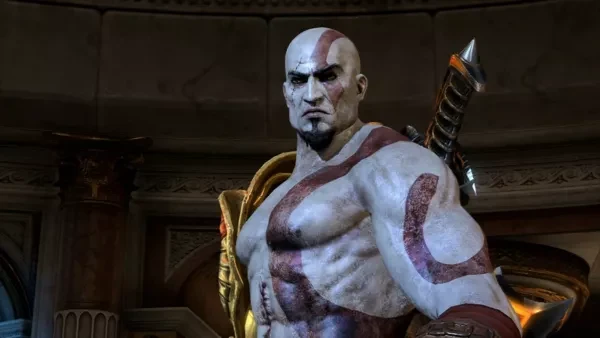
The former Spartan captain who twice crawled back from the dead. In the Greek era's finale, he kills nearly all of Olympus — and, for the first time in his life, does something not driven by revenge: he gives Hope to mankind.
📚 Read the God of War series in story order
- God of War: Ascension Story Explained: Six Months After the Tragedy and the Three Goddesses of Vengeance
- God of War: Chains of Olympus Story Explained: The Day the Sun Vanished and Kratos's Cruelest Choice
- God of War (2005) Story Explained: Ten Years of Nightmares and the Price of Killing a God
- God of War: Ghost of Sparta Story Explained: The Forgotten Brother and the Prophecy of the Marked Warrior
- God of War II Story Explained: The God Betrayed by His Father and the Titans' March on Olympus
- God of War III Story Explained: The Fall of Olympus and Kratos's Final Gift of Hope — you are reading this one
- God of War (2018) Story Explained: A Father and Son Scatter the Ashes — and the Name Loki


