God of War: Ascension Story Explained: Six Months After the Tragedy and the Three Goddesses of Vengeance

📋 Quick facts
- Game
- God of War: Ascension
- Developer
- Santa Monica Studio
- Release year
- 2013 (March 12, 2013)
- Original platform
- PlayStation 3
- Genre
- Action-Adventure
- Director
- Todd Papy
- Music
- Tyler Bates
- Notable feature
- The first entry of the entire series in story order (a prequel, set 6 months after Kratos's family tragedy); the only God of War game with a multiplayer mode
- Next entry
- God of War: Chains of Olympus (2008)
Six months after the night he killed his own wife and child with his own hands, Kratos should still have been serving Ares. Instead, he sits in a prison unlike any other on earth: a fortress of chains carved deep into the stone body of Aegaeon, the hundred-handed giant who was the first being in history to break a blood oath. Holding and torturing him are the three Fury sisters — goddesses of vengeance born before the gods themselves, with a single purpose since the dawn of time: to punish anyone who dares break a blood oath. And Kratos has just broken the greatest oath of his life — his oath to Ares, the God of War.
God of War: Ascension is the first entry of the entire series in story order: it tells what happened immediately after Kratos's family tragedy, before even his ten years of service to Olympus. This is the story of the price of defying a pact with the gods — and of the only friend Kratos had in the darkest stretch of his life.
⚠️ Spoiler warning: This article covers the full story of God of War: Ascension, including the shared plot of Ares and the Furies, Orkos's true identity, and the ending at Sparta.
📌 Quick summary: Six months after the night he killed his own wife and child with his own hands, Kratos breaks his blood oath to Ares — an unforgivable crime in the eyes of the three Fury sisters, goddesses who have punished oath-breakers since the dawn of time. Imprisoned in a jail carved into the body of the hundred-handed giant Aegaeon, he must fight for his freedom and uncover the shared plot of Ares and the Furies: to use a “marked warrior” to overthrow Zeus.
Chapter 1: The Prison of Oath-Breakers
When Kratos realized Ares had tricked him into killing Lysandra and Calliope, he swore he would never serve that god again. But a blood oath to a god is not something you can simply walk away from: it is recorded and guarded by the Furies. Megaera, one of the three sisters, personally tortures Kratos every day in the Prison of the Damned — a structure the Furies themselves created by turning Aegaeon into a living prison: the hundred-handed giant of old had broken his oath to Zeus, and his punishment is to bear upon his petrified body every oath-breaker who comes after. Kratos is chained, beaten, and tormented by visions of his family — but he refuses to submit. During one torture session, he tears free of his chains and escapes deep into Aegaeon's body, beginning his journey to reclaim his freedom.
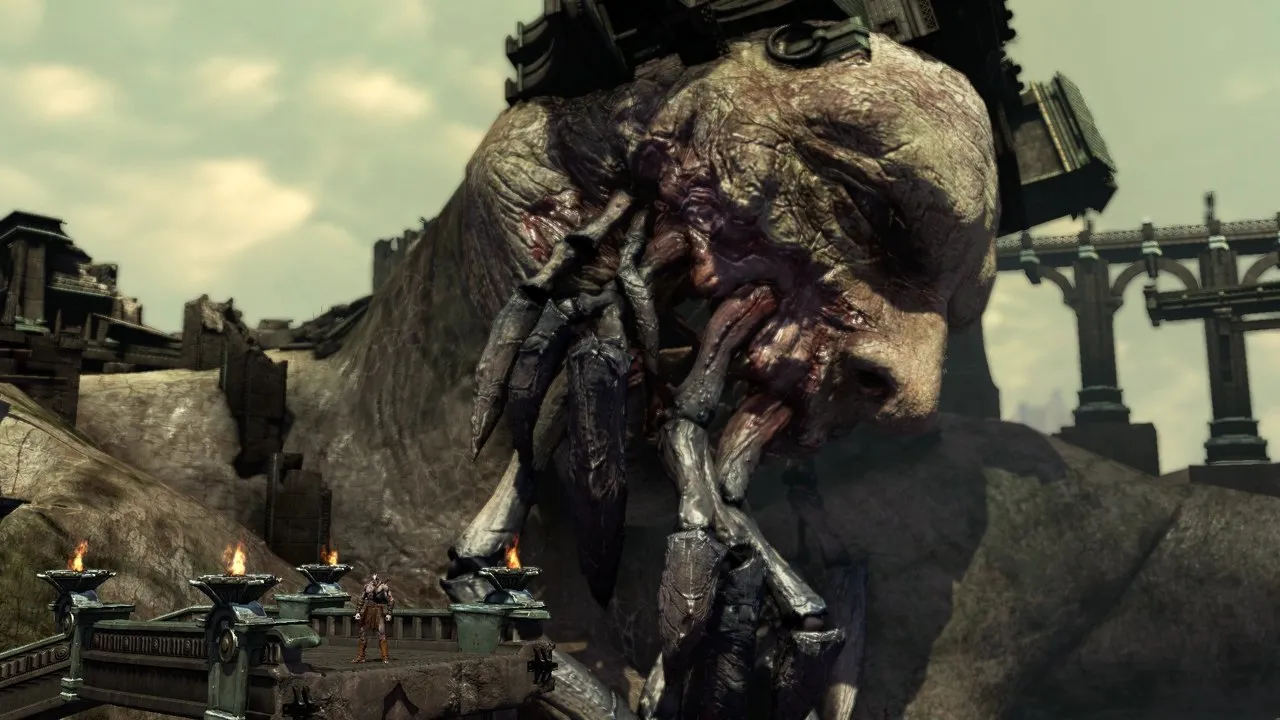
Aegaeon is one of the three Hecatonchires, the hundred-handed giants born in the primordial age, who once stood with Zeus in the war against the Titans. But after the victory, he broke his blood oath — and in the world of the Furies, no crime is heavier. His punishment became the precedent for every oath-breaker after him: his body was turned into a prison, so that every oath-breaker chained upon his back would see their own future. Kratos's days in prison are a loop with no way out: Megaera's chains and torture by day, Tisiphone's illusions by night — his wife and child return to him, so vivid that he no longer knows what is memory and what is the goddesses' trickery. It is that double torment, not any lash, that nearly breaks the Ghost of Sparta.
To understand why Kratos dares defy both Ares and the Furies, we must go back a few weeks before his capture — when a gaunt stranger with glowing burns across his skin came to him in Sparta and spoke the truth about what was truly tormenting him.
Chapter 2: Orkos and the Plot to Overthrow Olympus
That stranger is Orkos — the Oath Keeper of the Furies, the one tasked with recording and sealing every blood oath in the world. His true identity is even more earth-shaking: Orkos is the son of Ares and Alecto, queen of the Furies. Years earlier, a prophecy spread across Olympus: a marked warrior would be the destroyer of the gods. Ares and the Furies joined forces in a plot to overthrow Zeus: Ares fathered a child with Alecto to create the perfect warrior for that coup. But Orkos grew up with a fatal flaw in his parents' eyes — he had a conscience. Judged a defective failure, Orkos was exiled to serve as oath keeper, while Ares turned to raising another candidate: Kratos.
Orkos, after years of witnessing his parents' ambitions, decides to betray them. He seeks out Kratos and reveals the truth: the visions tormenting him are not merely natural nightmares — the Furies, above all Tisiphone, mistress of illusions, have been amplifying them to drive him mad and make him willingly return to Ares's service. Orkos gives Kratos his Oath Stone and leads him to the only path to seeing through every illusion: the oracle Aletheia at Delphi. But when Kratos reaches Delphi, he learns that the holiest place in Greece has been seized.
Chapter 3: Delphi and the Eyes of Truth
The Temple of Delphi, where the oracle of the god Apollo conveys the will of the gods to mankind, now lies in the hands of Castor and Pollux — twin brothers who style themselves the Prophets, using power and cruelty to silence every true voice. The real oracle, Aletheia, is held prisoner and tortured by them.
Castor and Pollux are a bizarre pair of twins: two brothers with a terrifying magic that lets Castor reverse time upon his own body, flickering between old age and youth in the middle of battle. They rule Delphi through fear: anyone who still speaks Aletheia's name, any traveler who dares ask about the true oracle, vanishes without a trace. When Kratos arrives, the holiest temple in Greece has become a stage of lies, where two impostors wear the crowns of the gods to profit from the faith of men.
Kratos frees her, but she is already mortally wounded. Before dying in his arms, Aletheia points to the only escape from the Furies' game of illusions: the Eyes of Truth — an artifact kept within the Lantern atop the statue of the god Apollo on the isle of Delos. Whoever possesses the Eyes will see through every illusion, even Tisiphone's. Kratos finishes off Castor and Pollux, ending the impostors' reign, then sails for Delos.
Chapter 4: The Statue of Apollo on the Isle of Delos
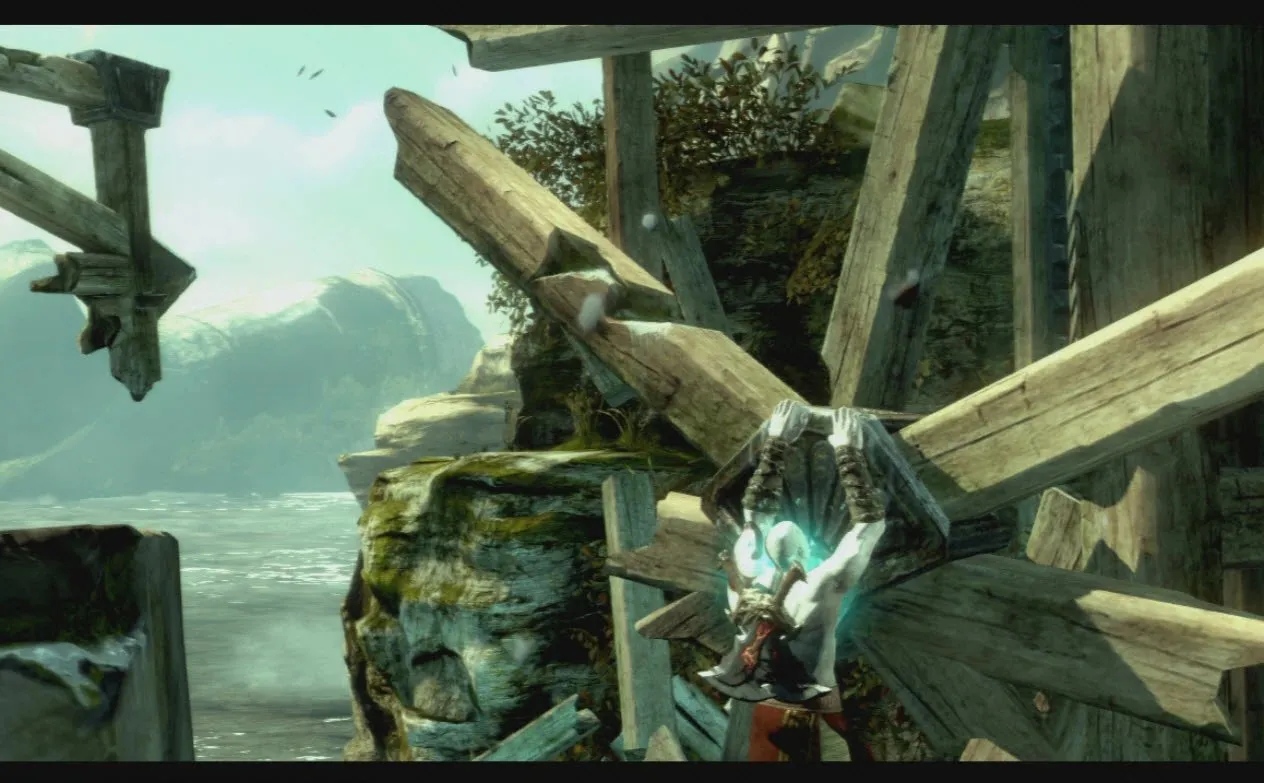
Delos is where the builders of the god Apollo are raising a colossal statue of the god — and where the Furies have laid their trap. Kratos climbs across the scaffolding, water wheels, and the giant stone arms of the half-built statue, while Tisiphone attacks relentlessly with her pet Daimon and layer upon layer of illusions: at times he sees himself in a peaceful Sparta, at others he stands in the middle of hell. The Eyes of Truth are finally his, atop the Lantern — but the victory lasts only a heartbeat. The Furies launch an all-out assault: Alecto binds Kratos fast in her black ichor, and he wakes in the very place the story began — the Prison of the Damned, chained tighter than before. This time, the Furies are determined not to let their prey escape again.
Chapter 5: Back to the Prison — Killing Megaera and Tisiphone
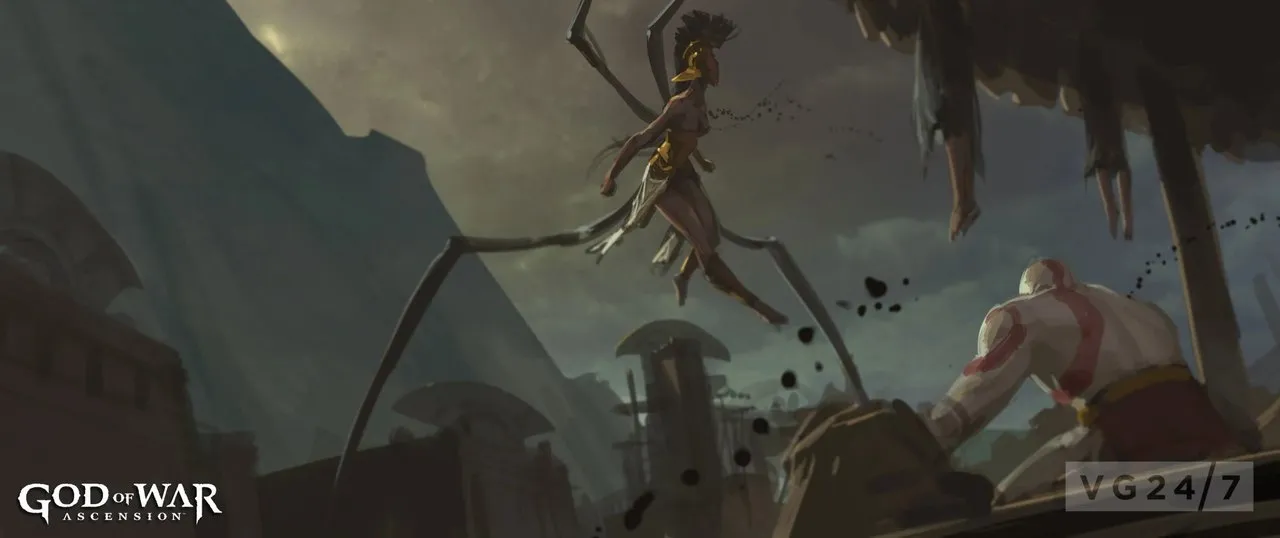
But Kratos now has the Eyes of Truth, and all of Tisiphone's illusions are useless against him. He breaks his chains and fights his way through Aegaeon's body — where Megaera has released her parasites into the Titan, bringing his colossal arms and head back to life to attack anything that moves. The battle climbs all the way to the top of Aegaeon's head. There, Kratos faces Megaera in her grotesque spider-legged form: he tears off one of the vengeance goddess's arms before finishing her off atop the Titan's head. Megaera is dead — the first Fury to fall at the hands of a mortal.
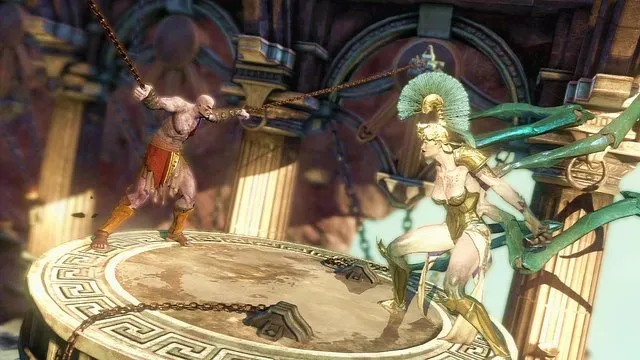
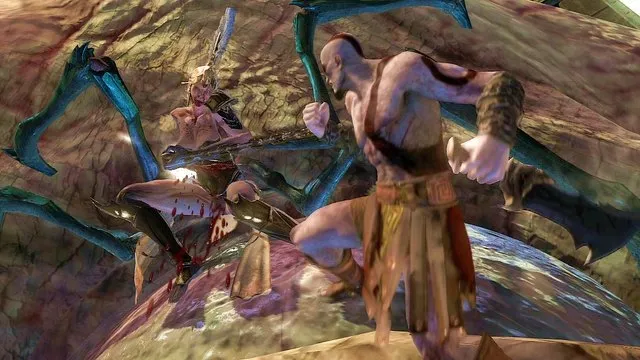
The climb to the top of Aegaeon's head runs straight through the prison itself: corridors carved into flesh and stone, other prisoners chained to the Titan's body until they went mad, and everywhere the traces of the parasite swarm — hollowing out parts of the hundred-handed giant's body and wearing them to attack. Kratos fights not only the Furies but the prison itself coming alive around him: every arm of Aegaeon that can move is an enemy, and every step could be his last before being hurled into the abyss beneath the Titan's body.
Tisiphone is next. Even though her illusions no longer work, Tisiphone still fights with her own power and her loyal Daimon. Kratos kills them both. Two of the three Fury sisters are dead, and the way down to Alecto's chamber — deep beneath the prison — is open. But Alecto does not sit waiting for death: she is the queen of the Furies, the strongest of the three sisters, and the mother who, with Ares, created this entire plot.
Chapter 6: Alecto — Queen of the Furies
In her chamber at the bottom of the prison, Alecto offers Kratos one final choice wrapped in the sweetest illusion of all: she shows him a life where Lysandra and Calliope still live, a home in Sparta, a Kratos whose hands were never stained with blood — if only he will return to Ares's service. The Eyes of Truth let Kratos see through it all: it is just another beautiful cage. He refuses, and Alecto reveals her true form: the entire chamber sinks into a black sea, and the Fury queen transforms into a gigantic sea monster — a sea serpent of godlike size, with countless tentacles crushing Kratos. The final battle of Ascension is one of the most brutal fights of the entire Greek-era series. As Kratos's blade pierces Alecto, the queen of punishers can only utter a final warning — to the effect that Orkos's father will not forgive, and the Furies will always have replacements. But for Kratos, freedom is very close now. Only one final knot remains, and it lies in Sparta.
Chapter 7: The Death of Orkos and the Final Fire
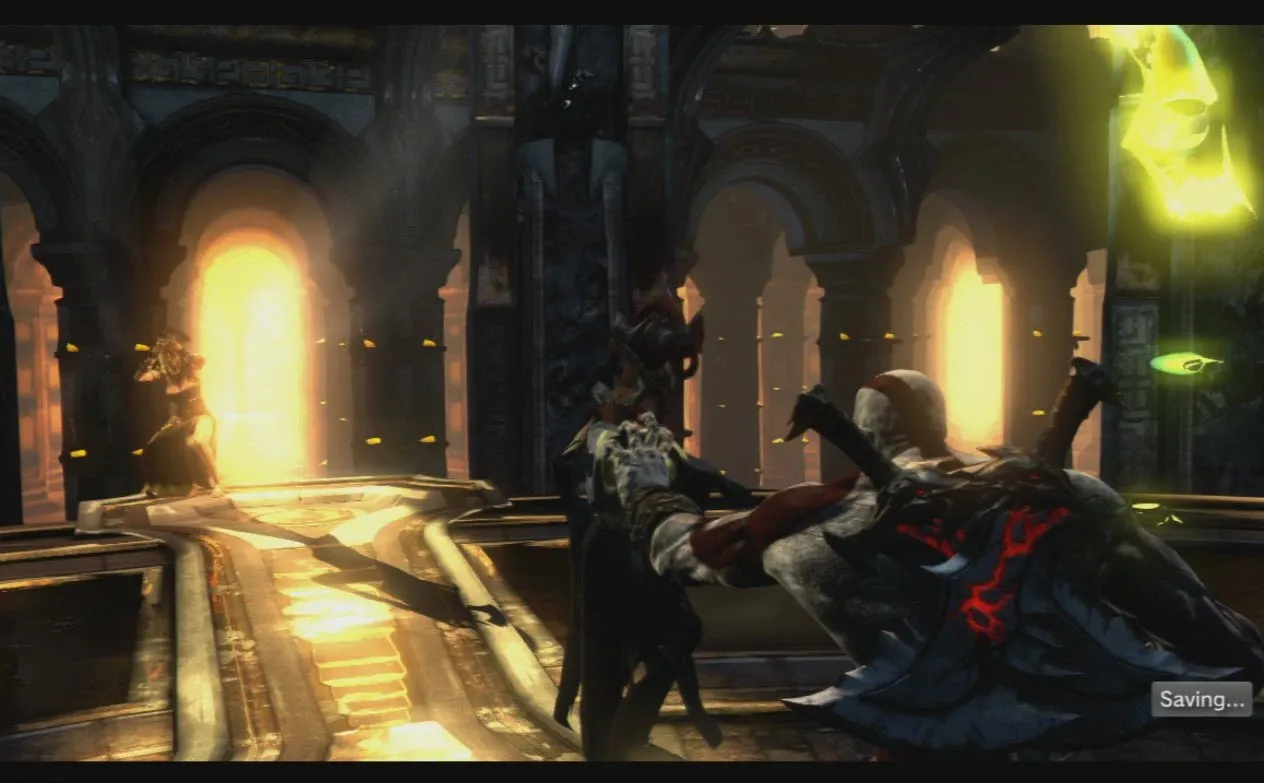
A blood oath is sealed by the Oath Keeper — as long as Orkos lives, the pact between Kratos and Ares still exists in name, even though all three Fury sisters are dead. At Kratos's home in Sparta, Orkos waits for him and says it himself: kill me. Not out of hatred — Orkos has never hated anyone, not even the mother who cast him aside. He simply does not want to live another day as someone else's tool, and death at the hands of his only friend is the liberation he chooses for himself. Kratos does as he asks, in silence. It is the first time in his life he kills a man not out of rage or war — but out of mercy.
There is a detail about Orkos that only becomes clear when you look closely: across his chest and arms are glowing burns — each one a blood oath he has sealed and carried upon his own skin in another's place. Hundreds, thousands of pacts between gods and mortals have passed through that gaunt body. When Orkos says he does not want to live any longer as a tool, it is not the weak words of a man tired of life: it is the decision of the one person in this story who understands better than anyone the true price of every oath — and who chooses to decide the final pact of his own life.
Then he sets fire to his own home, with Orkos's body inside — burning away the last remnant of his old life: the home that once held a wife, a child, and a Kratos who had not yet become the Ghost. The oath to Ares has turned to ash. But as he steps out of the flames, Kratos understands a bitter truth: the nightmares are still there. The Furies only amplified them; they did not create them — the memory of that fateful night is his own, and no broken pact can erase it. So he does the only thing left: he goes to serve the gods of Olympus, hoping that divine forgiveness will accomplish what freedom could not. The ten years of service begin here — and that is the backdrop of God of War: Chains of Olympus.
The Characters' Fates
Kratos: completely breaks his oath to Ares and goes to Olympus to offer his service, beginning ten years as a servant of the gods — the period told in Chains of Olympus and leading straight to the mission to kill Ares in the 2005 game.
Orkos: dies by his own wish, cremated by Kratos inside the house in Sparta. He is Kratos's first true friend — and the first in a long list of good people who die around the Ghost of Sparta.
The Furies: all three sisters are killed by Kratos. According to Alecto's dying words, there will always be new Furies to replace them — the order that punishes oath-breakers does not die with these three sisters.
Ares: loses both his perfect candidate and his alliance with the Furies. His plot to overthrow Zeus must wait many more years — and the man he once discarded will be the one to finish him in the 2005 game.
Common Misconceptions
Is Ascension a sequel to God of War III?
Completely the opposite: it is the first entry in story order (a prequel), released in 2013 but set six months after Kratos's family tragedy — before every other part of the series, before even his ten years of service to Olympus.
Did the Furies create Kratos's nightmares?
No. They only amplified and weaponized real memories. This is the most tragic point of this entry: Kratos kills all three sisters, breaks the oath, and wakes to find the nightmares completely intact — because they are his own sin, not anyone's magic.
Was Orkos cast aside for being weak?
No. Orkos was cast aside because he had a conscience — the one thing Ares and Alecto's plot did not need. He is the child of Ares and Alecto, born to be the oath keeper, and regarded by his own parents as a failure. In a story full of gods and monsters, the most “defective” person is the most human one.
Did Ares ally with the Furies just to keep Kratos?
No — the goal was far greater: together they plotted to overthrow Zeus using the “marked warrior” of the prophecy. Kratos was only the second piece — after the first piece (Deimos, his younger brother, taken away as a child) and the backup piece (Orkos) both proved unusable.
Fan Theories & Open Questions
The misread prophecy: Ares believed the “marked warrior” would help him overthrow Zeus. But the mark on Kratos — the red tattoo mirroring Deimos's birthmark — ultimately belonged to the destroyer of Olympus in a completely different sense. Did the Furies and Ares train with their own hands the very figure of the prophecy they feared?
Did Zeus know about this plot? Zeus stays silent throughout Ascension, yet later he himself disguises as the Grave Digger to help Kratos kill Ares. It is very likely the king of Olympus knew about the coup plot long before and was simply waiting for a piece strong enough to clean it up for him.
The other oath-breakers: The prison on Aegaeon's body holds countless prisoners besides Kratos. After all three Furies die and the prison largely collapses, their fates are never told — a gap the series has never returned to fill.
👤 Main characters
A quick introduction to the central characters of the story — portraits taken from the game itself.
Six months after the night he killed his wife and child, Kratos is tormented by visions to the brink of madness and decides to break his oath to Ares. Ascension shows the most vulnerable, most human Kratos of the Greek era: a tortured prisoner fighting not for revenge, but for the right to live by his own will.
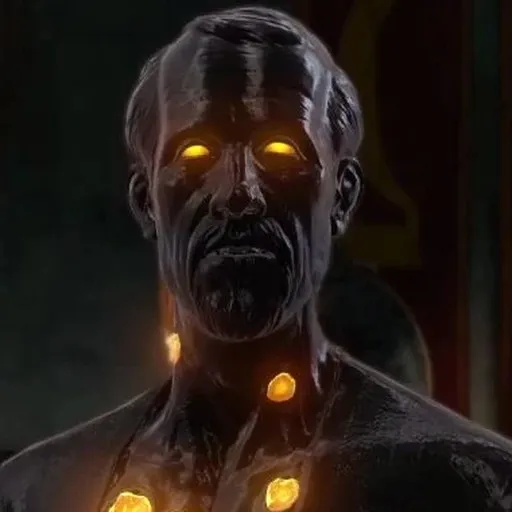
Bred to be the perfect warrior for the coup to overthrow Zeus, Orkos instead grew up with a conscience — and was exiled to serve as oath keeper for the very beings who created him. He is the only one who dares betray the Furies to help Kratos, and the first true friend of the Ghost of Sparta.
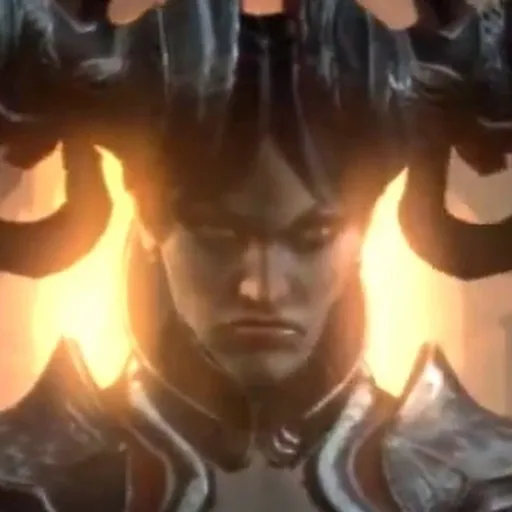
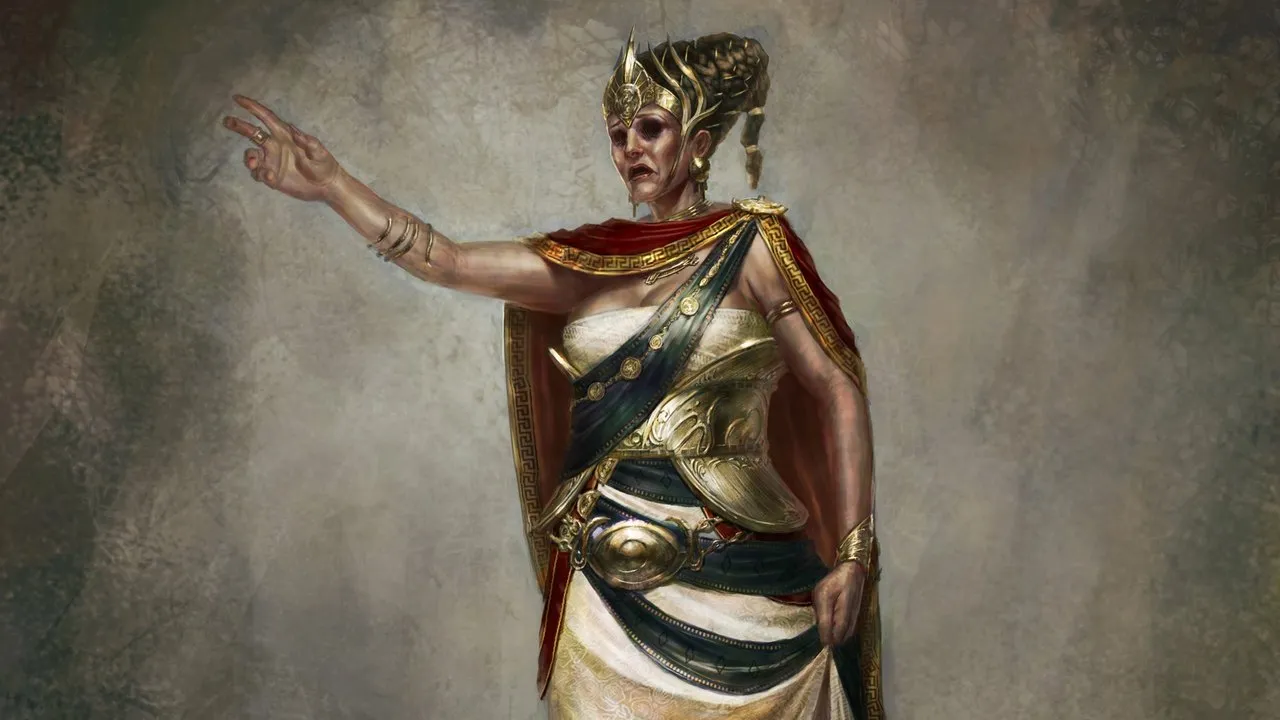
The oldest and most terrifying goddess of vengeance, born before the gods themselves. Together with Ares, Alecto conceived Orkos and the entire coup, and she offers Kratos the cruelest bargain of all: a false happy life in exchange for eternal servitude.
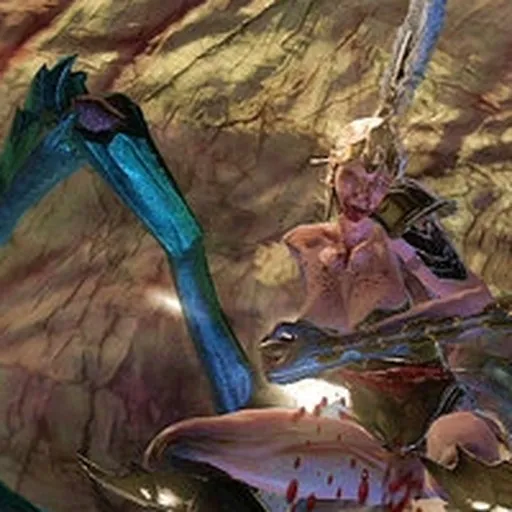
The Fury sister in charge of physical punishment. Megaera personally tortures Kratos every day in the prison built on Aegaeon's corpse and unleashes her parasites into the Titan's body to turn him into a weapon. She is also the first of the three sisters to die by Kratos's hand.
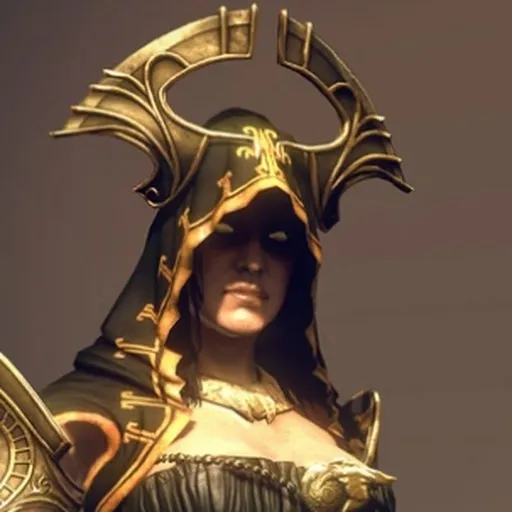
If Megaera tortures the flesh, Tisiphone tortures the mind: she amplifies Kratos's nightmares of his wife and child until he can no longer tell truth from lies. Only with the Eyes of Truth can Kratos escape her games — and Tisiphone pays the price right after Megaera.
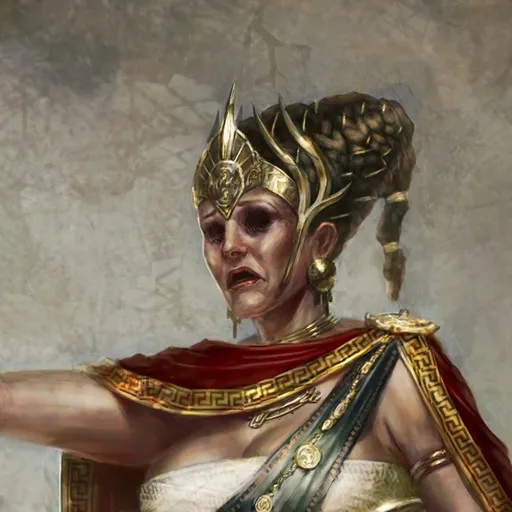
The oracle imprisoned and tortured to death by the impostor twins Castor and Pollux to silence the truth. Her final breath is spent showing Kratos the only path out of the Furies' illusions — the gift that saves his entire journey.
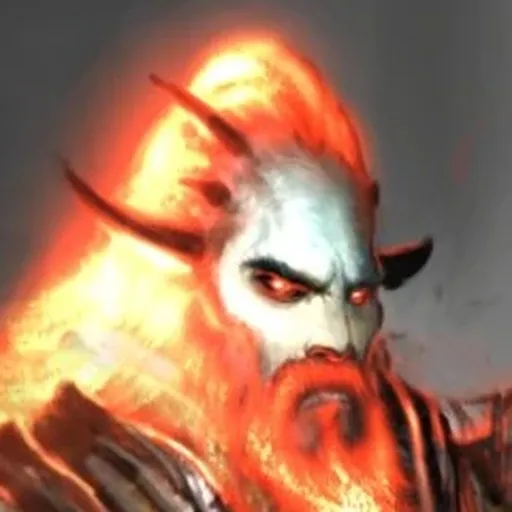
Ares rarely appears directly in Ascension, yet his presence is everywhere: the broken oath is his, the coup is his, and both Orkos and Kratos are pieces he created and then discarded. His shadow hangs over the entire Greek era.
📚 Read the God of War series in story order
- God of War: Ascension Story Explained: Six Months After the Tragedy and the Three Goddesses of Vengeance — you are reading this one
- God of War: Chains of Olympus Story Explained: The Day the Sun Vanished and Kratos's Cruelest Choice
- God of War (2005) Story Explained: Ten Years of Nightmares and the Price of Killing a God
- God of War: Ghost of Sparta Story Explained: The Forgotten Brother and the Prophecy of the Marked Warrior
- God of War (2018) Story Explained: A Father and Son Scatter the Ashes — and the Name Loki


