God of War (2005) Story Explained: Ten Years of Nightmares and the Price of Killing a God

📋 Quick facts
- Game
- God of War
- Developer
- Santa Monica Studio
- Release year
- 2005 (March 22, 2005)
- Original platform
- PlayStation 2
- Genre
- Action-Adventure
- Director
- David Jaffe
- Music
- Gerard Marino, Ron Fish, Winifred Phillips
- Notable feature
- The opening entry of the entire God of War series; introduces Kratos — the Ghost of Sparta — and the Blades of Chaos; one of the most acclaimed action games on the PS2
- Next entry
- God of War: Ghost of Sparta (2010)
Three weeks before he threw himself from the highest cliff in Greece, Kratos was still a living man. The story of God of War begins at its ending — on the Suicide Bluffs, where the warrior with ash-white skin declares that the gods have abandoned him, then casts himself into the Aegean Sea. To understand how a man could be driven to that point, we must go back ten years: to a vow made on the brink of defeat, a blood-soaked night in a temple, and ten years of nightmares without a single peaceful night.
This is the first entry in the entire God of War series — where it all began: before the Norse lands, before Atreus, there was only Sparta, Mount Olympus, and a man who sold his soul to the God of War.
⚠️ Spoiler warning: This article retells the full story of God of War (2005), including the tragedy of Kratos's family, the Gravedigger's true identity, and the ending atop Olympus.
📌 Quick summary: Kratos, a Spartan general, sells his soul to Ares, the God of War, to escape defeat — and is tricked into murdering his own wife and daughter in a blind frenzy. For the next ten years, he serves the gods of Olympus in the hope that his nightmares will be erased. His final task: kill Ares himself with the power inside Pandora's Box. But victory over a god does not bring him the peace he seeks.
Chapter 1: The Spartan General and the Pact with the God of War
The young Kratos was a captain of the Spartan army — brilliant, ruthless, and so hungry for glory that he accepted no limits. He led his small army on campaigns of conquest everywhere, until the day they clashed with a Barbarian army from the East that outnumbered them many times over. In that bloody battle, the Spartans were slaughtered almost to the last man, and Kratos knelt beneath the hammer of Alrik, King of the Barbarians, awaiting the killing blow. At that exact moment, he looked up to the sky and cried out: "Ares! Destroy my enemies, and my life will be yours!"
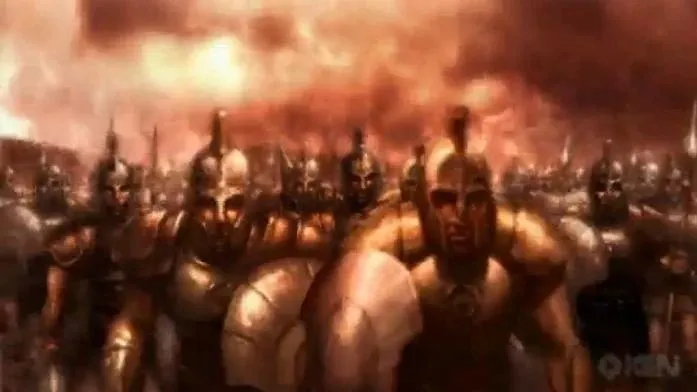
The God of War answered his prayer. Ares descended upon the battlefield, granted Kratos the Blades of Chaos — a pair of massive blades forged in the fires of the underworld, their chains burned into their master's forearms as a reminder that could never be removed — and slaughtered the entire Barbarian army, even tearing Alrik apart with his own hands... or rather, letting Kratos behead him with the new blades. From that day on, Kratos became the servant of Ares: he led the god's armies to burn and conquer across Greece in his master's name, growing ever more brutal, ever more distant from his wife Lysandra and his young daughter Calliope, who waited at home. He won every battle. But the price of the pact had not yet been fully paid.
Chapter 2: The Fateful Night in the Temple of Athena
One night, Ares ordered an attack on a village that worshipped Athena — the rival he hated most on Olympus. Kratos led his men into the village temple despite the oracle's warning: "Take care, Kratos. The dangers in that temple will destroy you." In his bloodlust, he could not see whom he was killing. When the rage subsided, two bodies lay at his feet: Lysandra and Calliope. Ares had secretly brought his wife and daughter from Sparta to this temple. The god explained coldly: with a wife and child, Kratos was still soft; with everything taken from him, he would become the perfect warrior.

Kratos swore that Ares would pay, and abandoned the god's service. The village oracle, meanwhile, laid a curse upon the man who had slaughtered his own family: the ashes of Lysandra and Calliope would cling to Kratos's skin forever, turning it the pale white of death. From then on, all of Greece knew him as the Ghost of Sparta — a white specter who brought war wherever he went, and who was tortured every night by the memory of that night in his dreams. Ares had gotten what he wanted, in a twisted way: Kratos had nothing left to lose. But he had also created the one being in the world who hated him to the bone.
Chapter 3: Ten Years Serving Olympus and Athens Aflame
For ten years after that fateful night, Kratos served the gods of Olympus, doing the dirtiest work they gave him — slaying monsters, quelling revolts, hunting the Hydra upon the Aegean Sea — with a single hope: that when his labors were great enough, the gods would erase the nightmares that tormented him every night. But the nightmares remained intact, and he began to understand that the gods had never intended to free him. At that very moment, Ares openly challenged Olympus: he led his legions in an attack on Athens, the city of Athena, in broad daylight — an act of rebellion without precedent, born of envy toward the sister whom Zeus favored.
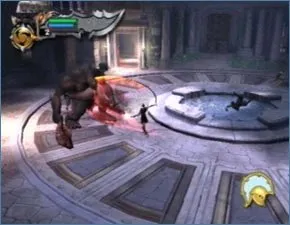
Zeus had laid down an unwritten law: god must not kill god. So Olympus needed a mortal to do it for them. Athena gave Kratos his final and greatest task: kill Ares. In burning Athens, the city's oracle showed him the only path that could kill a god — Pandora's Box, an ancient weapon containing power enough to slay a god, hidden in the temple on the back of Cronos, the last living Titan, whom Zeus had condemned to crawl through the Desert of Lost Souls for a thousand years. If Kratos brought the box back, the gods promised he would be forgiven for all the sins of his past. Kratos set out — though in his heart, he knew he needed that forgiveness far less than he needed Ares dead.
Chapter 4: The Desert of Lost Souls and the Titan Cronos
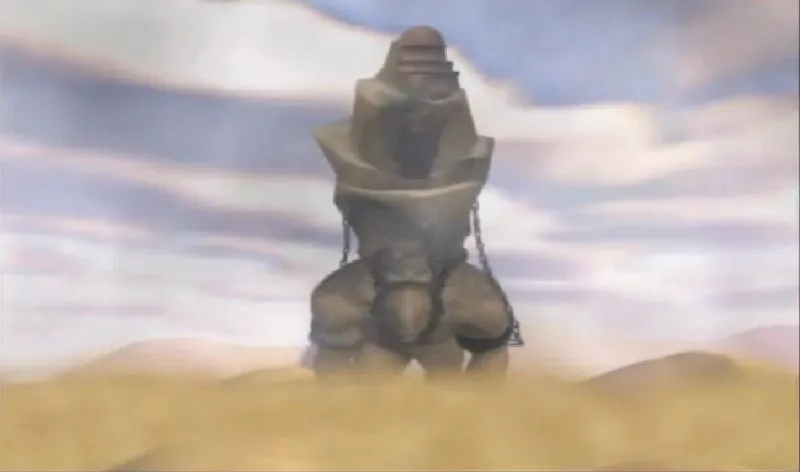
The desert welcomed Kratos with the singing of the Sirens — creatures who use their enchanting voices to lure travelers in, then tear them apart. After killing the whole pack of Sirens, he followed the sound of a conch horn and saw an impossible sight: Cronos, the colossal Titan who was once the father of the gods, crawling on all fours through a sea of sand, an entire stone temple chained to his back. Zeus had sentenced Cronos to carry Pandora's Temple on his back until the desert sands buried him — a punishment lasting a whole millennium, and still not over.
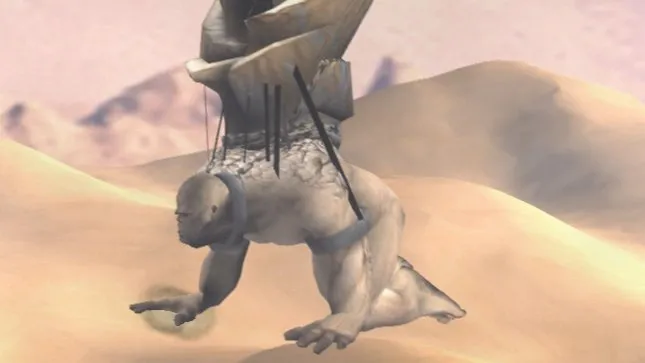
Kratos grabbed a chain and climbed onto the Titan's back. He climbed for three days and three nights — a small detail that conveys the temple's mind-boggling scale — before finally setting foot at the gates of Pandora's Temple. Inside was the work of the architect Pathos Verdes III, who had designed the temple at the gods' command and slowly went mad within his own labyrinth. The temple was not merely a hiding place for the box: it was a colossal killing machine built to ensure that no mortal could ever reach what lay inside and come out alive.
Chapter 5: Pandora's Temple — The Labyrinth of a Mad Architect
Every chamber in the temple was a trial named after a god. Kratos crawled across the rings of Atlas, solved the deadly puzzles of Poseidon, and descended into the blood-stained corridors of Hades. Along the way, he found the bodies of the architect's two sons — men who had died within their own father's labyrinth — and finally the body of Pathos Verdes III himself, who had taken his own life in despair after losing his whole family to this work, leaving behind a journal filled with the writings of a madman still trying to finish the temple for the uncaring gods. Pandora's Temple is the clearest portrait of the world Kratos lives in: mortals build wonders, bleed, and go mad for the gods — and the gods never look down.
After passing the final ring of trials and killing the temple's colossal guardian — an armored Minotaur standing watch in its own labyrinth — Kratos finally stood before Pandora's Box. The box was far smaller than he had imagined compared to its reputation: a block of gold and gemstone resting quietly on an altar, containing the power the gods had sealed away after the Great War between gods and Titans in ancient times. Kratos lifted the box down and began the journey back. But in Athens, a pair of eyes had followed his every step from the very beginning — and Ares knew exactly what he was carrying.
Chapter 6: Killed by a Pillar and the Escape from the Underworld
The moment Kratos stepped out of the temple, Ares — all the way from Athens — seized a broken pillar and hurled it across space itself. The pillar pierced straight through Kratos's chest, pinning him to the cliff face. As he lay dying, the Harpies of Ares carried Pandora's Box away to their master. That was the first death of Kratos's life: within arm's reach of his goal, killed by the very god who had made him. He fell into the Underworld, where his soul had to face the River Styx and the circles of hell reserved for the dead. But the Ghost of Sparta refused to stay down. He killed, climbed, and crawled over the corpses of the damned themselves to find a way back to the surface.
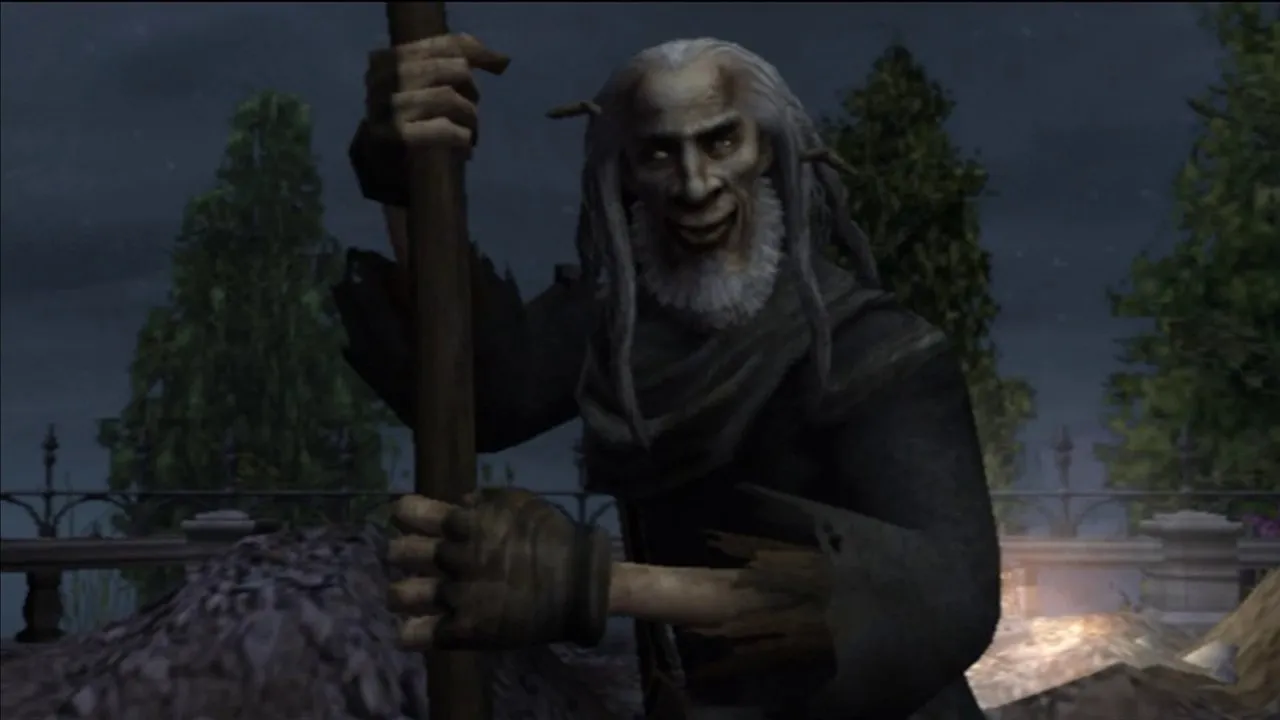
The one who helped him escape was a strange figure: the Gravedigger, an old man Kratos had met in Athens — calmly digging a grave in the middle of the burning city and saying it was being dug "for you." When Kratos climbed out of the pit in Athens — that very grave — the old man only laughed: "Athena is not the only god keeping watch over you, Kratos." The true identity of the Gravedigger — confirmed in later entries — is Zeus in disguise: the king of the gods had quietly helped Kratos kill Ares, because the arrogance of the God of War had exceeded the limits of Olympus's tolerance. Kratos returned to life and went back to Athens — where Ares stood in the square, opening the box... unaware that it was already empty. For the true power of Pandora's Box had chosen the one who opened it: the moment Kratos touched the box in the temple, its power had passed into him.
Chapter 7: The Mortal Who Killed a God and the Empty Throne on Olympus
The final battle took place amid the ruins of Athens: Kratos, now grown to the size of a god thanks to the power of the box, faced Ares head-on. But Ares was not only strong — he was cruel, and he knew his trump card well. He stripped away the Blades of Chaos, stripped away every magic the gods had granted Kratos, then dragged him into a nightmare dimension: the temple of that fateful night, recreated, and this time Kratos had to protect Lysandra and Calliope from an entire army of copies of himself — the Kratos of blind rage. He fought to save the people he had failed to save in life. When he returned to reality, the final weapon of Kratos was the Blade of the Gods — the colossal sword that the god statue in Athens used as a bridge. He tore it free and drove it through Ares. The God of War died at the hands of a mortal — something that had never happened in the history of Olympus.
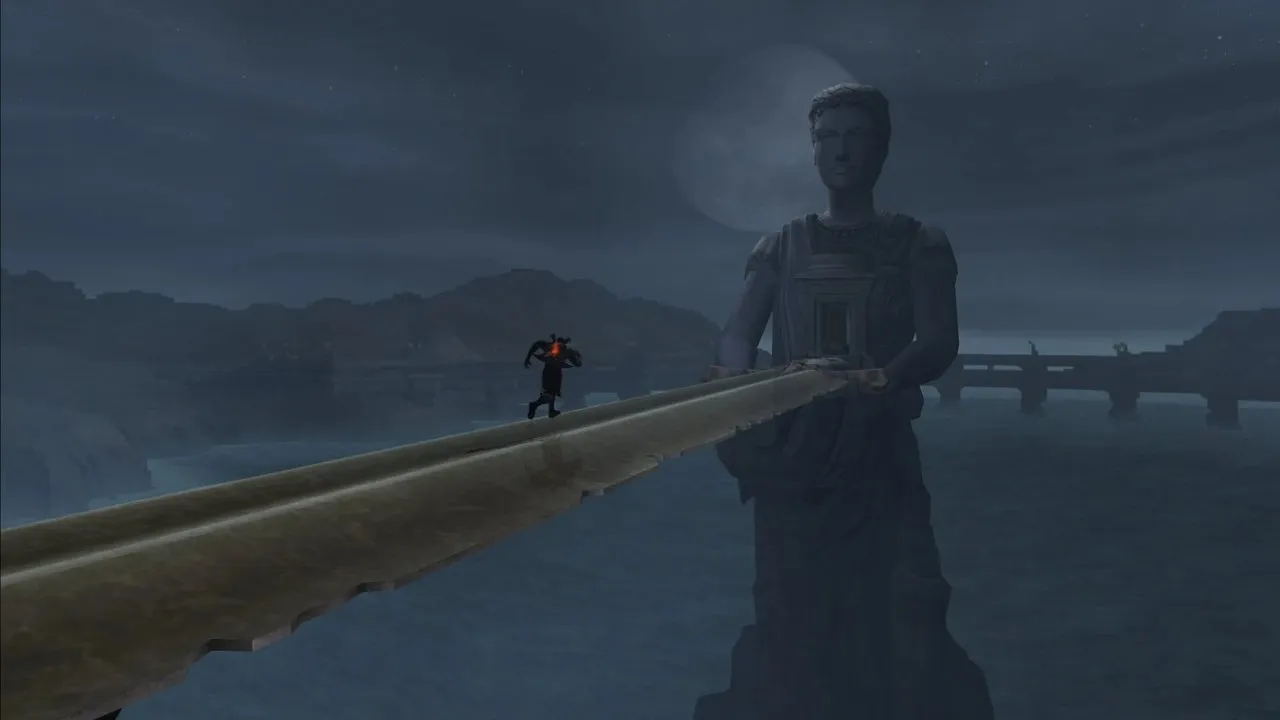
Athens was saved, Ares was dead, and Kratos came to claim his reward: erase his nightmares. Athena spoke the truth the gods had dodged from the start: they had promised forgiveness, and his sins were indeed forgiven — but no one had ever promised to erase his memories. "The gods cannot erase your terrible memories." Ten years of service, a god slain, in exchange for hollow forgiveness and nightmares left fully intact. Three weeks later, Kratos stood atop the Suicide Bluffs — the highest cliff in Greece — and spoke the opening line of the game: "The gods of Olympus have abandoned me. Now there is no hope left." Then he threw himself off.
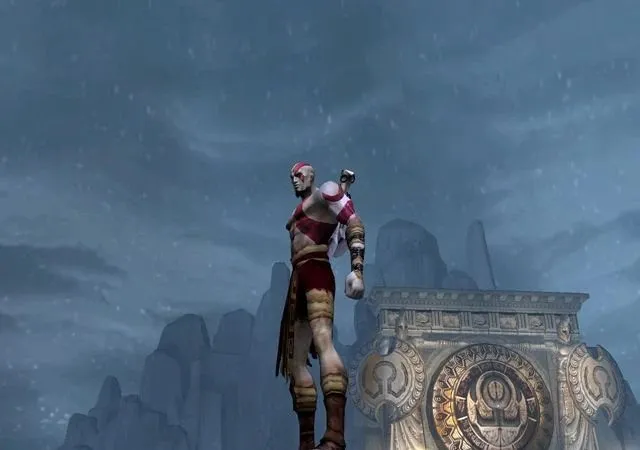
But the gods would not let him die. Athena pulled him up and made an offer: the throne of the God of War stood empty, and Olympus needed someone to sit upon it. Kratos climbed the steps of Mount Olympus and sat upon the throne of Ares — from an exploited servant, he became the god through whose hands every war from now on would pass. The narration of Gaia closes the first entry: from then on, every war of mankind — from the battles of the Roman Empire to the two World Wars — took place under the gaze of the new god. Kratos had won. But he sat on that throne with his nightmares still intact, and with an Olympus that now had to be wary of the very being it had created.
The Fates of the Characters
Kratos: becomes the new God of War of Olympus — setting the stage for even greater conflicts with the gods themselves in God of War II (2007), when Zeus turns and betrays him.
Ares: the first god ever killed by a mortal. His colossal corpse is secretly disposed of by the gods; in later entries, the tomb of Ares and what remains of him still haunt Olympus.
Athena: remains the one closest to Kratos on Olympus, but the relationship between them is full of half-kept promises — and will fracture completely in the entries to come.
Alrik (Barbarian King): the man Kratos beheaded in the opening chapter. His soul does not rest: in God of War II, he returns from the Underworld to hunt Kratos down for revenge.
Common Misconceptions
Did the gods lie to Kratos about erasing his nightmares?
More precisely, they spoke in evasions: the promise from the start was "your sins will be forgiven" — Kratos himself assumed that forgiveness meant erasing his memories. Athena did not lie, but Olympus deliberately let him believe it for ten years.
Does Pandora's Box contain a weapon?
The box contains a primordial power from the age of the Great War between gods and Titans — enough for a mortal to stand as an equal to the gods. But it contains something else as well: every evil in the universe, sealed away alongside that power. The true price of opening the box is only revealed in God of War III.
Is the Gravedigger just a throwaway side character?
No. He is Zeus in disguise — later entries confirm this, and it casts the events of the first game in a different light: Zeus actively intervened to help kill Ares, beginning the chain of disastrous decisions the king of Olympus would make regarding Kratos.
Did Kratos kill Ares because he served the gods?
Quite the opposite: serving the gods was only the pretext. The true motive of Kratos from start to finish was revenge for Lysandra and Calliope — and ironically, once Ares was dead, he still could not escape the nightmares of them.
Theories & Unanswered Questions
The prophecy of the "marked warrior": Long before the first game, an oracle warned Olympus of a marked warrior who would destroy the gods. Ares and Athena once kidnapped a child with a strange birthmark — Deimos, the younger brother of Kratos — believing him to be the one in the prophecy. This is only told in full in Ghost of Sparta, and it reframes the entire story: what if the one Olympus truly feared was the older brother they had turned into the Ghost?
Why did Zeus help Kratos, then come to fear him? In the first game, Zeus (in the guise of the Gravedigger) quietly saves Kratos twice. But a mortal who can kill a god is far too dangerous a precedent — that fear is the seed of the betrayal in God of War II and every tragedy that follows.
Cronos and the box: Zeus punished Cronos by making him carry the temple containing a weapon that can kill gods — right in the middle of a desert anyone can find. Was that the arrogance of a victor, or did Zeus believe no mortal could ever survive the labyrinth of the temple? Either way, that very punishment placed the box in the hands of Kratos.
👤 Main characters
A quick introduction to the central characters of the story — portraits taken from the game itself.
A young Spartan general hungry for glory, he sold his soul to Ares to win a battle — and was tricked by that very god into killing his own wife and child. Their ashes clung to his skin, bleaching it white, and ten years of nightmares turned him into the only man alive who dared to think of killing a god.
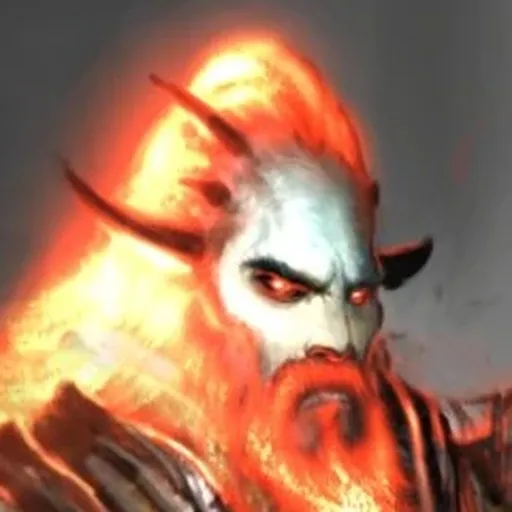
The god who answered the plea of Kratos on the battlefield and bound him in a bloody pact. He orchestrated the deaths of Lysandra and Calliope to turn Kratos into the perfect weapon, then rebelled and attacked Athens — becoming the first god ever killed by a mortal.
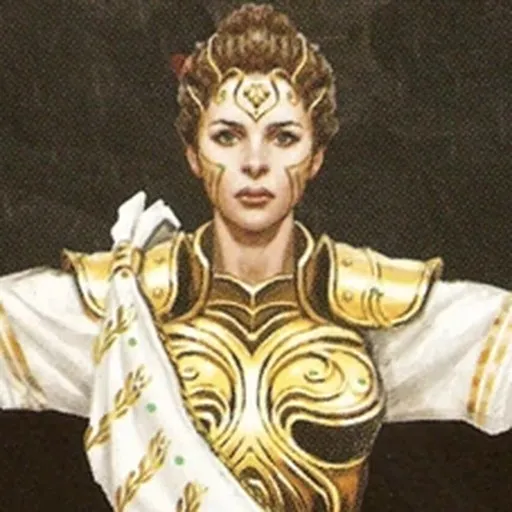
The sister Ares envied most, and the only god on Olympus who still spoke with Kratos. She gave him the task of killing Ares and promised forgiveness — but saved the hardest truth for the final moment: the gods forgive sins; they do not erase memories.

The Spartan wife who understood her husband better than anyone — she was once the only voice still holding on to the humanity in the increasingly brutal general. Her death at her own husband's hands, in the scheme of Ares, is the wound Kratos carries through the entire series.

The little daughter Kratos was rarely home to watch grow up. She died with her mother on that fateful night in the temple, and the image of Calliope would return to haunt her father — even in the world of the dead in later entries.
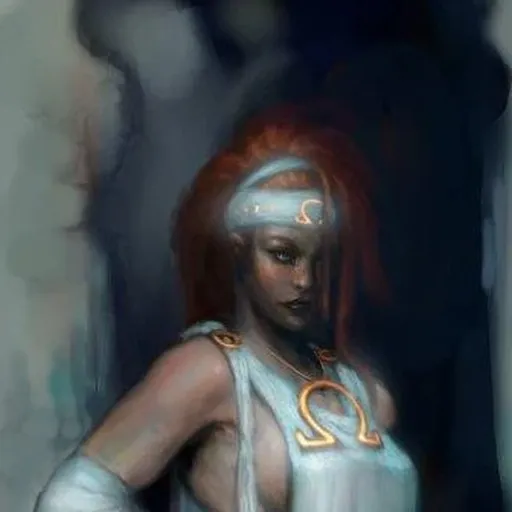
As Athens burned at the hands of Ares, the oracle of the city was the one who showed Kratos the only path: Pandora's Box on the back of Cronos amid the desert. Without her guidance, the ten years of service of Kratos would have ended in hopelessness.

The old man who calmly dug a grave amid a collapsing city and said that grave was meant for Kratos. That very 'grave' was the way Kratos climbed out of the Underworld. Zeus had secretly helped kill Ares — and that same Zeus would later become the greatest enemy of Kratos.
📚 Read the God of War series in story order
- God of War: Ascension Story Explained: Six Months After the Tragedy and the Three Goddesses of Vengeance
- God of War: Chains of Olympus Story Explained: The Day the Sun Vanished and Kratos's Cruelest Choice
- God of War (2005) Story Explained: Ten Years of Nightmares and the Price of Killing a God — you are reading this one
- God of War: Ghost of Sparta Story Explained: The Forgotten Brother and the Prophecy of the Marked Warrior
- God of War (2018) Story Explained: A Father and Son Scatter the Ashes — and the Name Loki


