God of War: Chains of Olympus Story Explained: The Day the Sun Vanished and Kratos's Cruelest Choice

📋 Quick facts
- Game
- God of War: Chains of Olympus
- Developer
- Ready at Dawn
- Release year
- 2008 (March 4, 2008)
- Original platform
- PlayStation Portable (PSP)
- Genre
- Action-Adventure
- Director
- Ru Weerasuriya
- Writer
- Marianne Krawczyk, Ru Weerasuriya, Cory Barlog
- Notable feature
- The prequel chapter telling the mission to rescue the god Helios; contains the Elysium choice, widely regarded as the most heartbreaking moment in the series; remastered in God of War: Origins Collection (PS3, 2011)
- Next entry
- God of War (2005)
God of War: Chains of Olympus (2008) is the second prequel in the series' story chronology, set during the ten years Kratos served the gods of Olympus in exchange for the erasure of his nightmares about the family he killed with his own hands. Developed by Ready at Dawn for the PSP, it is the shortest entry of the Greek era — yet it contains the cruelest, most heartbreaking moment in the entire series: the moment a father must push his own dead daughter away with his own hands, for the second time. Warning: this article reveals the entire story of the game.
📌 Quick summary: During his ten years serving Olympus in exchange for the erasure of his nightmares, Kratos receives the strangest mission of his life: the sun has been stolen, and the world has sunk into the sleep of Morpheus, god of dreams. Hunting Persephone — the queen of the Underworld who means to destroy the Pillar of the World — he is reunited with his daughter Calliope in the paradise of Elysium, then forced to push her away with his own hands to save every soul in existence.
The Day the Sun Fell from the Sky
The story begins in Attica, a port city under siege by the Persian army. Kratos — now a servant of Olympus, fighting the gods' wars in battles that are not his own — single-handedly faces the invading army and their monstrous Basilisk amid the ruined streets. But in the middle of the battle, the unthinkable happens: the sun disappears. The chariot of Helios falls from the sky, the world plunges into darkness in broad daylight, and in that darkness Morpheus — god of dreams, held in check by Helios's light for millennia — begins spreading his mist across the land. Gods and mortals alike collapse one after another into a sleep with no waking, and the kingdom of the gods faces collapse not through war, but through an eternal dream.
Athena gives Kratos his mission: find Helios, restore the sun, before Morpheus takes the whole world. What stands out is how the gods respond to this crisis — they do not act themselves; they call Kratos. As always. The Ghost of Sparta's ten years of service rest on a single bargain: he does Olympus's dirtiest work, and one day the gods will erase the images that haunt him every night. Chains of Olympus is the story of one of those missions — and of Kratos beginning to understand the true price of serving the heavens.
The Sun Chariot and the Guidance of the Goddess of Dawn
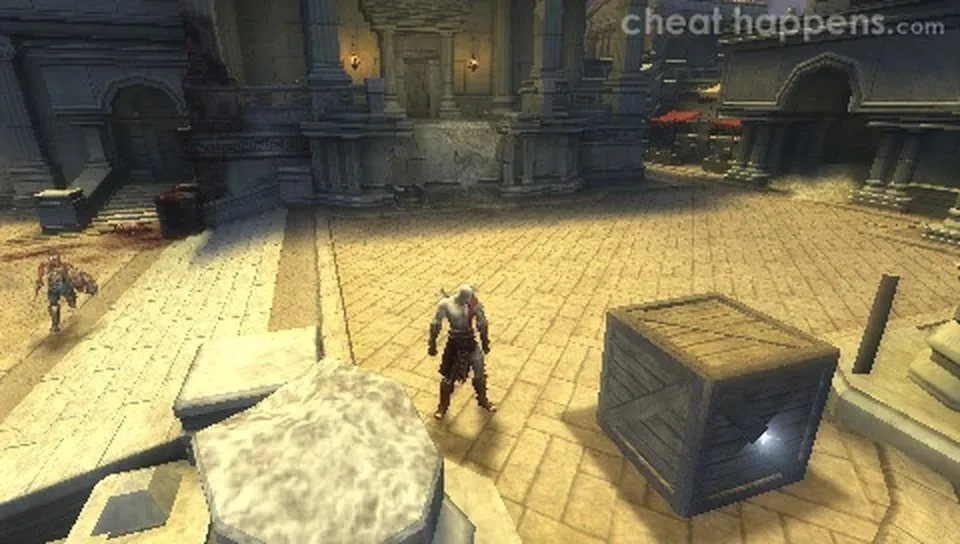
The trail of Helios leads Kratos to the Temple of the Sun, where Eos — goddess of the dawn, sister of Helios — tells him the truth: her brother has been dragged down into the Underworld. The mastermind behind the kidnapping did not attack Olympus with an army; they simply snuffed out the world's lamp and let the darkness do the rest. Kratos boards the Sun Chariot and uses Helios's own fire horses to dive down into the kingdom of the dead — a journey almost no mortal has ever returned from.
The memorable detail of this chapter is Eos: she is one of the very few gods in the series who speaks to Kratos with genuine respect, perhaps because she understands better than anyone what it means to be overshadowed — the dawn is forever only the one who clears the way for the sun. Through her, the game also quietly restates Olympus's toxic power structure: when a god falls into danger, the system does not save him; it sends a replaceable servant in his place.
Charon, the River Styx, and Kratos's Rare Defeat
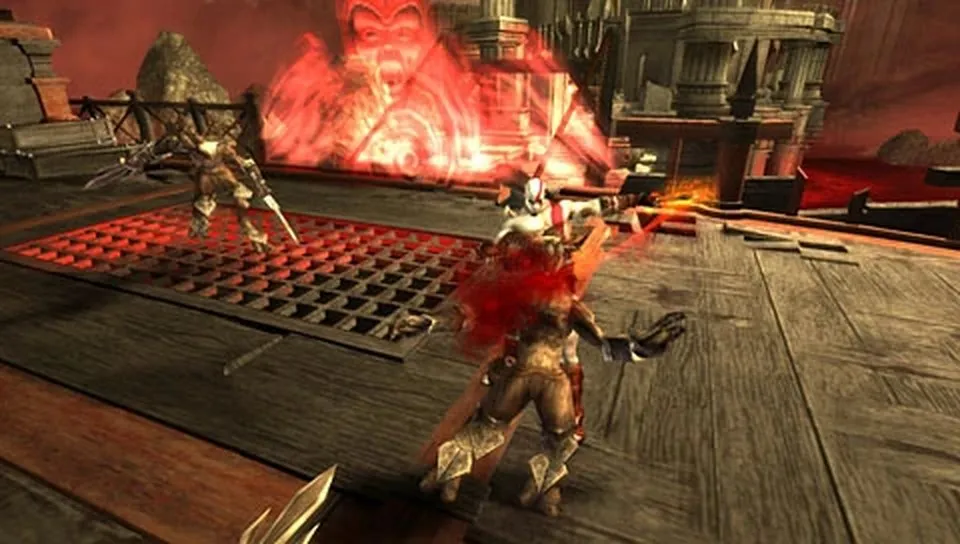
The road down into the Underworld crosses the River Styx, and the one who guards that road is Charon — the silent ferryman who has carried countless souls to the far shore. Charon refuses to carry Kratos: the servant of the gods is not dead, and this ferry is only for the dead. Battle breaks out, and Chains of Olympus does something few God of War games dare to do: Kratos loses. Charon defeats the Ghost of Sparta and throws him into the depths of the Underworld (Tartarus) like an illegal intruder.
But Tartarus is where the weapon that will save Kratos is hidden: the Gauntlet of Zeus, the colossal weapon Zeus once used to chain the Titans after the great mythological war, forgotten in the dungeon of the very beings it once imprisoned. Kratos reclaims the gauntlet, climbs back up through hell, and in the rematch he kills Charon — breaking one of the oldest orders of the world of the dead: from now on, the boundary between life and death on the River Styx has no one left to guard it. Kratos's only defeat in this chapter is the lesson the series repeats again and again: he is not unstoppable because of inborn strength — he is terrifying because no matter how many times he is beaten down, he gets back up holding a bigger weapon.
Elysium: Paradise, a Daughter, and the Impossible Choice
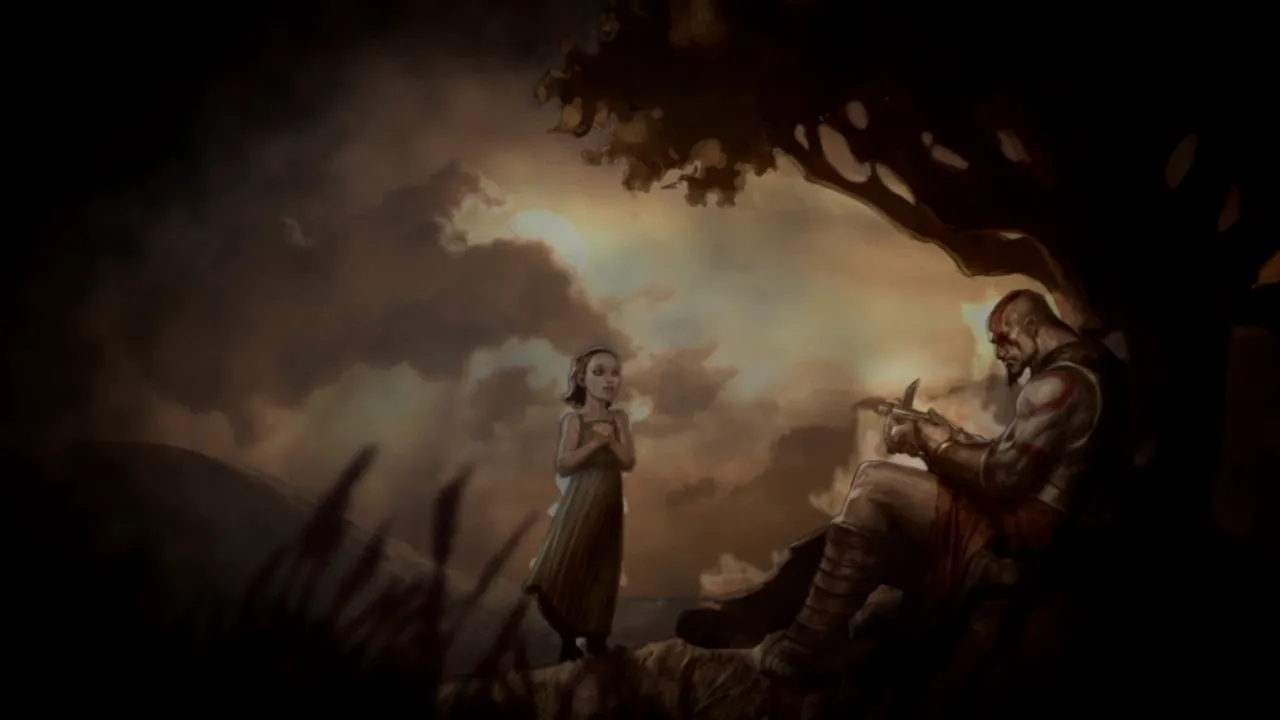
Deep within the Underworld lie the Fields of Elysium — a paradise for pure souls, a place with no war, no gods, no violence. And there, playing amid the meadows, is Calliope — the daughter Kratos killed on that mad night in the temple of Athena many years before. For the first time since that fateful day, the Ghost of Sparta holds his daughter in his arms while she is still vibrant and alive, still calling him father.
It turns out this is the gambit of Persephone, Queen of the Underworld: she offers Kratos a choice that no weapon can solve. Staying in Elysium with Calliope means giving up all his power and weapons — becoming an ordinary soul, at peace, forever. Kratos did the thing no one expected: he actually did it. He cleansed himself, cast off the Blades of Chaos and all his strength, embraced his daughter, and accepted that he would stay in this paradise forever — the man who had killed thousands chose peace, once, for himself. Then Persephone revealed the rest of the plan: when the Pillar of the World is destroyed, everything will collapse — Olympus, the mortal world, and this Elysium too. The paradise of father and daughter has only a few hours left to exist. If Kratos wants to save his daughter (and every other soul), he must become a monster again: leave her behind, reclaim his power by slaughtering the very pure souls of Elysium to restore his lost rage — using the blood of paradise to become the God-Killer once more. The scene of Kratos gritting his teeth and pushing Calliope away — the little girl crying and clutching at her father's hand in vain — while his two hands redo the thing that destroyed his life is ranked by the God of War community among the most heartbreaking scenes in the entire medium of video games. Not because it is tragic, but because it is the starkest truth about this character: Kratos is never allowed to be a father. Every time he tries, the world forces him to choose between his daughter and everything else.
Persephone — the Queen Tricked into Marriage, and Her Plan to Destroy Everything
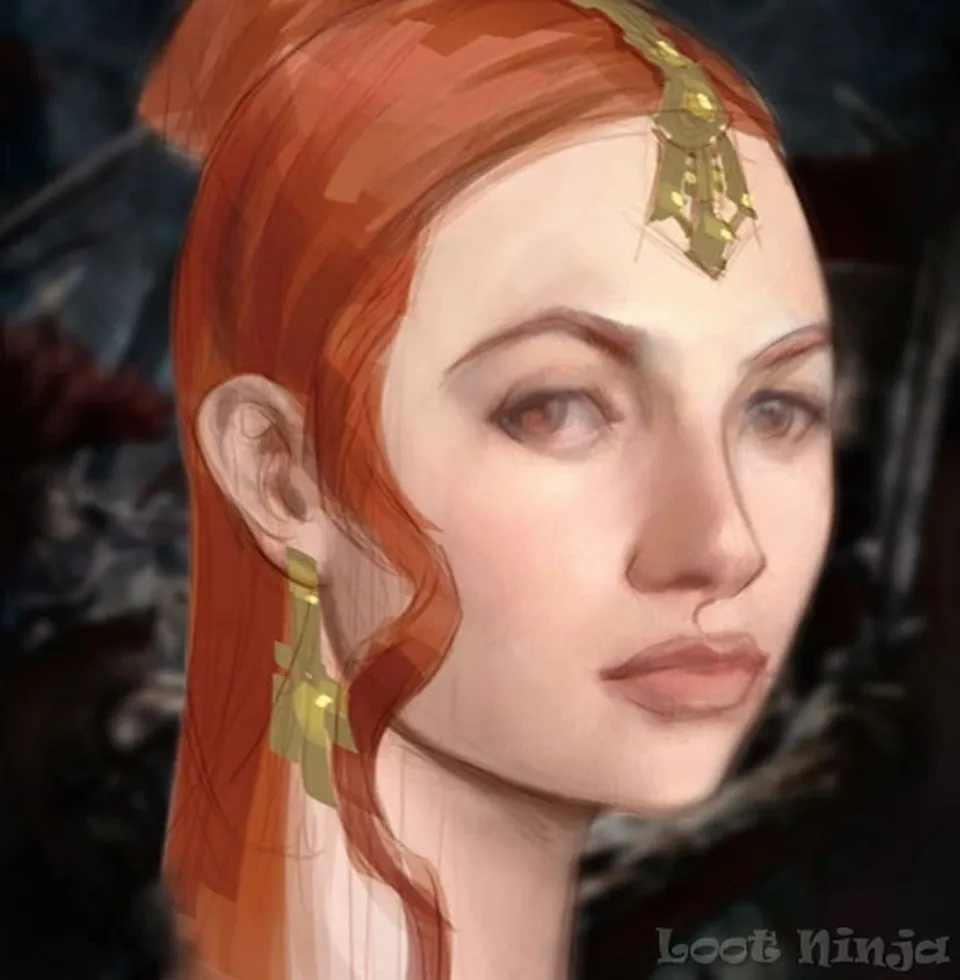
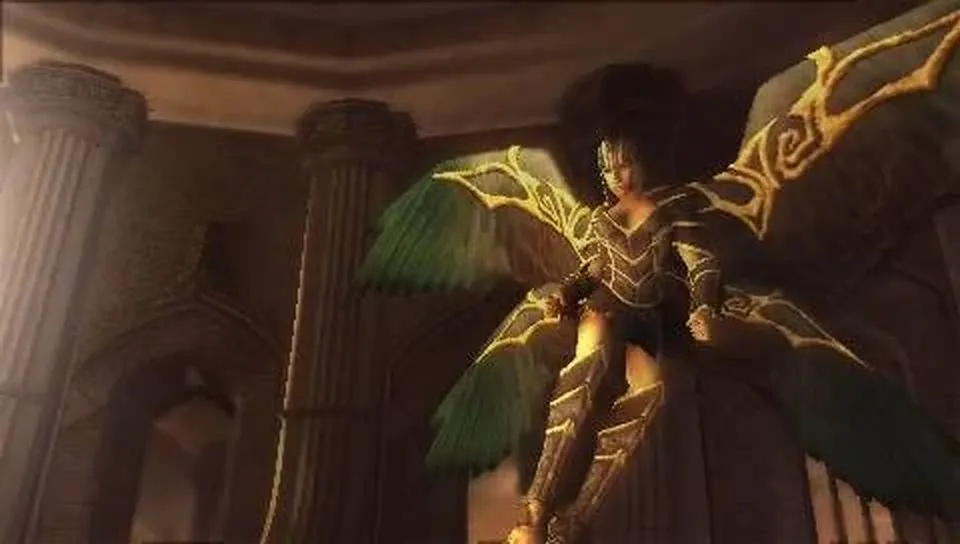
Persephone is not evil by nature; she is one of the gods' oldest victims. In the mythology the game inherits, she was kidnapped by Hades, taken to the Underworld, and bound there forever by the schemes of the gods — a loveless marriage, a kingdom of nothing but the dead, and half of every year spent underground under an "agreement" others signed on her behalf. In Chains of Olympus, millennia of that resignation finally erupt into a perfectly mad plan: if this world is built on the gods' injustice, then erase all of it — gods, Titans, humans, souls, everything together.
To carry it out, Persephone frees Atlas — the colossal Titan once chained by Zeus — and uses the power of the captive Helios to fuel his destruction of the Pillar of the World, the mythical column that holds up the entire earth. When the pillar breaks, heaven and earth will crash into each other; no more Olympus to be unjust, no more Underworld to imprison, nothing at all. What makes Persephone a memorable villain is that her plan, by the logic of a victim, is completely consistent: she does not want to rule the world — she wants to end it, because in every version of the world that has ever existed, she is the one who pays the price.
The Battle at the Pillar of the World — and Atlas's Eternal Punishment
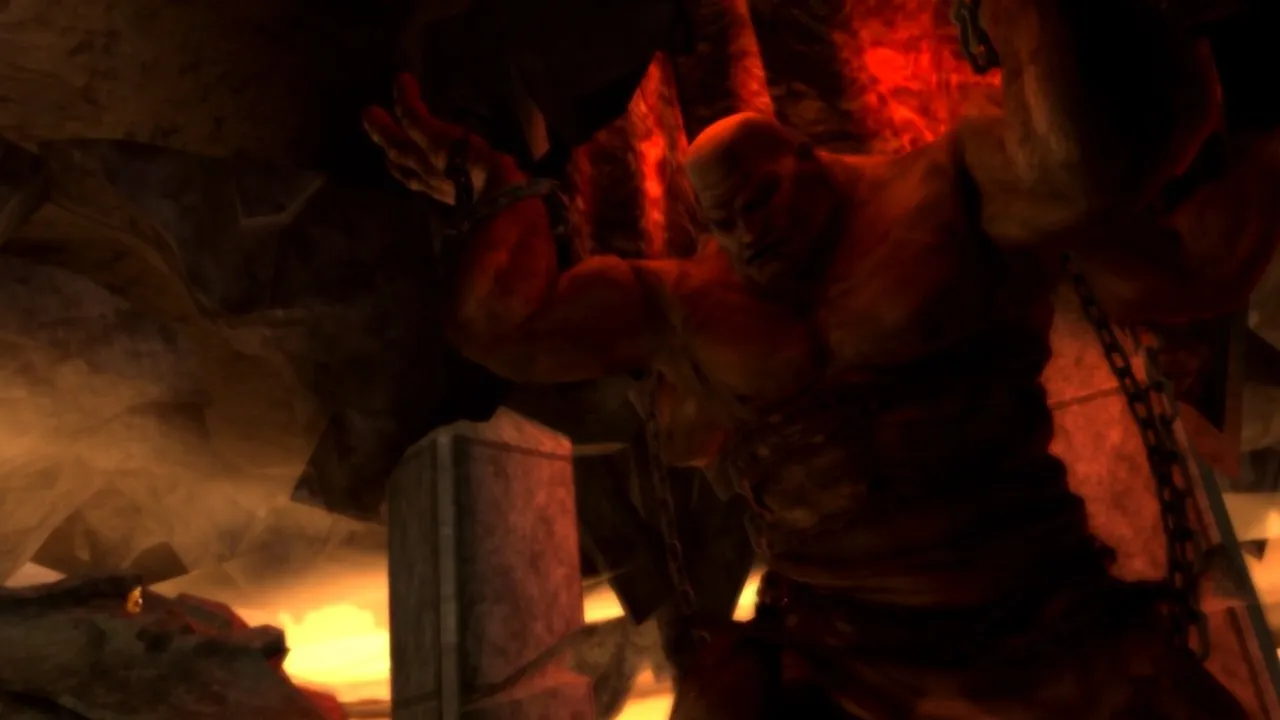
The final battle takes place at the Pillar of the World itself, where Atlas is using all his Titan strength to crush the column while Persephone faces Kratos directly. It is the fiercest two-on-one fight in the series of that era, and it ends with Persephone's death at Kratos's hands — the Queen of the Underworld falls, and with her, her dream of erasing reality.
But Kratos's victory comes with a sentence he pronounces himself, and that sentence will haunt the rest of the series: the Pillar of the World has been partially destroyed and no one can repair it — the world needs someone to bear it forever. Kratos chains Atlas to the pillar itself: from now on, this colossal Titan must hold up the entire weight of the world on his shoulders, forever, without rest, without death. In God of War II, when Kratos meets Atlas again, the old Titan will recall this debt with all his hatred: it was Kratos who sentenced him to the cruelest punishment that has ever existed. Chains of Olympus, though a "side" entry on a handheld console, planted one of the most important seeds of the entire Greek era — and posed the question the series never answers outright: where is the line between justice and torture, when the one passing sentence is also a victim?
The Sun Returns — and the Servant Receives Nothing
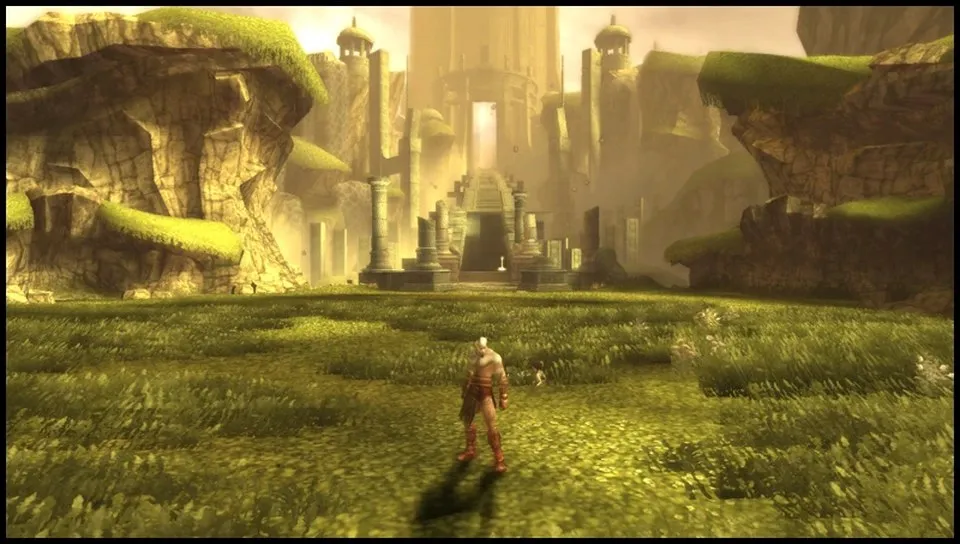
Helios is freed, the Sun Chariot flies into the sky once more, and the light scatters Morpheus's mist — the god of dreams retreats into the darkness to wait for another chance that may never come. The world is saved. And Kratos, exhausted after saving all of reality, falls from the Sun Chariot and lies unconscious on a cliff overlooking the sea — the familiar ending for a servant: no one thanks him.
The ending of Chains of Olympus is deliberately cold: Athena and Helios stand looking at the unconscious Kratos and decide to leave him there — while also taking back the Gauntlet of Zeus and the Sun Shield, the divine artifacts he had just used to save them. The reason is never spoken, but the player understands: Olympus never lets its servant keep anything that could kill a god. Kratos wakes on the cliff with empty hands, the nightmares of Calliope and Lysandra fully intact in his head, and ten years of service still stretching long ahead of him. He had just refused paradise to save the world — and the world's reward for him is to keep making him dream of the night he killed his own family. If anyone ever wondered why the Kratos at the start of God of War (2005) wants to throw himself into the Aegean Sea to end his life, Chains of Olympus is half the answer.
The Fates of the Characters After the Game Ends
Atlas remains chained at the Pillar of the World, bearing the whole world on his shoulders for years, until he reappears in God of War II — where he is both an old enemy and a reluctant ally, and his decision to help Kratos against Zeus stems in part from the debt of that sentence years before. Persephone dies at Kratos's hands, leaving the kingdom of the Underworld to Hades alone — Hades's resentment toward Kratos over his wife's death is one of the quiet driving forces of the later entries. Charon is killed, and the River Styx no longer has an official ferryman. Morpheus retreats and never appears directly in the series again — the god of dreams still waits in his darkness. Calliope remains in Elysium, safe — and loses her father a second time, this time conscious enough to watch him walk away. Kratos continues his ten years of service to the gods, heading straight toward the events of God of War (2005).
Common Misconceptions
Is Chains of Olympus just a PSP side story that's safe to skip?
No. This is the entry that establishes Atlas's punishment (pivotal to God of War II), the origin of Hades's grudge, and the only entry that shows Kratos once had a genuine chance at peace. Skipping it means skipping the chapter that explains most clearly why Kratos is so desperate in the main entries.
Did Kratos push Calliope away because he chose Olympus?
The exact opposite: he pushed his daughter away to save her (and every soul) from the collapse of Elysium, accepting that he must become a monster again so his child could go on living in paradise — even though that paradise no longer had a place for him.
Is Persephone a one-dimensional villain?
No. She is a mirror of Kratos himself: a victim of the gods, robbed of her life, who chooses revenge through destruction. The only difference is where the rage lands: she chose to erase everything, while he (at this point) still had something to protect.
Was Kratos losing to Charon a writing mistake?
No — that defeat is deliberate: he loses because Charon does not fight with brute strength alone, and the victory in the rematch comes from Zeus's weapon, not from Kratos suddenly "powering up."
Unanswered Theories
Did Athena know Persephone's plan in advance? The speed of Olympus's response, and the fact that they sent Kratos of all people — the only one with an extreme personal motive to enter Elysium and then come back out — leads many players to suspect the gods exploited even his pain as a tool: only a father who has just been reunited with his child could be forced into a choice cruel enough to restore the strength needed for the final battle. Where did Morpheus go? He is the only god in this conspiracy to escape all punishment and vanish from the series — some theories hold that his dream mist still hangs over later events in subtler ways, though the games never confirm it. How much of the ten years of service consisted of missions like this? Chains of Olympus and Ascension tell only two missions; the hundreds of others never told are the largest gap in the Greek era — and perhaps deliberately so: the series' message is that to Olympus, those years were not worth recording, because the one who carried them out was only a tool.
👤 Main characters
A quick introduction to the central characters of the story — portraits taken from the game itself.
Chains of Olympus shows Kratos at a point when he still believes — if only slightly — that serving Olympus will bring him peace. The mission to rescue Helios leads him to the cruelest choice in the entire series: paradise beside his daughter, or becoming a monster again to save that very paradise. He chooses to be the monster, and the price is losing Calliope a second time — this time in complete awareness.
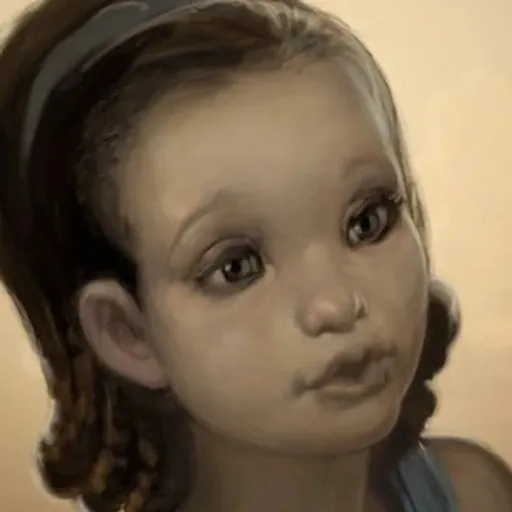
Calliope is the most human part left in Kratos. In Elysium, she still plays innocently and calls him father as if that horrifying night had never happened — and it is precisely that innocence that turns the reunion of father and daughter into the most painful scene in the series: to save her, Kratos must push her away, watch her cry and clutch at his hand, then walk off without being allowed to explain.
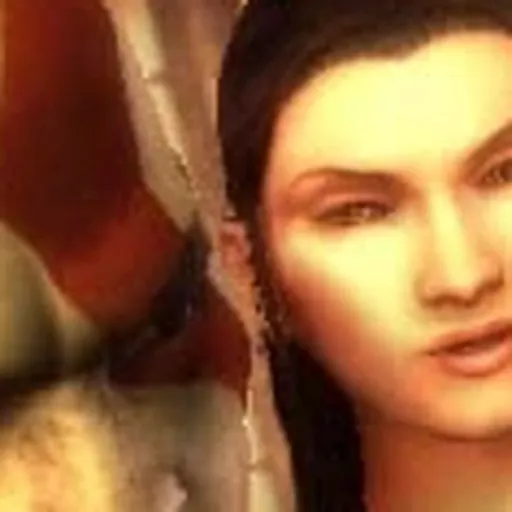
Persephone is Kratos's dark mirror: both are victims robbed of their lives by the gods, both carry a resentment that never fades. The difference is that she chooses to erase all of reality — gods, humans, souls, everything — as a final release for herself. Her plan fails, but the question she poses does not: does a world built on such injustice deserve to exist?
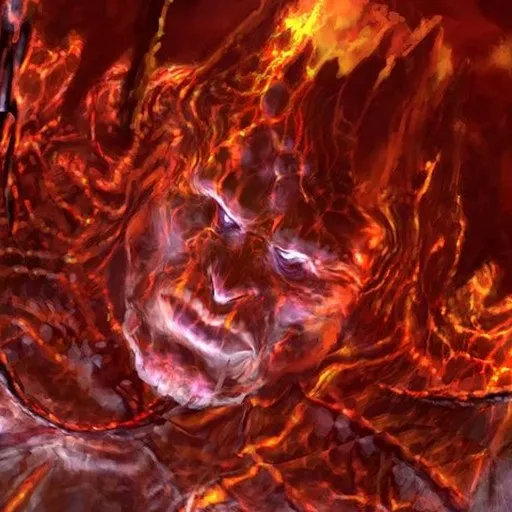
Atlas is proof of the cruelty in young Kratos's "justice": to save the world, he sentences a living being to bear the entire earth on his shoulders forever, unable to die. Years later in God of War II, Atlas will recall that debt — and the strange mix of hatred and understanding between two prisoners of the gods makes him one of the deepest supporting characters of the Greek era.
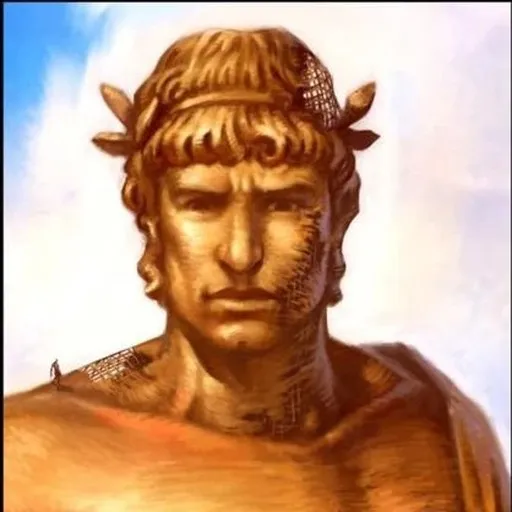
The God of the Sun, kidnapped by Atlas and drained of his power to bring the Pillar of the World down. Helios's disappearance sinks the whole world into darkness and Morpheus's sleep — and the mission to rescue him is the first task that brings Kratos face to face with Persephone's conspiracy.
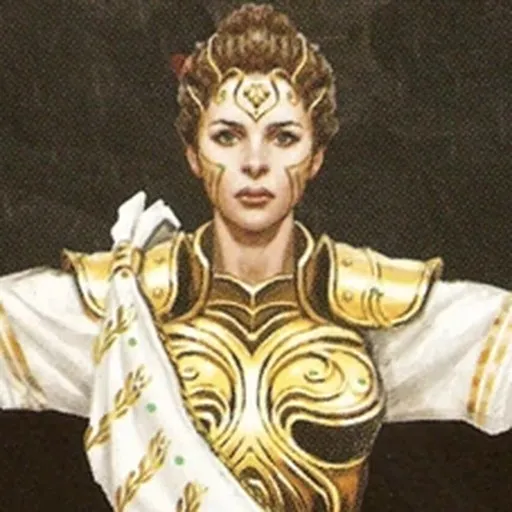
Athena in Chains of Olympus keeps the calm bearing of a strategist: when the world is in danger, she does not act herself but sends the one tool that can get the job done. The cold ending — when she and Helios take back the divine artifacts from the unconscious Kratos and leave him lying on the cliff — shows the Ghost of Sparta's true standing in Olympus's eyes most clearly: prized as a weapon, and only a weapon.
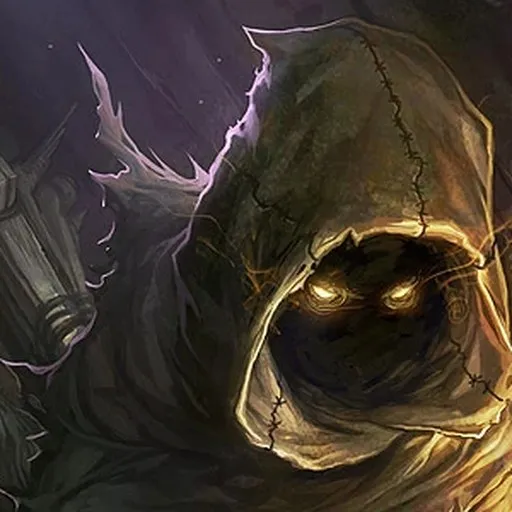
Charon represents an order older than Olympus itself: the dead must be ferried across the river; the living are not permitted. His refusal and his defeat of Kratos are not arrogance — he is a gatekeeper doing the duty he has performed for millennia. His death at Kratos's hands in the rematch is one of the first primordial orders the Ghost of Sparta breaks on his journey.
📚 Read the God of War series in story order
- God of War: Ascension Story Explained: Six Months After the Tragedy and the Three Goddesses of Vengeance
- God of War: Chains of Olympus Story Explained: The Day the Sun Vanished and Kratos's Cruelest Choice — you are reading this one
- God of War (2005) Story Explained: Ten Years of Nightmares and the Price of Killing a God
- God of War: Ghost of Sparta Story Explained: The Forgotten Brother and the Prophecy of the Marked Warrior
- God of War (2018) Story Explained: A Father and Son Scatter the Ashes — and the Name Loki


