God of War (2018) Story Explained: A Father and Son Scatter the Ashes — and the Name Loki

📋 Quick facts
- Game
- God of War
- Developer
- Santa Monica Studio
- Release year
- 2018 (April 20, 2018)
- Original platform
- PlayStation 4
- Genre
- Action-Adventure
- Director
- Cory Barlog
- Music
- Bear McCreary
- Notable feature
- The entire game is one continuous shot without a single camera cut; it opens Kratos's Norse era; won Game of the Year at The Game Awards 2018
- Next entry
- God of War Ragnarök (2022)
There is a god who buried his past beneath the floor of his house. Kratos — the Ghost of Sparta, the man who once slaughtered all of Olympus single-handedly — now lives in hiding deep in the forests of the Norse lands, an ordinary husband and father. But when his wife, Faye, dies, her final wish pulls father and son into a journey that is anything but peaceful: carry her ashes to the highest peak in all the realms and scatter them from there.
It should have been a simple farewell trip. But this land belongs to Odin's Aesir gods, and the woman who just died was no mortal, whatever her son believed. God of War (2018) is the story of a father who knows no way to love his child except through sternness, a boy who does not know who he is, and the prophecies of the giants that had written down their every step in advance — including the very last one.
⚠️ Spoiler warning: This article retells the full story of God of War (2018), including the true identities of Faye and Atreus, the ending in Jötunheim and the meaning of the final prophecy mural.
📌 Quick summary: Kratos, who once slaughtered all of Olympus, now lives in seclusion in the Norse lands with his son Atreus. After his wife Faye dies, father and son set out to scatter her ashes from the highest peak in the realms, as her final wish demanded. But Odin's Aesir gods have their eyes on them, and young Atreus carries an identity he himself does not yet know: the name the giants call him is Loki.
Chapter 1: The pyre in the forest and the Stranger who feels no pain
Faye was laid on a pyre in the snow-covered forest, her hands clasping the knife she had passed on to her son. Before she died, she asked Kratos to cut down the trees marked with her golden handprint around their home. He did as she asked, not knowing those trees were the pillars of a vast concealment spell: the moment the last tree fell, the veil that had protected his family for years dissolved, and the Norse gods saw, for the first time, the stranger living in their forest.
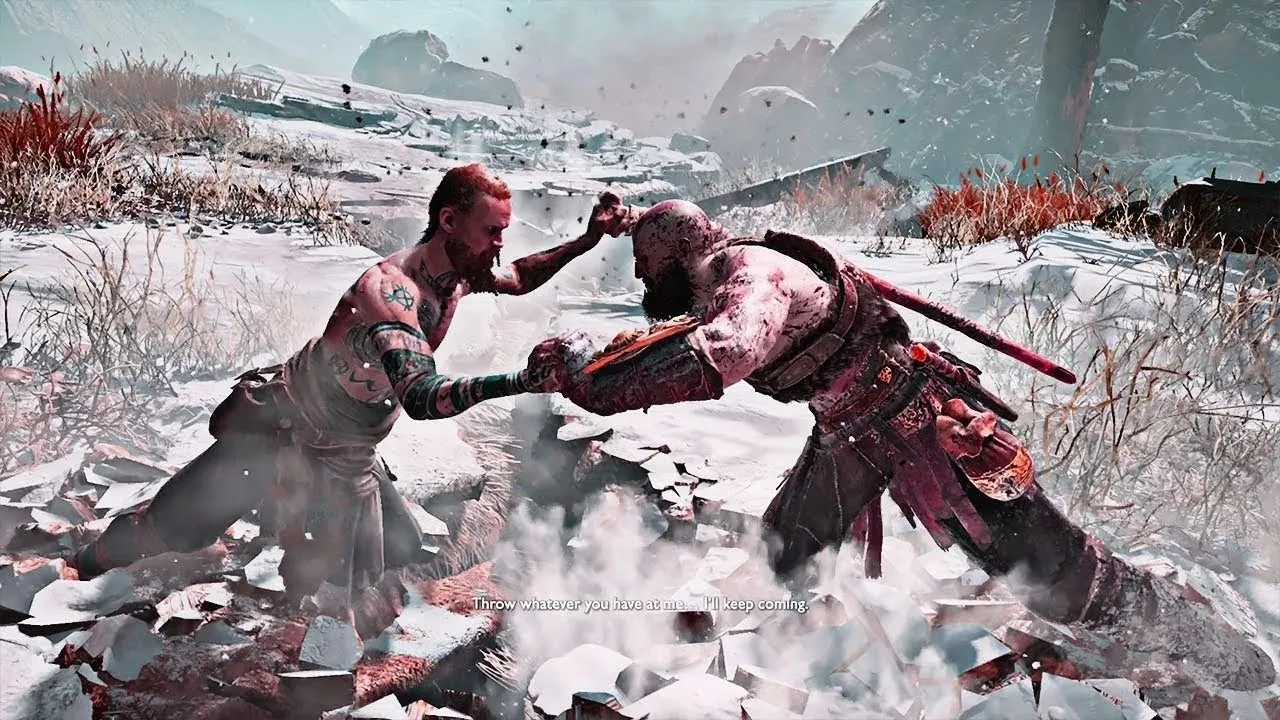
Kratos tested his son with a hunt: Atreus missed the deer in his haste, and his father concluded the boy was not ready for the journey. But the choice was taken from them that very afternoon, when a scrawny, tattooed man knocked on their door and called Kratos the one he was looking for — a "guardian". The Stranger was much smaller than Kratos, but he felt no pain: every blow was meaningless, wounds closed in the blink of an eye, and when Kratos finally snapped his neck, he simply got back up as if nothing had happened. The battle tore apart a whole corner of the forest and ripped the roof off their home. Kratos understood this place was no longer safe. Ready or not, father and son had to leave at once — carrying Faye's ashes in a small leather pouch, toward the towering mountain in the distance.
Chapter 2: The Lake of Nine, the World Serpent and the talking head
The road led father and son to the Lake of Nine, where the receding water had revealed a giant bridge and the temple of Týr. When Kratos blew the horn, the lake stirred: Jörmungandr, the World Serpent, rose up — a creature so vast its body wraps around the entire world. Strangely, the serpent spoke an ancient tongue that only one person they were about to meet could understand, and as Atreus translated, it said it recognized them and wanted to help. On the lake's shore, father and son met Brok and Sindri, the two Huldra dwarf brothers, master smiths. They were the ones who had forged the Leviathan Axe — and they had forged it for Laufey, a giant warrior woman. That name was Faye. For the first time, the pieces of the "ordinary" wife and mother began to look anything but ordinary.
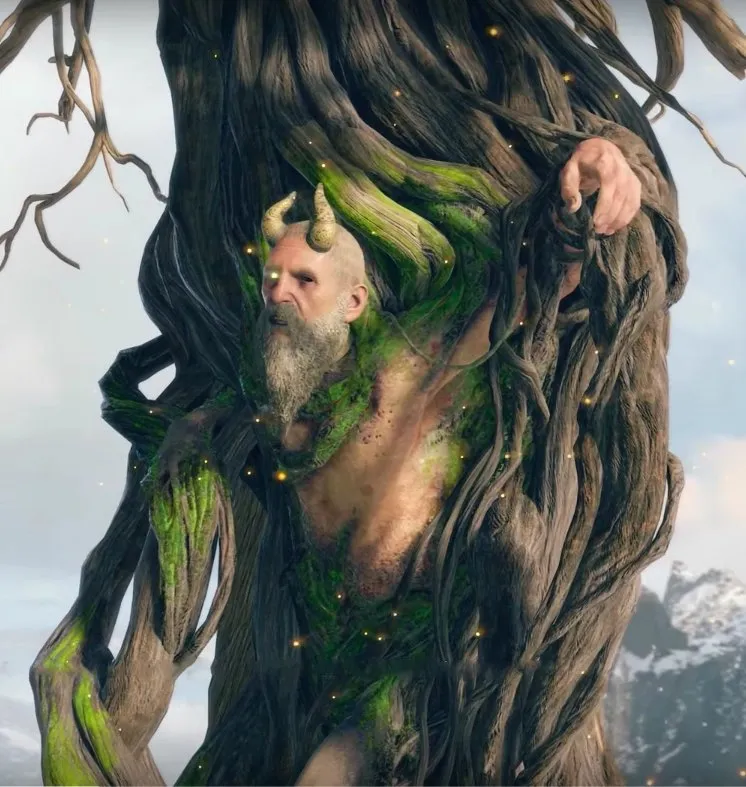
The mountain was blocked by the Black Breath, a deadly wall of magical mist. A witch in the woods — who healed her boar with her bare hands and knew far too much about the gods — helped them for a stretch, then warned them: the gods had their eyes on them. Atop the snowy peak, father and son found Mimir, who called himself the smartest man alive, his limbs hacked off by Odin and his body imprisoned in the trunk of the World Tree, tortured daily. Mimir offered a trade: cut off his head, take it to the witch to be revived, and he would guide them. The head, brought back to life at Kratos's hip (after the witch nearly spat in his face), became the journey's chattiest companion. Mimir told them the Black Breath could only be dispelled by the Light of Alfheim — and that Odin craved something in Jötunheim, the land of the giants, so badly he had sealed off every road leading there.
Chapter 3: Alfheim — the elves' eternal war
Through the Bifröst bridge in Týr's temple, father and son set foot in Alfheim, realm of the elves — and walked straight into a war with no end. The Light Elves and Dark Elves had slaughtered each other for countless generations over control of the Light, the energy that flows between the realms. To take the Light and pierce the Black Breath, father and son had to fight through the Dark Elf army occupying the temple, and Kratos had to step into the pillar of Light itself.
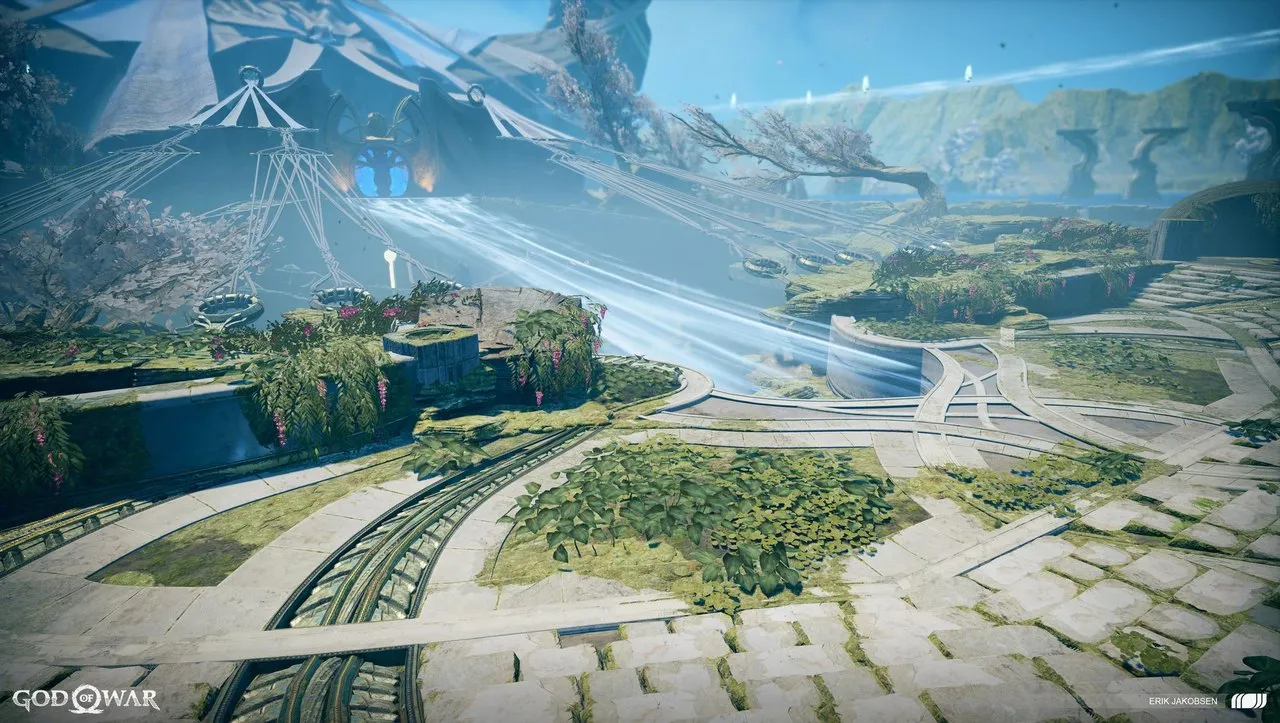
Inside the Light, Kratos thought only a few moments had passed. But when Atreus pulled his father out, all around them lay the corpses of Dark Elves the boy had killed alone while waiting — time inside the Light flows very differently from outside. Atreus resented his father for abandoning him; Kratos, as always, answered with silence and discipline. They killed the dying Dark Elf king Svartáljör (who swore they had chosen the wrong side), charged the Light into Atreus's bow and returned to Midgard. The Black Breath dissolved. But the rift between father and son did not: Atreus grew ever more bitter at a father who never told him the truth about anything, while Kratos still hid the greatest truth of all — that the blood of gods ran in both of them.
Chapter 4: The corpse of Thamur and the two sons of Thor
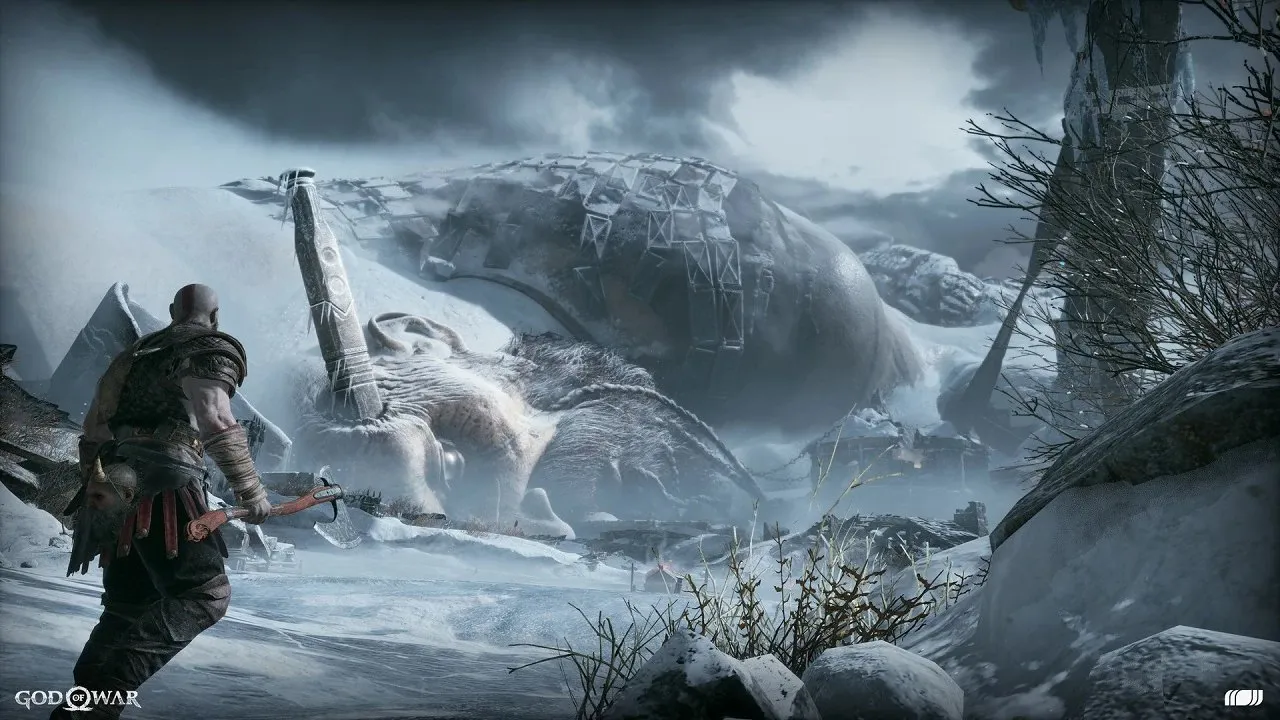
On the road up the mountain, father and son passed the corpse of Thamur, the giant stonemason who once tried to build a great wall around Jötunheim, then fled after a quarrel with his son, only to be killed by Thor — the Aesir god of thunder who had wiped out nearly the entire giant race. Thamur's frozen corpse still clutched its giant chisel, the very thing they needed to break through magical ice on their journey. It was here, too, that Thor's two sons appeared: Magni and Modi, sent by Odin to hunt father and son down. In the battle beneath the giant's corpse, Kratos killed Magni. Modi fled in disgrace — one of Thor's own sons had died at the hands of a stranger, something that had never happened to the Aesir family before.
But victory demanded its price immediately afterward. In Týr's vault, Modi ambushed them: he knocked down a restrained Kratos and turned to taunt Atreus about his dead mother. The rage inside the boy exploded beyond all control — Atreus drew his knife, drove it straight into Modi's neck and kicked him down into the abyss. Then he collapsed, coughing blood, burning with fever and delirium. The witch of the woods — hiding nothing now — diagnosed the strange illness: this was a young god destroying himself because he believed he was mortal; Atreus's divine nature was rebelling against that belief. The cure lay in a place no one wanted to go: the heart of the Bridge Keeper in Helheim, realm of the dead. Before leaving, Kratos said he had to go home to fetch something he had buried long ago.
Chapter 5: The Blades of Chaos and the heart of Helheim
Beneath the floor of the wooden house, Kratos dug up an old cloth bundle. Inside were the Blades of Chaos — the chained blades that had followed him through the slaughter in Greece, the weapons he had sworn he would never take up again. The phantom of Athena, the goddess who once guided him, appeared to mock him: "You cannot change. You will always be a monster." Kratos answered with the words of a man who had gone too far to turn back: "I know. But I am not your monster anymore." He wrapped the chains around his forearms — where the burns from long ago still scarred his skin — and rowed to Helheim, a realm of the dead so cold that even ordinary fire dies there, where the Leviathan Axe was useless and only the fire of Chaos could burn.
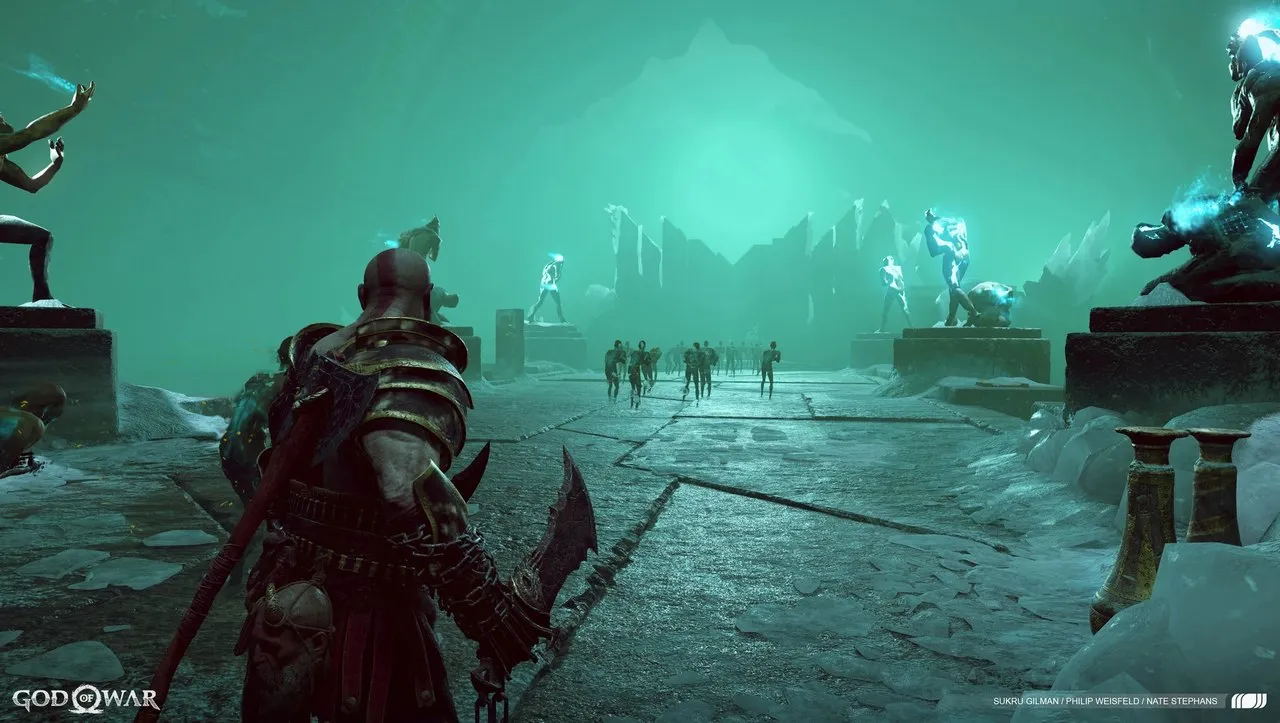
Kratos killed the Bridge Keeper and tore out its heart. But Helheim has its own way of torturing: it forces the dead to face the thing that haunts them most. On the Bridge of the Damned, Kratos saw a vision of Zeus — the father he had murdered — strangling him. Mimir, watching from his hip, finally pieced it all together: this taciturn guest was the Ghost of Sparta, the man who destroyed an entire pantheon in the south. The cure worked, and Atreus woke. And this time, Kratos did not hide it: "We are gods." But hearing the truth changed Atreus — for the worse. He became arrogant, contemptuous of mortals, dismissive of the very friends who had helped them, convinced that a god could do whatever he pleased. The father who had just opened his heart with a single sentence now had to watch his son slide toward the thing he hated most: the image of his own younger self.
Chapter 6: The highest peak is not in Midgard
When father and son finally stood atop the mountain of Midgard, Mimir delivered the bitter news: this was not the highest peak in the realms. The highest peak stood in Jötunheim — and the gate to it had been sealed for a hundred years. At that very moment, the Stranger returned. By now they knew his name: Baldur, son of Odin. The battle on the back of Baldur's dragon shattered the statue guarding the Jötunheim gate, and they all plunged straight down into Helheim. In the realm of the dead, it was Baldur's turn to be tortured by his past: a vision replayed the quarrel between him and his mother — the witch of the woods was Freya, Baldur's mother. Because of a prophecy that her son would die a meaningless death, Freya had cast a Vanir spell on Baldur that made him immortal and invulnerable — but the price was the loss of all sensation: no pain, no cold, no taste, no pleasure, nothing, for a hundred years. Baldur begged his mother to lift the curse; she refused, because lifting it would mean her son could die. He swore he would never forgive her.
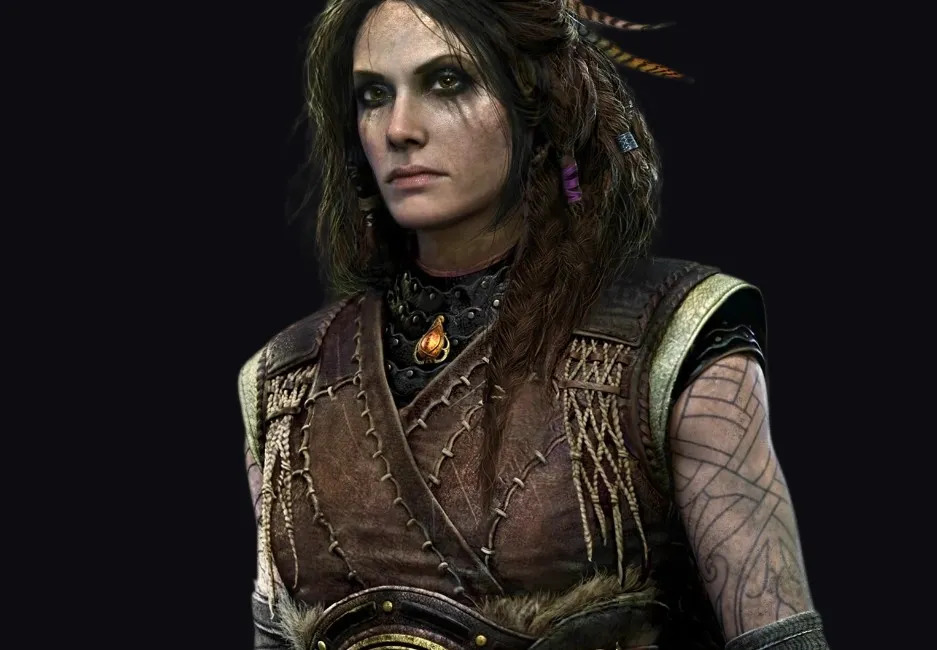
Father and son escaped Helheim aboard the flying ship of the dead, and Atreus — having seen the consequences of his arrogance and heard his father tell more of his past — began to learn remorse: "We have to be better than that." Back in Midgard, they found what Týr had left in Odin's secret chamber: the Unity Stone and clues to the travel rune to Jötunheim hidden in Týr's vault. In that vault, too, stood an ancient Greek vase painted with a warrior wielding twin chained blades — Týr, the Norse god of war who had traveled through many civilizations, had known of Kratos long before he ever set foot in these lands. Everything was ready to open the gate to the land of the giants. Only one man was still waiting for them at the temple.
Chapter 7: The snapped neck and the name Loki
Baldur attacked just as the gate to Jötunheim was about to open. Freya rushed in to stop them, binding both fighters with vines and reanimating the giant corpse of Thamur to force the battle to end — she would do anything to protect her son, even as he turned his hands to her throat and she still spread her arms in acceptance: "For you, I accept everything." Atreus threw himself between them. Baldur's fist came down — and struck the shard of a mistletoe arrowhead on Atreus's strap (Sindri's gift that Kratos had once confiscated, of which only a tiny piece remained, used to stitch the strap). Mistletoe — the most ordinary of plants — was the one blind spot the Vanir spell of Freya had never accounted for. The curse shattered. Baldur stood in the snow and, for the first time in a hundred years, felt the cold, felt pain — and he laughed like a madman with joy: "I can feel everything."
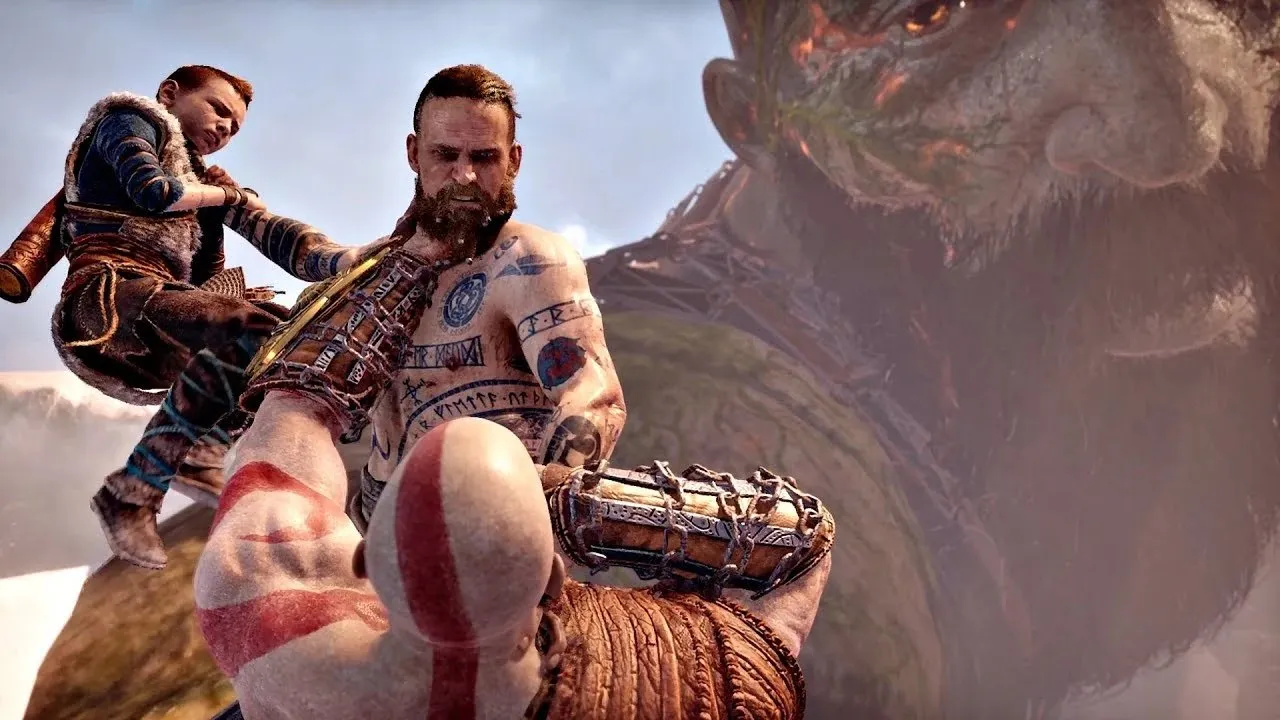
Even so, Baldur still chose revenge on his mother. Kratos was forced to intervene to the very end. After the fiercest battle of the journey, he snapped Baldur's neck a second time — and this time it was forever. "The cycle of violence ends here," he said to the corpse. "We must be better." Freya cradled her son's body, and grief turned to curses: she revealed to Atreus that Kratos too was a man who kept secrets, swore she would have her revenge at any cost, then carried her son away into the snow. The gate to Jötunheim finally opened. But the land of the giants held no living soul anymore: across its valleys lay the corpses of the last giants, who had returned home to die. In their temple, father and son found the enormous prophecy mural — and the entire journey they had just lived was already painted upon it, by Faye herself.
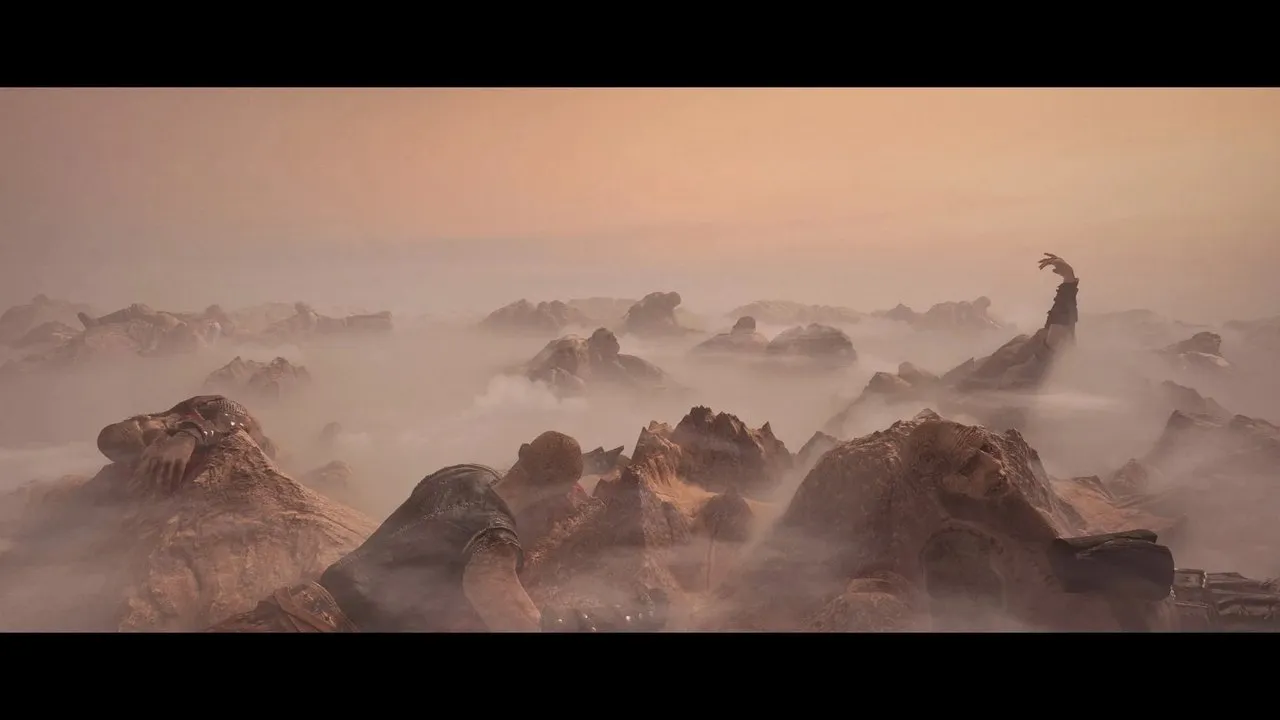
Faye's real name was Laufey, "Laufey the Just" — the last giant to remain in Midgard to protect her kind, and the one who had single-handedly planned this entire journey: she knew her death would bring her husband and son here, forcing father and son to travel together, understand each other and grow. One final panel — which only Kratos saw, and quietly covered — showed him dying in Atreus's arms. On the highest peak in all the realms, in a valley full of giant corpses, Atreus opened the pouch of his mother's ashes and spoke the last secret: "Mother said the giants named me Loki." Laufey's ashes flew away on the snowy wind. On the road home, Mimir realized winter had come unnaturally early — Fimbulwinter, the three-year winter that heralds Ragnarök, had begun ahead of schedule. Baldur's death had started the countdown to the end of the world.
The fates of the characters
Kratos & Atreus: they complete Faye's final wish and return home, truly father and son for the first time. In a dream a few years later (the game's hidden ending), a man holding a hammer of thunder stands at their door in the middle of a storm — Thor has come, opening the way to God of War Ragnarök (2022).
Freya: she loses her son and carries away a hatred for Kratos and a vow of revenge. She remains bound by Odin's curse to Midgard — unable to leave this realm, and unable to harm any living creature with her own hands.
Mimir: he goes on living as the advising head at Kratos's hip — and as father and son's first true friend.
Brok & Sindri: the two smith brothers reconcile after many years (thanks to the Leviathan Axe and this journey) and continue to help father and son. The heartbreaking detail about Brok — that he once died and was brought back by Sindri missing a piece of his soul — is only confessed by Sindri in Ragnarök.
Common misconceptions
Did Baldur hunt Kratos out of hatred?
No. Baldur was sent by Odin to find a giant — the "guardian" Odin believed was the key to Jötunheim. He mistook Kratos for that giant; Odin's real target was Faye/Laufey and the road to the land of the giants.
Are Freya and Frigg two different people?
No. In the game, Mimir reveals that Frigg is simply the name Odin used for Freya — a way to erase her identity as a Vanir goddess after their political marriage collapsed, turning her into part of the Aesir and cutting off her Vanir roots in the eyes of posterity.
Was it a coincidence that the World Serpent recognized Atreus?
No. Jörmungandr is Loki's child — that is, Atreus's own son — come from the future: during Ragnarök, Thor will strike it so hard that it is hurled backward through time, to before the game even begins. That is why it recognized its father.
Was the mistletoe that broke Baldur's curse an invented plot device?
No. This detail comes straight from Norse mythology: in the myth, Baldur also dies by a sprig of mistletoe — the one thing his mother, the goddess Frigg, had overlooked when she made all things swear never to harm her son.
Theories & unanswered questions
The final panel: the mural in Jötunheim shows Kratos dying in Atreus's arms. But the giants' mural had already "erred" on one important detail — in the original mural, Atreus's companion on the final leg was not Kratos but someone else. Does the prophecy speak of a real death, or of a "death" of the old man inside Kratos? Ragnarök answered in a way few expected.
Who blew the horn that called the World Serpent? While Atreus lay delirious with illness, a horn sounded, summoning Jörmungandr — and Mimir insisted he did not know who it was. The game never explains it. The most popular theory: a character from the future, just like the serpent itself.
How much did Faye know in advance? She laid out the whole journey, down to choosing which trees to cut. But did she know about the final panel — and was her hiding it (just as Kratos hid the truth from his son) cruelty, or her final gift: the right to decide one's own fate instead of living by prophecy?
👤 Main characters
A quick introduction to the central characters of the story — portraits taken from the game itself.
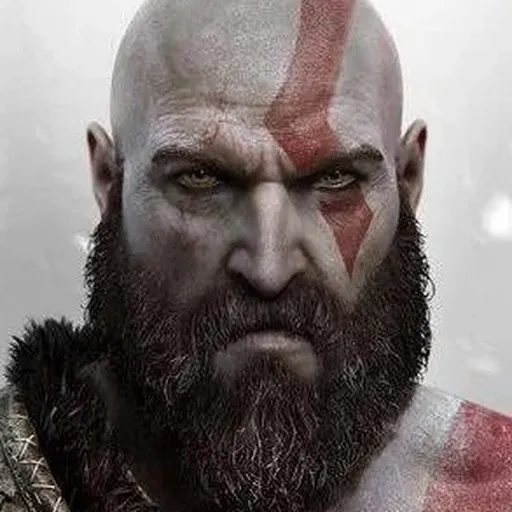
The man who slaughtered all of Olympus and then fled to the Norse lands to quietly start his life over. He teaches his son with iron discipline and clipped, short sentences, keeping his bloody past buried — until the past comes knocking at his own front door.
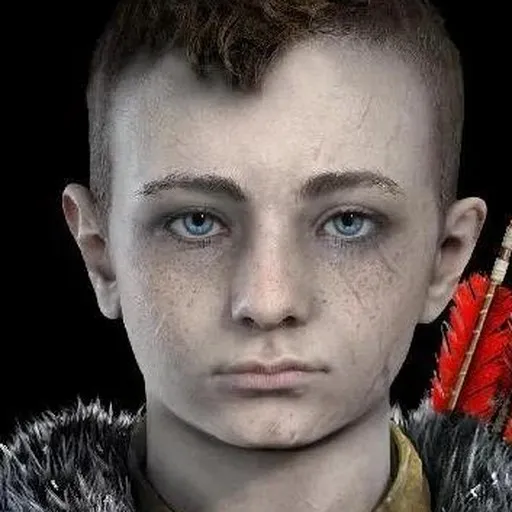
A boy raised in the woods who knew only his mother as his whole world and his father as a distant, strict man. The ash-scattering journey forces him to face the truth that he is a god — and the name his mother's people gave him before he was even born.
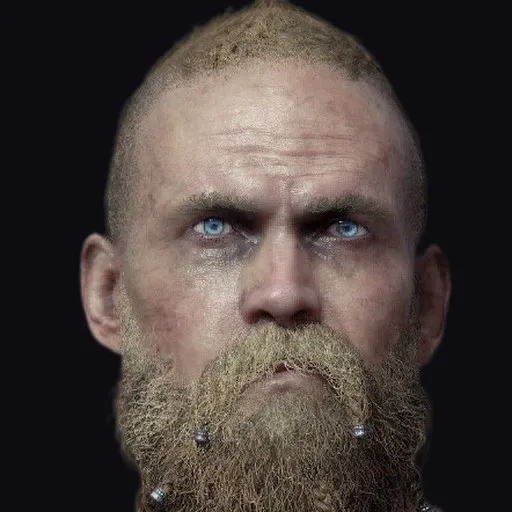
Protected by his mother's spell at any cost, Baldur has lived a century in absolute numbness — no pain, but no pleasure either. He hunts father and son on Odin's orders, but what he craves most is simply to feel something once more, even if the price is death.
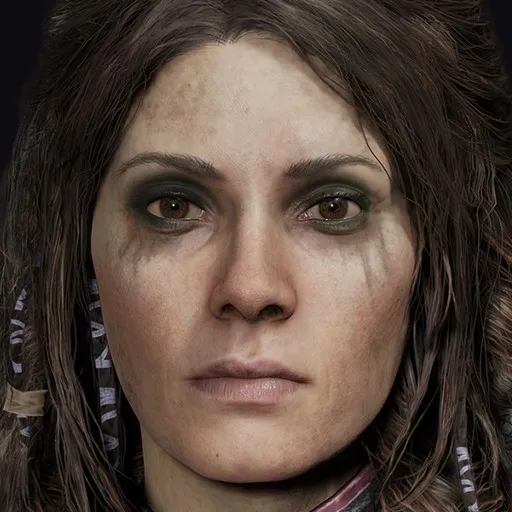
A Vanir goddess who married Odin for peace and was exiled when the marriage fell apart. Because of a prophecy that her son would die a meaningless death, she cast a spell of immortality on Baldur — turning a mother's love into the greatest tragedy of all three of them.
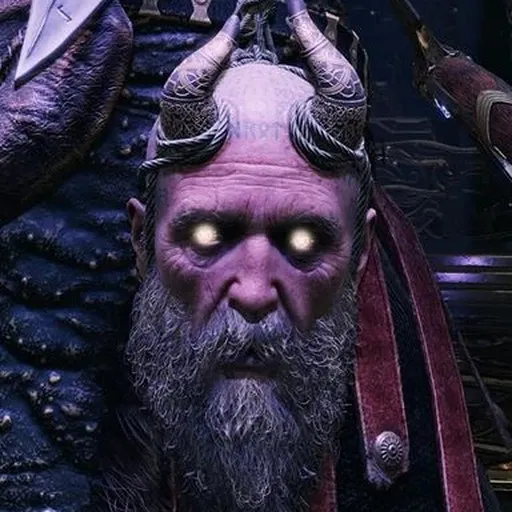
Imprisoned by Odin in the World Tree and tortured every day for knowing too many of the Aesir's secrets. Freed by father and son in the most unusual way possible, Mimir becomes a walking encyclopedia — and this family's first true friend.
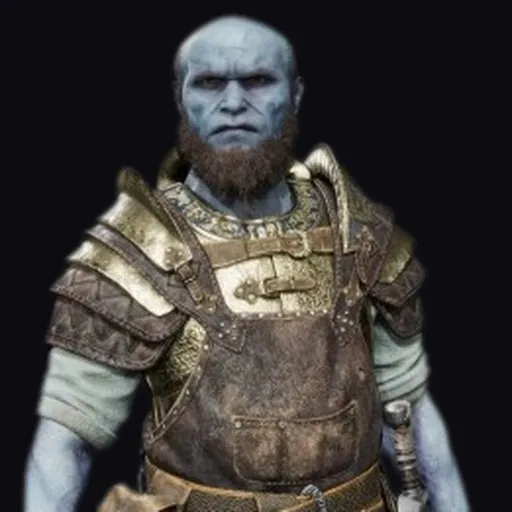
- Occupation
- Blacksmith
- Trait
- Blue skin from a lifetime of handling silver with his bare hands
- Masterpieces
- The Leviathan Axe, the hammer Mjölnir
One of the two legendary Huldra blacksmith brothers — the men who forged both Thor's hammer Mjölnir and Faye's Leviathan Axe. Brok is foul-mouthed and hot-tempered, the complete opposite of his brother Sindri, but he is the first to recognize the worth of Kratos and Atreus and quietly helps father and son throughout the journey.
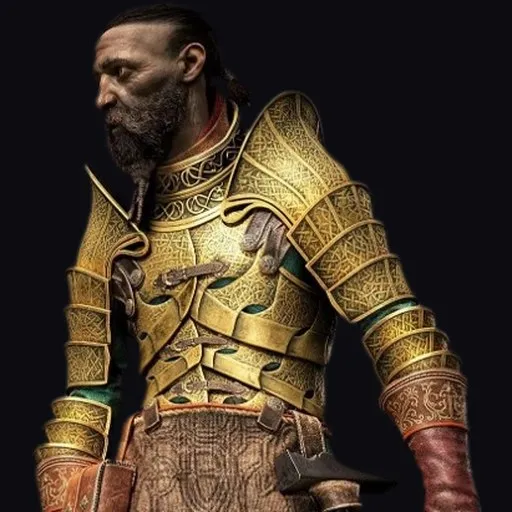
- Occupation
- Blacksmith
- Trait
- Obsessively clean, terrified of germs
- Ability
- Walks between realms, appearing and vanishing at will
The younger half of the Huldra brothers, a gifted smith who can step between realms and pop in and out behind his customers. Sindri is polite, gentle and obsessed with cleanliness — the total opposite of his brother Brok — and he crafts the magical mistletoe arrows and countless life-saving pieces of gear for Kratos and his son.
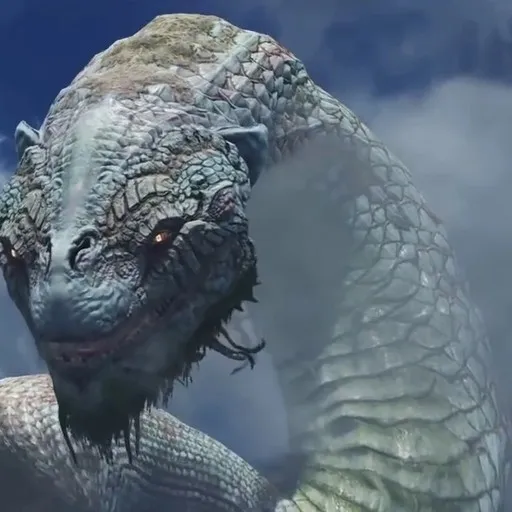
The colossal serpent coiled around the world, asleep beneath the Lake of Nine. It recognizes Atreus from their very first meeting — because in the future, it is Loki's own child, and its battle with Thor will be so violent it tears time itself apart.
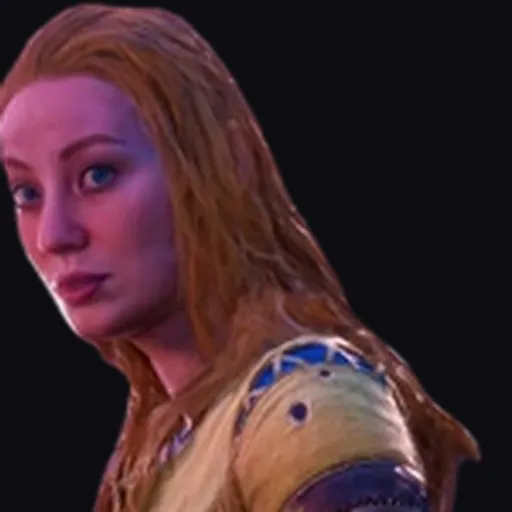
The last giant who stayed in Midgard to protect her people, defying her kin's call to retreat. She loved and married Kratos, gave birth to Atreus, and planned every step of the ash-scattering journey — so that husband and son would be forced to travel together until they truly understood each other.
📚 Read the God of War series in story order
- God of War: Ascension Story Explained: Six Months After the Tragedy and the Three Goddesses of Vengeance
- God of War: Chains of Olympus Story Explained: The Day the Sun Vanished and Kratos's Cruelest Choice
- God of War (2005) Story Explained: Ten Years of Nightmares and the Price of Killing a God
- God of War: Ghost of Sparta Story Explained: The Forgotten Brother and the Prophecy of the Marked Warrior
- God of War (2018) Story Explained: A Father and Son Scatter the Ashes — and the Name Loki — you are reading this one


