Resident Evil 5 Story Explained: Burning Africa and the End of Albert Wesker

📋 Quick facts
- Game
- Resident Evil 5 (Japanese title: Biohazard 5)
- Developer
- Capcom
- Release year
- 2009
- Original platform
- PlayStation 3, Xbox 360
- Genre
- Survival Horror (action-oriented)
- Director
- Yasuhiro Anpo, Kenichi Ueda (producer: Jun Takeuchi)
- Music
- Kota Suzuki
- Notable feature
- The first mainline entry built around 2-player co-op (Chris & Sheva); the finale of the Albert Wesker/Umbrella saga that began in 1998
- Previous / Next entry
- Resident Evil 4 (2005) / Resident Evil 6 (2012)
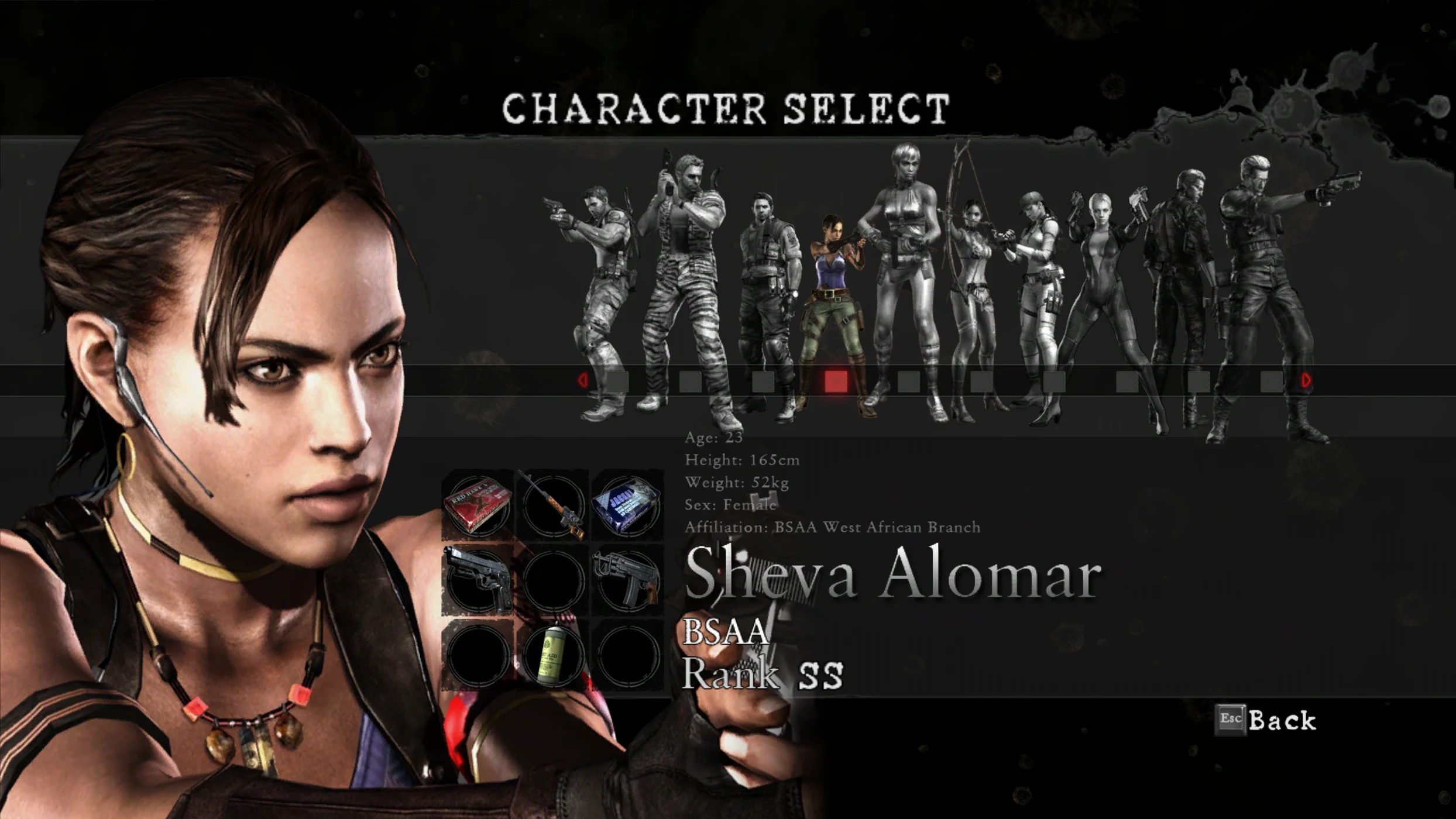
Eleven years after the night of horror at the Spencer Mansion, the Umbrella Corporation has collapsed — but its viruses have not. In 2009, Chris Redfield, former S.T.A.R.S. member turned agent of the BSAA (Bioterrorism Security Assessment Alliance), sets foot in Kijuju, an autonomous zone in Africa, to stop a bioweapon deal. The one sent to meet him there is Sheva Alomar, an agent of the BSAA's West African branch — the partner who will walk the entire journey with him, shoulder to shoulder in the most literal sense: Resident Evil 5 is the first mainline entry designed around two-player co-op.
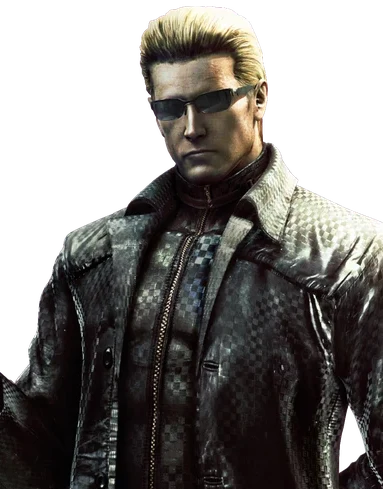
But the Kijuju deal is only the surface. Behind the arms dealer Ricardo Irving and the pharmaceutical giant Tricell stands a name Chris thought long buried: Albert Wesker — the traitorous S.T.A.R.S. captain, believed dead at the Spencer Mansion in 1998. Wesker has returned with the final weapon of his life: the Uroboros virus, capable of "forcibly evolving" all of humanity — with only the "worthy" allowed to survive. This article tells the full story across the game's six chapters, from the markets of Kijuju to the mouth of the volcano where Wesker's saga ends forever.
📌 Quick summary: In 2009, BSAA agent Chris Redfield arrives in Kijuju, Africa with his partner Sheva Alomar to capture arms dealer Ricardo Irving, only to discover Irving is a pawn of the Tricell corporation and Albert Wesker — the enemy believed dead since 1998. Wesker uses the Uroboros virus (engineered from the Progenitor virus and antibodies from Jill Valentine's body) to "forcibly evolve" humanity by raining Uroboros missiles across the globe from a stealth bomber. Chris and Sheva free Jill from Wesker's control, inject him with an overdose of the serum that stabilizes his virus, then finish the Uroboros-mutated Wesker inside a volcano with two rockets — closing the 11-year Wesker/Umbrella saga.
Kijuju, Africa: the fateful meeting of Chris and Sheva
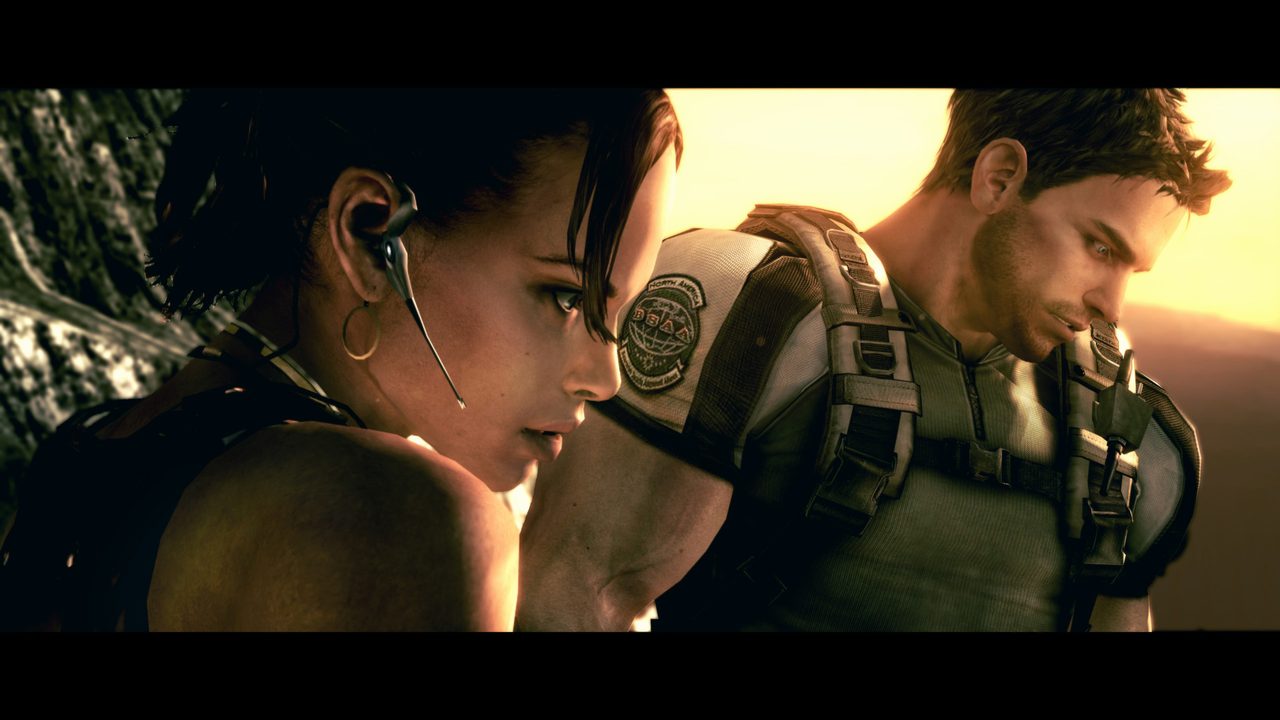
Chris arrives in Kijuju alone under orders from the BSAA's North American branch: a source reports that Ricardo Irving, the notorious arms dealer, is about to close a bioweapon deal in the town marketplace. Assigned to receive and support him is Sheva Alomar, 23, an agent of the BSAA's West African branch — born and raised on this very land, orphaned as a child in a factory accident and raised by her uncle before joining the anti-bioweapon force. Their meeting is brief and professional — and immediately swallowed by chaos.
Before the deal, Chris and Sheva meet their BSAA contact at a butcher shop in the marketplace: Reynard Fisher, the infiltration agent who has been watching Kijuju for months. Fisher arms them and warns about an "Uroboros Project" the locals are whispering about — something BSAA brass still dismisses as rumor. The deal goes down in a warehouse: Irving sells his "goods" to a group of masked buyers, and the merchandise is tested on the spot on a bound victim. A hooded man injects the victim with a strange virus — and his body begins to swell and split, black tentacles erupting from his flesh: Uroboros. Chris and Sheva are forced to put down the monster as Irving slips away. From that moment, Chris understands this is no ordinary bioweapon — and the name behind it makes his blood run cold as it surfaces. Sheva, as a native, realizes something else terrifying: the Kijuju residents who went missing recently didn't leave — they became "raw material" for trials like this one.
The first chapter also introduces the series' new signature enemy: the Majini. Unlike Raccoon's mindless zombies, the Majini are living humans infected with Plagas — the parasites from the Spanish village nightmare of Resident Evil 4 — so they keep their intelligence: they talk, use guns, drive vehicles, set traps and attack in coordinated packs. A whole town where every civilian is Majini: that is the new kind of nightmare Chris and Sheva must cut through.
Leaving the warehouse, the two reach the central square, where hundreds of Majini have gathered for a "public assembly" — and witness a savage sight: the man dragged to the scaffold is Reynard Fisher himself, the contact who just armed them. The axe-wielding giant Executioner Majini beheads him before the cheering crowd. An entire community fully brainwashed, turning ritual murder into a festival — and Chris understands there is nothing left to save in Kijuju, only the mastermind to hunt down.
The burning savannah: Popokarimu and the giant Ndesu
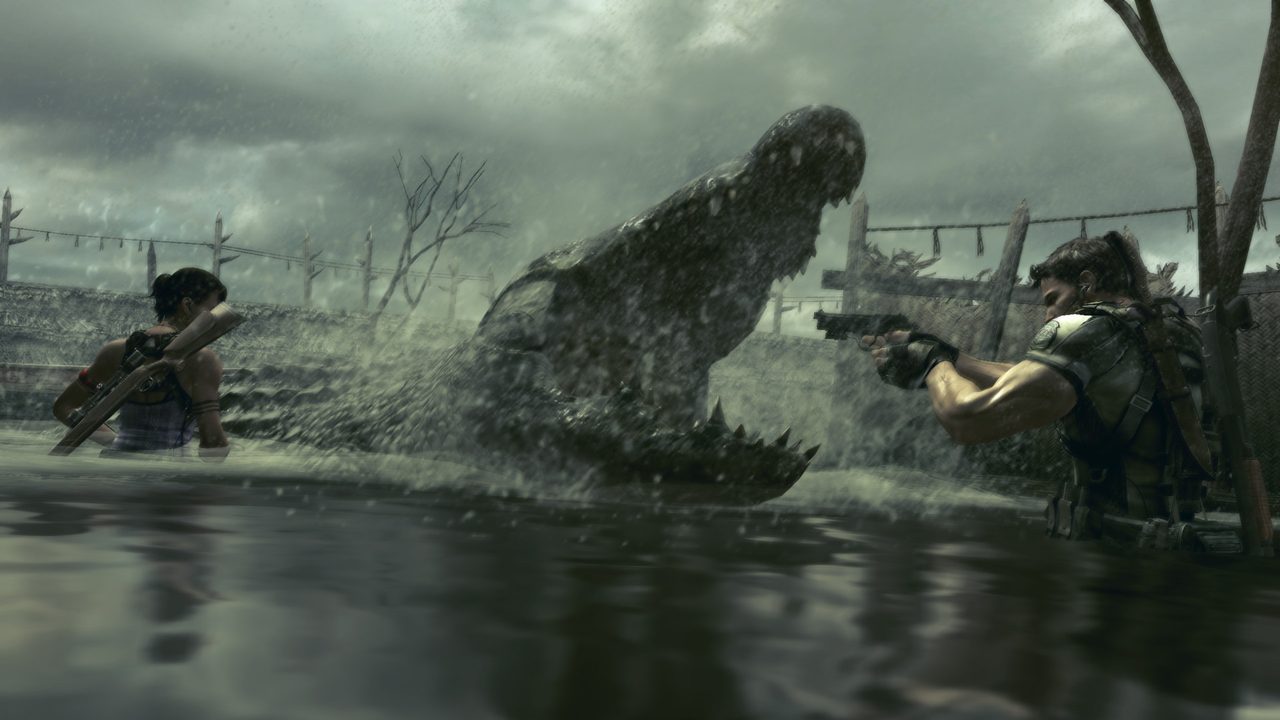
Hunting Irving takes the two through the port storage facility and the train station, where armed Majini ambush at every dark corner. Cornered, Irving plays his trump card: Popokarimu — the giant bat B.O.W. built by Tricell by infecting bats with Plagas, originally the "merchandise" meant for sale in the Kijuju deal — released from a container truck to block the road. Chris and Sheva shoot the creature down, and both monster and truck plunge off a cliff in flames. But Irving slips away again, and the chase moves onto the Savannah: the BSAA's Delta Team uses the armored Gambit vehicle to run down Irving's convoy amid Molotov-throwing motorcycle Majini.
Just then the ground trembles — Ndesu, the giant Majini (an El Gigante variant hosting multiple Plagas), appears and attacks the convoy. The battle costs Delta Team dearly, but Chris and Sheva bring the giant down with the Gambit's firepower. Irving escapes once more — this time toward the marshlands and the oil field. But before leaving, he drops a line that stops Chris cold: the true mastermind is someone Chris "thought died long ago."
The marsh, the execution ground and Irving's ship
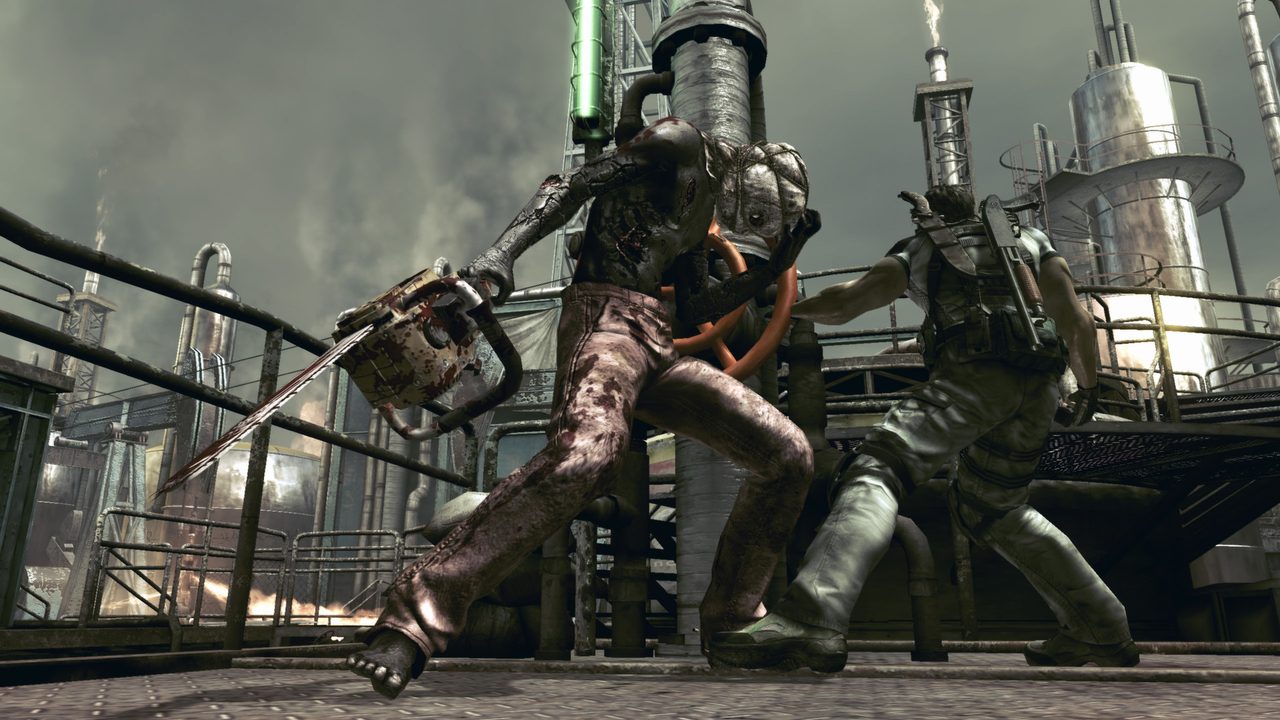
The two pilot a boat into the marshlands, reaching the village of the Ndipaya tribe — where Irving once tricked the villagers into injecting Type 3 Plagas disguised as "vaccine." Past the trap-filled Execution Ground, they reach Tricell's oil refinery: rows of tents bearing the Tricell logo, documents recording Plaga experiments on the very tribesmen — undeniable proof of the pharmaceutical giant's crimes. Irving blows up the facility and flees to his ship anchored at the docks.
Cornered on the deck, Irving does one last insane thing: he injects himself with a dominant-species Plaga — the strain that lets the host control rather than be controlled. His body warps into a colossal tentacled monster that swallows the ship whole. Chris and Sheva bring Irving down in a battle on the sinking deck. Before dying, he utters the name "Excella Gionne" and points toward the caves — home to Tricell's Uroboros research facility, where Excella's "partner" is waiting.
The thousand-year caves: the sun flower and the origin of Progenitor
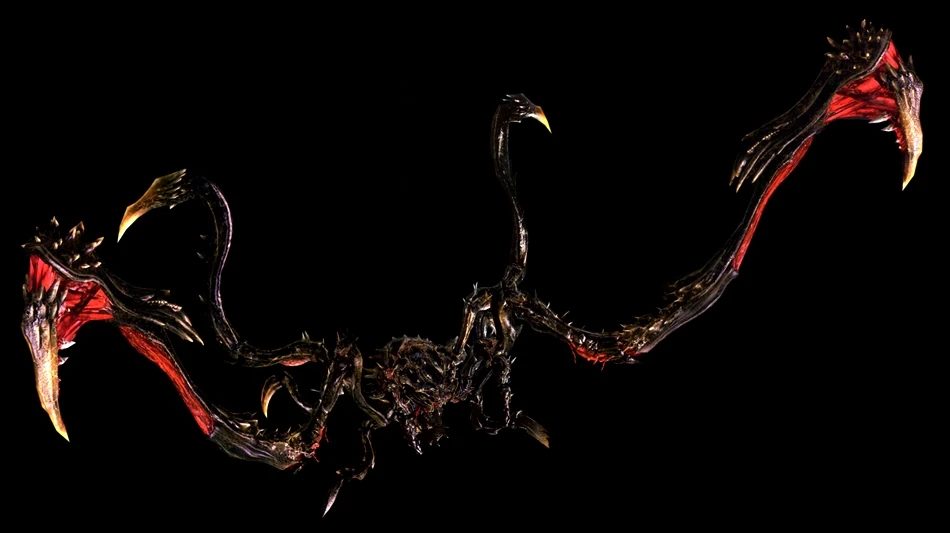
The caves are no ordinary caves: they hold the ruins of the vanished Ndipaya tribe, who once worshipped a strange flower — the Stairway of the Sun. From this very flower, decades earlier, the three founders of Umbrella — Oswell E. Spencer, Edward Ashford and James Marcus — extracted the Progenitor virus, the ancestor of every virus in the series: the T-virus, the G-virus... all began here. The Ndipaya once used the flower in rituals: only warriors with "compatible" genes survived and grew stronger — an observation that planted in Spencer's mind the ideas of "selection" and "evolution," ideas Wesker would push to the extreme decades later. Deep in the caves, Chris and Sheva find a modern Tricell research facility rising amid the thousand-year ruins — someone is continuing the work Spencer left unfinished.
In the facility's files, they find a photograph that freezes Chris in place: Jill Valentine — the old comrade the world believed dead three years ago — appearing in Tricell's research records, linked to the name Albert Wesker. Jill is alive — and in Wesker's hands. At that moment, over the facility's speakers, a familiar voice welcomes Chris: Wesker is alive, has been watching his every step. On the way out, U-8 — the colossal armored B.O.W. developed by Tricell ("U" for Ultimate) — attacks them in the worship area among the ancient stone columns.
The masked woman
At Tricell's research center, Chris and Sheva come face to face with Wesker for the first time in 11 years. He is no longer an ordinary human: the virus in his body grants him superhuman speed and strength — fast enough to dodge bullets at close range. The first fight with Wesker is an expensive lesson: he is too fast, too strong, seemingly invincible. But Chris spots the weakness: Wesker must periodically inject a serum to keep the virus in his body stable — without it, his body will collapse.
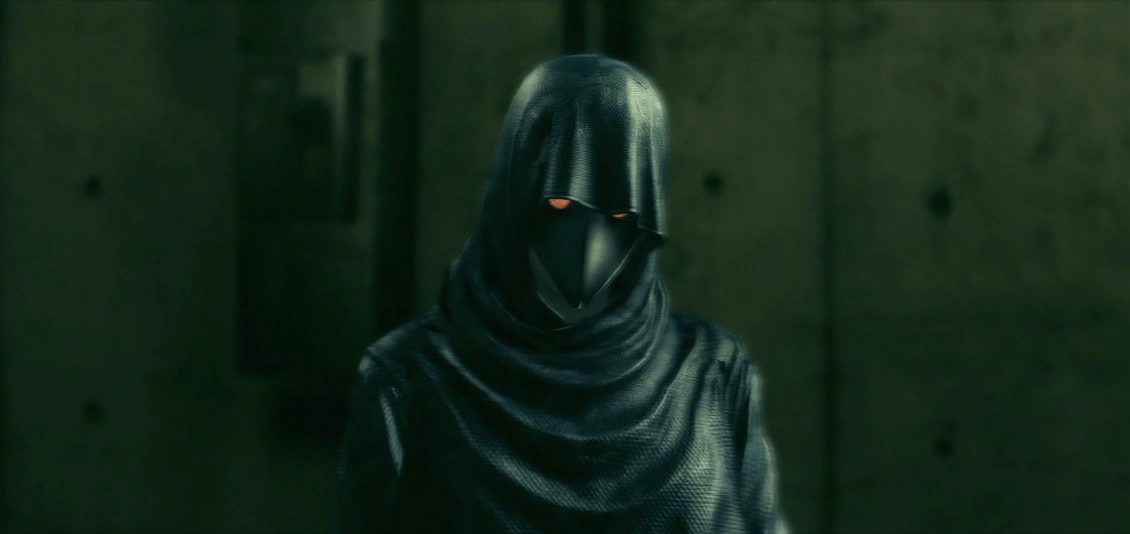
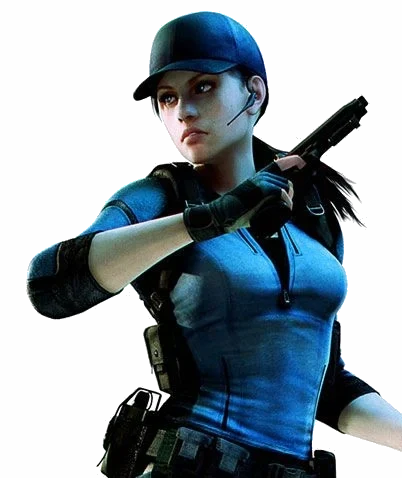
Then she appears: a woman in a bird-beaked mask and cloak, eyes glowing red — agile enough to fight on Wesker's level. She attacks Chris and Sheva without mercy, like a perfect combat puppet. During the fight, Chris wrestles her down and tears off the mask — and freezes: it is Jill Valentine. On her chest sits a P30 device — pumping performance-enhancing chemicals into her body while controlling her mind on Wesker's orders. Chris and Sheva must defeat Jill without killing her, then rip the P30 device from her body. Jill collapses, then wakes — for the first time in three years, herself again.
Wesker: the man who should have died in Raccoon City
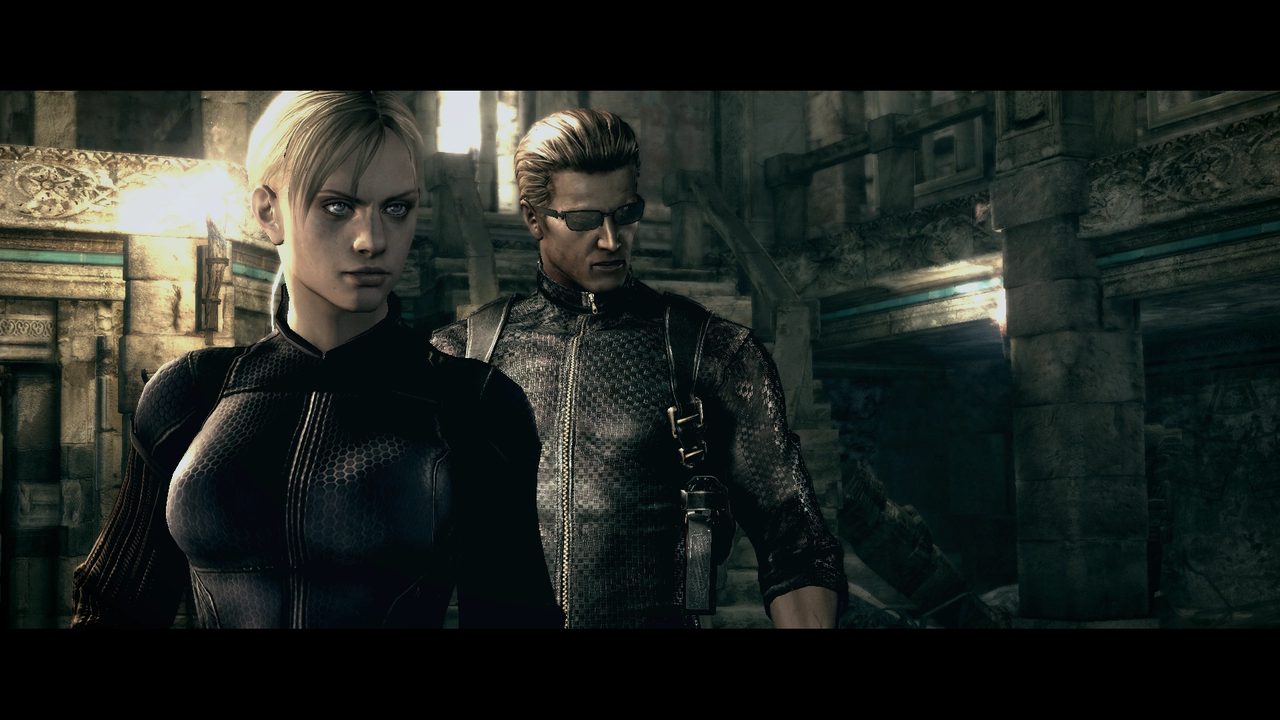
To understand why Wesker is alive, rewind to two points in time. In 1998, at the Spencer Mansion, Wesker — then the S.T.A.R.S. captain secretly working for Umbrella — was impaled by the Tyrant. Everyone believed he died. But Wesker had injected himself with a virus beforehand: instead of killing him, the virus granted him superhuman power — he cheated death and vanished into the shadows, operating ever since as an independent player with ambitions far beyond Umbrella's. In the years that followed, he flickered in and out of events: pulling strings from afar during the Rockfort Island disaster, collecting virus samples from every faction — all to prepare his own final plan.
In 2006, Chris and Jill — by then anti-bioweapon operatives — raided Oswell E. Spencer's European estate to arrest Umbrella's founder. They arrived one step late: Wesker was already there and killed Spencer before their eyes. In the fight that followed, to save Chris, Jill threw herself at Wesker and plunged with him through a window over a cliff. Chris believed both had died. But Wesker survived — and he kept Jill's body, placed her in cryo-stasis, and implanted the P30 device to turn her into his weapon. Wesker's need for Jill was even crueler: her body — having survived a T-virus infection during the Raccoon City disaster — carried precious antibodies, and those antibodies were the final piece for Wesker to perfect the Uroboros virus from the primal Progenitor virus.
Uroboros awakens: Excella's final gamble
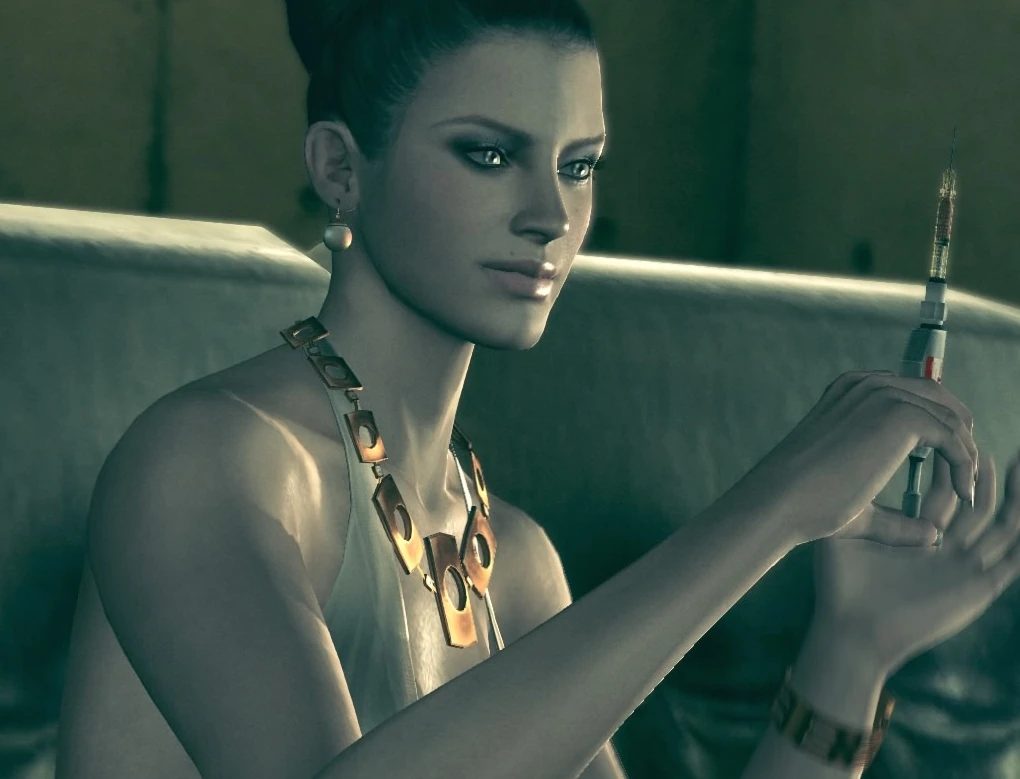
Wesker's plan is finally laid bare in full — and it is as insane as the man himself: a stealth bomber already loaded with Uroboros-tipped missiles. Wesker will rain Uroboros across the world from above: the virus will "forcibly evolve" all of humanity — the weak culled into monsters, only "worthy" individuals with superior genes surviving and evolving. A global purge so Wesker can crown himself "god" of the new world. To stop him, Chris and Sheva must board the plane before it takes off — and they hold a secret weapon: the PG67A/W serum vial Excella dropped — the serum Wesker must inject regularly in precise doses to keep the virus in his body stable. An overdose of the serum injected into him will act as poison, sending the virus out of control.
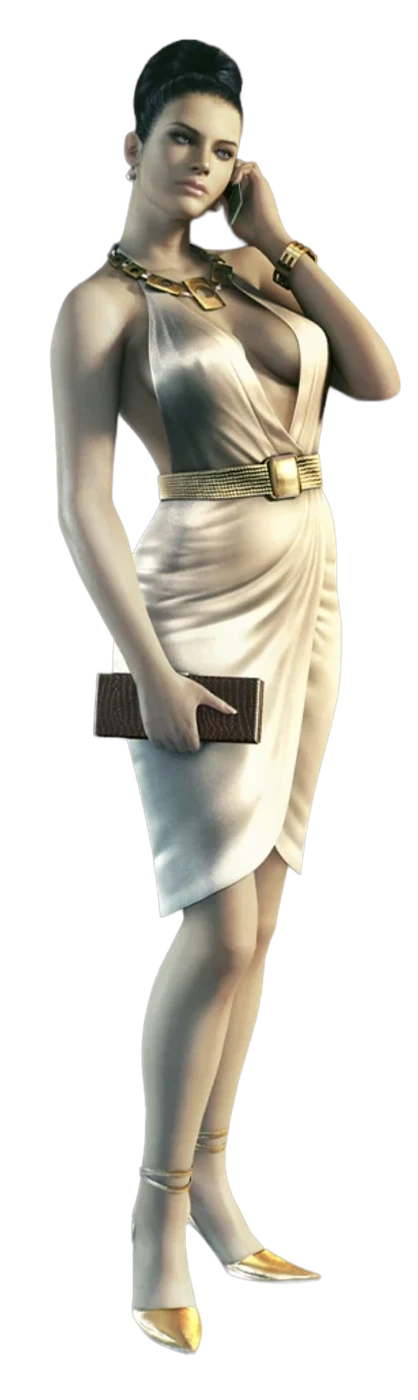
As for Excella Gionne — the powerful, ambitious woman behind all of Tricell's Kijuju operations, from funding Irving to running the cave Uroboros lab — she realizes too late that she was only a pawn. With Uroboros complete and her usefulness spent, Wesker coldly injects Excella with Uroboros right before Chris and Sheva's eyes. Her body balloons into Uroboros Aheri — a colossal tentacled monster, the final boss barring the way to the runway. Excella dies as a test subject — exactly the way she once treated so many others.
The volcano's mouth: the end of Albert Wesker
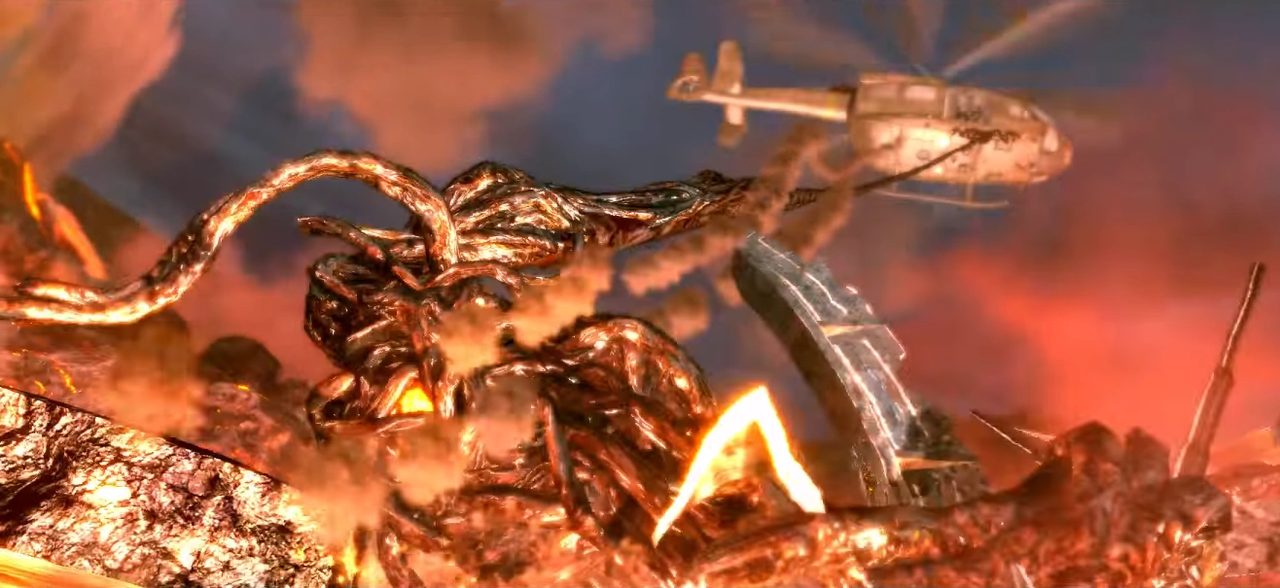
Chris and Sheva board the bomber just before takeoff. In the cargo hold, the second fight with Wesker unfolds — this time they have the serum, and Jill radios them with instructions. Chris injects Wesker with an overdose of PG67A/W, and the virus inside him spirals out of control. In desperation, Wesker injects Uroboros into himself to turn the tables — and in the final struggle, the plane goes down near the active volcano. Amid the sea of lava, Wesker rises in his final form — a colossal mass of flesh with tentacles and eyes, still screaming Chris's name.
The final battle plays out on rocky outcrops amid flowing lava. As both near exhaustion, Josh Stone — the BSAA Delta Team captain who fought alongside them since the operation began — arrives by helicopter. Chris and Sheva leap aboard, and as Wesker's tentacles clutch the landing skids, both fire two rocket launchers straight into the thrashing Uroboros mass. The blast sinks Wesker into the flames. This time, no virus can save him. Albert Wesker is dead — and with him, the 11-year Umbrella saga that began on the night of the Spencer Mansion officially closes.
The fates of the characters
Chris Redfield and Sheva Alomar survive the Kijuju operation and continue serving in the BSAA — Chris as one of the organization's most veteran operatives, Sheva remaining with the African branch. Jill Valentine is freed from the P30, but her body suffered heavily after three years of control; she needs a long recovery before returning to the fight in later events. Albert Wesker dies in the volcano's mouth — the irreversible full stop for the series' greatest villain. Excella Gionne dies as an Uroboros monster of Wesker's making; Ricardo Irving dies on his own ship after turning himself into a monster; Oswell E. Spencer — Umbrella's founder — had already died in 2006 at Wesker's hands. Josh Stone survives with Delta Team, piloting the helicopter that lifts Chris and Sheva out of the volcano.
Common misconceptions
Are the Majini zombies?
No. Resident Evil zombies are T-virus undead — slow, mindless, knowing only how to bite. The Majini are living humans infected with Plagas, the controlling parasites from Resident Evil 4. That is why Majini keep their minds: they talk, use guns, drive vehicles, set traps and attack with tactics — far more dangerous than zombies.
Wesker died at the end of Resident Evil 1 — how is he alive?
In Resident Evil 1, Wesker was indeed impaled by the Tyrant and everyone believed him dead. But he had injected himself with an experimental virus beforehand: instead of killing him, the virus resurrected him with superhuman power — speed, strength and regeneration beyond any human. Since then Wesker operated independently, and Resident Evil 5 is the first time he steps into the open after all those years in hiding.
Did Jill Valentine really betray Chris?
No. Everything Jill did against Chris was controlled by the P30 device on her chest — pumping performance-enhancing chemicals into her while brainwashing her into Wesker's weapon. The moment Chris and Sheva removed the device, Jill woke up and immediately returned to her comrades. Her three "missing" years were three years of captivity under control.
Is the Uroboros virus a form of the T or G virus?
No. Wesker engineered Uroboros directly from the primal Progenitor virus in the Stairway of the Sun flowers, combined with antibodies from Jill Valentine's body — entirely separate from the T-virus line (from Arklay) or the G-virus (William Birkin's work in Resident Evil 2). Uroboros's signature is its black tentacles, which only "evolve" hosts with "compatible" genes and cull the rest into monsters.
Theories & mysteries
Is Wesker truly dead for good? Capcom has repeatedly stated that the death in the volcano is Wesker's definitive end — the producers have said outright that his saga concluded with Resident Evil 5. But for a man who already cheated death at the Spencer Mansion, fans never stop asking with each new entry — and Capcom deliberately never closes that door completely with an in-game confirmation. What remains of Tricell after Excella's death? The corporation was one of the pharmaceutical giants that replaced Umbrella after its fall; the game never spells out Tricell's fate after the Kijuju operation, leaving it open for later entries to explore.
Another mystery: why did Wesker need to show himself in Kijuju at all? With his power and network, he could easily have let Excella and Irving handle everything. The answer lies with Chris: Wesker wanted to personally watch his lifelong nemesis crumble — that arrogance, as every time before, was the fatal flaw that broke his perfect plan at the final minute. And one small but persistent question: what happened to the remaining Uroboros samples in Tricell's facilities? The bomber was stopped, but Tricell is a global corporation — the game never shows every virus sample destroyed, a detail fans still use as a back door for conspiracy theories about later games.
The legacy of Resident Evil 5
Resident Evil 5 is one of the most controversial entries in series history: it pushed the franchise firmly toward action with its over-the-shoulder camera, weapon upgrade systems and above all two-player co-op — a design decision that changed the series' DNA afterward, from Resident Evil 6 to the co-op modes in Revelations. In return, it became the best-selling entry in the series for many years, bringing Resident Evil to tens of millions of new players and proving the commercial power of the "horror + action co-op" formula.
For the story arc, Resident Evil 5 is the finale of the Umbrella era: Wesker's death in the volcano and Tricell's collapse close everything that began at the Spencer Mansion in 1998, through Raccoon City and Jill's escape. Later entries had to find entirely new villains and threats — because the greatest "boss" was gone. And for Chris Redfield, this is the first time in 11 years he can truly rest from Wesker's shadow — though, as later entries show, his war against bioterrorism is far from over. See all articles in the series at the Resident Evil series page.
👤 Main characters
A quick introduction to the central characters of the story.
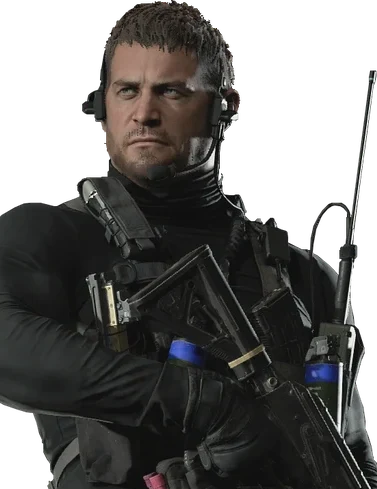
- Affiliation
- BSAA North American branch
- Background
- Former S.T.A.R.S. member (Alpha Team)
- Trait
- Iron will, obsessed with destroying Wesker
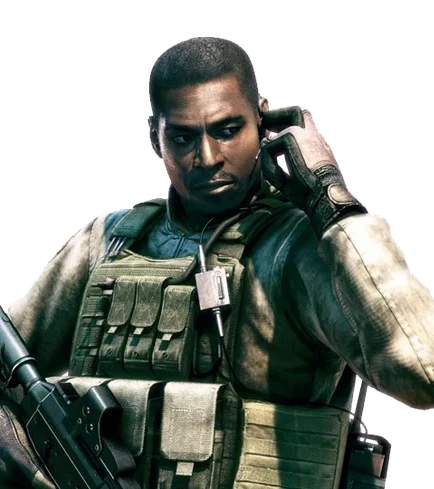
The series' veteran hero since the first game in 1996. After Umbrella's fall, Chris joined the BSAA and became one of the world's top anti-bioweapon operatives. The Kijuju operation is his most personal confrontation: not only stopping the Uroboros virus, but his only chance to settle the 11-year score with Albert Wesker — and to redeem the guilt of losing Jill in 2006.
📚 Read the Resident Evil series in story order
- Resident Evil Story Explained: One Night in the Spencer Mansion and Wesker's Betrayal
- Resident Evil 2 Story Explained: Leon's First Day and the Fall of Raccoon City
- Resident Evil 3 Story Explained: The Last Escape and the Monster That Only Says One Word
- Resident Evil Code: Veronica Story Explained: Rockfort Island, the Ashford Twins and the Death of Steve
- Resident Evil 4 Story Explained: Rescuing the President's Daughter from the Las Plagas Cult
- Resident Evil 5 Story Explained: Burning Africa and the End of Albert Wesker — you are reading this one


