Resident Evil Story Explained: One Night in the Spencer Mansion and Wesker's Betrayal

📋 Quick facts
- Game
- Resident Evil (Japanese title: Biohazard)
- Developer
- Capcom
- Release year
- 1996 (original); 2002 (remake)
- Original platform
- PlayStation (remake: GameCube)
- Genre
- Survival Horror
- Director
- Shinji Mikami
- Music
- Masami Ueda, Makoto Tomozawa, Akari Kaida (original)
- Notable feature
- Defined the survival horror genre; the 2002 remake added the Lisa Trevor storyline and the Crimson Head mechanic and is regarded as the definitive version of the first game
- Next entry
- Resident Evil 2 (1998)
In the summer of 1998, the Arklay mountain region outside Raccoon City became the Midwest's nightmare. For weeks, police received reports of bizarre murders: families living at the forest's edge and hikers found attacked, their bodies bearing signs of having been eaten and bite marks no known animal could have made. Local newspapers blamed a cannibal cult living in the woods. The truth, as always in the Resident Evil universe, was worse than the rumors: the killers were human beings infected with a virus that had turned them into the living dead, leaked from a research facility hidden beneath an old mansion.
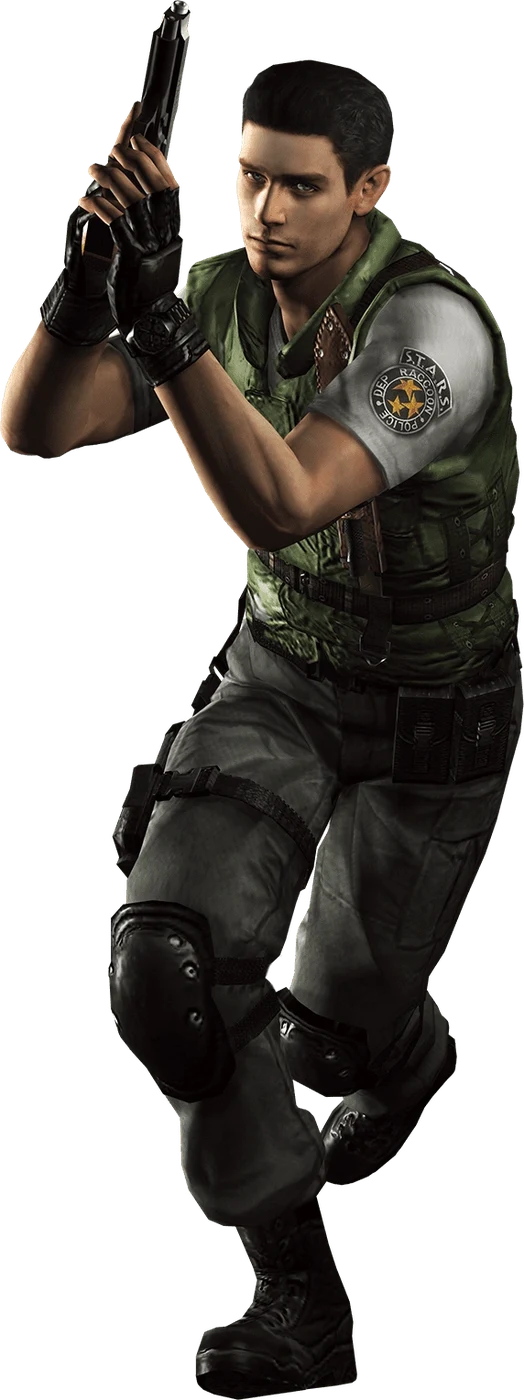
This article follows the storyline of the 2002 remake on GameCube — the version Capcom itself and the community regard as the definitive telling of the first game: it keeps the framework of the 1996 original while adding the tragic Lisa Trevor storyline and the Crimson Head mechanic that lets the dead "rise a second time." The player chooses one of two protagonists — Jill Valentine or Chris Redfield — and the two routes run in parallel, intersecting at the key beats. What follows tells the combined route of both, noting the most important differences between them along the way.
📌 Quick summary: In 1998, after a string of murders in the Arklay Mountains, S.T.A.R.S. Bravo Team goes missing and Alpha Team — Jill Valentine, Chris Redfield, Barry Burton and captain Albert Wesker — enters the forest to search, only to be chased by virus-infected dogs into the Spencer Mansion. Inside is a zombie-filled maze hiding the Umbrella Corporation's laboratory and the T-Virus. Wesker is exposed as a mole, Barry is blackmailed through his family's lives, and Wesker releases the Tyrant — the ultimate bio-weapon — to silence everyone. The survivors trigger the self-destruct system, destroy the Tyrant with a rocket launcher and escape by helicopter as the mansion explodes.
The Arklay murders and the missing Bravo Team
On July 23, 1998, the Raccoon City Police Department sent Bravo Team of the S.T.A.R.S. unit (Special Tactics and Rescue Service) into the Arklay forest to investigate the murders. Their helicopter suffered an engine failure and was forced down in the forest — then all contact was lost. The following night, July 24, Alpha Team was dispatched to find them: captain Albert Wesker, with Chris Redfield, Jill Valentine, Barry Burton, Joseph Frost and pilot Brad Vickers.
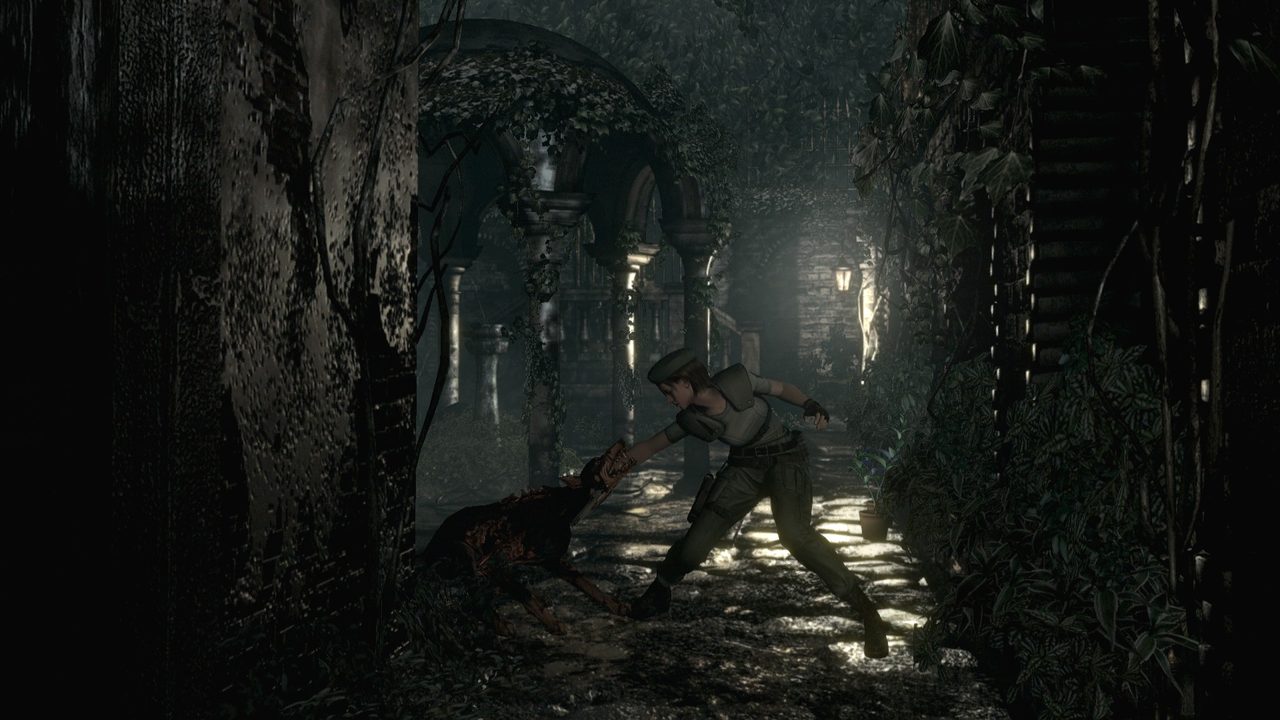
Alpha Team found Bravo's downed helicopter and the body of pilot Kevin Dooley still in his seat. But as they spread out to sweep the area, a pack of Dobermans with rotting flesh — Cerberus, products of the T-Virus — burst from the darkness. Joseph Frost was mauled to death in front of his teammates. Brad Vickers panicked, took off and abandoned the team on the ground. Hunted across the clearing by the pack, the four remaining members of Alpha Team had exactly one way out: through the doors of an old mansion standing alone in the forest — the Spencer Mansion. The doors slammed shut behind them. The howling faded. And that was only when the real nightmare began.
Trapped inside the Spencer Mansion
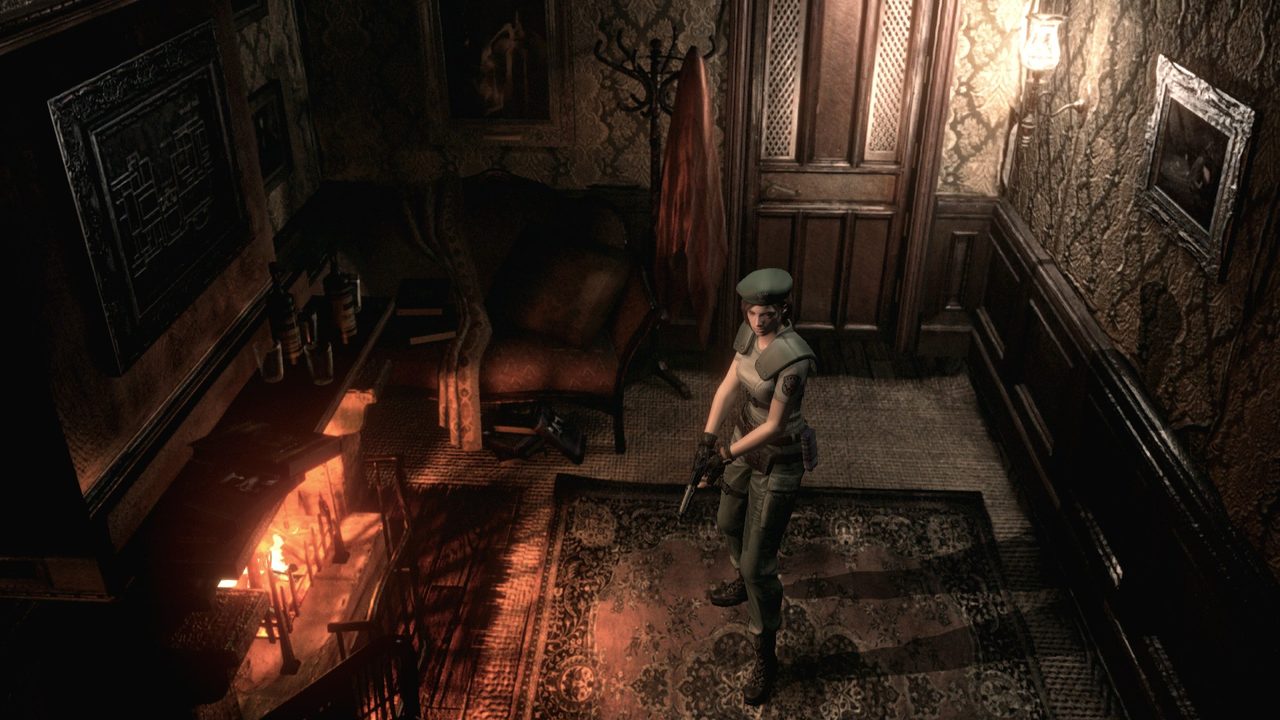
Inside, the mansion was strangely silent. Then a gunshot rang out from the west wing. Depending on the route chosen, the one who splits off to investigate is Jill (with Barry) or Chris (alone) — and what waits for them in the dining room became the founding moment of an entire genre: a figure hunched over a body on the floor, eating a member of Bravo Team. It was Kenneth J. Sullivan — and the thing gnawing on him turned its head to reveal the rotting face of the first zombie. When they returned to the main hall to report, Wesker had vanished without a trace. Alpha Team had dissolved into lone individuals inside a maze of wood and stone.
The Spencer Mansion is a deliberately engineered trap: doors locked with sword, armor and helmet keys; staircases descending to basements found on no map; statues, paintings and hidden mechanisms concealing passages. The deeper the player goes, the more scattered documents they gather — a butler's journal, a researcher's letter, the famous diary of a "keeper" recording his own transformation into a monster after being injected with "some strange medicine," ending with an unbearable itch. Piece by piece, the documents form a picture: the mansion is a front for the pharmaceutical giant Umbrella, and beneath it lies a bio-weapons research complex that has just suffered a catastrophic leak. The zombies wandering the corridors were once Umbrella's own scientists and security staff.
Zombies, Crimson Heads and the death of Bravo Team
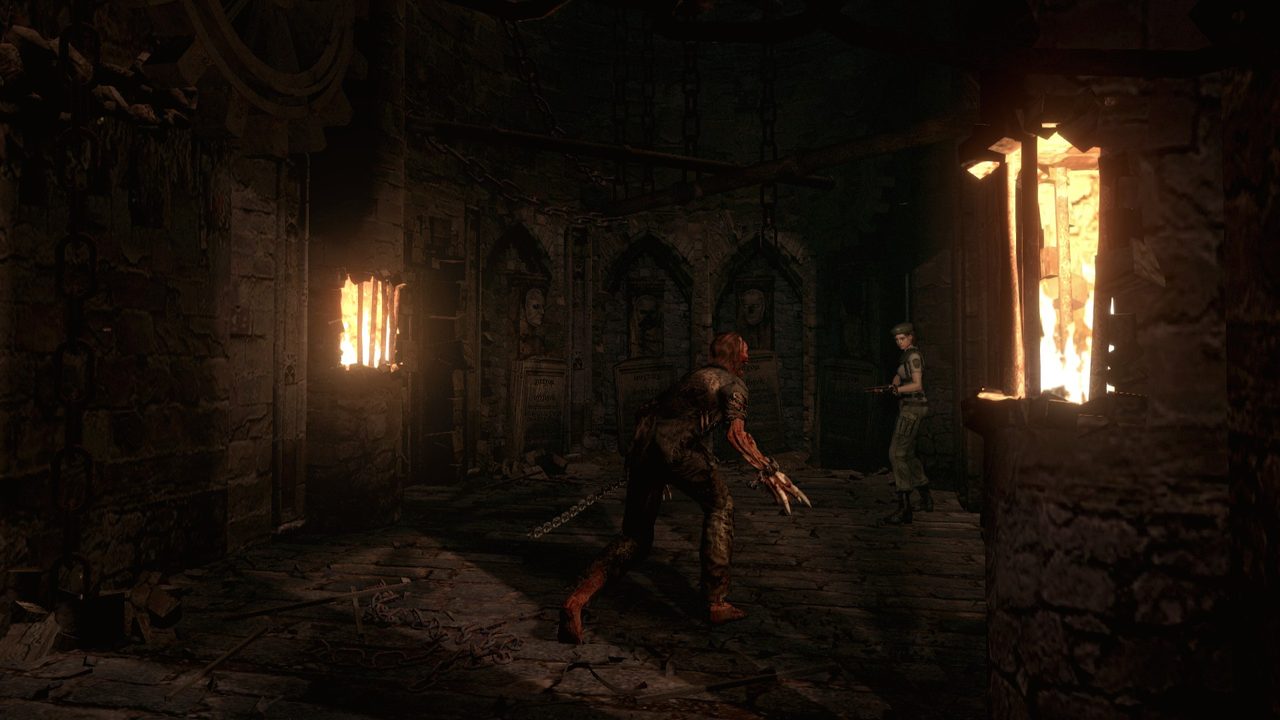
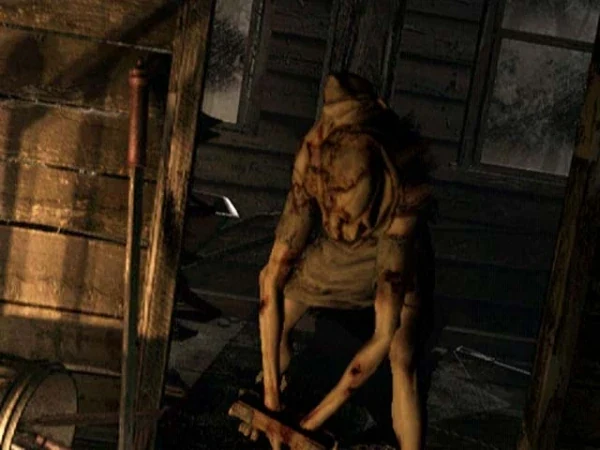
The 2002 remake added a cruel rule the 1996 original never had: a zombie that is dropped without its body being burned or its head destroyed does not stay dead. After a while, the corpse mutates further — skin turning crimson, claws growing long, speed and strength surging — and rises again as a Crimson Head. The mechanic turns every body on the floor into a ticking bomb, and makes the fuel for burning corpses a resource as precious as ammunition. It is also a horrifying explanation for why the mansion grows more dangerous the longer you stay, no matter how many times you have "cleared" it.
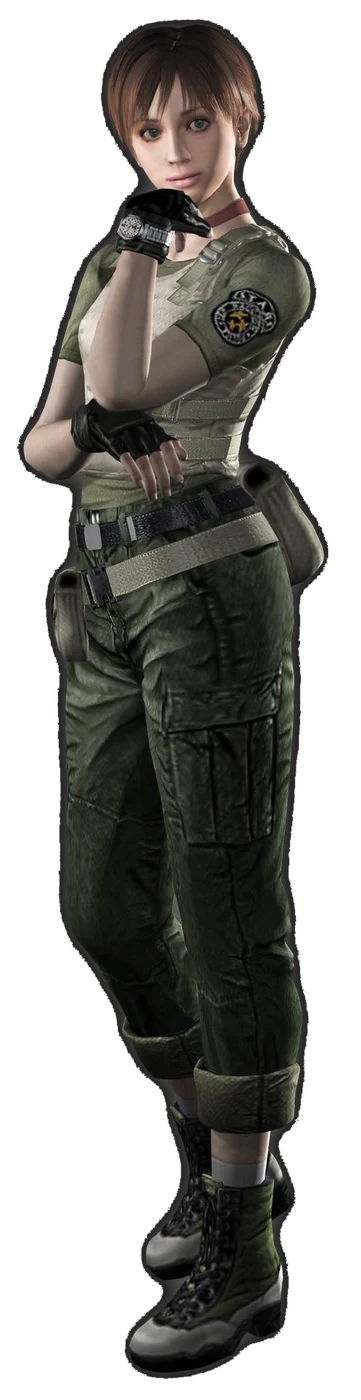
Threading through that maze, Alpha's members find their Bravo counterparts one by one — most of them dead. Forest Speyer was pecked to death by infected crows on a balcony. Richard Aiken was bitten and poisoned by the giant mutated snake Yawn; in Chris's route, he throws himself in the way of the snake's second strike to save Chris, while in Jill's route the player can bring back serum in time — yet Richard's fate remains tragic in most endings. The only Bravo survivor Alpha finds alive is Rebecca Chambers, the team's 18-year-old rookie medic — in Chris's route she accompanies him through several stretches, while in Jill's route she appears at the residence and the medical room. And in the tunnels beneath the mansion, Bravo captain Enrico Marini — gravely wounded — manages one sentence before an unseen gunshot kills him: "A traitor… Umbrella…" There is a mole inside S.T.A.R.S. Enrico died before he could say the name.
Lisa Trevor — the tragedy buried beneath the mansion
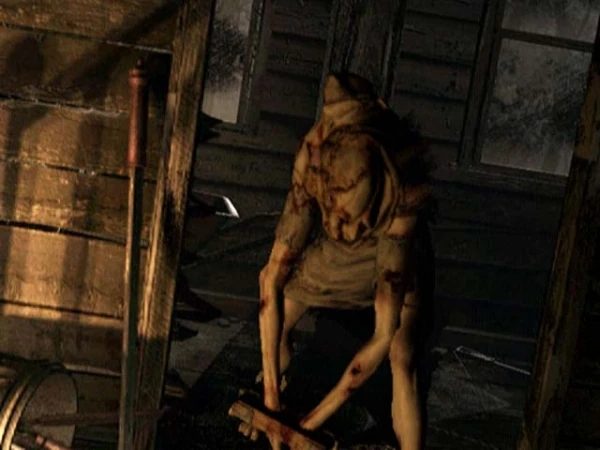
If the Spencer Mansion has a heart, it beats in the story of architect George Trevor's family — the man who designed the mansion on commission for Oswell E. Spencer, Umbrella's founder. When construction finished in 1967, Spencer invited the Trevor family to "stay" — then kidnapped George's wife Jessica and his 14-year-old daughter Lisa, turning them into test subjects for the Progenitor virus Umbrella had just discovered. Jessica could not withstand the experiments and was disposed of when she tried to escape with her daughter. George was locked inside the very maze he had designed and starved to death after days of wandering in despair — his diary, found in the game, is one of the most chilling documents in the entire series.
Lisa did not die. Her body absorbed every virus strain Umbrella injected into her for more than thirty years, turning her into a nearly immortal creature — but her mind remained 14 years old, with a single desire left: to find her mother. Umbrella once sent female staff disguised as her "mother" to approach her; Lisa killed them and took their faces to wear, like a child trying to piece her lost mother back together. In the game, Lisa appears again and again — chained, wearing a mask of skin, moaning for "mother" — and no weapon can kill her. In the final confrontation, in the crypt beneath the mansion, the player opens Jessica's coffin: Lisa recognizes her mother's remains, cradles the skull, and throws herself into the bottomless pit. It is a storyline written entirely for the 2002 remake — and one of the most remembered tragedies in Resident Evil, standing alongside any tragedy the survival horror genre would produce years later in The Last of Us.
Barry Burton and the family photo — when the traitor holds a good man's leash
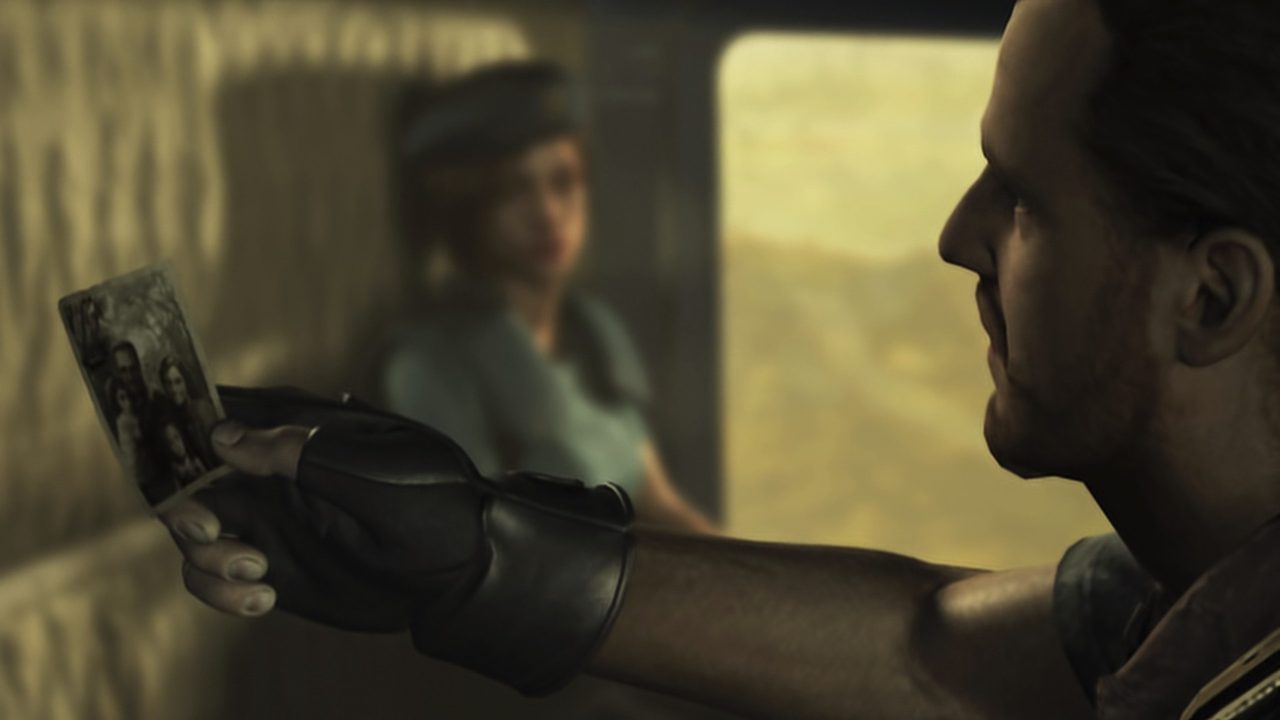
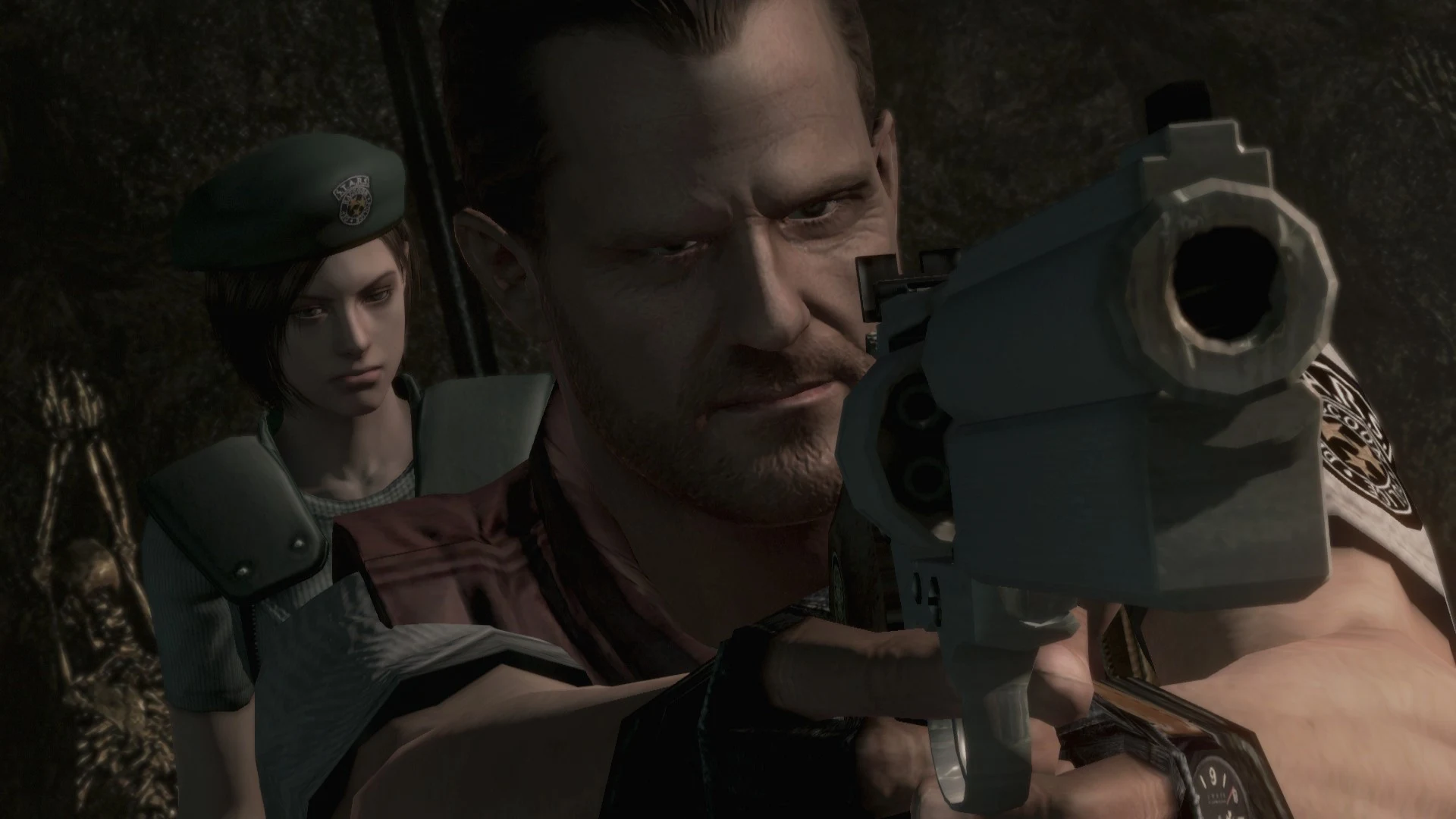
In Jill's route, her main companion is Barry Burton — Alpha Team's weapons specialist, a gruff man devoted to his Magnum and utterly devoted to his wife and daughters. Barry saves Jill from a collapsing-ceiling trap by seconds (the moment that gave the 1996 original its immortal "Jill Sandwich" joke), but as the night goes on, his behavior grows suspicious: he appears and vanishes inexplicably, at one point even speaking cryptically at gunpoint before walking away. The truth only surfaces near the end: Wesker blackmailed Barry through his family's lives. Umbrella showed Barry a photograph of his wife and children with a clear promise — cooperate, or they die. Barry is no traitor; he is a father with a gun held to his head through the people he loves most.
In Chris's route, the "torn companion" role falls to Rebecca and Barry appears far less — but in the canonical ending all four of them, Jill, Chris, Barry and Rebecca, survive, and the series treats Barry as having turned on Wesker at the decisive moment: once Barry learns that Wesker is also betraying Umbrella for his own ambitions, he understands that the man's promise to protect his family is worthless. The detail matters because it shows Wesker is not merely a loyal Umbrella mole — he is an opportunist willing to betray every side, and that layered treachery is what makes him truly frightening.
The underground laboratory — the truth about the T-Virus and Wesker's face
Beneath the mansion, past the residence, the courtyard and the underground tunnels, lies the destination of every clue: the Arklay Laboratory — Umbrella's vast research complex, where the T-Virus (Tyrant Virus) was developed from Progenitor as a bio-weapons program. It was the leak here — identified by later entries in the series as deliberate sabotage — that turned the entire staff into zombies, spread to the dogs and the wildlife of the forest, and caused the "cannibal" murders that opened the story. The mansion's monsters — the snake Yawn, the giant spiders, the shark Neptune in the aqua ring, the mutated Plant 42 — are all products or test subjects of this complex.
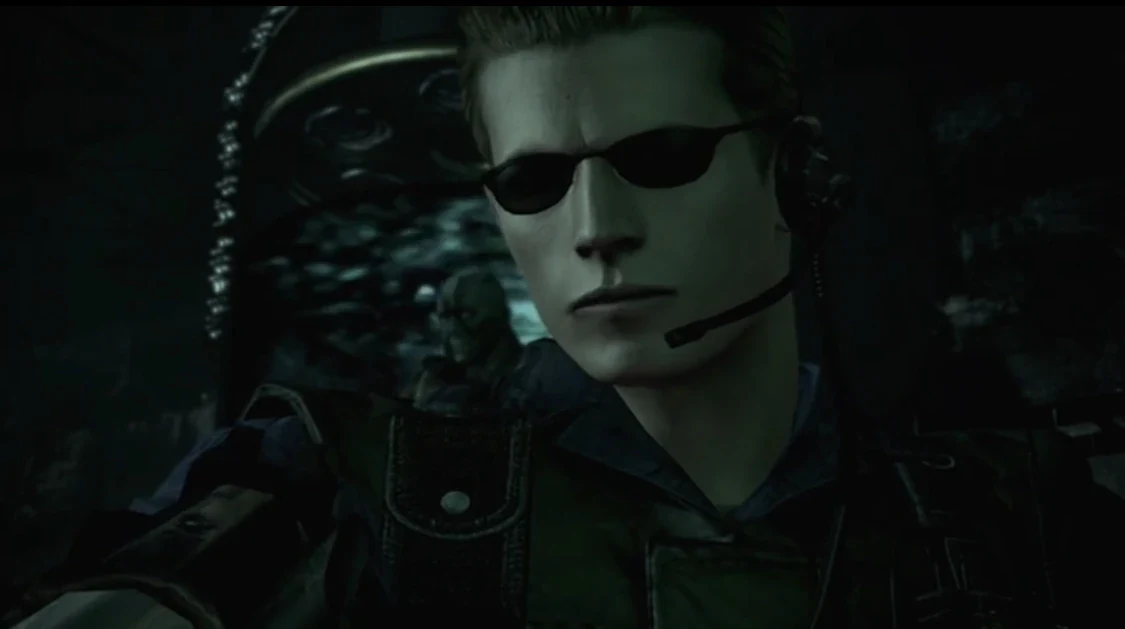
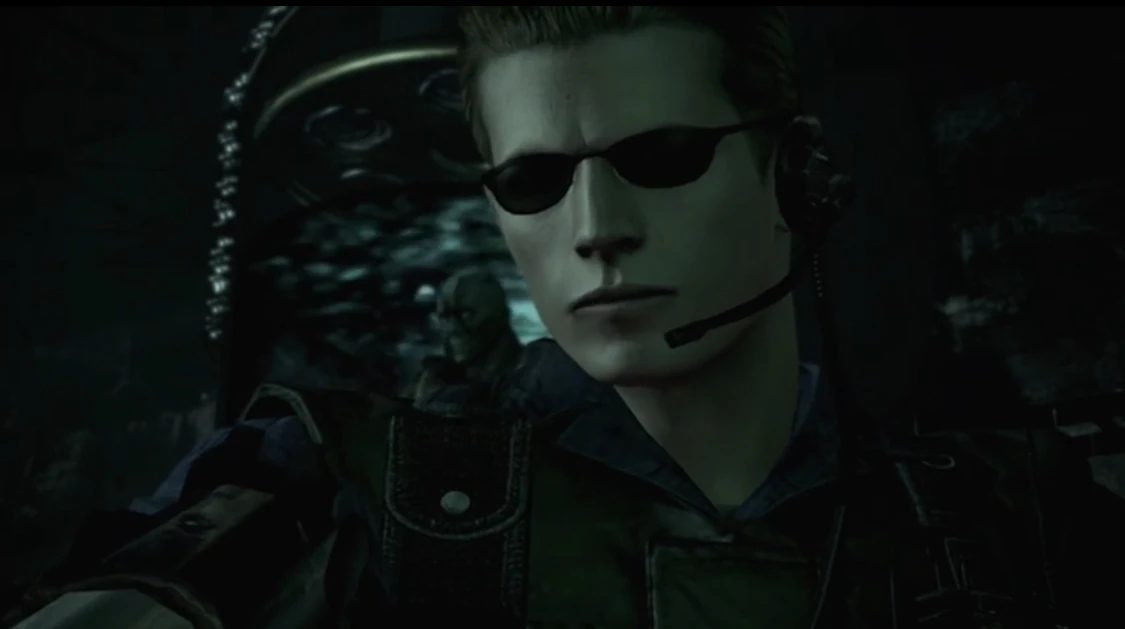
And here, the traitor Enrico Marini spoke of finally unmasks himself: Albert Wesker. He confesses that he is an Umbrella employee planted inside S.T.A.R.S. — he lured both teams into the mansion not to investigate, but to collect combat data on the bio-weapons against elite soldiers, and to eliminate every witness. In Jill's route, he used Barry as hostage and tool throughout the night; in Chris's route, he locks Chris (or Jill, in the opposite route) in the laboratory's holding cell to be silenced. But Wesker wears one more mask: he is secretly betraying Umbrella too, planning to steal the research for a rival power. Everyone in that mansion that night — both S.T.A.R.S. teams and Umbrella alike — was a pawn in Wesker's private game.
The Tyrant unleashed — self-destruct and the last flight out
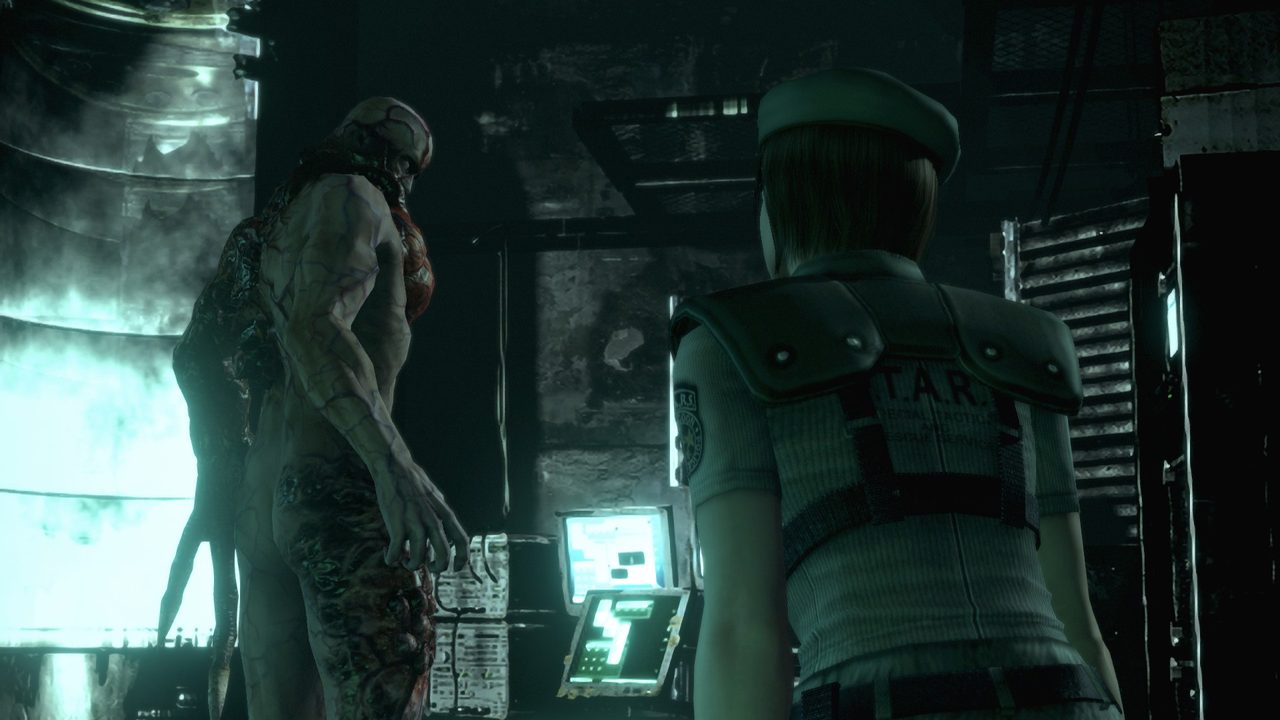
To bury the evidence and prove the value of what he intends to steal, Wesker opens the culture tank and releases the Tyrant — the T-002, a humanoid bio-weapon hailed as "the ultimate life form": enormous, immensely strong, with its heart exposed outside its chest and one arm grown into a blade-like claw. But Wesker's most perfect pawn is the first thing to turn on him: the moment it steps free, the Tyrant runs its claw through Wesker, tosses his body aside like refuse, and turns to hunt the player. In the remake, Wesker appears to die here — how he survived would only be revealed several games later.
The player drives the Tyrant off, frees the imprisoned teammate, and — in the full route — triggers the laboratory's self-destruct system (activated by Rebecca in Chris's route, Barry in Jill's). The whole mansion shakes under the alarm. The survivors race to the rooftop helipad and fire a flare to signal Brad Vickers — the pilot who seemed to have fled, but who has in fact been circling all night searching for his team. Before the helicopter can land, the floor cracks open: the Tyrant survived, leaping onto the roof for one final battle. At the edge of despair, Brad drops a rocket launcher — and a single shot destroys Umbrella's most perfect monster.
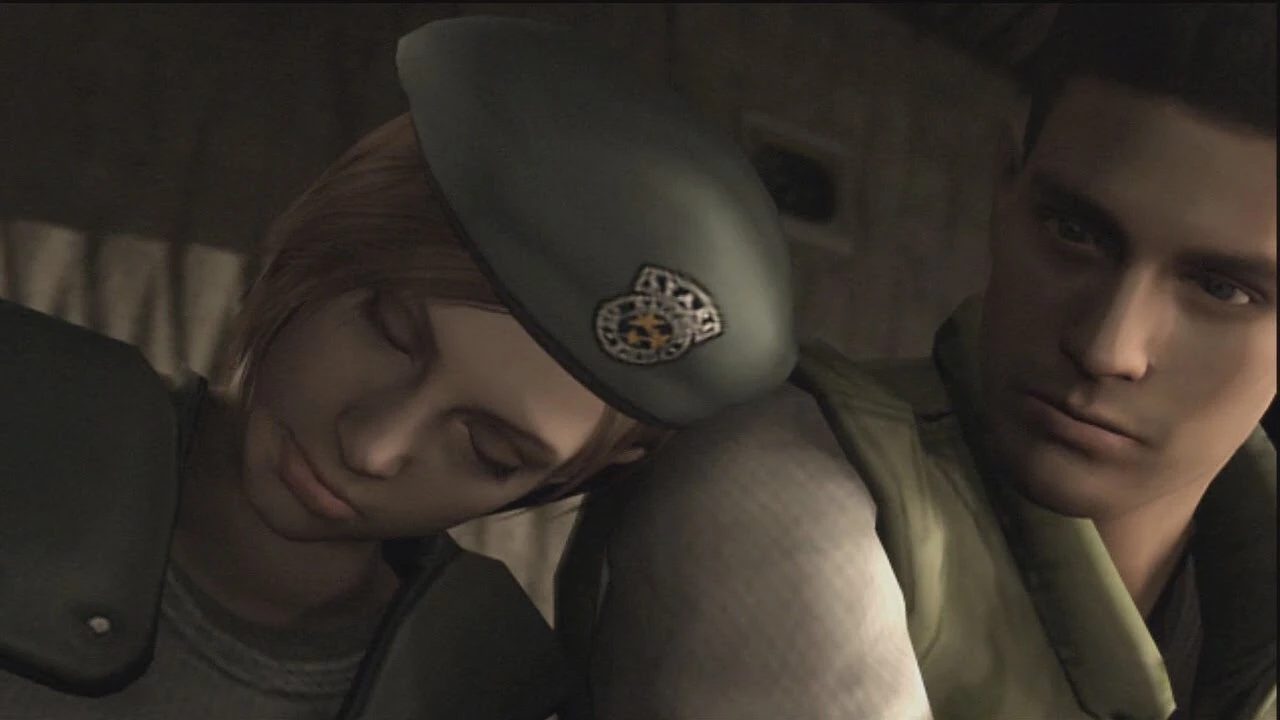
The Spencer Mansion explodes behind them, burying the Arklay Laboratory and most of the evidence of Umbrella's crimes. Four people — Jill, Chris, Barry and Rebecca, in the ending the series recognizes — fly toward the sunrise, exhausted, unaware that their war with Umbrella has only begun. The Raccoon City police will not believe them. Umbrella will strangle every investigation. And just two months later, Raccoon City itself will become the next hell.
What happened to the characters
Jill Valentine survives the Mansion Incident and becomes one of the central figures of the entire series. She continues investigating Umbrella alongside Chris and later becomes a founding member of the BSAA, the global anti-bioterrorism organization.
Chris Redfield escapes the mansion and is the first to publicly accuse Umbrella — and no one in Raccoon City believes him. He leaves the city to investigate Umbrella in Europe, leaving his sister Claire to come searching for him in Raccoon City — setting up Resident Evil 2 and Code: Veronica.
Albert Wesker is impaled by the Tyrant and left in the self-destructing laboratory — but he does not die. Thanks to an experimental virus he injected into himself beforehand, exactly as planned, he revives with superhuman power and escapes the mansion before the explosion, becoming the series' central villain for more than a decade.
Barry Burton survives and is reunited with his family — who were never truly in Umbrella's hands the way Wesker threatened. Barry later joins the BSAA as an advisor, and his story continues in Resident Evil: Revelations 2.
Rebecca Chambers, 18 years old, is Bravo Team's sole survivor — hours earlier, she had also survived the Ecliptic Express disaster in Resident Evil 0. She leaves special forces for research and teaching, but her past with Umbrella comes back for her in later entries.
Lisa Trevor throws herself into the pit with her mother's remains after more than 30 years as a test subject — in the remake's storyline. Some supplementary series materials hint she might not have died in the ruins after all, but within the game itself, the pit beneath the crypt is where the Trevor girl's tragedy ends.
Common misunderstandings
Does the 2002 remake tell a completely different story from the 1996 original?
No. The remake keeps the original's framework intact: the two S.T.A.R.S. teams, the Spencer Mansion, Wesker's betrayal, the Tyrant and the final explosion. What it adds is the Lisa Trevor storyline, the Crimson Head mechanic, and new areas and documents — deepening the story rather than rewriting it. That is why the 2002 remake is considered the definitive way to tell the first game.
Does Wesker really die in the first game?
No. Wesker is impaled by the Tyrant inside the laboratory, but he had injected himself with an experimental virus strain beforehand, as part of his own plan. The virus activates as his body "dies," reviving him with superhuman strength and speed — a detail the series explains fully in later entries and in Resident Evil: The Umbrella Chronicles.
Is Barry Burton a traitor?
No. Barry was blackmailed by Wesker and Umbrella with threats against his wife and children, backed by the family photograph as proof they were being watched. Every suspicious act Barry commits in Jill's route is done under orders to protect his family. When the truth comes out, Barry turns against Wesker — and it is later confirmed his family was safe all along.
Which route is the "real" one, Jill's or Chris's?
Both are "real" in the series' patchwork fashion: the recognized ending has Jill, Chris, Barry and Rebecca all surviving and the mansion destroyed. Later entries borrow details from both routes — Barry's blackmail (Jill's route) and Rebecca's role in the laboratory (Chris's route) are both treated as having happened. Capcom has never declared a single route absolutely canonical.
Theories & mysteries
Who shot Enrico Marini? The game never shows the moment, but every clue points to Wesker: Enrico was the only member of Bravo Team who had uncovered the mole's existence, and the unseen shot kills him just before he can speak the traitor's name. This reading is agreed on by the community and the series' official materials — though visually, the game leaves the player to draw the conclusion.
Was the mansion's virus leak an accident or sabotage? Within the first game itself, the cause of the leak is stated only vaguely. Later entries (especially Resident Evil 0 and in-game documents) establish it as sabotage connected to James Marcus — one of Umbrella's three founders, murdered by his own corporation. This lies outside the first game's scope and should be read as the series' later supplementary explanation, not something the original game states itself.
Is Lisa Trevor still alive? In the remake, Lisa throws herself into a bottomless pit after finding her mother's remains. Some supplementary materials suggest her nearly indestructible body could have survived the fall — but this is speculation based on expanded materials; in the game, Lisa's story ends in the crypt, and it is the most powerful ending the series ever gave a "monster."
Legacy of the night that named a genre
The original Resident Evil of 1996 was not the first horror game in history, but it was the game that named and defined the survival horror genre: fixed cinematic camera angles, scarce ammunition, a cramped inventory, saving at typewriters with ink ribbons, and fear born of deprivation more than of monsters. It sold millions of copies on PlayStation, returned zombies to the center of popular culture and launched an empire that endures today. The 2002 remake — arriving just six years later — is routinely ranked among the greatest remakes ever made, and its HD Remaster is how most players experience the first game today.
In the timeline of the genre, Resident Evil is the starting point later landmarks must reckon with when it comes to survival horror — from Silent Hill to modern names such as The Last of Us Part II. And for Truyện Game, this is the first article of the Resident Evil series — the journey continues with the Raccoon City disaster in the entries that follow. All articles of the series are gathered on the Resident Evil series page.
👤 Main characters
A quick introduction to the central characters of the story.
- Unit
- S.T.A.R.S. Alpha Team
- Specialty
- Lockpicking, explosives handling
- Partner
- Barry Burton (Jill's route)
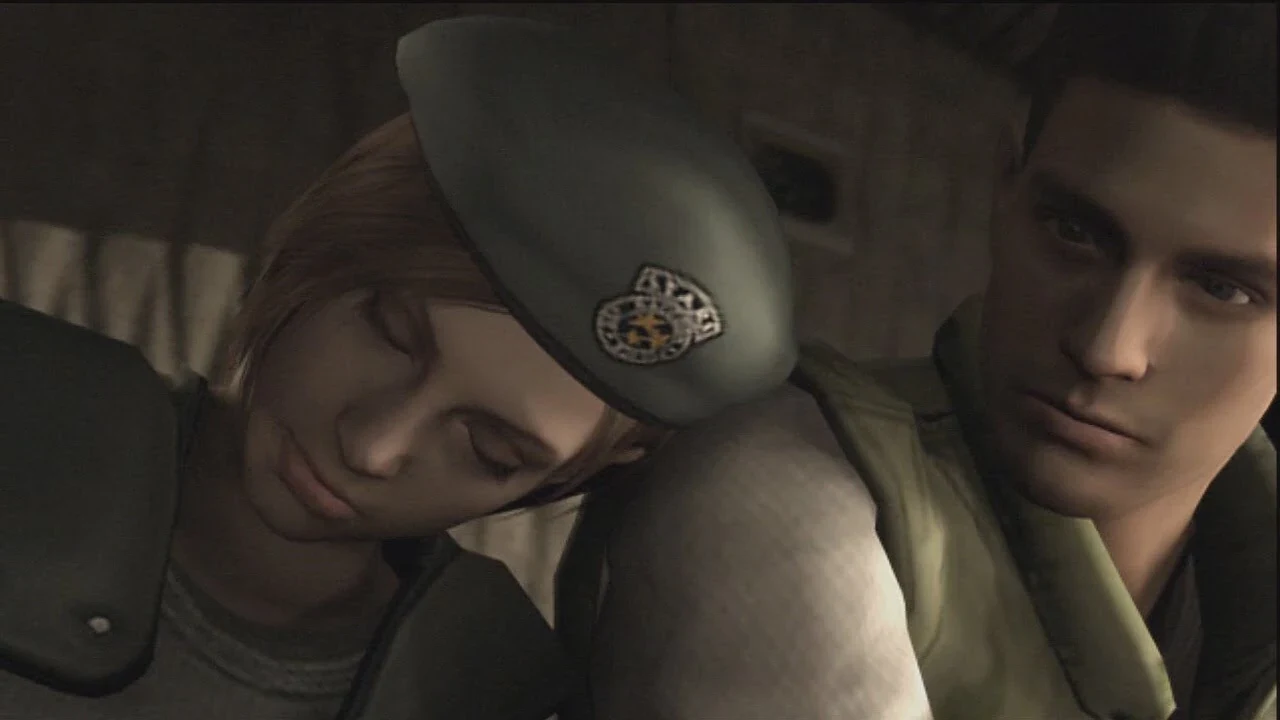
One of the two protagonists of the first game. Calm and deft with locks, Jill (depending on the route) uncovers most of the Spencer Mansion's secrets, from the first zombie in the dining room to the underground laboratory. After the Mansion Incident, she becomes one of the series' most enduring fighters against Umbrella.