Final Fantasy VI Story Explained: The Madman Who Destroyed the World and a Symphony of Hope

📋 Quick facts
- Game
- Final Fantasy VI
- Developer
- Square (now Square Enix)
- Release year
- 1994 — April 2, 1994 in Japan (Super Famicom); October 1994 in North America under the title Final Fantasy III
- Original platform
- Super Nintendo (Super Famicom in Japan)
- Genre
- Turn-based JRPG (Active Time Battle)
- Director
- Yoshinori Kitase and Hiroyuki Ito (co-directors)
- Music
- Nobuo Uematsu
- Notable feature
- The final 2D Final Fantasy; 14 playable characters with no single protagonist; Kefka actually destroys the world in the middle of the game, splitting it into the World of Balance / World of Ruin; the legendary opera scene “Aria di Mezzo Carattere”
- Next entry
- None — a standalone, self-contained story
A thousand years before the story begins, three gods went to war, the world burned, and magic — once woven into the very land and sky — withdrew into legend. Humanity turned its back on magic, choosing steam engines and gunpowder instead. But Final Fantasy VI is not the story of a world where magic died. It is the story of an empire that dug magic up from its grave, a girl turned into a weapon without ever knowing it, and a deranged clown — the only villain in JRPG history to actually destroy the world halfway through the story, then sit upon a throne atop the ruins.
It is also the game that pushed the philosophy of the series’ creator to its very limit: no one is the single main character. Terra opens the story, Locke carries it forward, Celes shoulders the second half — and every member of the 14-strong playable cast gets a “movement” of their own. It is that symphony which made Final Fantasy VI an enduring monument of the role-playing genre — regularly voted the finest entry in the series.
⚠️ Spoiler warning: This article retells the entire story of Final Fantasy VI (the original Super Famicom/SNES version, 1994), including the endings of both the World of Balance and the World of Ruin.
📌 Quick summary: A thousand years after the war of the gods, the Gestahlian Empire digs magic back up to build Magitek weaponry. Terra — a half-human, half-esper girl fitted with a slave crown — is rescued by the Returners resistance and becomes the hope of the world. But the clown Kefka, the very first Magitek experiment, betrays everyone: he seizes the power of the three gods, destroys the world right in the middle of the story, and ascends the throne of godhood upon its ruins.
Chapter 1: The Girl on the Snowy Hill and the Slave Crown
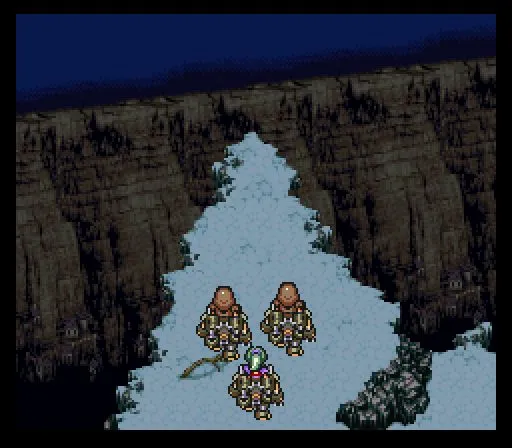
The game opens with one of the most iconic frames in gaming history: three Magitek Armor suits — war machines fusing magic with steam — trudging across snowy cliffs toward the neutral city of Narshe. Aboard one of them sits a girl who can use magic — something believed extinct for a thousand years. Her mission: seize the frozen esper in the Narshe mines for Emperor Gestahl.
But as they draw near the esper, a surge of energy erupts. The two Imperial soldiers Biggs and Wedge are struck dead, the girl’s armor shatters, and the control crown on her head falls away. She wakes in the home of an old man named Arvis in Narshe, remembering only her name: Terra. Arvis tells her plainly: all these years the Empire has controlled her with a slave crown — and wiped her memories clean.
Hunted by Narshe’s soldiers, Terra falls into the mines, and a horrifying shard of memory returns: it was Kefka Palazzo — the jester of Gestahl’s court — who placed the crown upon her head, then ordered her to burn 50 Imperial soldiers alive just to “test” her power. Locke Cole — self-styled “treasure hunter,” in truth a member of the Returners resistance — is entrusted by Arvis with getting Terra out of Narshe. With the help of Mog and the moogles of the mines, Locke fights off the Narshe troops and escapes with Terra to Figaro Castle — the desert castle of King Edgar Roni Figaro, who is outwardly the Empire’s ally but secretly funds the Returners.
Kefka comes in person to demand Terra. Edgar sinks the entire castle beneath the sand while the three of them flee across the desert on chocobos. Mid-chase, Terra unconsciously uses magic — and Edgar and Locke realize in astonishment: she is precisely the link the resistance needs to understand the Empire’s power.
Chapter 2: The Returners Assemble — The Fall of Doma
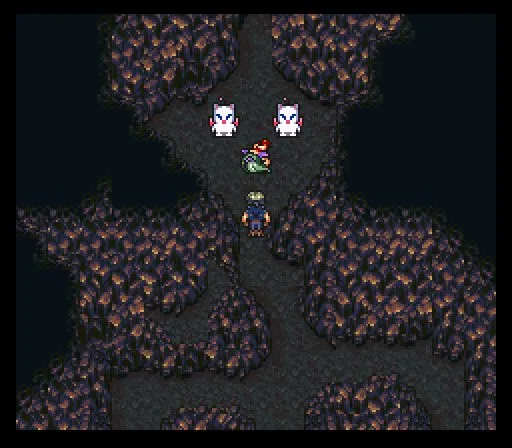
On the road to meet the Returners’ leader, Banon, the party crosses paths with Vargas at Mt. Kolts — a martial artist who murdered his own master, Duncan Harcourt, out of jealousy. Salvation arrives in the form of Sabin Rene Figaro — Edgar’s twin brother, who renounced the throne to study the martial arts. Sabin brings Vargas down and joins the party. At the Returners’ hideout, Banon lays out the plan: to defeat the Empire, they must learn what magic it has extracted from the captured espers.
Locke volunteers to slip into Imperial-occupied South Figaro to slow the enemy down — and there he rescues Celes Chere, an Imperial general and Magitek Knight imprisoned solely for daring to question the court’s policies. Sabin — separated from the party after a battle with the loud-mouthed octopus Ultros on the Lethe River — washes ashore near Doma Castle just as the Empire attacks. Here the game makes the player witness one of Kefka’s most sickening crimes: unable to take Doma by force, Kefka poisons the water supply of the entire castle, slaughtering nearly all its people — the wife and son of the retainer Cyan Garamonde among the dead.
Cyan charges alone into the Imperial camp like a man bent on suicide, and is saved by Sabin and the mercenary ninja Shadow. To escape, the three board the Phantom Train — the ghost train that ferries the souls of the dead to the world beyond — and there Cyan watches his wife and child step aboard the train and leave him forever. (And it is on this very train that Sabin does the unthinkable: he suplexes the entire train — a moment that became a legendary meme in the community.) Escaping the train, Sabin and Cyan leap down Baren Falls to the village of Mobliz, befriend the wild boy Gau on the grasslands of the Veldt, then dive through the Serpent Trench to regroup at Narshe.
Kefka leads an assault on Narshe; the Returners drive the Empire back — but as the party draws near the frozen esper on the cliff, the esper reacts to Terra once more. Terra transforms into a glowing pink esper being, soars up into the sky, and vanishes. The first half of the story closes on an enormous question mark: who is she?
Chapter 3: The Fateful Night at the Opera
While Terra is missing, the esper Ramuh — who has been sheltering Terra in her transformed state in Zozo — tells the whole truth. A thousand years ago, after the War of the Magi, the espers carried the three statues of the Warring Triad into a separate dimension, to hide the gods’ power from mankind. The Gestahlian Empire found the entrance to the Esper World and captured espers to drain their energy dry, creating Magitek technology — and Kefka was the very first Magitek Knight prototype, the man whose mind was shattered by the process of artificial magic infusion. Ramuh and three fellow espers escaped the Empire; those who fell had become magicite — crystals preserving the entirety of an esper’s power after death. He explains: magic ripped by force from living espers yields only a feeble imitation; only magicite can convey that power in full — then he turns himself into magicite and entrusts it to the Returners.
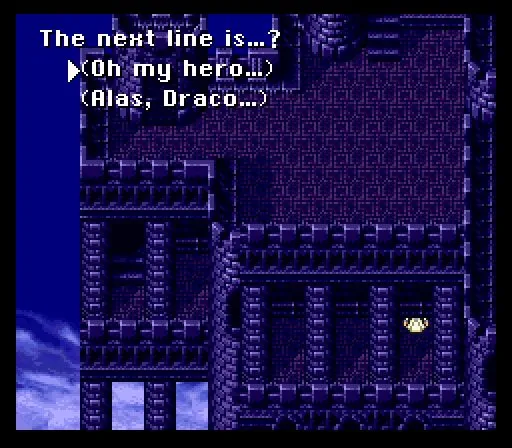
To reach the Imperial capital Vector on the southern continent, the party needs an airship. Their only bridge is Setzer Gabbiani — a gambler, owner of the private airship the Blackjack. Setzer is infatuated with Maria, the star of the opera Maria and Draco at the Opera House, and intends to kidnap her. Celes — Maria’s exact double — is talked by Locke into impersonating her on stage so they can get close to Setzer. That night’s performance becomes legend: Celes raises her voice in the “Aria di Mezzo Carattere” — and although on the SNES it is only the wordless synthesized tones of the SPC700 chip, the opera scene is still voted one of the greatest console moments of all time. Ultros crashes the show, the performance falls apart, Setzer kidnaps “Maria” in the chaos — and Locke’s party sneaks aboard the Blackjack, using Locke’s two-headed coin to trick Setzer into helping them.
At the Magitek Research Facility in Vector, the party witnesses Kefka torturing the two espers Shiva and Ifrit, and hears him proclaim that he will resurrect the Warring Triad. The two espers bestow their magicite upon the party, while the remaining imprisoned espers — too weak after years of being drained — turn into magicite one by one. The researcher Cid hints that Celes is an Imperial spy; Kefka appears and confirms it, sowing doubt in Locke’s heart. Just as the overloaded facility is about to explode, Celes teleports away, dragging Kefka with her — saving the entire party by a hair’s breadth.
Chapter 4: The Floating Continent — Kefka Ascends to Godhood
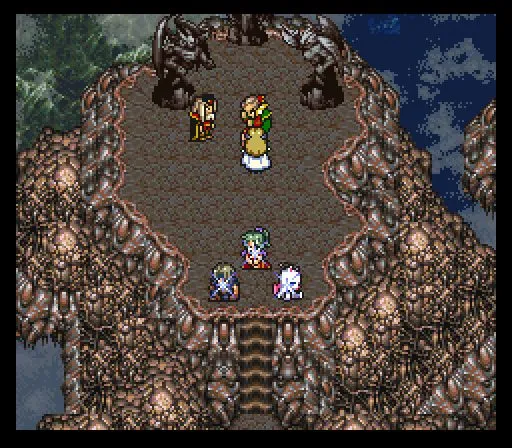
A shard of magicite is identified as Maduin’s — and the moment she touches it, Terra recovers the whole of her memory: she is a hybrid, half human and half esper, the daughter of the esper Maduin and the human woman Madeline, who had wandered into the Esper World and fallen in love with him. When the Empire attacked, Terra was carried off together with her father, and grew up as a Magitek experiment because of the magic she was born with. Accepting who she truly is, Terra returns with the party to Narshe to rescue Mog — and a new plan takes shape: open the gate to the Esper World, so that Terra — living proof that the two races can coexist — can persuade the espers to cooperate.
The gate opens, and the espers pour out… and lose control, devastating Vector and bringing down the Blackjack. Amid the rubble, Emperor Gestahl unexpectedly declares that he has “seen his error,” sues for peace, and asks the Returners and Terra to travel in search of the escaped espers to make amends. Terra and Locke accompany General Leo Cristophe to the village of Thamasa — where the villagers Strago Magus and his granddaughter Relm Arrowny pretend to know nothing of magic — until Relm is trapped inside a burning house, forcing them to reveal their fire-quenching magic. As it happens, Thamasa was founded by the descendants of those who had been infused with magic after the War of the Magi. At the espers’ cave, Relm uses her Sketch ability to save the party from Ultros and joins them; General Leo and the esper leader Yura reach a ceasefire — and then Kefka appears, slaughters the espers, seizes their magicite, and kills even the Empire’s most loyal general when Leo stands in his way.
The whole thing was a charade. Kefka and Gestahl enter the Esper World, find the ruins of the Warring Triad, and use their power to raise an entire Floating Continent up off the ground. The Returners make their landing, fight their way through the Imperial Air Force, Ultros, and Mr. Typhon, and confront Kefka and Gestahl before the three statues of the gods. Gestahl names his price: lure Celes back, kill her friends, and the three of them shall rule the world together. Celes refuses — and stabs Kefka. When Gestahl realizes that Kefka means to awaken the Triad, that it will be a catastrophe, and moves to stop him, Kefka kicks him off the Floating Continent, sending him plummeting to his death. With a sneer, Kefka shifts the three statues out of their balanced positions. The magical balance of the world shatters: the earth splits open, the seas heave, and civilization collapses. The Blackjack is destroyed. The friends are scattered to the winds across the world.
This is the moment that defines Final Fantasy VI: the villain is not stopped at the last minute. He wins. The entire world sinks into ashes — and the game still has half its journey ahead of it.
Chapter 5: The World of Ruin — Celes Awakes on a Deserted Island
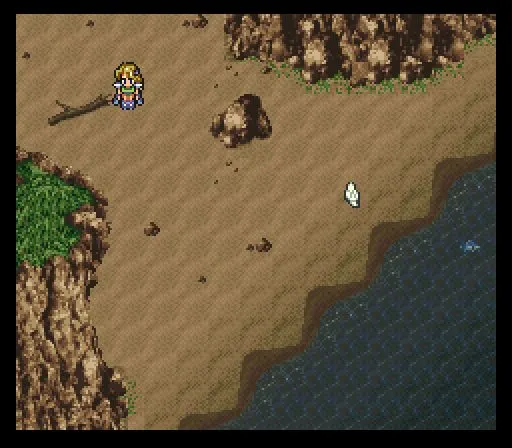
A year passes. Kefka builds a tower out of the rubble on the site of old Vector, drains the power of the Warring Triad, and proclaims himself God of Magic. The new world — the World of Ruin — is withering away day by day: plants and beasts mutate from the magical aftershocks, and any place that dares to resist is annihilated by the Light of Judgment — a beam of destructive energy from Kefka’s Tower.
Celes wakes upon a deserted island together with old Cid — the man who had pulled her from the rubble. Day after day, she goes down to the beach to catch fish to feed the ailing Cid. Depending on how the player cares for him — feeding him fresh fish or spoiled fish — Cid will live or die. If Cid dies, Celes in despair throws herself off a cliff to end her life — but is saved by a seabird, and in that moment at the very edge of death, she finds her reason to go on living: her friends may still be alive, somewhere out there. That segment was written personally by director Kitase himself — the emotional heart of the game’s second half.
Celes sails a raft back to the mainland, and in Tzen she finds Sabin alive. The belief that the others still exist leads them to Nikeah, where a man calling himself “Gerad” — Edgar’s spitting image — is leading a gang of thieves. Tracking him back to South Figaro, slipping through a cave down into Figaro Castle, buried beneath the sand, the truth comes out: Edgar is alive — he used the alias “Gerad” to trick the gang of thieves into helping him break into his own castle. At Kohlingen, the three meet Setzer again, and together they visit the grave of Darill — Setzer’s late friend, the former owner of the airship Falcon. The party raises the Falcon from the depths — and the journey to gather up the scattered pieces of the world begins.
Chapter 6: Gathering the Party Again — Side Stories
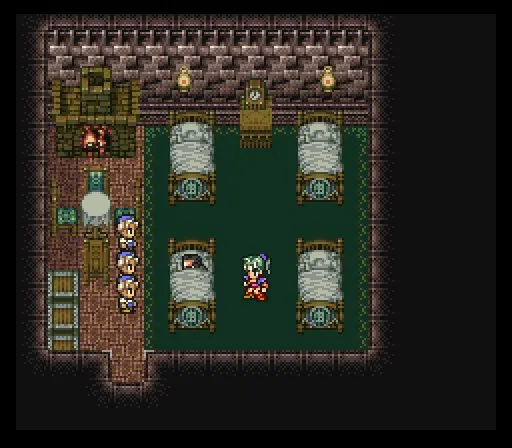
The second half of Final Fantasy VI is a bold structure, unprecedented for its time: there is no longer a forced “main quest line” — the player flies freely all over the World of Ruin aboard the Falcon, searching out each old friend — and every reunion is a small story steeped in haunting emotion.
At Mobliz, the party finds Terra caring for a group of orphaned children — their parents died on the day the world ended. She refuses to fight, until the monster Humbaba threatens the children and forces her to rise and protect them. It is in that very moment that Terra at last understands the thing she has been searching for all this time: love — the feeling that a “weapon” like her believed she could never possess. Atop Mt. Zozo, Cyan lives as a hermit, carrying on a romance by letter with a young woman named Lola — who believes he is her late boyfriend. To save him from the demon Wrexsoul, the party ventures into Cyan’s own guilt-tormented mind, where the spirits of his wife and child appear before him: “live on.”
In Jidoor, Relm works as a hired painter for the rich man Owzer, while Strago — believing his granddaughter dead — has joined the Cult of Kefka. At the Dragon’s Neck Coliseum, Shadow — a man who fights only to forget his past — is competing as a gladiator; to win him back, the party must bet the right weapon to lure him out. And Locke, in the Phoenix Cave, seeks the magicite of the esper Phoenix to resurrect his late beloved Rachel — and Phoenix grants Rachel life again for only a brief moment, just long enough for her to forgive Locke, bless his feelings for Celes, and then depart forever. Down in the mines of Narshe, Mog helps the party win over Umaro — a giant yeti; and inside the belly of the monster Zone Eater, Gogo — the mysterious master mimic whose identity is never revealed — finds the party worthy and joins them.
Chapter 7: Kefka’s Tower — The Finale
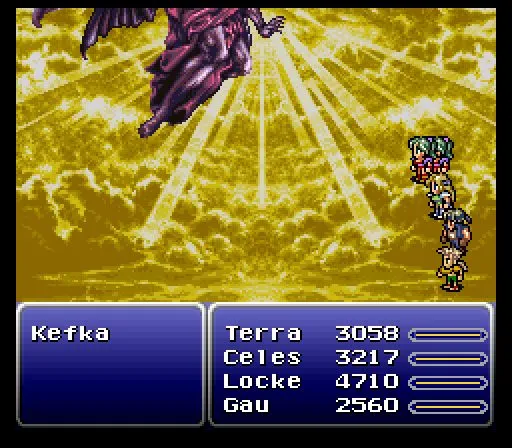
The ranks are assembled in full. The Returners split into three prongs and assault Kefka’s Tower all at once. Everyone knows the price of victory: if the Warring Triad is destroyed, magic will disappear forever — and no one knows what will happen to Terra.
At the top of the tower, Kefka — now a winged god — preaches his philosophy of nihilism: human life is meaningless, everything people build will one day be destroyed, so why live at all? The party answers with the very things they have lived through: a humble meal, a handwritten letter, the orphaned children of Mobliz, a song upon the opera stage — it is holding on to one another through the small hardships of everyday life that gives people the will to live on. Kefka flies into a rage, hurls the Light of Judgment down upon the world one final time, then plunges into the last battle to the strains of Uematsu’s 17-minute “Dancing Mad” — the most monumental final-boss symphony of the 16-bit era.
Kefka falls. Together with him, the essence of magic dissolves: every magicite shatters, the espers fade into nothingness. Amid the ruins, the spirit of Maduin appears and speaks to his daughter: she can go on existing as a human being, if she has a bond strong enough with this world. With the last of her esper power, Terra carries the whole party out of the collapsing tower and sets them down on the deck of the Falcon. She collapses — and when she wakes, she is wholly human: her love for the children of Mobliz held fast to the human part of her, just as Maduin said.
The Falcon flies across the world, bearing witness to cities being rebuilt from the ashes. At the ship’s bow, Terra lets her hair fly free in the wind — for the first time in her life, she is free to live a life of her own. The screen closes on the words “A World Reborn” — a world reborn.
The Fates of the Characters
- Terra Branford: Loses all of her esper power and becomes a complete human being thanks to her love for the orphaned children of Mobliz — the place where she stays, and where she finally finds her “home.”
- Locke Cole: Lets go of his guilt over Rachel after she is resurrected for a brief moment to forgive him and give her blessing. He comes to be with Celes — the ending scene shows the two of them together as they escape Kefka’s Tower.
- Celes Chere: From an imprisoned Imperial general to the one who leads the whole party in the World of Ruin — she finds the meaning of living again after nearly losing everything on the deserted island.
- Edgar & Sabin Figaro: The twin brothers are reconciled completely. Edgar continues as king, rebuilding Figaro; Sabin remains at his brother’s side. (The detail of the two-headed coin: Edgar cheated so that he himself would bear the crown, leaving his younger brother free.)
- Cyan Garamonde: Overcomes the grief of losing his wife and child at Doma after defeating Wrexsoul in his dream — encouraged by the spirits of his wife and child to “live on” — and goes on living, keeping in touch with Lola by letter.
- Shadow: Stays behind in the collapsing Kefka’s Tower, sending Interceptor on ahead: “Baram! From now on, I stop running…” The Japanese version expresses his intent to die more clearly than the English version — the game implies that he willingly stays behind to die, though it never shows his death. (If you did not wait for Shadow on the Floating Continent, he died at the end of the World of Balance and cannot be recruited again.)
- Setzer Gabbiani: Loses the Blackjack in the apocalypse, then recovers the Falcon — the airship of his late friend Darill — becoming the wings of the entire party.
- Relm & Strago: Return to Thamasa after Strago leaves the Cult of Kefka; Relm continues on her path as a painter.
- Mog, Gau, Umaro, Gogo: Mog and Umaro return to the mines of Narshe; Gau goes back to the grasslands of the Veldt — choosing a life “both human and beast” as his own; Gogo vanishes as mysteriously as he appeared.
- Kefka Palazzo: Dies at the summit of his own tower; together with him, magic vanishes from the world forever.
Common Misconceptions
Is Terra a pure-blooded esper?
No. Terra is a hybrid, half human and half esper: her father is the esper Maduin, her mother the human woman Madeline. It is this very “hybrid” detail that is the key to her surviving at the end of the game, when magic disappears from the world — the human part of her is what anchors her to life.
Are Tina and Terra two different people?
No — they are one and the same character. Her original Japanese name is Tina (ティナ); the English SNES localization by Ted Woolsey changed it to Terra. This difference has confused more than a few lore readers cross-checking documents in the two languages.
Is Kefka nothing more than a comic-relief clown?
Completely wrong. According to official lore, Kefka was the first Magitek Knight prototype — the process of artificial magic infusion destroyed his mind. And he is one of the rare villains in JRPG history to successfully destroy the world right in the middle of the game, then truly ascend to godhood.
Are espers gods?
No. The three gods are the Warring Triad; espers are only beings who were transformed during the War of the Magi, who afterward sealed the gods away and withdrew into a dimension of their own to hide the gods’ power from mankind.
If magic disappears at the end of the game, does Terra have to die?
No. Maduin says it plainly: Terra can go on existing as a human if she has an emotional bond strong enough with the world — her love for the children of Mobliz held fast to the human part of her. That is why her ending is a moment of hope rather than tragedy.
Is the World of Ruin a “broken” second half of the game?
No. Splitting the game into the World of Balance and the World of Ruin was a deliberate decision by the development team — they had grown tired of the “hero saves the world at the last minute” formula, so the second half of the game revolves around the themes of reunion and finding hope again when everything seems lost.
Fan Theories and Community Debates
Who really is Gogo? The identity of the mysterious master mimic is never revealed, and fans have debated it for 30 years: is Gogo Emperor Gestahl, who survived Kefka’s kick? Is he Darill — Setzer’s late friend? Or is he the very Gogo of Final Fantasy V, wandered here through the Interdimensional Rift? The community at Caves of Narshe leans toward the possibility that Gogo is simply a cameo paying homage to the Gogo of FFV — but there is no evidence in the game to confirm it, and Square most likely intended to leave it open.
Is Shadow really Relm’s father? This was once FFVI’s most famous fan theory — based on the five dreams at the inns (Clyde and his train-robbing partner Baram; Clyde arriving in Thamasa, having a daughter, then leaving), on Interceptor being friendly with no one besides Shadow except Relm, and on the Memento Ring that only the two of them can wear. The theory has now been officially confirmed through a developer interview in V-Jump magazine in 1995: Shadow is indeed Clyde, Relm’s biological father.
Does Shadow live or die at the end of the game? The ending leaves it open: he stays behind in the collapsing tower, tells Interceptor to go on ahead, and calls out Baram’s name. The Japanese version expresses the intent to die more clearly than the English version, but the game never shows his death — one camp believes he died just as the creators intended, the other believes he survived to “start over,” as his lines suggest. The debate has never been settled.
Cid on the deserted island: which is “canon,” his living or his dying? Depending on whether the player feeds Cid fresh fish or spoiled fish, he lives or dies. The community generally regards the version where Cid dies as the “emotional canon” — because it gives rise to the scene of Celes leaping from the cliff and then finding hope again, far more powerful than the version where Cid lives. Square has never confirmed which version is official.
👤 Main characters
A quick introduction to the central characters of the story — portraits taken from the game itself.
- Bloodline
- Half human, half esper
- Parents
- The esper Maduin & Madeline
- Weapon
- Sword
A mysterious girl controlled by the Empire through a slave crown, raised as a Magitek experiment because of the magic she was born with. Terra’s journey is one of recovering her memories, accepting her mixed blood — and learning the meaning of love through the orphaned children of Mobliz.

- Self-styled trade
- Treasure hunter
- Faction
- Returners
- Weapon
- Daggers
A gallant thief who always insists that he is a “treasure hunter,” never a robber. Haunted by his failure to save his beloved Rachel, Locke spends the whole journey seeking to atone — and in the end learns how to let go, so he can love the person who is here in the present.
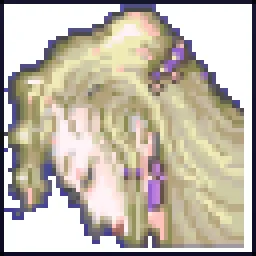
- Former post
- Imperial general, Magitek Knight
- Ability
- Artificial magic
- Weapon
- Sword
An Imperial general imprisoned for daring to question the court’s policies, rescued by Locke and gradually becoming the very soul of the party. In the World of Ruin, it is Celes who wakes first of all — and she is the one who gathers everyone back together.
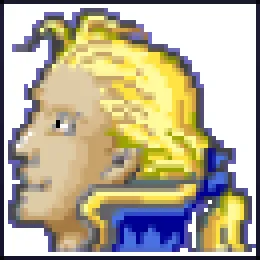
- Position
- King of Figaro
- Sibling
- Sabin (twin)
- Specialty
- Machinery
A young king who outwardly stands as the Empire’s ally while secretly funding the Returners. Edgar relies on cunning more than force — and he cheated with a two-headed coin so that he himself would bear the crown, leaving his twin brother free.
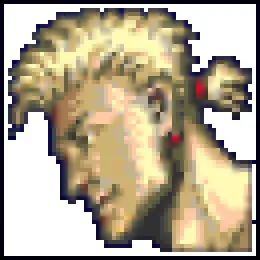
- Master
- Duncan Harcourt
- Specialty
- Martial arts (Blitz)
- Claim to fame
- Once suplexed an entire ghost train
A prince who renounced the throne to study the martial arts, becoming a master with devastating Blitz techniques. Hot-tempered and blunt, yet utterly devoted to his brother — and the owner of the most legendary suplex moment in JRPG history: suplexing the Phantom Train.
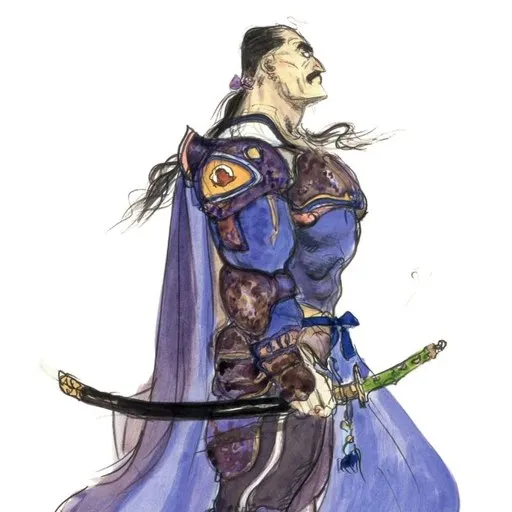
- Homeland
- Kingdom of Doma
- Weapon
- Katana
- Loss
- His wife Elayne and his son Owain
An old-fashioned retainer of Doma who holds honor above all, who lost both wife and child when Kefka poisoned the kingdom’s water supply. Cyan carries that pain with him through the entire journey — from the Phantom Train, through the letters he writes in place of a fallen soldier, to the day he faces once more the very clown who destroyed his life.
- Home
- The Veldt plains
- Circumstance
- Abandoned by his father from birth
- Ability
- Learns monster techniques (Rage)
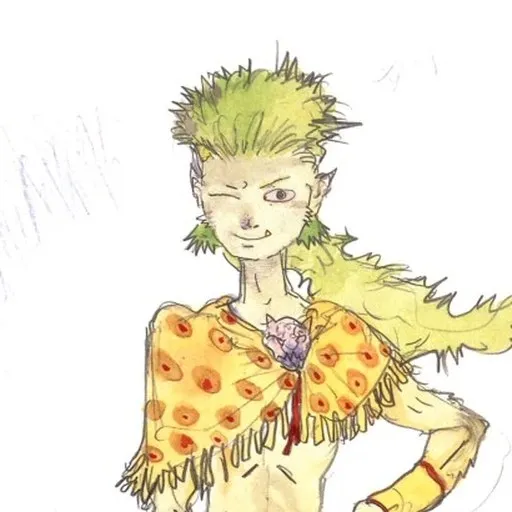
A boy abandoned by his father upon the Veldt and raised among packs of monsters, speaking clumsily like a wild beast. Gau follows the party with the purest heart in the whole group — and his reunion with his doddering old father, who no longer recognizes his own son, is one of the quietest moments in Final Fantasy VI.
- Trade
- Mercenary ninja
- Companion
- His dog Interceptor
- Past
- Real name Clyde — Relm’s biological father
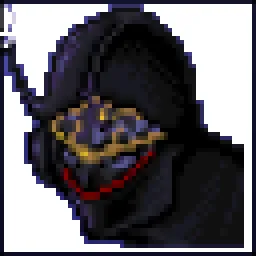
A cold-blooded assassin who fights only for money, yet the dreams at the inns gradually reveal his past: he was once Clyde, a train robber who left his daughter behind in Thamasa. At the game’s end, Shadow willingly stays behind inside the collapsing Kefka’s Tower — perhaps to atone for a lifetime of running away.
- Assets
- The airship Blackjack, later the Falcon
- Occupation
- Wandering gambler
- His love
- Darill
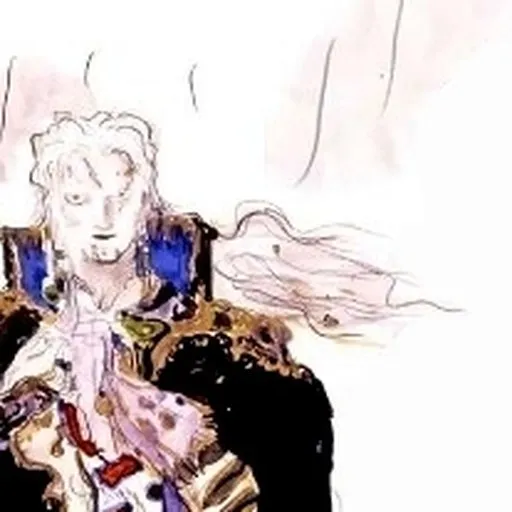
A flamboyant gambler who roams the world aboard his airship-cum-casino, living by the creed “life is a gamble.” Setzer loses the Blackjack when the world falls, but it is the Falcon of his late friend Darill that carries the party back into the skies to fight Kefka.
- Homeland
- The village of Thamasa
- Ability
- Monster magic (Lore)
- Granddaughter
- Relm
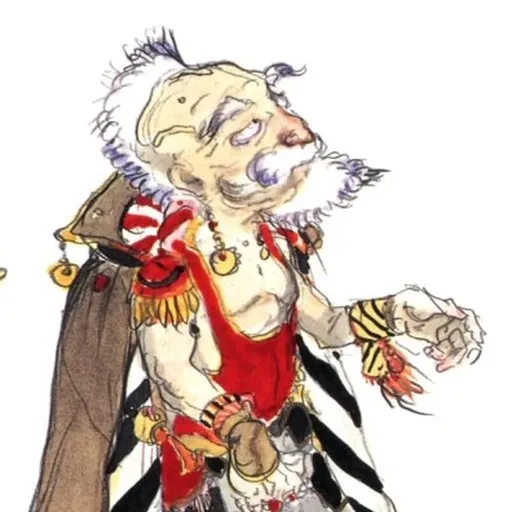
An old man descended from the mages who fought in the War of the Magi a thousand years ago. Strago and the villagers of Thamasa hid their magical blood all their lives, and he only rises up when Gestahl’s empire comes to steal the espers’ power.
- Homeland
- The village of Thamasa
- Ability
- Paintings come to life (Sketch)
- Grandfather
- Strago
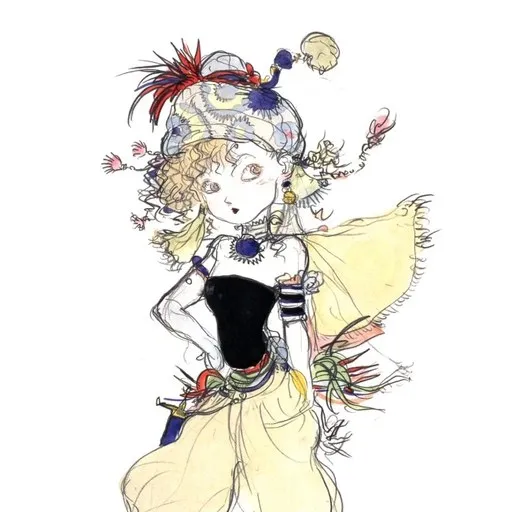
A cheeky 10-year-old painter, Strago’s granddaughter and the strongest young mage in Thamasa. Relm’s brushstrokes can bring monsters to life to fight for her — and she is the very one who makes the cold-hearted Shadow hesitate for the first time.
- Species
- Moogle
- Home
- The caves of Narshe
- Trait
- The only moogle who can speak human language
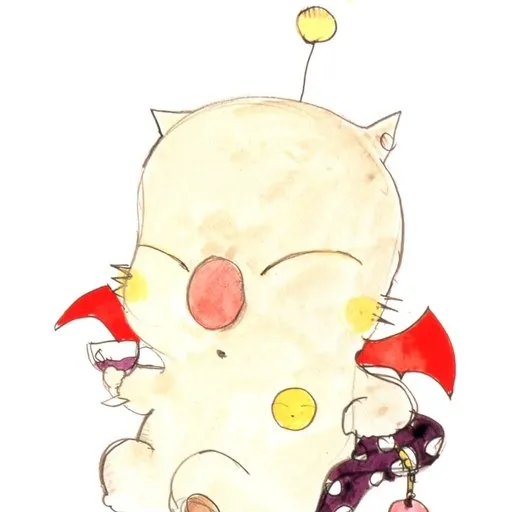
A moogle who lives with his tribe in the caves of Narshe, who learned the human tongue thanks to the esper Ramuh in his dreams. Mog is a side character so beloved that he became the mascot of the entire series — in Final Fantasy VI, he is a full party member, wielding a spear and dancing the dances of earth and sky.

- Origin
- The first Magitek Knight prototype
- Former master
- Emperor Gestahl
- Greatest crime
- Destroyed the entire world mid-game
The jester of Gestahl’s court, a man whose mind was destroyed by the process of artificial magic infusion. Kefka is the rare villain in JRPG history who actually succeeds in destroying the world right in the middle of the story — killing his own emperor, shifting the Warring Triad out of alignment, and truly ascending the throne as God of Magic.
📚 Read the Final Fantasy series in story order
- Final Fantasy IV Story Explained: The Dark Knight Cecil's Journey of Redemption
- Final Fantasy VI Story Explained: The Madman Who Destroyed the World and a Symphony of Hope — you are reading this one
- Final Fantasy VII Story Explained: The Mercenary and the Memories That Were Never His
- Final Fantasy VIII Story Explained: The Sorceress's Time Loop and the Promise at the Flower Field
- Final Fantasy IX Story Explained: Home Is Where Someone Is Waiting for You
- Final Fantasy X Story Explained: The Thousand-Year Dream and the Price of Truth
- Final Fantasy XII Story Explained: The Gods' Chess Game and the Princess Who Dared to Say No
- Final Fantasy XV Story Explained: Ten Years in the Crystal and the Price of the Dawn
- Final Fantasy XVI Story Explained: The Flame of Rebellion and the Day Magic Vanished from Valisthea


