Final Fantasy XII Story Explained: The Gods' Chess Game and the Princess Who Dared to Say No

📋 Quick facts
- Game
- Final Fantasy XII
- Developer
- Square Enix
- Release year
- 2006 (March 16, 2006)
- Original platform
- PlayStation 2
- Genre
- JRPG
- Director
- Yasumi Matsuno (original concept), Hiroyuki Ito & Hiroshi Minagawa
- Music
- Hitoshi Sakimoto
- Notable feature
- The Gambit system for programming party behavior and seamless real-time combat; set in Ivalice — the world shared with Final Fantasy Tactics
- Next entry
- Final Fantasy XII: Revenant Wings (2007)
There is no mad god bent on destroying the world in Final Fantasy XII. The enemy here is an empire, a council of undying beings who play chess with the fate of mankind, and the most dangerous weapon of all time: stones that hold the power of gods. Set in Ivalice — the world shared with Final Fantasy Tactics — Yasumi Matsuno's Final Fantasy XII (2006) is a political epic about war, revenge, and free will, told through the memoirs of Marquis Ondore. It is also the entry that changed Final Fantasy forever, with real-time combat and Gambits that let you program your party's behavior. Warning: this article spoils the entire story, including the true identity of the king's assassin.
📌 Quick summary: Ivalice is engulfed in war as the Archadian Empire swallows up the small kingdoms. Princess Ashe of Dalmasca — reported to have taken her own life — secretly builds a resistance; street orphan Vaan, sky pirate Balthier, and the framed knight Basch are swept into the quest to reclaim her kingdom. But the real game of chess lies in the hands of the undying Occuria and the nethicite stones that hold the power of gods.
The night the king was assassinated and the knight who was framed
Dalmasca is a small kingdom wedged between two giants: the Archadian Empire to the east and the Rozarrian Empire to the west. When Archadia's armies came pouring in, King Raminas of Dalmasca was forced to sign a treaty of surrender — and on the very night of the signing, at Nalbina Fortress, he was assassinated. The only witness was Rex, a young recruit: he saw Captain Basch fon Ronsenburg himself, the kingdom's most loyal knight, stab the king to death and declare a coup. Rex died of his wounds not long after; Basch was sentenced to death for treason and kingslaying; Princess Ashe, the sole heir, was reported to have taken her own life in grief. Dalmasca fell in a single night.
The truth — which the player only learns in full much later — is that it was all a perfectly staged play by the Senate and House Solidor: the hand that stabbed the king belonged to Gabranth, Basch's twin brother, now a Judge Magister of the Empire, impersonating his brother down to the last detail. The real Basch was kept alive in the dungeons of Nalbina for two years as a "living piece of evidence" held in reserve, while Rex was turned into a sacrificial pawn — the testimony of a dying boy was something no one bothered to verify. All of Final Fantasy XII unfolds from a lie, and its journey, in the end, is the journey of peeling back that lie layer by layer.
A street orphan, two sky pirates, and the princess who didn't die
Two years later, in occupied Rabanastre, Vaan is an orphaned street kid who survives on petty theft and the dream of becoming a sky pirate — flying an airship of his own, free as his brother Rex once dreamed of being. His brother died on that fateful night, and Vaan pours all his hatred onto the Empire. When the new Consul, Vayne Solidor, arrives to take up his post, Vaan slips into the royal palace's treasury to "take back what belongs to Dalmasca" — and runs into two other uninvited guests: Balthier, a dashing sky pirate who calls himself the "leading man" of the story, and his partner Fran, a warrior of the rabbit-eared Viera. All three are caught up in the resistance attack on the palace, and in the chaos Vaan catches a girl falling from the sky — Amalia, the leader of the resistance.
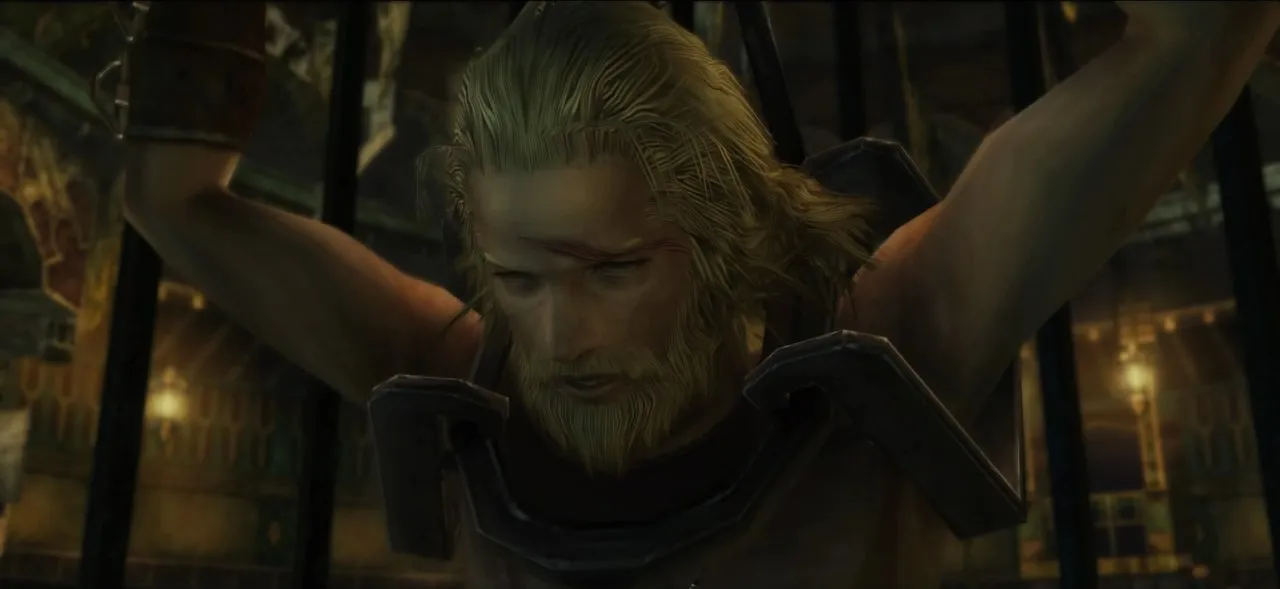
Amalia is Ashe. The princess who "took her own life" two years ago has in fact been leading the independence movement with an iron will and a hatred nothing can shake. The whole party is captured and thrown into the Nalbina dungeons — where they find Basch still alive, hanging in an iron cage. Their escape marks the beginning of the strangest alliance in Final Fantasy history: a princess who lost her country, a knight branded a kingslayer, a petty thief, and two sky pirates only in it for the bounty. None of them — not even Ashe — has any idea this journey will take them to the very doorstep of the gods.
The Dawn Shard and the Tomb of the Dynast-King
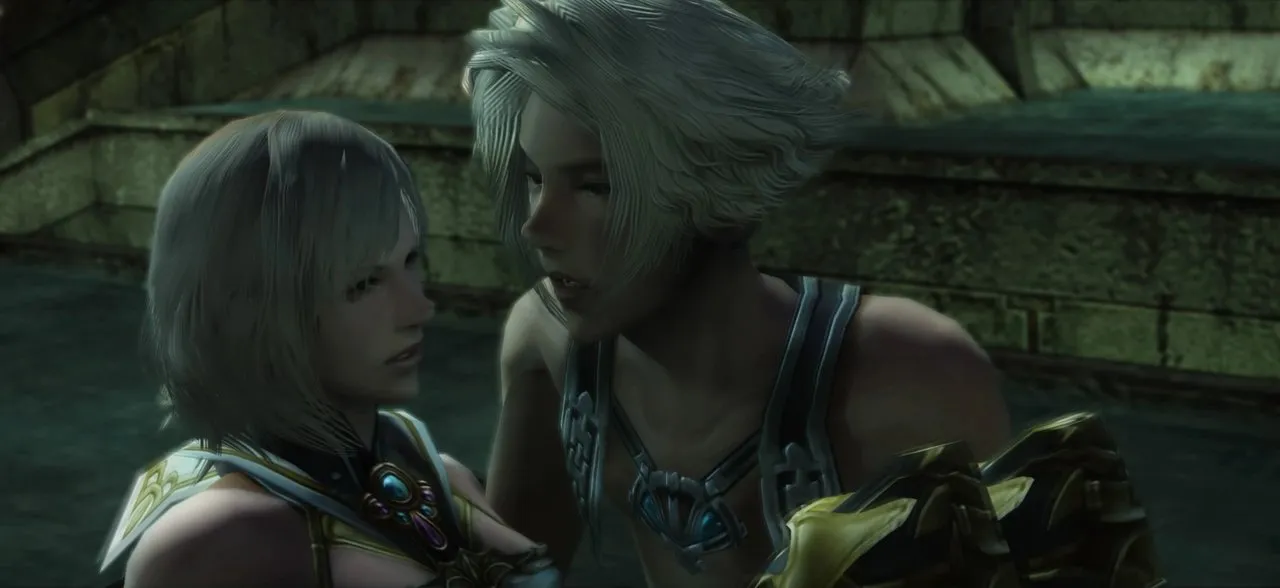
To prove her royal lineage before Marquis Ondore and the resistance factions, Ashe needs the treasure of her ancestors: the Dawn Shard, kept in the Tomb of Raithwall. Raithwall was no ordinary king: he was the Dynast-King, the legendary monarch who united Ivalice centuries ago with three pieces of nethicite — the Dusk Shard, the Dawn Shard, and the Midlight Shard — granted by the gods themselves, and the Sword of Kings, a blade that can cut nethicite. In the trap-filled tomb guarded by monsters, Ashe claims the Dawn Shard with the help of Belias, the first Esper to submit to the party — mythical beings created and cast aside by the gods, now existing only to be summoned by those strong enough to command them.
But the Dawn Shard is more than a certificate of royalty: nethicite is a mineral that absorbs and amplifies the Mist — the magical energy that pervades Ivalice — to the point that a single small stone can wipe out an entire fleet. When the Empire's Judge Ghis seizes the Dawn Shard and tests it aboard the flagship Leviathan, the stone overloads and detonates, swallowing Archadia's entire 8th Fleet in a pillar of light. Ashe sees with her own eyes that the "legacy of her ancestors" she clings to is in truth an apocalypse-grade bomb. And on the other side of the war, the Empire has just found a way to manufacture nethicite of its own (manufacted nethicite) — the weapon the gods once monopolized is about to fall into human hands.
Nethicite, Mist, and the rebellious Espers — the true power structure of Ivalice
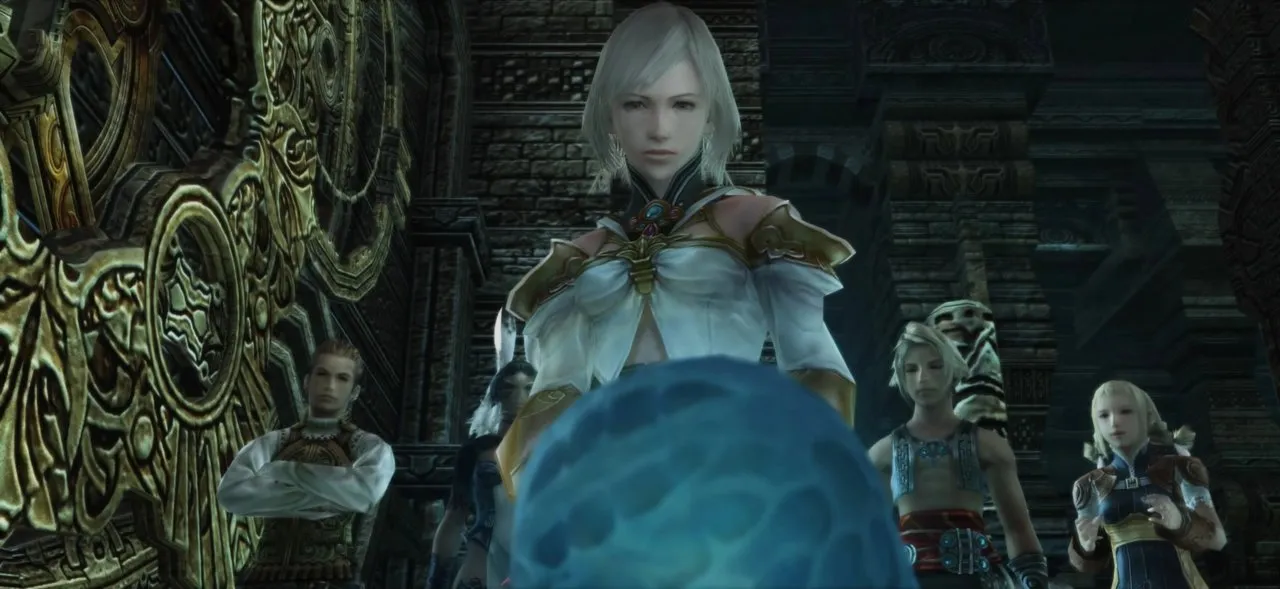
To understand the chess game of Final Fantasy XII, you have to understand what every faction is fighting over: nethicite. Ivalice is saturated with Mist — an invisible form of magical energy, concentrated in certain regions, and the source of most magic and monsters in this world. Nethicite is a mineral able to absorb Mist into itself and release it at its wielder's will: a god-made stone (deifacted nethicite) crafted by the Occuria can store enough Mist to flatten a city, while Archadia's manufacted nethicite is a cheaper, less stable human copy — but the first copy in history made without the gods. The war over Dalmasca is, at its core, an arms race over this "magical oil," and the Sun-Cryst atop Pharos is the largest oil field of all: a mass of primal nethicite from which the Occuria cut every stone they ever granted to the Dynast-Kings of each age.
An even deeper layer of lore lies with the Espers — the summoned beings of the game, whose entries in the bestiary lay out a complete mythology: in the beginning, the gods created the "Scions" to serve them, but many Scions rebelled or were cast out. Ultima, the High Seraph, leader of the Scions of Light, led a rebellion against the gods themselves and was struck down to the earth. Zodiark, the mightiest Scion of Darkness, was so powerful that the gods bound him in chains while he was still an infant, fearing the day he would come of age. The Espers the player gathers along the journey — Belias, Mateus, Shemhazai, Zalera, and others — are all remnants of that mythic war: entities that once nearly overthrew the heavens, now bound into stones and serving whichever mortal is strong enough to subdue them. Final Fantasy XII never makes you read these pages of mythology — they sit quietly in the bestiary, waiting for the curious. But once you have read them, you understand why the Occuria fear mankind so much: the history of Ivalice has proven twice that the created can always turn against the creator — the Espers did it, and now it is humanity's turn.
Larsa — the Empire's little prince and an impossible alliance
In the middle of the war stands a twelve-year-old child: Larsa Ferrinas Solidor, Vayne's youngest brother and the youngest son of Emperor Gramis. Unlike his brother, Larsa believes war is a tragedy that can be avoided, and he travels into the war zone himself to negotiate peace with Dalmasca behind the entire court's back. He journeys with Ashe's party for a long stretch, gives Penelo a piece of manufacted nethicite to protect her, uses his station to open the way through Imperial checkpoints, and sincerely counts these "enemies of the state" as his friends.
Larsa is the moral heart of Final Fantasy XII: he proves this story has no side that is purely good or purely evil. Archadia has the ruthless Vayne, but also the kind Larsa and Judges like Drace — executed by her own regime for daring to criticize Vayne. Dalmasca has the righteous Ashe, but her obsession with revenge nearly turns her into another Vayne. Even Basch and Gabranth — twin brothers on opposite ends of the war — are a mirror: one kept his knightly oath in full through two years in a dungeon, the other sold his soul to the Empire out of hatred for the homeland that let his family fall apart. Matsuno did not write about heroes and monsters; he wrote about people ground down by history in different ways.
The Occuria — gods who play chess with history, and Ashe's refusal
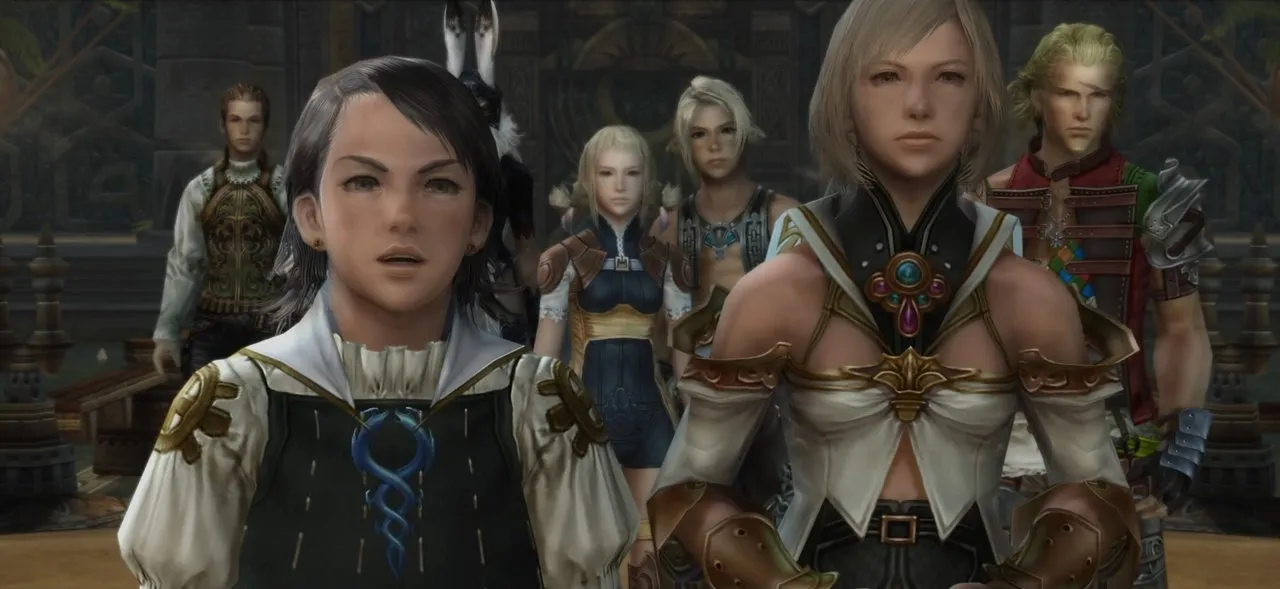
In the ancient city of Giruvegan, deep in the jungle, Ashe finds those who have been behind everything: the Occuria, an undying race who call themselves the gods of Ivalice. It was they who gave nethicite to Raithwall so that he could "prune" history according to their design whenever mankind strayed from the path — in every age, they choose a new "Dynast-King," grant him godly stones and power, and pull the strings from behind the curtain. Now they have chosen Ashe: appearing before her in the image of Prince Rasler, her late husband, they tempt her to take the Sun-Cryst — the enormous source of primal nethicite atop the lighthouse of Pharos — cut new stones from it, and use them to crush the Archadian Empire in vengeance for Dalmasca. The only price is to become their next puppet, as her ancestor once was.
This is the greatest turning point of Final Fantasy XII, and it belongs entirely to Ashe. Atop Pharos, before a Sun-Cryst holding enough power for her to win the entire war in a single night, with the counterfeit shade of Rasler whispering in her ear all along the journey — Ashe realizes that the voice speaking to her is not her husband, but the gods wearing the face of the one she loved most in order to command her. She raises the Sword of Kings... and refuses. Not a refusal of victory — she refuses the way of winning the gods arranged, refuses to let human history forever be someone else's chess game. Few protagonists in Final Fantasy are granted a moment of growth this great: from a princess who knew only vengeance, Ashe becomes the first person in centuries to dare say "no" to the gods.
Reddas and the most beautiful death in Ivalice
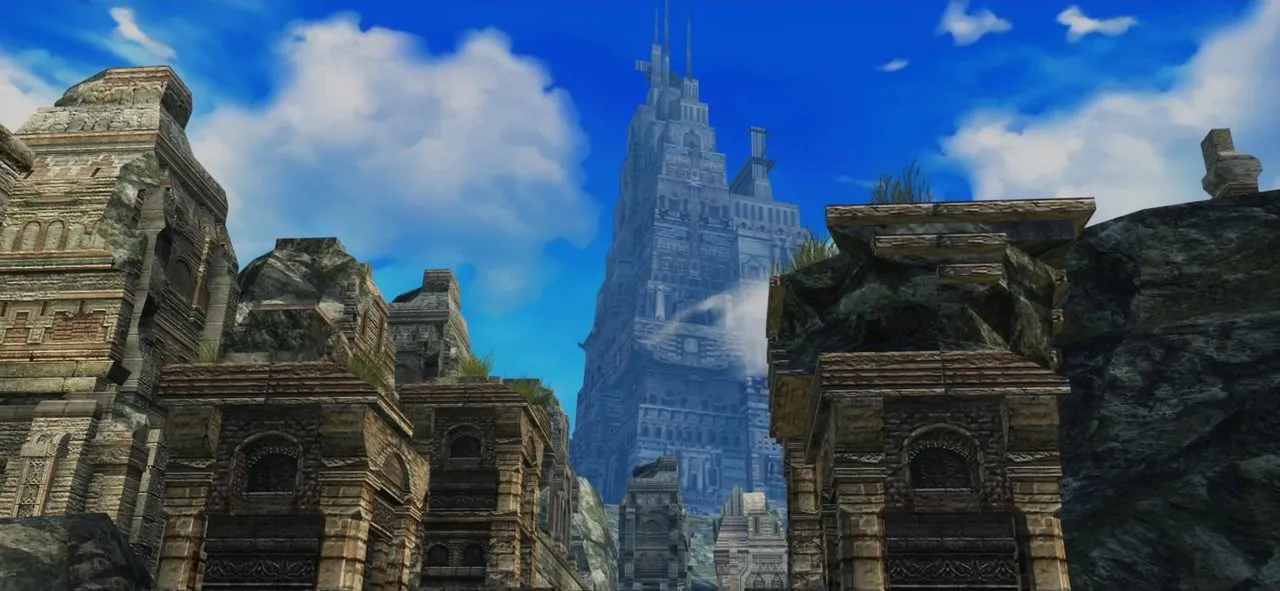
The one who helps Ashe destroy the Sun-Cryst is Reddas, the pirate lord of Port Balfonheim — and another of the story's secrets: he was once Judge Zecht of Archadia, the Judge who ordered nethicite used at Nabudis, wiping an entire kingdom off the map in the blink of an eye along with tens of thousands of lives. Carrying that guilt for the rest of his life, Zecht fled, changed his name, and waited for a chance to atone. Atop Pharos, as the released Sun-Cryst begins to overload — ready to detonate like the stone at Nabudis years before — Reddas snatches the Sword of Kings from Ashe's hand, charges in alone to destroy the crystal, and vanishes into the pillar of light along with it.
Reddas's death accomplishes two things at once: it cuts off the Occuria's supply of nethicite forever (from now on the gods have no stones left to grant a new puppet), and it is the game's answer to the theme of guilt: no one in Final Fantasy XII gets to wipe their past clean — not Basch, not Gabranth, not Ondore — but everyone can choose how to face it at the end of the road. Before dying, Reddas asks Ashe to forgive the man who helped destroy her homeland; and she, who once lived only for revenge, forgives him. Pharos is where the two most guilty and hate-filled people in the story both set down their burdens.
Vayne, Venat, and the battle in the skies over Rabanastre
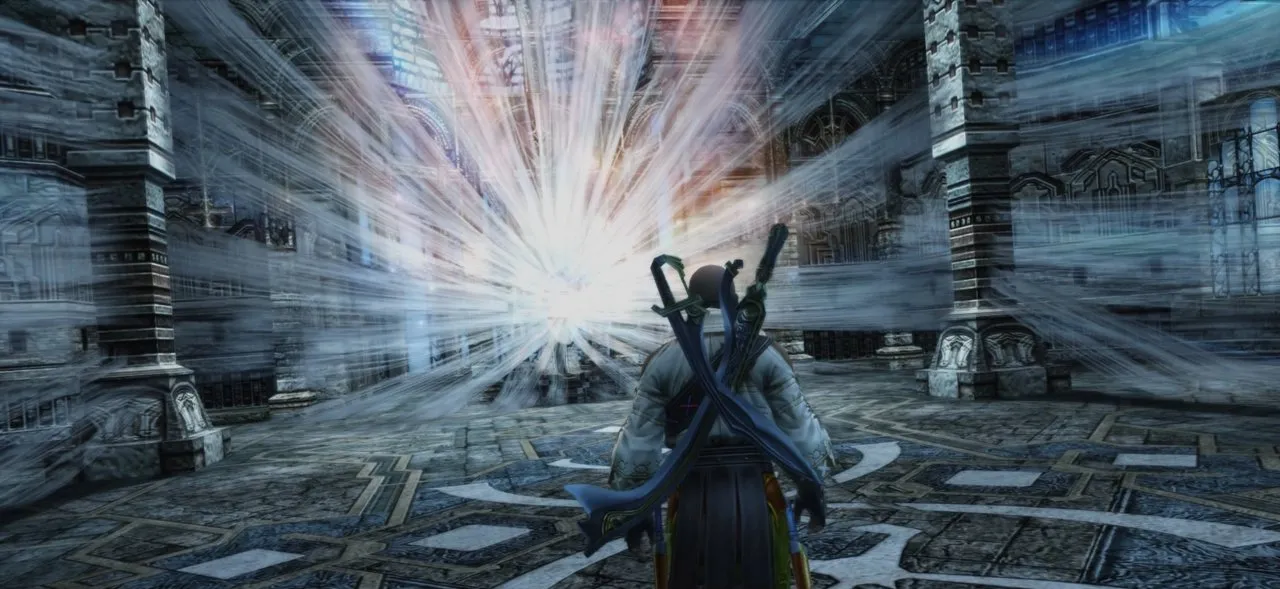
At the other end of the board is Vayne Carudas Solidor — and what sets him apart from every other Final Fantasy villain is that he is not mad, nor is he manipulated by the gods in the usual way. Vayne murdered his own father (Emperor Gramis) and the senators to clear his path to the throne, yet his ultimate goal is a genuine ideal: to free mankind from the Occuria. His ally, Doctor Cid — Balthier's father, the genius scientist who has "heard the voice" of Venat for many years — researches manufacted nethicite precisely so that mankind will no longer need the gods' stones. And Venat is an Occuria who betrayed its own kind: it wants to break its race's monopoly over history and "return the reins of history to the hands of man," whatever the price in war and blood.
The final battle takes place aboard the Sky Fortress Bahamut, the colossal flying fortress hanging over Rabanastre. Vayne fuses with Venat into The Undying, a being half man, half god — and, ironically, in order to "free mankind from the gods," he accepts becoming a new god himself. Ashe's party defeats him not with the power of the gods' stones (which they rejected and destroyed), but with their own strength — living proof of Venat's thesis and its refutation at once: mankind needs no gods, not even a god named Vayne. When Bahamut loses control and threatens to fall on Rabanastre, Balthier and Fran stay aboard the fortress, steer it away from the city, and vanish in the explosion — the story's "leading man" ends his part with a sacrifice worthy of a true lead. One year later, Penelo's letter closes the game: Ashe is crowned Queen of Dalmasca, Larsa becomes Emperor of Archadia, Basch takes his late brother's place as the Judge who protects Larsa under the name Gabranth — and somewhere out there, a familiar airship has just been "stolen" from its berth. Balthier lives on, in the loudest way possible.
What becomes of everyone after the ending
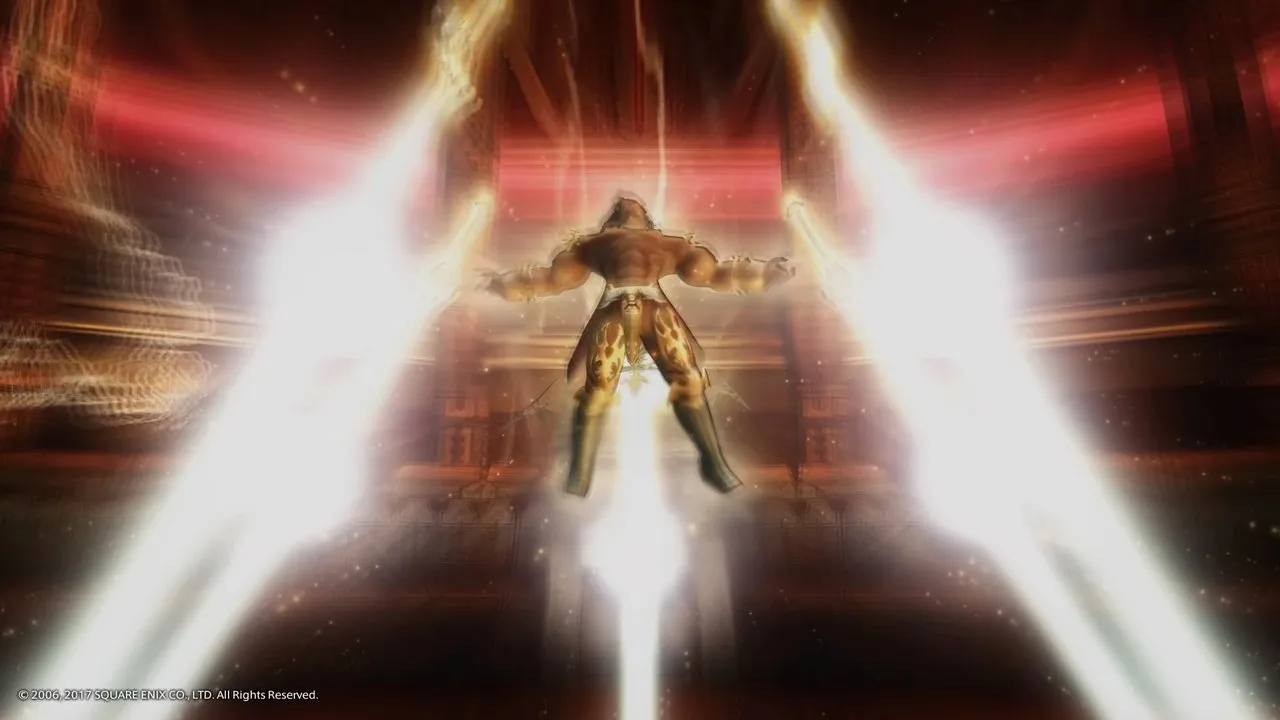
Ashe is crowned Queen of Dalmasca, ruling an independent kingdom between two empires softened by their new rulers. Vaan and Penelo become true sky pirates — their journey continues in the spin-off Revenant Wings, while in the original game, it is Penelo who recounts the entire ending in her letter to Larsa. Basch lives out the rest of his life under the identity of his brother Gabranth (who died in the battle aboard Bahamut after protecting Larsa and making amends with his brother), serving as the Judge who guards the young emperor — the knight framed for kingslaying ends his days in the armor of the man who framed him, to protect the peace. Balthier and Fran survive the destruction of Bahamut just as Balthier promised ("the leading man never dies") and come back to "borrow" the Strahl a year later. Larsa becomes the youngest emperor in Archadia's history, aided by Basch, pursuing the policies of peace he dreamed of back when he was still a boy negotiating in a war zone.
Common misconceptions
Is Vaan really the main character of Final Fantasy XII?
Vaan is the narrator and the player's eyes, but the true protagonist of the story is Ashe — every fateful decision belongs to her — and, to a degree, Balthier, who says as much himself in the game. This was Matsuno's intent: to tell history through the eyes of the smallest person caught up in it.
Is Vayne a pure villain?
Not quite. He is ruthless and murdered even his own father, but the ideal of the Vayne–Cid–Venat alliance — freeing mankind from the Occuria — is real, and part of it came true through his very defeat, when the Sun-Cryst was destroyed and the gods lost the stones they granted their puppets.
Are the Occuria omnipotent gods?
No. They are undying and powerful, but entirely dependent on humans willing to be their puppets. When Ashe rejected their offer and the Sun-Cryst was destroyed, the Occuria lost the ability to meddle in history almost at once — their power existed only because humans believed in it and obeyed.
Is Final Fantasy XII connected to the other games?
Yes: Ivalice is the shared world of Final Fantasy Tactics, Tactics Advance, and Vagrant Story, with the same system of races, Espers, and political flavor. FFXII itself also spawned a direct sequel, Revenant Wings — it is only standalone relative to the other numbered mainline entries.
Unanswered theories
Did the Occuria really lose? They withdrew after Pharos, but beings who have lived for millennia rarely give up after a single defeat. Their chosen method of manipulation — speaking through the image of the dead (Rasler) — shows how frighteningly well they understand humanity, and Ivalice still has other stones and other ambitious men. How much did Balthier know about his father from the start? The fact that he abandoned his post as a Judge and the name Ffamran mied Bunansa so early, together with his manner whenever Doctor Cid appears, suggests our "leading man" had been running from the truth about Venat long before he admitted it — his journey, in the end, is about coming back to face the father he fled. Marquis Ondore — hero or opportunist? The entire game is told through the memoirs of Ondore, a man who calls himself a liar from the very first lines (he once spread the news that Ashe had taken her own life in order to protect her, and manipulated both sides of the war). That the narrator confesses to being a liar is Matsuno's invitation to the player: ask yourself how much of Ivalice's "official history" is true — a question perhaps no other Final Fantasy has dared to pose quite so bluntly.
👤 Main characters
A quick introduction to the central characters of the story — portraits taken from the game itself.
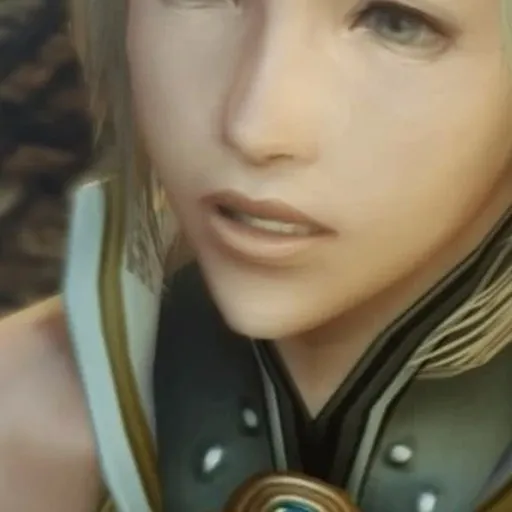
Every fateful decision in Final Fantasy XII belongs to Ashe. Chosen by the Occuria gods as their puppet of vengeance, promised the power to crush the Empire, she is the first person in centuries to dare refuse them atop Pharos — turning a princess's journey of revenge into the story of how mankind reclaims the right to decide its own history.
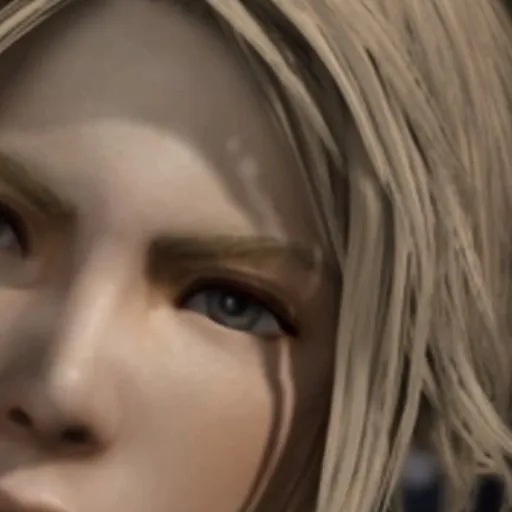
Vaan is the player's eyes in the world of Ivalice: a small person ground under history's wheel, never knowing the whole truth about his brother's death. His dream of an airship and a free sky — inherited from Rex — is the thread that gives this heavy political epic a youthful heart, and by the end of the game, he truly touches that sky.
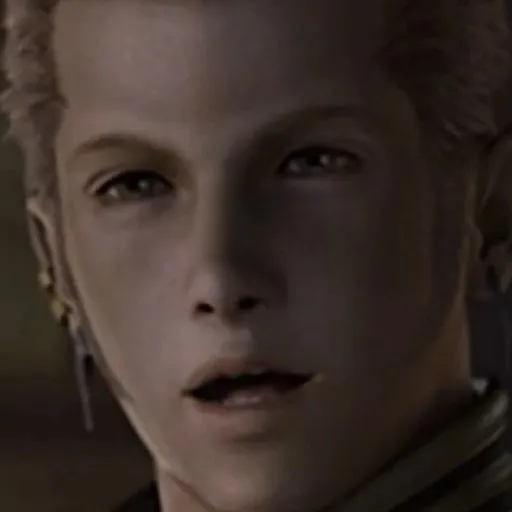
Balthier calls himself the leading man, and the game quietly agrees with him: a former Imperial Judge who fled a father slowly going mad from Venat's 'voice,' he lives the flamboyant life of a sky pirate until fate drags him back to face his family. He ends the story with a leading man's classic sacrifice — and returns a year later as if nothing happened, because 'the leading man never dies.'
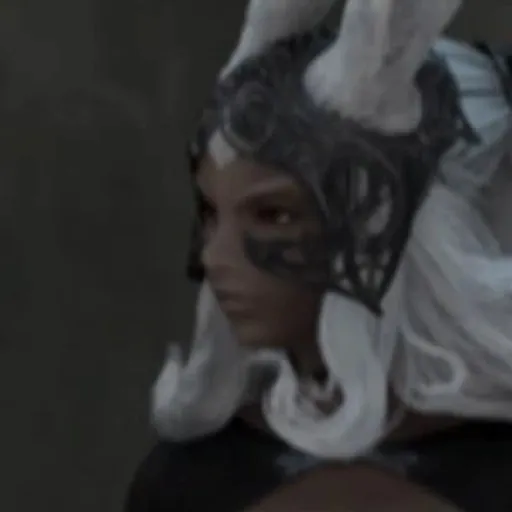
Fran is the voice of calm and of the natural world amid a story of human scheming. Her Viera live listening to the 'voice of the Wood' — and her choice to leave it behind and travel with Balthier made her an exile among her own people. Fran's sensitivity to the Mist saves the party more than once, and her presence reminds the player that Ivalice holds many worlds beyond the courts of men.
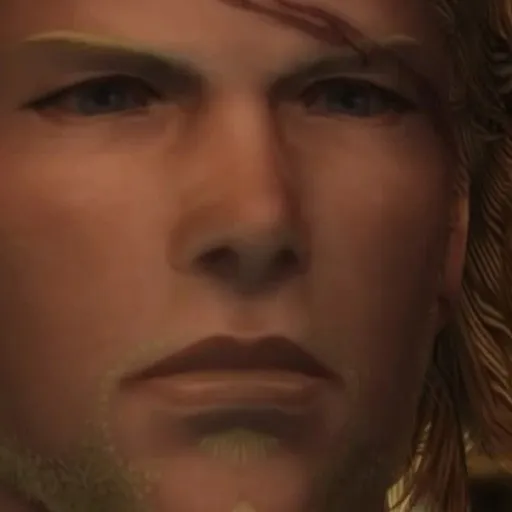
Basch is the embodiment of loyalty that needs no recognition: hated by an entire kingdom for a crime that was not his, kept alive in a cell for two years, he still goes on protecting Ashe and Dalmasca the moment he is free. His ending — living out his days in the armor and identity of the very man who framed him, to protect the young emperor of his old enemy — is one of the most bittersweet and noble fates in the series.
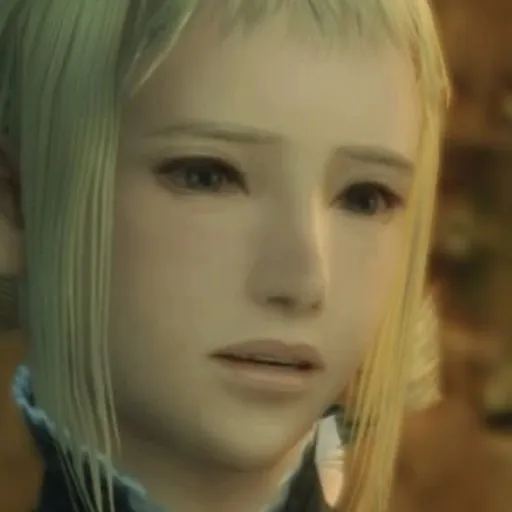
Penelo has no royal blood and no epic tragedy — her strength is ordinary kindness in a world gone mad for power. Her friendship with Larsa, the enemy's prince, is living proof that Ivalice's young generation can break the cycle of their fathers' hatred; and it is her voice in the game's final letter that turns this whole epic into a story retold with feeling, rather than in the history books of the victors.
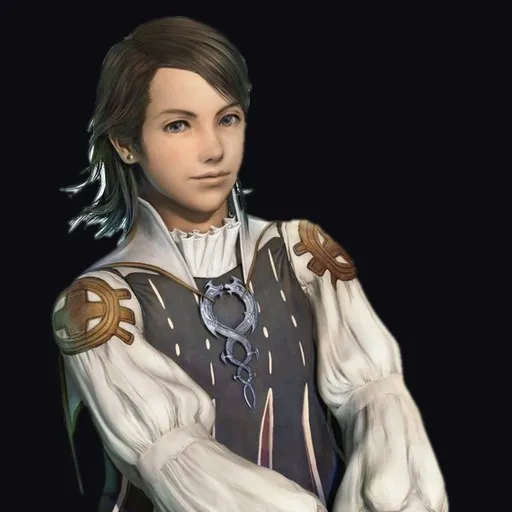
The 12-year-old prince of Archadia — Vayne's younger brother — yet the only member of the imperial house who seeks peace instead of war. Larsa travels with Ashe's party under the alias 'Lamont,' staking both his position and his life to stop two empires from plunging into a war of annihilation.
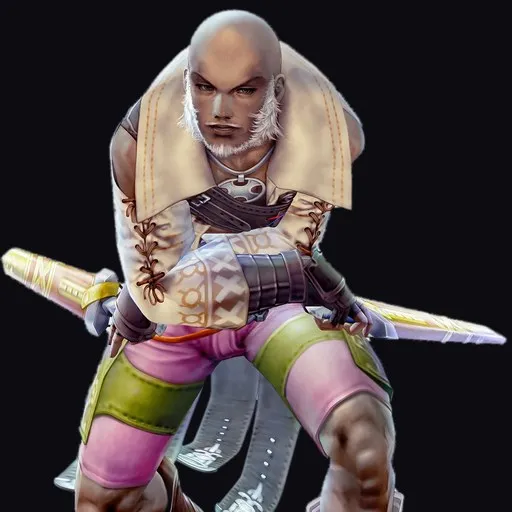
Former Judge Zecht — the man who, on Vayne's orders, destroyed Nabudis with nethicite and lived the rest of his days in regret under the pirate name Reddas. Atop the Pharos tower, he gives his own life to destroy the Sun-Cryst, atoning for his old sin and saving the party.
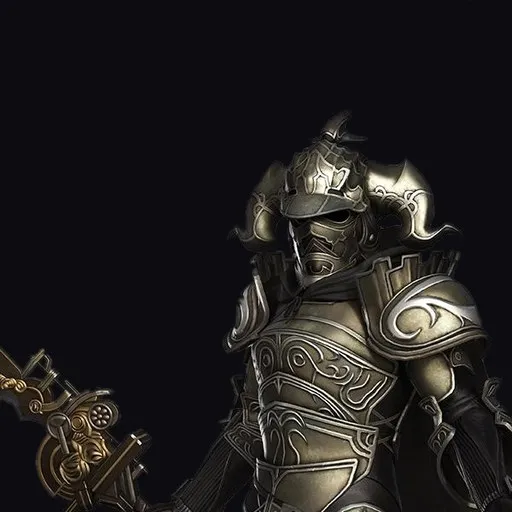
The twin brother who stole Basch's identity to pin King Raminas's murder on his brother, then climbed to the office of Judge Magister of Archadia under the name Gabranth. He lives his whole life in hatred and obedience to Vayne, and only at the very end turns back to protect Larsa and make amends with his brother.
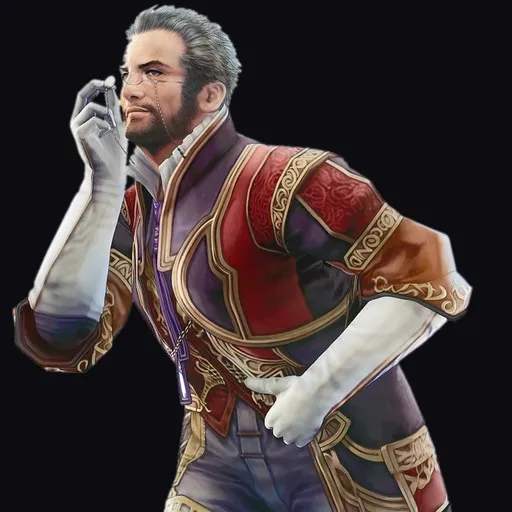
The scientific genius behind Archadia's manufacted nethicite technology, and the first human ever to join forces with an Occuria — Venat — to 'return the reins of history to the hands of man.' For Balthier, he is both the respected father of years past and living proof of the price of ambition.
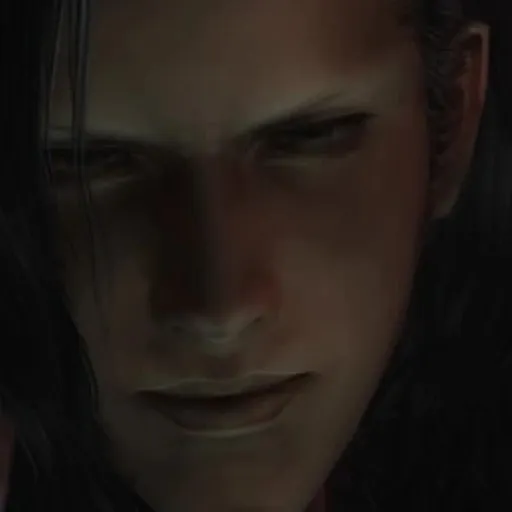
Vayne is the most unusual villain in Final Fantasy: he murdered his father and manipulates an entire empire, yet his ideal — tearing the reins of history from the hands of the Occuria gods and returning them to mankind — is genuine. Vayne's tragedy is that to defeat the gods, he is willing to use every trick of the gods, and in the end turns himself into a new god named The Undying. He loses not because his ideal was wrong, but because he did not believe mankind could be free without someone like him to lead the way.
📚 Read the Final Fantasy series in story order
- Final Fantasy IV Story Explained: The Dark Knight Cecil's Journey of Redemption
- Final Fantasy VI Story Explained: The Madman Who Destroyed the World and a Symphony of Hope
- Final Fantasy VII Story Explained: The Mercenary and the Memories That Were Never His
- Final Fantasy VIII Story Explained: The Sorceress's Time Loop and the Promise at the Flower Field
- Final Fantasy IX Story Explained: Home Is Where Someone Is Waiting for You
- Final Fantasy X Story Explained: The Thousand-Year Dream and the Price of Truth
- Final Fantasy XII Story Explained: The Gods' Chess Game and the Princess Who Dared to Say No — you are reading this one
- Final Fantasy XV Story Explained: Ten Years in the Crystal and the Price of the Dawn
- Final Fantasy XVI Story Explained: The Flame of Rebellion and the Day Magic Vanished from Valisthea


