Final Fantasy IX Story Explained: Home Is Where Someone Is Waiting for You

📋 Quick facts
- Game
- Final Fantasy IX
- Developer
- Square Co., Ltd. (now Square Enix)
- Release year
- 2000 — July 7, 2000 in Japan (PlayStation)
- Original platform
- PlayStation
- Genre
- Turn-based JRPG
- Director
- Hiroyuki Ito
- Writer
- Hironobu Sakaguchi
- Notable feature
- The Final Fantasy entry that returned to a classic fantasy style after two science-fiction installments; Sakaguchi called it the entry dearest to him, “the closest to his ideal vision of Final Fantasy”
- Next entry
- Final Fantasy X (2001)
In 2000, when the entire games industry was racing toward grim science fiction, Square did the opposite: Final Fantasy IX returned to the most classic fantasy of all — knights and princesses, airships sailing under full canvas across the sky, two moons hanging in the night. Hironobu Sakaguchi, the creator of the series who wrote this game's scenario, said shortly before its release that this was his favorite Final Fantasy of all, because it was “the closest to his ideal vision of what Final Fantasy should be.”
But don't let the fairy-tale shell fool you. Beneath its storybook-styled characters lies one of the heaviest, most moving stories in the entire series, revolving around death, artificial people searching for souls, and the question every character must answer for themselves — who am I, what do I live for, and where is my home?
⚠️ Spoiler warning: This article retells the entire story of Final Fantasy IX (the original PlayStation version, 2000), including the secret final boss and the full ending.
📌 Quick summary: Zidane, a thief with the Tantalus theater troupe, Princess Garnet and the black mage Vivi are swept into a war sparked by Queen Brahne under the manipulation of Kuja — a Genome created by the planet Terra to seize Gaia. Knowing he is about to die, Kuja goes mad, tries to destroy everything, and awakens Necron, the embodiment of death. The party defeats Necron, Kuja redeems himself by saving everyone at the last moment, and Vivi leaves behind a farewell letter.
Chapter 1: The Play and the Kidnapping in Alexandria
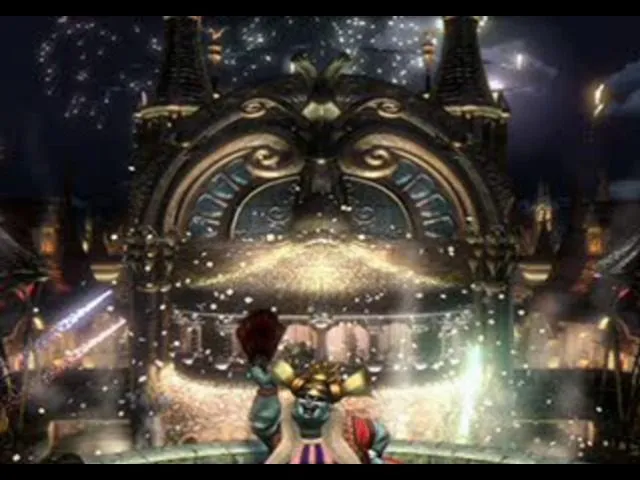
The story opens with a job. The traveling theater troupe Tantalus — actors by day, thieves in truth — takes a commission from Regent Cid of Lindblum: kidnap Princess Garnet of Alexandria on the very night of the celebration of her sixteenth birthday. Cid suspects Queen Brahne — Garnet's mother — has changed in a frightening way, and wants the princess out of the castle before it is too late.
That night, the airship Prima Vista becomes a floating stage above the capital for the classic play I Want to Be Your Canary. Lost amid the festival is Vivi — a small black mage boy whose tall pointed hat covers nearly his whole face, leaving only a pair of glowing yellow eyes. He has come to see the play holding a fake ticket, and only makes it in time to watch the spectacular sword fight between Zidane — Tantalus's blond, tailed thief — in the role of Marcus and his friend Blank, thanks to a rat boy named Puck leading him across the rooftops.
The kidnapping plan immediately goes off the rails. When Zidane sneaks up into the tower, he runs into a hooded girl who is… escaping the castle on her own. It is Garnet herself. She begs him to “kidnap” her, and quickly: she had already been planning to flee to Lindblum and beg Cid for help, because she too could see that her mother was no longer herself. The kidnapping becomes a willing escape, with Steiner, captain of the Knights of Pluto, bellowing in pursuit. Brahne orders the Prima Vista shot down the moment it takes off. The airship catches fire and crashes into the Evil Forest. To open an escape path for the group, Blank stays behind and is petrified along with the closing forest. Zidane, Garnet, Vivi and Steiner — four people who could not be more different — thus begin their journey together.
Chapter 2: The Village of Dali and the Walking Dolls
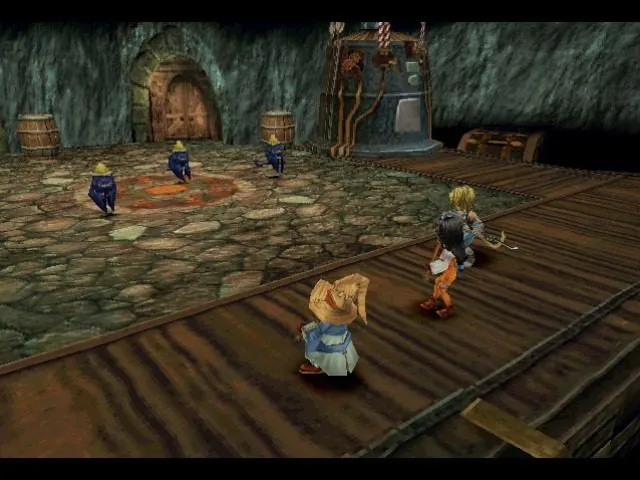
The group stops at Dali, a peaceful farming village where windmills turn slowly. There, Garnet takes a commoner's name to blend in: “Dagger” — after Zidane's dagger — and for the first time tries living as an ordinary person. But beneath Dali's windmills lies an enormous underground factory: people pump Mist — the poisonous fog that gives birth to monsters — into strange “eggs,” and from them manufacture black mages: silent soldiers with soulless yellow eyes, identical to Vivi yet hollow as dolls. They are packed into crates and loaded onto cargo airships bound for Alexandria, as single-use weapons.
Standing before these “brothers” of his being led away like merchandise is the first shock of Vivi's life. Who am I? Could he too be nothing but a defective product that fell off a cargo ship, lucky enough to be found and raised by old Quan? When Quan “stopped” (the black mages' word for dying), Vivi set out alone in search of an answer — and the first answer he found was this cruel.
The group fights its way aboard the very cargo ship to reach Lindblum. Mid-flight, they are ambushed by Black Waltz No. 3 — an elite winged black mage of Alexandria — and Vivi is forced to turn his magic against the being most like himself. Back in Lindblum, the group meets Regent Cid — turned into an oglop by his wife Hilda as punishment for his womanizing — and receives thunderous news: Alexandria has marched its army against Burmecia. The war has begun.
Chapter 3: Queen Brahne's War
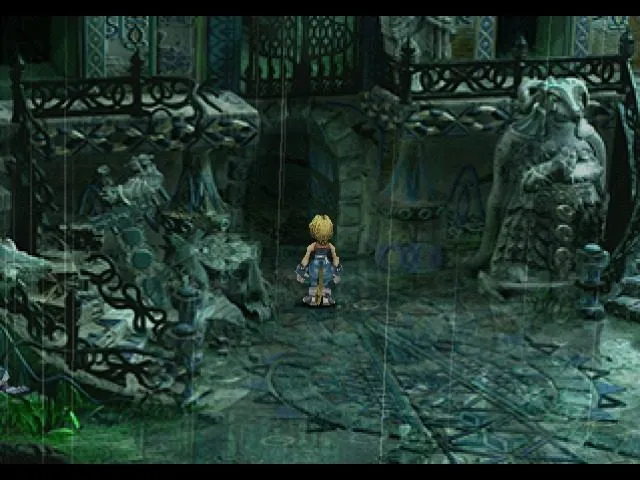
The truth about Brahne gradually comes to light: behind her stands a mysterious arms dealer named Kuja, pulling the strings. Brahne had long ago ordered the two jesters Zorn and Thorn to drain the eidolons — the summoned gods — out of Garnet, turning them into weapons of annihilation. Atomos is unleashed upon Lindblum, swallowing an entire district of the capital. And Burmecia, the kingdom of rat warriors beneath rain that never ceases, is overrun by the black mage army. The dragoon Freya returns to her ruined homeland and finds Sir Fratley — her lover, missing for years — still alive, but he looks at her as at a stranger, every memory of her gone. General Beatrix — of whom it is said she “single-handedly cut down a hundred knights” — defeats the entire party with ease, while Kuja looks down from his silver dragon as though watching an amusing show.
The people of Burmecia retreat to Cleyra, a city in a giant tree sheltered by a sandstorm. When the ritual that sustains the sandstorm is sabotaged from within, Brahne summons Odin for a single blow — erasing all of Cleyra from the map, thousands of lives vanishing in a blinding light. Meanwhile, both Steiner and Beatrix begin to ask themselves what it is they truly hold their swords for.
The hunt for the source of the Mist leads the group to the Outer Continent. They come to the Black Mage Village — where black mages who have “run out of time” hide away from mankind: they live only about a year before they “stop,” and they bury one another properly in the graveyard behind the village. Black Mage No. 288 tells Vivi about fear, and about the joy of living alongside everyone else — a joy greater than the fear. Further on lies Madain Sari, the village of the summoner tribe that was destroyed when Garnet was small, where now only six-year-old Eiko lives among the ruins with her family of moogles. Finally, at the Iifa Tree — the colossal ancient tree — the group defeats Soulcage and hears the first truth: the Mist is only the waste product of a blocked cycle of souls, and this tree does not belong to their planet at all.
Chapter 4: Garnet Loses Her Voice, Alexander, and the Visitor from the Sky
Brahne brings her fleet to the Iifa Tree, intending to kill Kuja and monopolize the power of the eidolons. But Kuja is one move ahead: he seizes control of Bahamut — the eidolon only just stolen — and turns the dragon king loose to slaughter the Alexandrian fleet itself. On the shore beneath the Iifa Tree, Queen Brahne lies dying in her daughter's arms, just in time to speak her apology. Garnet holds her mother's body, and from that day onward she cannot speak — her voice dies away just as she is about to ascend the throne as queen.
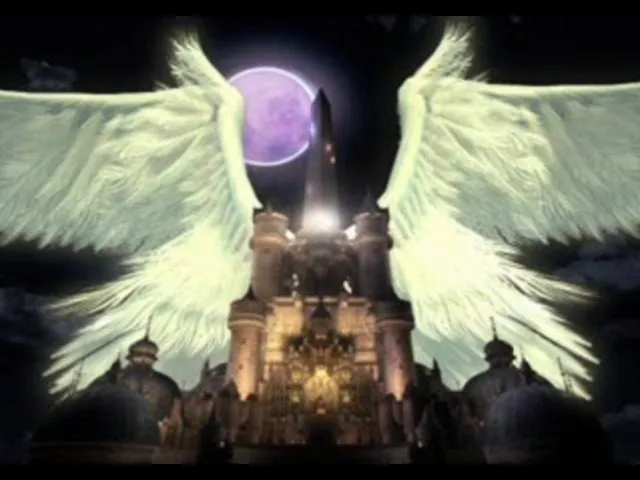
Before she can recover, Garnet faces her greatest trial yet. Kuja brings Bahamut back to ravage Alexandria in the very days of her coronation. Garnet and Eiko together accomplish what no one has managed in hundreds of years: they unite the four jewels of the summoner tribe and call forth Alexander — the colossal eidolon of legend, taking form from Alexandria Castle itself, spreading wings of light to shield the capital and crushing Bahamut. But the joy lasts only seconds. From the night sky, the colossal eye of a never-before-seen airship opens. Garland — one who comes from another planet — declares that Alexander is too dangerous to be allowed to exist outside his control, and with his own hand destroys the legendary eidolon together with nearly half the capital in a sea of fire.
Garnet breaks down completely: she has lost her mother, her voice, and now her city before her very eyes. The true enemy is no longer Kuja, nor any kingdom upon the ground. To put an end to it all, the group resolves to seek out the root of everything — the dying planet named Terra.
Chapter 5: Terra, the Genomes, and “You Are Not Alone”
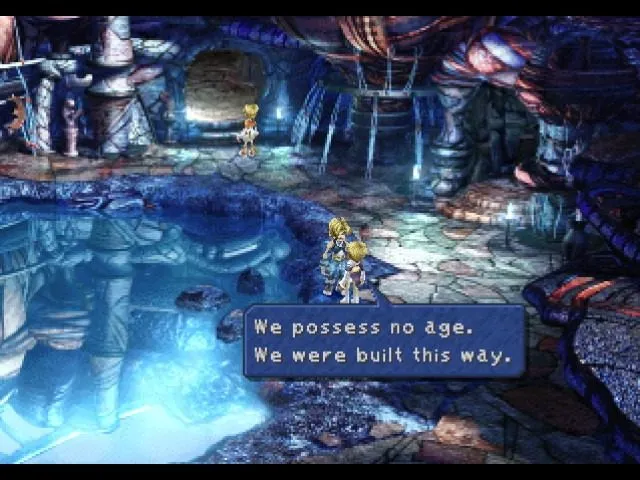
Bran Bal, a village on Terra, is one of the most haunting places in the game: everyone living there is blond and tailed — exactly like Zidane. They are the Genomes: bodies created in a laboratory, who do not age and feel no emotion, silently waiting to be “filled” with the souls of Terra's dead. Garland, the keeper of this dying planet, reveals his plan: Terra is dying, and so it will possess Gaia — the Iifa Tree was planted to dam the flow of Gaia's souls, forcing the souls of Gaia's people to slowly fade away and yield their place to the souls of Terra, reborn. The Mist, the wars, all of Gaia's suffering are parts of that cruel plan to “change homes.”
And Zidane is a special link in that plan. He is no human orphan: he is a Genome created by Garland himself as an “angel of death” — the one who would sow war across Gaia to hasten the possession. But Kuja — the prototype made before him — out of jealousy kidnapped the infant Zidane and abandoned him on Gaia. Thanks to that act of “sabotage,” Zidane was picked up and raised in Lindblum by Baku of Tantalus, instead of growing up in the cold laboratories of Bran Bal.
The truth shatters Zidane. At Pandemonium, Garland's fortress, he confronts the one who made him and then collapses entirely: if he is nothing but a tool of destruction, then what were all those years, all the people he loves — what were any of them? He pushes everyone away, hurling himself into one battle after another alone, like a man bent on destroying himself. And this is where Final Fantasy IX gives its players one of the most immortal sequences in JRPG history, set to the track You Are Not Alone: one by one, his friends charge into the battle at his side — Vivi, Garnet, Steiner, Freya, Eiko, even those who were once his enemies — each with a line to pull him back. What they all say comes down to a single sentence: you are not alone. Zidane stands back up — not as a tool of destruction, but as a human being choosing his own path. He understands at last: home is not where you were made — home is where someone is waiting for you to return.
Chapter 6: Kuja's Trance and Memoria, the Planet's Realm of Memories
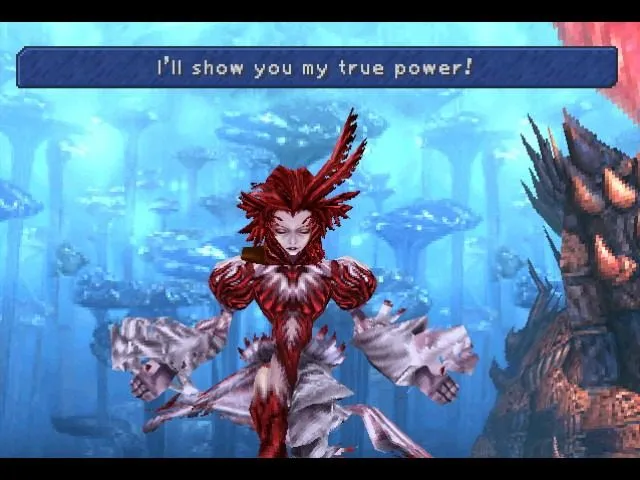
After Garland's defeat, Kuja descends upon Terra, hungry to seize it all. But Garland — even in defeat — still holds one final card: he reveals that Kuja, the prototype, was created with a finite lifespan, and his time is nearly spent. The one who seemed immortal and all-powerful turns out to be nothing but a thing made to be used and thrown away, exactly like the black mages he so despised. In his panic, Kuja devours countless trapped souls, attains an immensely powerful Trance, kills Garland, and in his desperate fury destroys the whole of Terra. If I must die, then nothing shall be permitted to exist after me.
Back on Gaia, the group witnesses the Iifa Tree running rampant after Garland's death, its colossal roots bursting up across the world. Above the canopy, a gate opens onto Memoria — a realm where all the memories of the planet lie suspended, from the dawn of creation to the end of days. The group walks upstream against the current of their own world's memories, hears the spirit of Garland speak his last words, and at last sets foot in the Crystal World, where the Crystal — the origin of all life — resides. There, Kuja in his Trance form awaits them for the final battle. Beaten but refusing his end, he unleashes Ultima straight at the Crystal itself: if he must vanish, he will drag all life down with him.
Chapter 7: Necron, the Ending, and Vivi's Letter
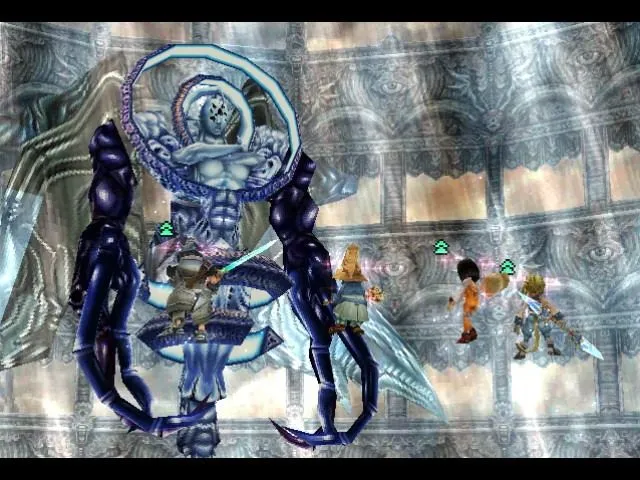
In the light of Ultima, the party believes they have all died. But they open their eyes upon a barren hill in outer space, and a voice speaks out of the darkness: Necron — who names himself the eternal darkness. He declares that the fear of death Kuja has just laid bare has persuaded him: all living things in the end yearn to return to nothingness, and so he shall return everything to the “zero world” — a place without life, without death, and therefore without fear. Necron is no servant of Kuja's or Garland's; he is that which has always waited at the end of every life. The party defeats him not through superior strength, but through the memories and the will to live they have gathered across the whole journey — one by one they fall and rise again, until Zidane strikes the finishing blow. Necron dissolves, but leaves behind a chilling affirmation: as long as life and death exist, so shall I.
On the other side, Kuja lies dying among the collapsing roots of the Iifa Tree. In the first and last act of redemption of his life, he uses what strength remains to him to teleport Zidane's party to safety. But Zidane cannot walk away like that. He returns into the wreckage and finds his enemy — who is also his “brother” — lying there awaiting death. There, Kuja bitterly confesses that only now, after committing so many atrocities, has he for the first time understood what it means to live — but it is too late. Zidane answers with the lesson his own journey taught him: no one needs a reason to be helped, and no one needs a reason to live.
Time passes. Alexandria is rebuilt, and Garnet reigns as a true queen. The Tantalus troupe returns to the capital and stages once more that very play from years ago, I Want to Be Your Canary. On stage, “Marcus” steps forward and delivers his lines toward the royal box — then casts off his cloak. It is Zidane, alive, and he has found his way home. Garnet springs to her feet and runs through the crowd toward the stage; her pendant slips and falls along the way, but she does not stop. She throws her arms around him before all her subjects. This time, there is no princess and no thief — only two people who have come home.
Woven between these scenes of reunion is the voice of Vivi — a letter he wrote to his friends. Slowly, the player realizes the most heartbreaking truth of all: Vivi had “stopped” before the day of the performance, and the letter is his farewell. In the final scene, a group of little black mage boys who look exactly like Vivi — the generation that comes after him — appear at Alexandria's docks. Final Fantasy IX closes with these lines from his letter:
“Thank you, everyone. Goodbye. My memories will become part of the sky.”
Where Each Character Ends Up
Zidane Tribal
He survives the collapse of the Iifa Tree and finds his way back to Alexandria. He is reunited with Garnet upon the very stage of that play from years before — this time as the man she loves, not her kidnapper.
Garnet (Dagger)
She rules Alexandria as a grown queen, beloved by her people. The moment she drops her pendant as she runs to Zidane is read by many as the moment she chooses to live for herself.
Vivi Ornitier
By the most widely held interpretation, Vivi had “stopped” before the performance in the ending; the letter that runs through the finale is his farewell. The little black mage boys who look exactly like him in the closing scene are regarded as Vivi's “children” — proof that his brief life still carries on.
Adelbert Steiner
He remains in service at the queen's side. His relationship with General Beatrix — from confrontation to understanding — blossoms; together they take up their swords in Alexandria's defense.
Freya Crescent
She returns to rebuild her homeland together with Fratley. Fratley's memories never come back, but the two of them resolve to start again from the beginning — to fall in love one more time.
Eiko Carol
She is no longer the lonely child of Madain Sari: Regent Cid and Lady Hilda (restored to her human form) welcome her to Lindblum and adopt her as their own — at last, she has a home in the truest sense.
Kuja
He dies among the roots of the Iifa Tree, after saving the party and receiving Zidane's forgiveness. The man who caused every war on Gaia departs having only just understood the value of being alive.
Lore Points That Are Often Misunderstood
Is Necron just a final boss crammed in at the last minute, and completely meaningless?
No. In terms of plot delivery, Necron's appearance is indeed abrupt, but thematically he is the final piece of the puzzle: the whole of Final Fantasy IX revolves around the fear of death, and Necron is that fear given form — the will to destroy everything so that there is nothing left to fear.
In terms of plot delivery, Necron's appearance really is sudden. But thematically he is the final piece, not an intruder: all of Final Fantasy IX revolves around the fear of death — black mages with a lifespan of one year, Kuja driven mad upon learning he is about to die, a dying planet Terra clinging to life by stealing another planet's home. Necron is precisely that fear given shape: the desire to destroy everything so there is no longer anything to fear. To call him “meaningless” is to overlook the game's entire thematic axis.
Is Vivi really still alive at the end of the game?
The figures who resemble Vivi in the ending are not Vivi himself: they are a group of black mage children, and none of them is confirmed to be him. On the contrary, the letter that runs through the ending carries the tone of a farewell, and Vivi is absent from every reunion scene. This is why the majority of the community understands that he has passed away — even though Square has never stated it outright (see the Theories section below).
Was Garnet's haircut nothing more than a change of appearance?
Garnet's hair is cut at the journey's final stage, with Zidane's own dagger — the origin of the name “Dagger” — at the very moment she regains her voice. It is an oath: to lay her grief aside and rise to fight as a true queen.
Is Final Fantasy IX the most childish entry in the series?
Beneath its chibi style and bright colors lies one of the darkest entries in the series: two kingdoms wiped from the map, soldiers mass-produced with expiration dates, a dead planet trying to possess another world, and a final boss who is the embodiment of death itself. That fairy-tale exterior is very much deliberate.
Fan Theories and Community Debates
What is Necron, really?
The community remains divided to this day. The most popular school of thought sees Necron as the embodiment of the fear of death and the will toward nothingness within every living creature — he himself says he is “eternal” for as long as life and death exist. A second school holds that he is a kind of “reaction” of the universe when the Crystal comes under direct threat from Ultima. One behind-the-scenes detail often brought up: the final-boss slot was originally intended for Hades — the series' familiar god of death — before Necron replaced him late in development.
Is Vivi alive, or has he passed away?
This is the FFIX community's longest-running and most emotional debate. The “he has passed away” side rests on the farewell tone of the letter, Vivi's absence from the reunion scenes, and the roughly one-year lifespan of the black mages. The other side points out that the game never shows a single scene of Vivi “stopping,” and argues that Square deliberately left the answer open. Whichever side you take, nearly every player agrees that Vivi's letter is the part of the ending that made them cry the most.
How long will Zidane live?
Genomes ordinarily do not age, because they are merely “vessels waiting to be filled with souls.” But Zidane is a special case: he grew up perfectly normally, like an ordinary sixteen-year-old boy. Will he grow old like an ordinary person, or does he carry the undefined lifespan of a Genome? The game does not answer — and this remains the question fans argue over whenever his and Garnet's future comes up.
👤 Main characters
A quick introduction to the central characters of the story — portraits taken from the game itself.
- Age
- 16
- Raised in
- Lindblum, with the Tantalus troupe
- Weapon
- Twin daggers and swords
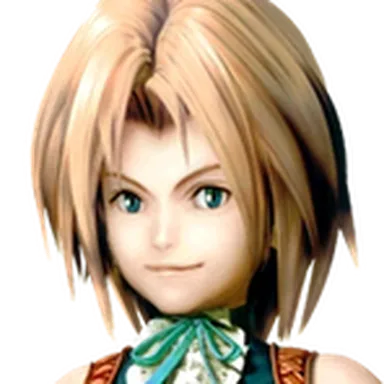
The sixteen-year-old thief of the Tantalus troupe: quick with his tongue and a hopeless flirt, yet he never abandons anyone. He believed he was just an abandoned child — until the planet Terra spoke his true name: a Genome created to bring war to Gaia.
- Age
- 16
- Homeland
- Madain Sari — village of the summoner tribe
- Abilities
- Summoning eidolons and white magic
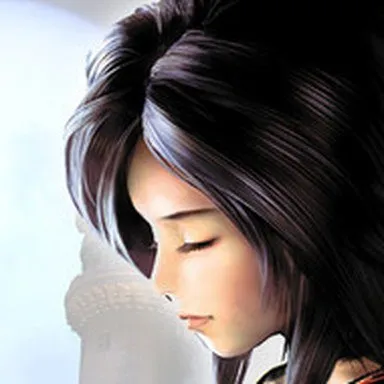
The princess of Alexandria who willingly lets herself be “kidnapped” in order to escape the castle and beg Lindblum for help. She loses her eidolons, her mother, and even her voice to grief — her journey is about learning to stand as a queen on her own two feet, and finding her own voice again.
- Type
- Prototype black mage
- Raised by
- Grandpa Quan, near Treno
- Weapon
- Staves
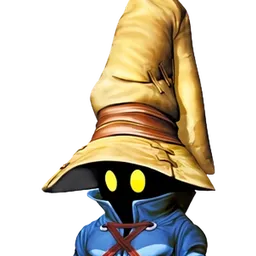
A timid little black mage boy taken in and raised by Grandpa Quan. When he discovers that his “brothers” are only mass-produced dolls with short lifespans, Vivi embarks on the most painful and beautiful journey in the game: proving that a finite life is still a life worth living.
- Age
- 33
- Position
- Captain of the Knights of Pluto
- Weapon
- Broadswords
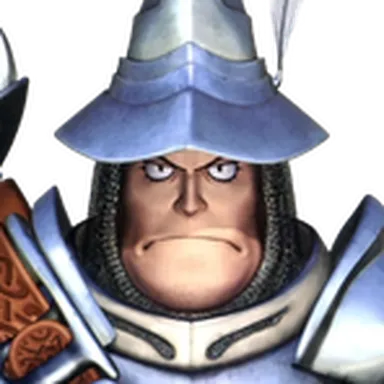
A rigid, bellowing soldier loyal to the crown almost to the point of blindness. The longer he travels alongside the “thief” Zidane, the more he learns the greatest lesson of a soldier's life: true loyalty means protecting people, not obeying orders regardless of right and wrong.
- Age
- 21
- Homeland
- Burmecia
- Weapon
- Spears
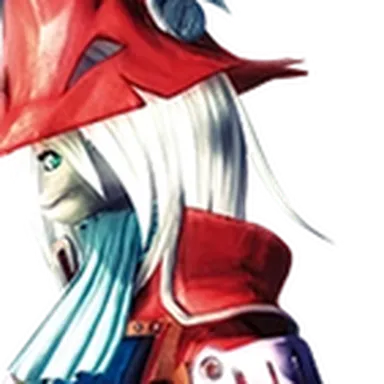
A knight of the rain kingdom of Burmecia, who left her homeland years ago to search for her missing lover, the knight Fratley. She finds him alive amid the ruins of her home — but in those empty eyes, there is not a single memory of her left.
- Species
- Qu
- Weapon
- A giant fork
- Specialty
- Eating frogs and learning monsters' spells (Blue Magic)
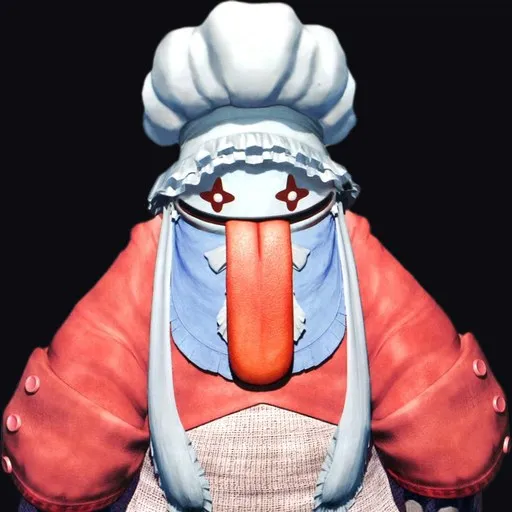
A cook of the Qu tribe driven by a single philosophy of life: “eat” and “not eat.” Quina follows the party to taste every delicacy in the world, and learns magic by… eating enemies alive — yet at the crucial moments, Quina's simplicity touches truths that everyone else overlooks.

- Age
- 6
- Homeland
- Madain Sari
- Best friend
- Mog the moogle — who is actually the eidolon Madeen
A six-year-old girl living alone with her family of moogles in the ruined summoner village, cooking meals every day for guests who never arrive. Eiko is the chattiest, warmest embodiment of the game's message: home is where someone is waiting for you to come home.
- Occupation
- Bounty hunter
- Weapon
- Claws
- Notable trait
- Was framed by Zidane years ago
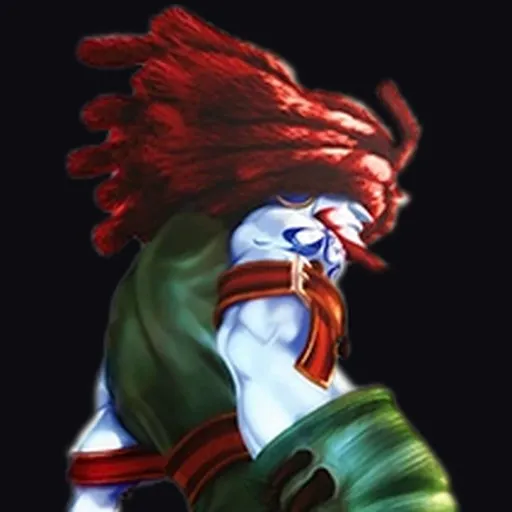
A cold-hearted bounty hunter who was framed by Zidane and carried the grudge for years. Amarant joins the party to find out why Zidane once spared his life, and gradually comes to understand that true strength does not belong to those who fight alone.

- Position
- General of the Alexandrian army
- Weapon
- The sword Save the Queen
- Nickname
- The woman who slew a hundred knights
A general hailed as the strongest on the continent, utterly loyal to the Alexandrian crown, who blindly obeyed Queen Brahne's orders in her war of aggression. When she witnesses Brahne using eidolons to massacre the innocent, Beatrix turns her back on the throne and stands alongside Steiner to protect Princess Garnet.
- Homeland
- The planet Terra
- Nature
- A prototype Genome with a finite lifespan
- Abilities
- Destructive magic and Trance
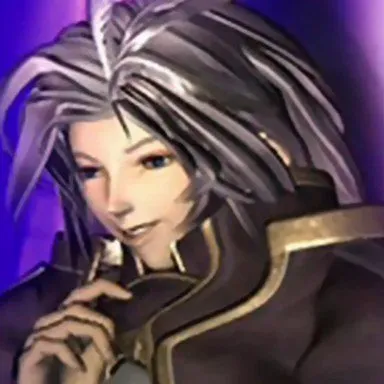
The mysterious arms dealer standing behind Brahne's war, who always carries himself like an artist in love with beauty. But behind that carefree manner lurks the world's greatest fear of death: Kuja knows he is only a prototype nearing his expiration date — and he is determined not to depart alone.
📚 Read the Final Fantasy series in story order
- Final Fantasy IV Story Explained: The Dark Knight Cecil's Journey of Redemption
- Final Fantasy VI Story Explained: The Madman Who Destroyed the World and a Symphony of Hope
- Final Fantasy VII Story Explained: The Mercenary and the Memories That Were Never His
- Final Fantasy VIII Story Explained: The Sorceress's Time Loop and the Promise at the Flower Field
- Final Fantasy IX Story Explained: Home Is Where Someone Is Waiting for You — you are reading this one
- Final Fantasy X Story Explained: The Thousand-Year Dream and the Price of Truth
- Final Fantasy XII Story Explained: The Gods' Chess Game and the Princess Who Dared to Say No
- Final Fantasy XV Story Explained: Ten Years in the Crystal and the Price of the Dawn
- Final Fantasy XVI Story Explained: The Flame of Rebellion and the Day Magic Vanished from Valisthea


