Radahn Explained: The Starscourge Who Held the Heavens, the Battle of Aeonia, and Miquella's Promised Consort

📋 Quick facts
- Game
- Elden Ring
- Developer
- FromSoftware
- Release year
- 2022 (February 25, 2022)
- Original platform
- PlayStation 4/5, Xbox One/Series X|S, PC
- Genre
- Soulslike (open-world Action RPG)
- Director
- Hidetaka Miyazaki
- Worldbuilding
- George R.R. Martin & Hidetaka Miyazaki
- Notable feature
- An in-depth analysis of Radahn — the general who held the stars still, the Battle of Aeonia against Malenia, the Radahn Festival at Redmane, and the Promised Consort twist in Shadow of the Erdtree
- Expansion
- Shadow of the Erdtree (2024)
Of all Elden Ring's demigods, few are as beloved by players as Radahn. A giant red-haired general who learned the world's hardest school of magic just so he would never have to part with his little horse — then challenged the heavens alone and held the stars still for ages. And no one suffers a crueller fate: he loses a battle without dying, rots into madness, eats the corpses of his own men on land poisoned by his opponent, until an entire kingdom has to throw a “festival” simply to kill him decently. This analysis dives deep into Radahn, the conqueror of the stars: why he held the stars, what really happened at Aeonia, what the festival at Redmane actually is — and the twist of Shadow of the Erdtree, where Radahn becomes Miquella's “promised consort” in the stolen body of Mohg. Warning: this article spoils the entire base game and the DLC.
📌 Quick summary: Radahn, son of Radagon and Rennala, is the mightiest demigod of the Shattering: he learned gravity magic for his horse Leonard, held the stars still and froze the fate of the world. His battle with Malenia ended with the Scarlet Aeonia — Caelid rotted, Radahn went mad eating corpses, and the Radahn Festival was born to grant him an honourable death. But in the DLC's telling, that is only the beginning: he is the consort Miquella chose in childhood.
The young general and the scrawny horse — Radahn before the legend
Radahn is the son of Radagon, the red-haired champion of the Golden Order, and Rennala, queen of the Carian royal family. As the story of Marika and Radagon shows, after Radagon left Rennala to become Queen Marika's second consort, their three children — Rykard, Radahn and Ranni — were raised to demigod status as the goddess's stepchildren. Of the three, Radahn is the purest warrior: he inherited his father's flaming red hair — something Radagon saw as a curse, but Radahn proudly called a heroic trait: he was born “a champion's cub”, and grew into “the Lord of the Battlefield's lion”.
That Lord of the Battlefield is Godfrey, the first Elden Lord — Radahn's absolute idol; his armour copies Godfrey's golden lion, and his Redmane legion is famed as an army that “knew no weakness”. But the detail that sets Radahn apart from every other general lies somewhere very small: his horse. Radahn grew into a giant, while Leonard — the steed who had been with him since youth — remained an ordinary, scrawny horse. He should have left the animal behind; instead, he travelled to Sellia, the town of sorcery in Caelid, and learned gravity magic under an Alabaster Lord — the school that manipulates the pull of the heavens themselves.
The Remembrance of the Starscourge states it plainly: the Red Lion General learned gravitational powers in Sellia in his younger days, “all so he would never have to abandon his beloved but scrawny steed”. Gravity made his immense weight feather-light on Leonard's back. This is the key to the whole character: Radahn's greatest power — the one that would one day hold up the sky — was born not from ambition, but from loyalty to a small creature of no strategic value whatsoever.
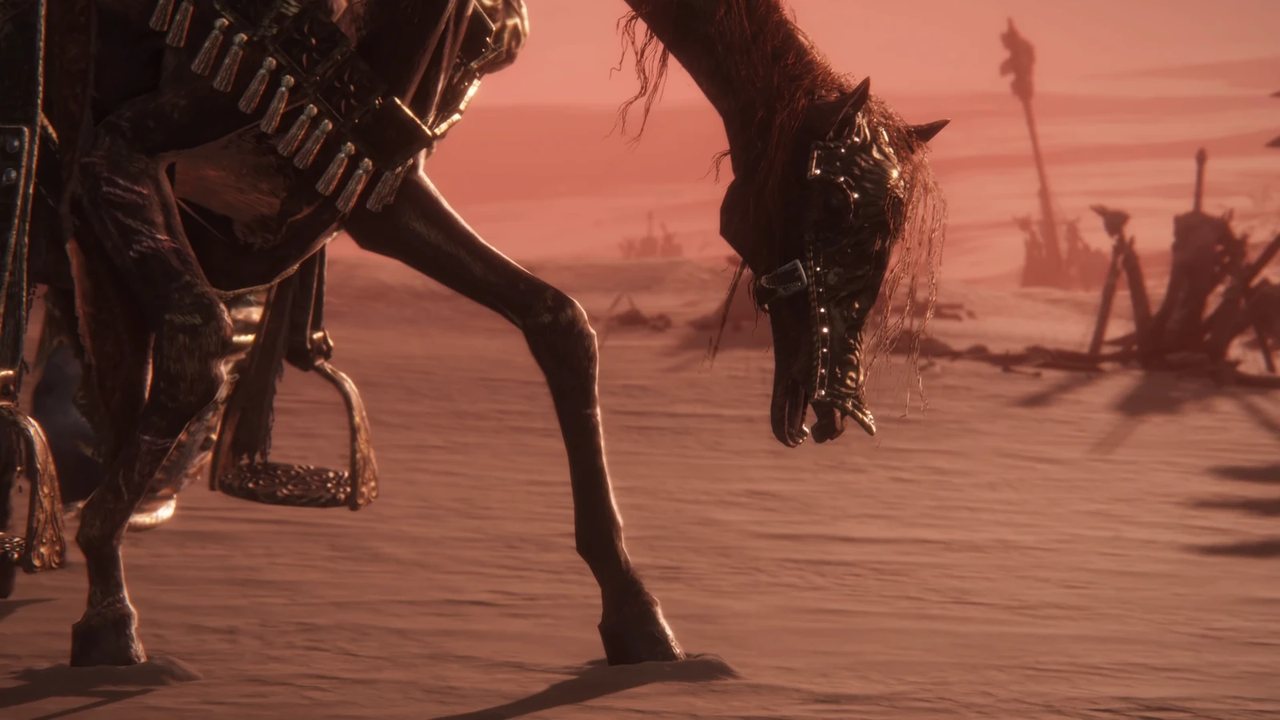
Conqueror of the stars — why did Radahn hold the stars still?
Radahn's most famous title is Starscourge — the conqueror of the stars. According to the Starscourge Heirloom, “the mightiest hero of the demigods confronted the falling stars alone — and thus did he crush them, his conquest sealing the very fate of the stars”. The sorcery Collapsing Stars preserves the words he spoke to his teacher: “I thank you for your tutelage, for now I can challenge the stars.” From some time before the Shattering, Radahn used gravity magic to hold every star above the Lands Between perfectly still: they did not fall, they did not move — and in a world where human fate is written in the stars, everyone's fate froze with them.
The game never states his motive outright, and this is where confirmed fact must be separated from inference. What is confirmed: “falling stars” are no harmless metaphor — the skies of the Lands Between genuinely contain dangerous meteorites and alien beings. The most widely supported theory is that Radahn held the sky for defensive reasons: he was protecting the world — and perhaps Sellia in particular — from whatever was descending from the cosmos. Whatever his motive, the side effect is confirmed very clearly by the game.
The most famous victim of the frozen sky is Ranni — Radahn's half-sister. The Carians read fate from the stars, and as her retainer Iji explains, Ranni's fate is held along with them: as long as Radahn keeps the stars, her path cannot advance, and the underground land of Nokron cannot be opened. By merely existing, the general in Caelid blocked an Empyrean's thousand-year plan — as analysed in the main Elden Ring story article, Radahn's death becomes a prerequisite for an entire ending of the game. Did Radahn deliberately obstruct his sister? The game never answers; most likely, Ranni's fate was simply collateral damage of a decision far larger than her.
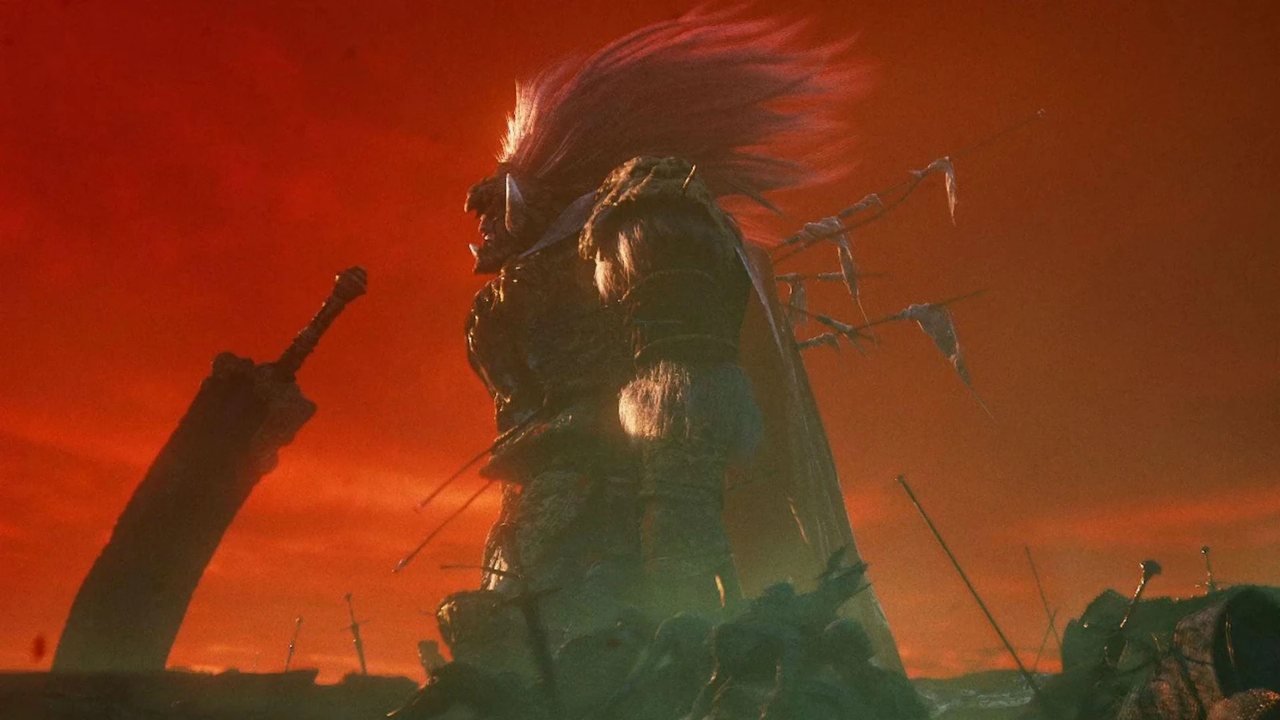
The Battle of Aeonia — when the two mightiest demigods both lost
When Marika shattered the Elden Ring — the Shattering — the demigods fell into war over the Great Runes, and Radahn became one of the greatest powers on the field; at one point he even marched on the capital Leyndell and was driven back by Morgott. But the battle that defines his legend took place in his homeland of Caelid, against the only worthy opponent: Malenia, Blade of Miquella. The twins' background is covered in the article on Miquella and Malenia; here it is enough to remember that Malenia marched south with her Cleanrot Knights, and the two mightiest demigods of the age clashed in the Swamp of Aeonia.
Why did Malenia fight Radahn? The base game leaves the question open; early theories revolved around the stars he held, which may have locked away Miquella's plans that needed the heavens to move. The expansion offers a much colder answer, discussed later in this article. As for the battle itself, the sword monument in Caelid records the outcome in the voice of an epitaph: “The Battle of Aeonia. Radahn and Malenia locked in stalemate. Then, the scarlet rot blooms.” Standing for the first time on the edge of defeat, Malenia tore out the golden needle that had held the Scarlet Rot in her body, threw herself at Radahn, and let the Aeonia flower bloom between them. The DLC's Young Lion armour set also reveals the words she whispered into his ear at that moment — words players only learned in 2024: “Miquella awaits thee, O promised consort.”
The flower did not kill Radahn — it did something worse. The Scarlet Rot seeped into the general's body and brain, while his Great Rune — in the item description's words — “burns, to resist the encroachment of the scarlet rot”, keeping him alive in a state that is no longer life. Malenia fell unconscious inside the flower and was carried home to the Haligtree on the back of Cleanrot Knight Finlay, across half the kingdom; Radahn stayed at Aeonia alone, with a mind being eaten away. In fairness, by Malenia's own standards Aeonia was no victory of hers: the one time she had to use her curse to avoid defeat, she turned herself into the very weapon she hated most — and poisoned her opponent's homeland along with it.
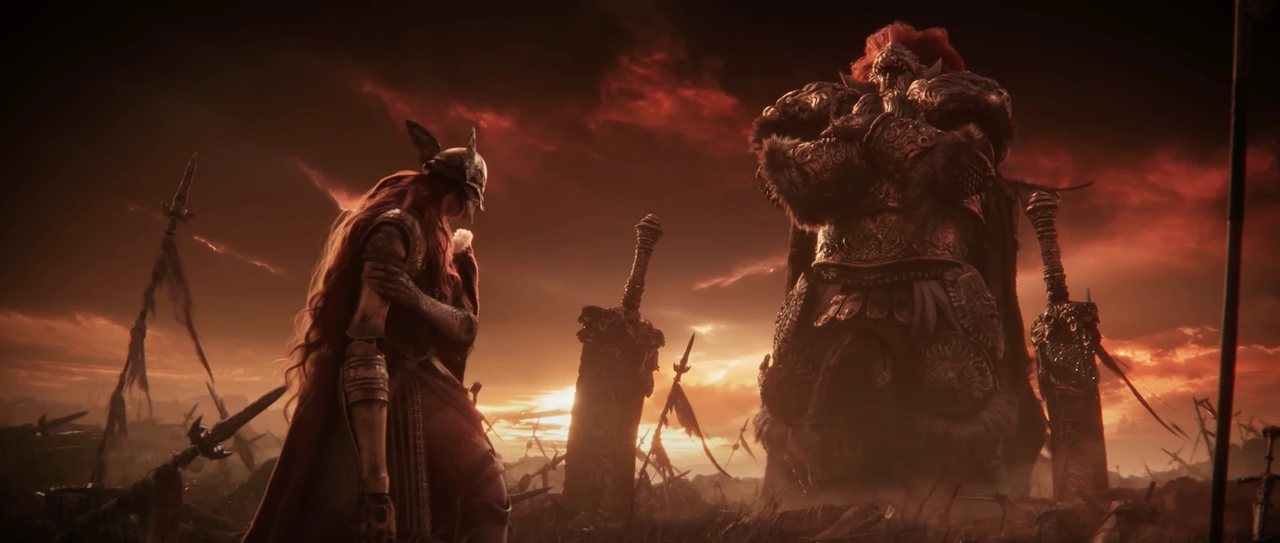
Rotting Caelid and the corpse-eating general — the price of a flower
The flower's consequences reached far beyond the two combatants. Caelid — Radahn's homeland, home to Sellia and the teachers who taught him — became a red, eternally rotting wasteland: trees warped into monstrous shapes, beasts infected by rot grew into giants, and the sky stayed the colour of blood. The Swamp of Aeonia at its centre, where the flower bloomed, remains one of the game's most diseased landscapes, its giant roots writhing around the “Heart of Aeonia”. The surviving Redmanes hold their castle, lighting fires everywhere, fighting a doomed war to keep the rot from spilling out of Caelid. That is the real legacy of this “glorious” battle: a province of the world died outright, and at its centre, its hero went mad.
Radahn after Aeonia is Elden Ring's most haunting image. The Scarlet Rot ate his brain until the brilliant general was only a beast: howling at the sky, wandering the Wailing Dunes, eating the corpses of enemies and comrades alike — the very Redmane soldiers who once followed him. But two details keep this tragedy from sliding into cheap horror. First: his Great Rune still burns — at the deepest instinctive level, Radahn's body is still fighting the rot every single day; he never surrendered, even when he no longer knew who he was. Second: Leonard is still there, still carrying the maddened giant across a dune field of corpses.
Set those two details side by side and it is clear why players love Radahn so much: FromSoftware did not grant him a heroic death at the height of glory, as convention would dictate — they forced his legend to live on in the most humiliating form possible, and let a horse's loyalty and a Great Rune's flame testify that the man is still in there, somewhere, waiting to be set free.
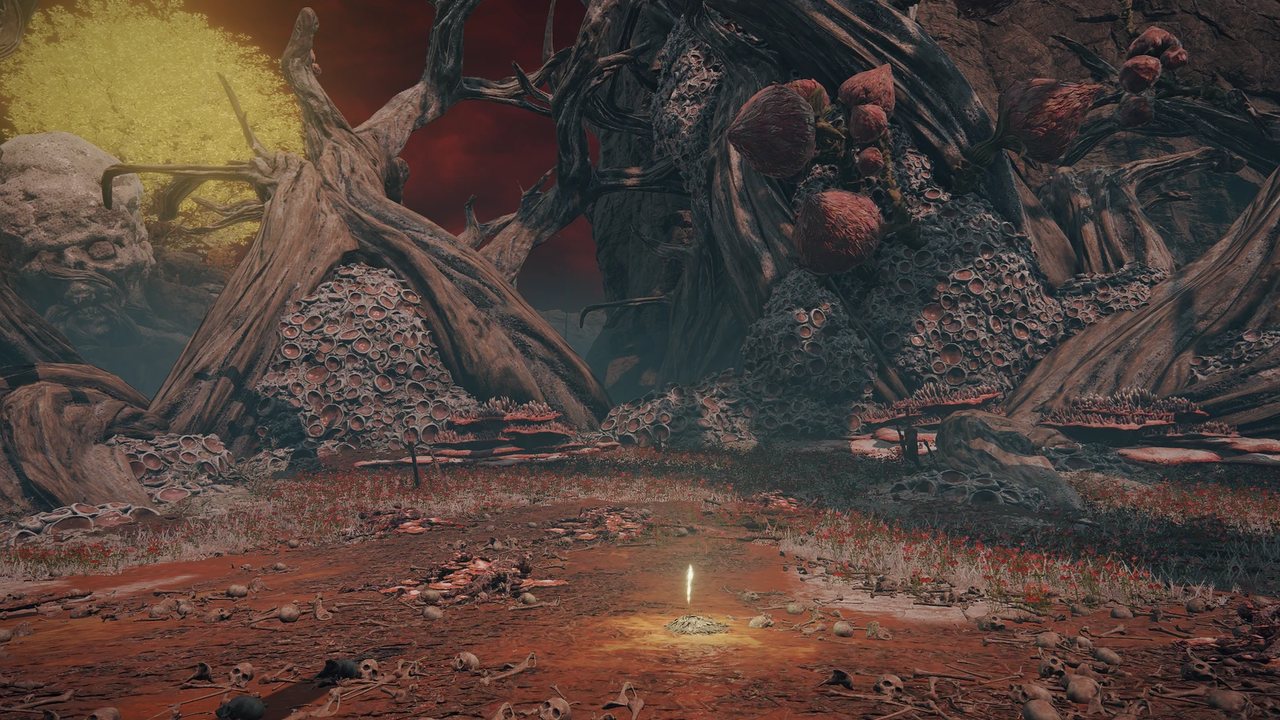
The Radahn Festival — a farewell party for a legend
The Radahn Festival is the Lands Between's answer to that hopeless situation. It takes place at Redmane Castle, hosted by its castellan Jerren — the old witch-hunter who once served Radahn. Let this be said plainly, because the name misleads: this is not a celebration. It is a mass execution staged as a rite of honour. Jerren summons warriors from everywhere — Blaidd, Ranni's shadow; Alexander, the warrior jar; Okina, the swordsman from the Land of Reeds; even Patches — and his opening speech is one of the game's best-loved pieces of dialogue: he recounts Radahn's legend, declares the day's true purpose — to grant the great general a worthy death — and the attendees roar together and charge down onto the sands.
As the DLC reveals through the investigation of Redmane Freyja, a knight who once served Radahn, Jerren and Radahn long ago swore a vow of honourable death: if the general ever fell, his old friend would make sure he did not linger in disgrace. The festival is Jerren keeping that vow in the largest way possible — instead of letting Radahn die slowly in madness or be cut down by some nobody, he turns the general's death into an event the whole world must witness and take part in. Freyja, upon learning in the DLC that Miquella intends to revive Radahn's soul after the festival, objects in a very Redmane fashion: in her view, endless war suits General Radahn far better than any honourable death. Even among those who loved Radahn most, “what is best for him” never had a single agreed answer.
The festival boss fight is also one of FromSoftware's most distinctive: the player does not duel alone, but leads an entire summoned war-band across a spear-strewn plain under a rain of colossal arrows, while Radahn plunges from the sky like a meteor mid-fight. When he finally falls, the reward is more than a Great Rune: the stars begin to fall like rain after ages of stillness, and a giant shooting star tears across the sky and crashes into Limgrave, opening the road down to Nokron. Radahn's death, quite literally, sets the world's history flowing again. Ranni's fate is unchained — and the newly freed soul, it turns out, already had someone waiting for it.
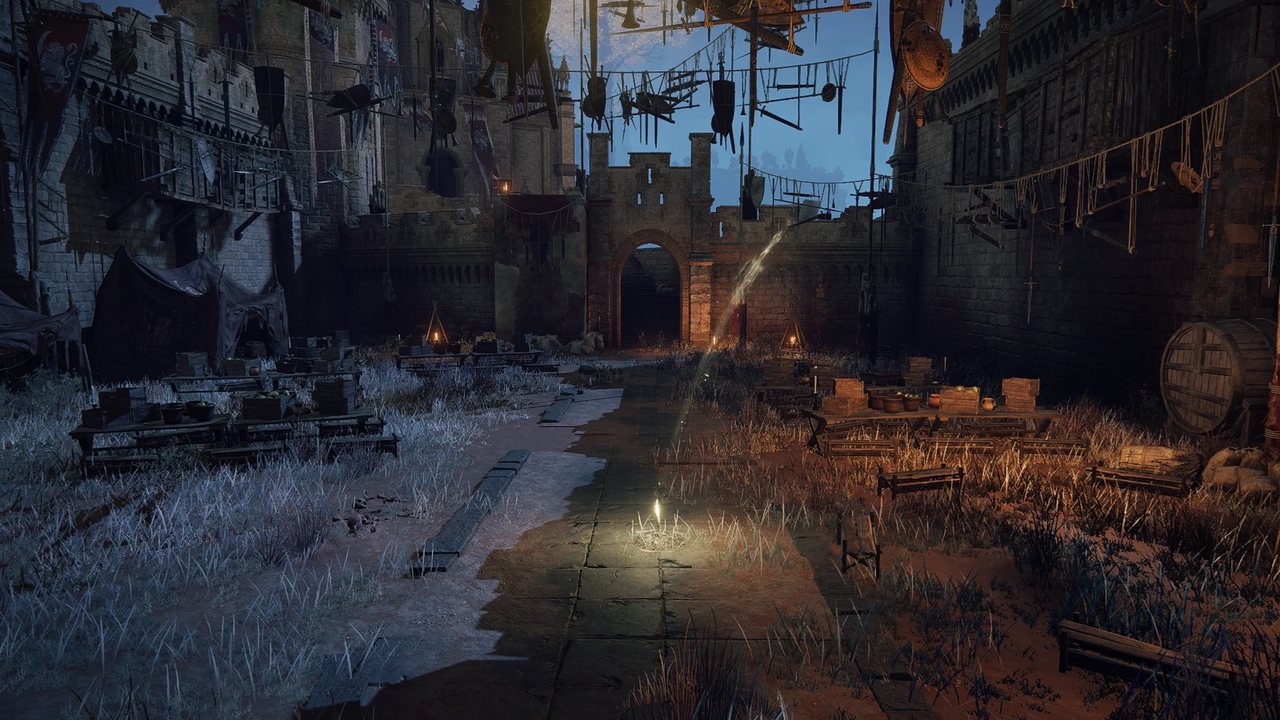
A childhood vow — when Miquella chose the mightiest general as his consort
For two years, players understood Radahn's story as a closed tragedy: hero, madness, honourable death. Shadow of the Erdtree reopens it with a revelation that changes the meaning of everything before it. According to the Remembrance of a God and a Lord — the memento of the DLC's final boss — in childhood Miquella “saw in Radahn a lord. His strength, and his kindness, that stood in stark contrast with their afflicted selves. And so Miquella made his heartfelt wish. That Radahn would one day be his king consort.” The memory that closes the game lets players hear the young Miquella say it to his half-brother himself: “Lord brother. I'm going to be a god. If we honour our part of the vow, promise me you'll be my consort. I'll make the world a gentler place.”
This detail rewrites the entire Battle of Aeonia. If the vow was real, Malenia's march on Caelid was no mere contest over a Great Rune: she went to carry out her brother's plan. Because to become a god's consort under the ancient rite at the Gate of Divinity, the lord's soul must be freed from its old body — in other words, Radahn needed to die. The whisper “Miquella awaits thee” on the battlefield, in this light, is a reminder of the promise at the decisive moment. The problem: the Aeonia flower failed at the most important step — it left Radahn neither dead nor alive, trapped in a rotting body for ages, and Miquella's plan stuck with him. The one who finally finished the job, ironically, is the player: at the Radahn Festival, the Tarnished kills the general and frees his soul; and the same Tarnished kills Mohg in his palace — setting out the final piece Miquella needed, as the analysis of the twins points out. The player thinks they are setting Radahn free; in fact, they are delivering him.
Fairness to Miquella is due here: his admiration for Radahn, by every item description, is sincere. In the eyes of the frail, cursed Empyrean child who would never grow up, born into a family of the mad and the cruel, the red-haired elder brother was both the strongest and the kindest: a general who loved his horse, was worshipped by his soldiers, and is never recorded to have done a single base deed. If he had to choose an Elden Lord for his “age of compassion”, Miquella could choose no one better. The tragedy is that between “chosen out of admiration” and “used as a component”, the line in Miquella's plan is thin enough that this article must return to it in the theories section.
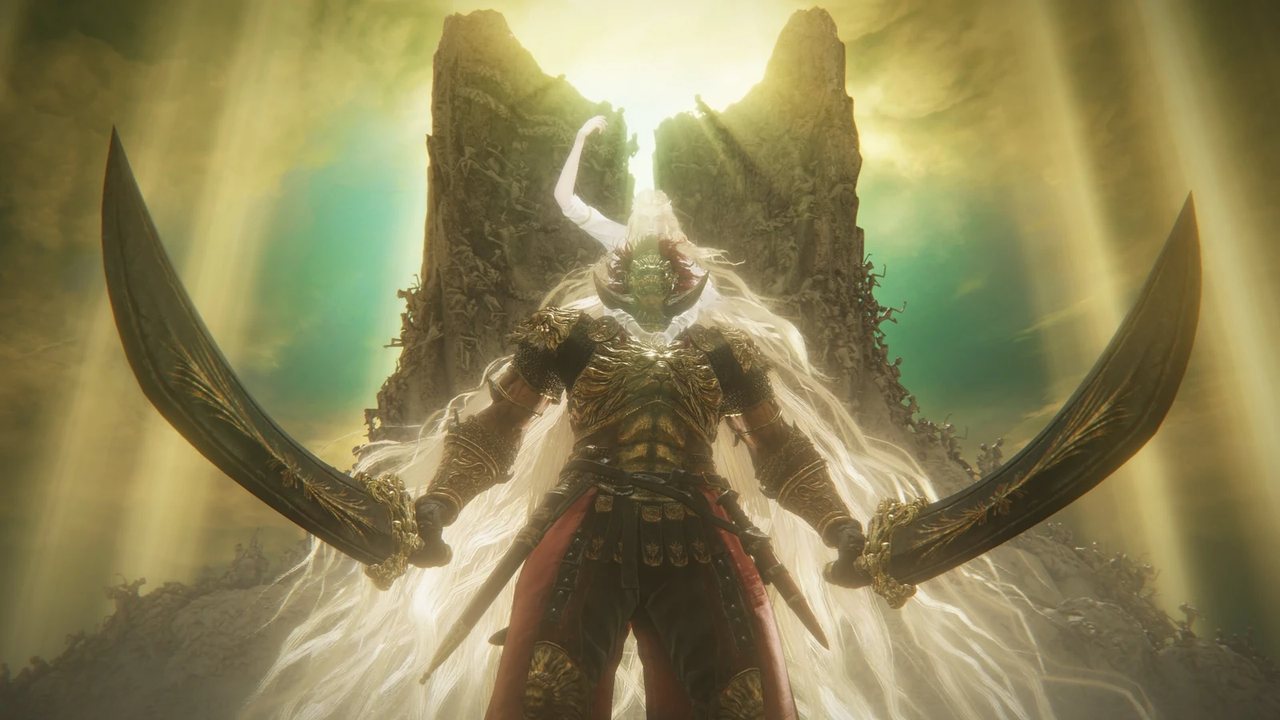
The body of Mohg — the secret rite and the price of resurrection
The twist's final piece lies in an item few read closely: the Secret Rite Scroll, found in the Specimen Storehouse of the Shadow Keep, which describes the rite at the Gate of Divinity in one cold sentence: “A lord will usher in a god's return, and the lord's soul will require a vessel.” That vessel is Mohg's corpse. Sir Ansbach — who once served Mohg — states the matter most clearly: after Mohg was slain at his palace, his body was stolen and taken straight to Miquella; realising the true purpose, Ansbach calls it an unbelievable desecration — Miquella “has forsaken Lord Mohg's soul. He desires only his empty shell.” This is confirmed fact, from NPC dialogue and item text, not community speculation.
So the “Radahn” at the Gate of Divinity in the DLC's final boss fight is not the original Radahn restored whole. It is his soul — returned in the form of his youth, as Miquella remembers him — placed into Mohg's restructured body: the observant will notice the Omen horns growing from the consort's arms, and the bloodflame attacks of the Lord of Blood woven between the gravity magic and the legendary twin greatswords. Even this resurrection follows the same logic as Godwyn's tragedy in the Night of the Black Knives: in the Lands Between, soul and body can be separated — and the world's greatest tragedies all begin when someone decides to separate them for their own purposes.
That final battle — Radahn, Consort of Miquella — is among FromSoftware's hardest and most divisive boss fights, precisely because of its meaning. Miquella appears mid-fight and climbs onto his consort's back, and from then to the end, Radahn does not say a single word. Not one line of dialogue — the general is utterly silent, fighting like a walking sword of the god behind him. That silence is the DLC's most important storytelling detail: it deliberately leaves open the question the end of this article cannot avoid — is the being standing there truly Radahn, returned by his own agreement, or only the most perfect weapon Miquella ever assembled?
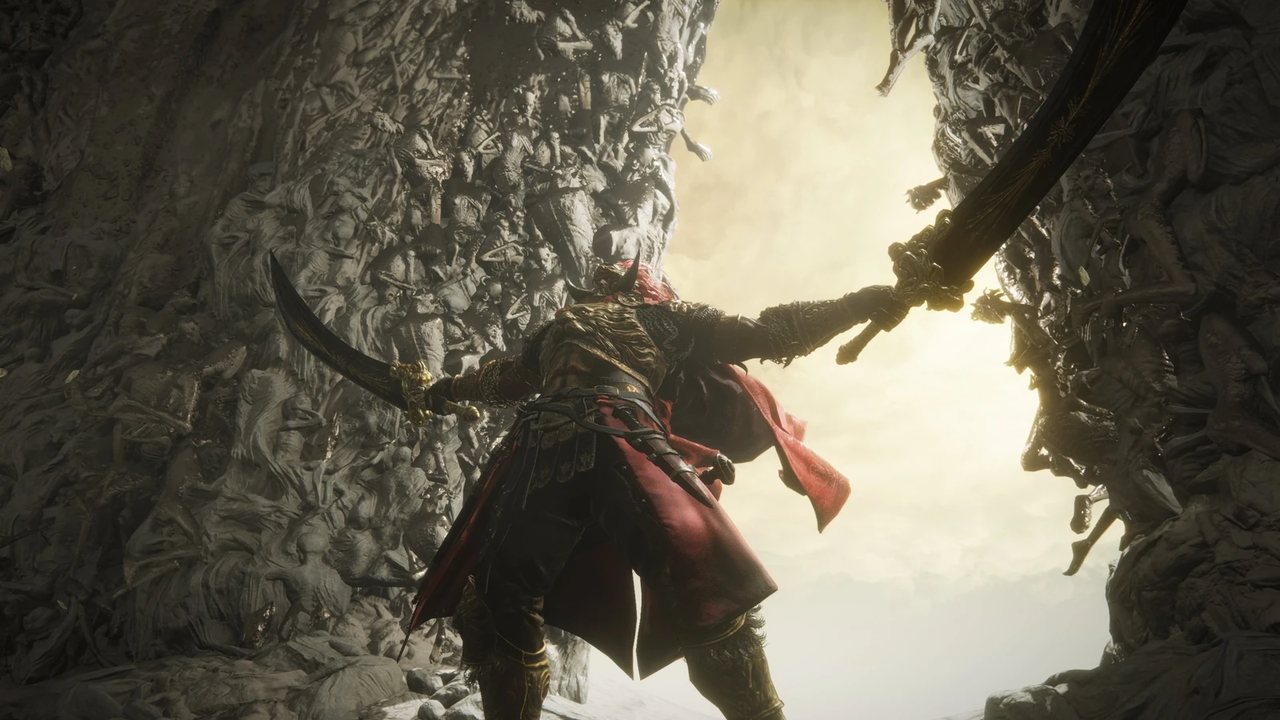
The fates of the characters after the endgame
Radahn: his soul is freed once more when the Tarnished defeats the Promised Consort; this time there is no festival. Leonard: fell beside his master on the Wailing Dunes on the day of the festival, and does not appear in the resurrected body — a small detail that breaks many players' hearts the most. Jerren: after the festival, he leaves Redmane and dies in his feud with Sellen, depending on the player's choices. Malenia: still sits waiting beneath the Haligtree, never knowing that her brother used the soul of her old opponent to the very end. Miquella: stopped at the threshold of godhood; the Age of Compassion ends with his consort. Mohg: not even granted peace in death — his corpse desecrated, his soul cast aside, with only Ansbach left to rage on his behalf.
Common misconceptions
Did Radahn hold the stars to stop Ranni?
There is no evidence that this was his motive. The game only confirms the consequence: the Carian family's star-read fate was frozen along with the sky, stalling Ranni's plan until Radahn died. Item descriptions recount the holding of the stars as a feat against “the falling stars” — a defensive motive remains the best-grounded reading; that it incidentally locked Ranni away is a side effect.
Did Malenia defeat Radahn at Aeonia?
Nobody won. The monument in Caelid states the two were “locked in stalemate” before the flower bloomed; afterwards Radahn lived on, mindless, Malenia lay unconscious and had to be carried home, and an entire land died with them. Malenia keeps her “undefeated” title only in the narrowest technical sense — and the price of it was the very curse she hated, and a Caelid rotting forever.
Is the Radahn Festival a celebration of his deeds?
Quite the opposite. The festival is a farewell rite staged as a festival of war: warriors gather to kill the maddened general together, granting him an honourable death instead of letting him linger, eating corpses on a battlefield. Jerren hosts it as an old friend keeping a vow, and its loud, roaring, heroic atmosphere is Redmane's way of saying goodbye — not a party.
Is the DLC's Radahn the “original” Radahn, fully resurrected?
No. It is Radahn's soul in the form of his youth, placed into Mohg's restructured corpse — the evidence being the Omen horns on his arms and the bloodflame attacks in his moveset, alongside the confirmations of Ansbach and the Secret Rite Scroll. His original body — together with Leonard — has lain on the Wailing Dunes since the day of the festival.
Unsolved theories & mysteries
Did Radahn consent to become Miquella's consort? This is the DLC's greatest controversy, and this article presents both sides because the game deliberately refuses to rule. The “he consented” side: the childhood vow is real — Miquella's memory speaks of “if we honour our part of the vow”, implying a two-sided agreement with conditions attached; Radahn idolised Godfrey all his life and longed to be a battlefield lord, so an offer to become Elden Lord of a new age is not alien to his ambitions; and Freyja — the living person who best understands the Redmanes — believes that being revived to fight on is what suits her general. The “he did not consent” side: if Radahn had agreed, why did he fight Malenia to a stalemate instead of going with her? Why did a festival have to end his life in his old body under another vow of honourable death? And above all: Miquella wields a power of bewitchment that makes all living things love him utterly, and used it on Mohg and many others; the consort at the Gate of Divinity is silent from start to finish, and not one word of agreement ever leaves Radahn's own mouth. Datamined files even contain a few cut lines of dialogue for Radahn in the final fight — but cut content is not canon. The silence of the released game may be FromSoftware's answer in itself: the player must decide whether they have just defeated a king returned, or set free a soul that was stolen a second time.
What was “our part” of the vow? Miquella says “if we honour our part of the vow” — what conditions Miquella's side had to meet, and what Radahn demanded in return, no item records. One theory holds that the condition involved defeating him in battle — a Redmane-style trial — which is why Malenia had to march: not to kill, but to complete an ordeal Radahn himself had demanded. This would explain Aeonia's ferocity, but it remains a theory. Why did Radahn hold the stars — and against what? If the falling stars carried alien beings, the frozen sky may be a shield the whole world owes him without ever knowing; his death at the festival, seen this way, both freed fate and reopened a dangerous door. Finally, Leonard. No item says where a horse's soul goes, and the consort's resurrected body has no horse. Perhaps that is the last boundary even a god's plan cannot cross: the one thing that belonged to Radahn alone, which Miquella could not carry with him.
👤 Main characters
A quick introduction to the central characters of the story — portraits taken from the game itself.
Radahn idolised Godfrey, learned gravity magic in Sellia only so he could ride his scrawny horse Leonard forever, and single-handedly faced down the falling stars until they stopped. After the Battle of Aeonia, the Scarlet Rot stole his mind: the greatest general became a howling, corpse-eating beast, awaiting an honourable death at the festival held in his name — and awaiting a childhood vow that would claim him once more, in a body that was not his own.
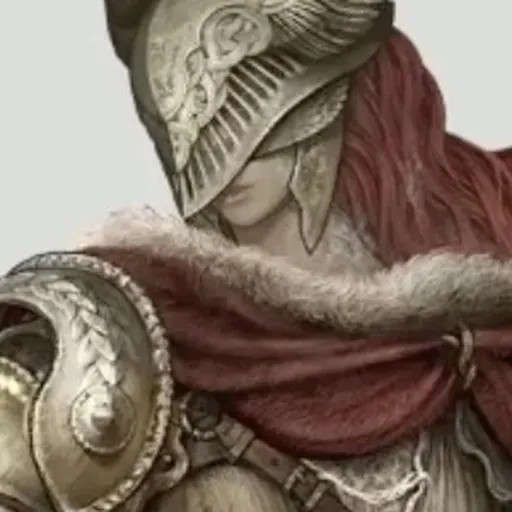
Malenia marched south and fought Radahn in the most famous battle of the Shattering. Standing for the first time on the edge of defeat, she tore out her golden needle and let the Scarlet Rot bloom — it did not kill Radahn, but it drove him mad and turned Caelid into a dead land. In the DLC's telling, she was not merely fighting over a Great Rune: she was carrying out her part in her twin brother's plan.
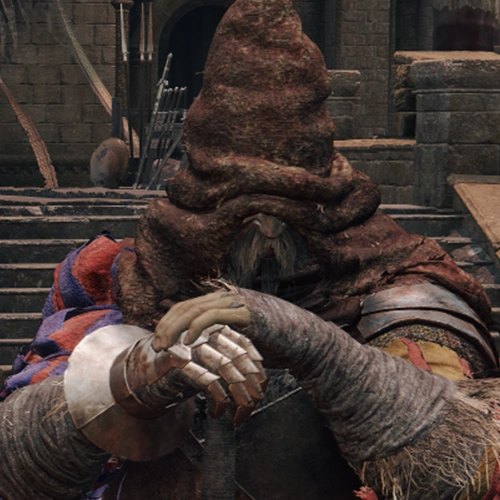
Jerren's voice opens the Radahn Festival: he summons warriors from across the Lands Between to Redmane to grant Radahn an honourable death. To him the festival is no celebration — it is a debt of honour owed to a lord who lost his mind to the Scarlet Rot. When the festival ends, Jerren leaves Redmane to settle the last debt of his life, with the sorceress Sellen.
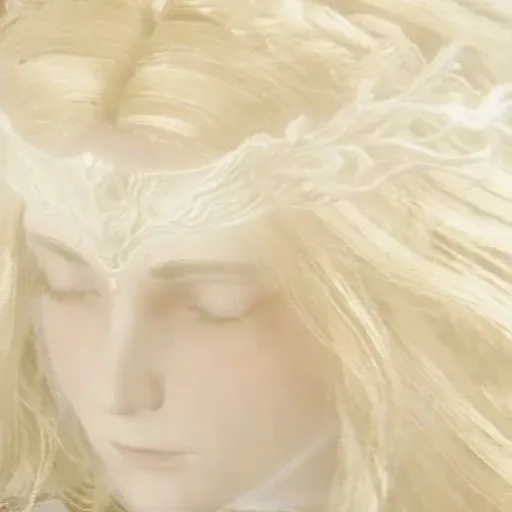
According to the Remembrance of a God and a Lord, Miquella wished from childhood that Radahn would become his consort when he ascended to godhood. Radahn's entire tragedy — the Battle of Aeonia, his death at the festival, Mohg's stolen corpse — is a set of pieces in that plan. The greatest question the DLC leaves behind: how much did Radahn ever truly agree to that vow?
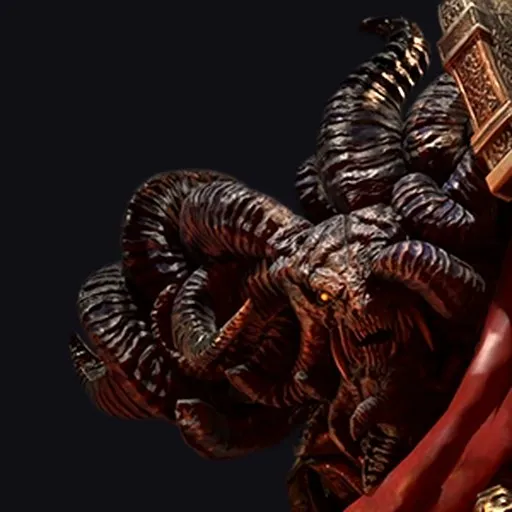
Mohg believed he had abducted Miquella to found the Mohgwyn dynasty; in truth he was charmed, used as a gateway into the Land of Shadow, and even his corpse was taken after death. The Secret Rite Scroll states plainly that a lord's soul requires a vessel — and Mohg's loyal knight Ansbach is the one who rages at the desecration on his behalf.
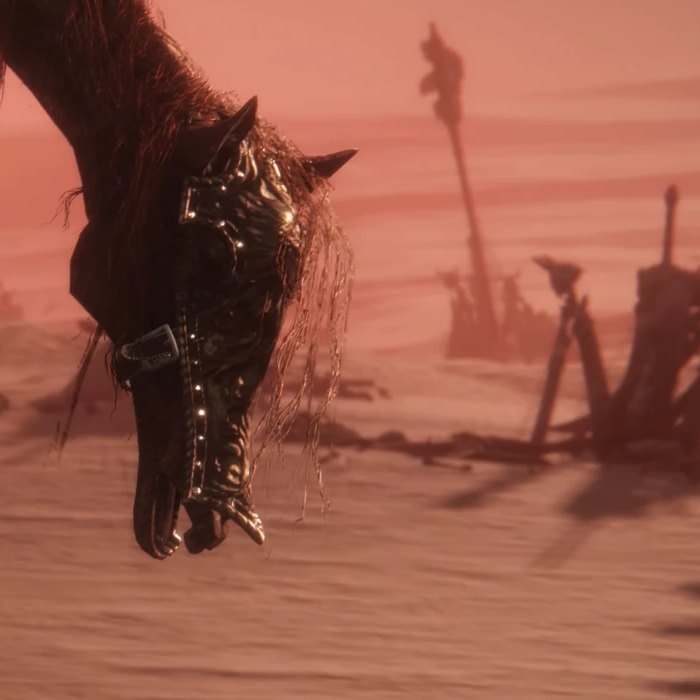
Leonard is no prop: the Remembrance of the Starscourge states that Radahn learned gravitational magic in Sellia in his youth “all so he would never have to abandon his beloved but scrawny steed”. Gravity made the giant's weight feather-light on Leonard's back. And when his master lost his mind, eating corpses and howling over the Wailing Dunes — Leonard was still there, loyal to a heartbreaking degree.
📚 Read the Elden Ring series in story order
- Elden Ring Story Explained: The Shattered Ring, the Demigods, and the Age of the Stars
- Miquella and Malenia Explained: The Cursed Twins and the Dream of a Kinder World
- Marika and Radagon Explained: One God, Two People — Elden Ring's Greatest Secret
- Melina Explained: The Kindling Maiden, the Gloam Eye, and the Vow of Destined Death
- Godwyn and the Night of the Black Knives Explained: When the First Demigod Died
- Radahn Explained: The Starscourge Who Held the Heavens, the Battle of Aeonia, and Miquella's Promised Consort — you are reading this one


