Godwyn and the Night of the Black Knives Explained: When the First Demigod Died

📋 Quick facts
- Game
- Elden Ring
- Developer
- FromSoftware
- Release year
- 2022 (February 25, 2022)
- Original platform
- PlayStation 4/5, Xbox One/Series X|S, PC
- Genre
- Soulslike (open-world action RPG)
- Director
- Hidetaka Miyazaki
- Worldbuilding
- George R.R. Martin & Hidetaka Miyazaki
- Notable feature
- An in-depth analysis of the Night of the Black Knives — Godwyn's assassination, the origin of the Prince of Death and Deathroot, and the Age of the Duskborn ending
- Expansion
- Shadow of the Erdtree (2024)
“On a night of wint'ry fog, the rune of Death was stolen. And the demigods began to fall, starting with Godwyn the Golden.” That is how Elden Ring opens its story: not with a battle, but with an assassination. No witnesses, no culprit ever brought to light, not a single drop of the murderer's blood spilled. Only a dead prince — in a world where demigods were not supposed to be able to die.
The Night of the Black Knives is the single most important event in the entire story: it is the opening shot of the Shattering, the direct cause that drove Queen Marika to shatter the Elden Ring, and the origin of one of the game's endings — the Age of the Duskborn. If the story of Elden Ring is a tapestry, the assassination of Godwyn is the first thread pulled loose, the one that unravelled everything.
Yet it is also the strangest crime in the Lands Between: it claimed two victims in the very same moment, in two opposite ways. One died in soul while his body kept “living” for a thousand years. The other died in body while her soul carried on with its scheme inside a doll. This article retraces the whole case — motive, weapon, crime scene, and the consequences still spreading across the Lands Between when the Tarnished arrives.
📌 Quick summary: To escape her fate as an Empyrean controlled by the Two Fingers, Ranni stole a fragment of the Rune of Death from Maliketh and forged it into the black knives. On the Night of the Black Knives, her assassins slew Godwyn the Golden — the first demigod ever to die — at the exact moment Ranni ended her own flesh. The result: Godwyn died in soul alone and his corpse became the Prince of Death, seeding Deathroot across the land; the shock drove Marika to shatter the Elden Ring.
Godwyn the Golden — the prince the whole kingdom loved
Godwyn was the firstborn son of Queen Marika and Godfrey, the first Elden Lord — the head of the Golden Lineage, held to be the most legitimate and noble line of the dynasty. Among the demigods he was the eldest brother in every sense: mighty, kind, and beloved by everyone, from common subjects to former enemies.
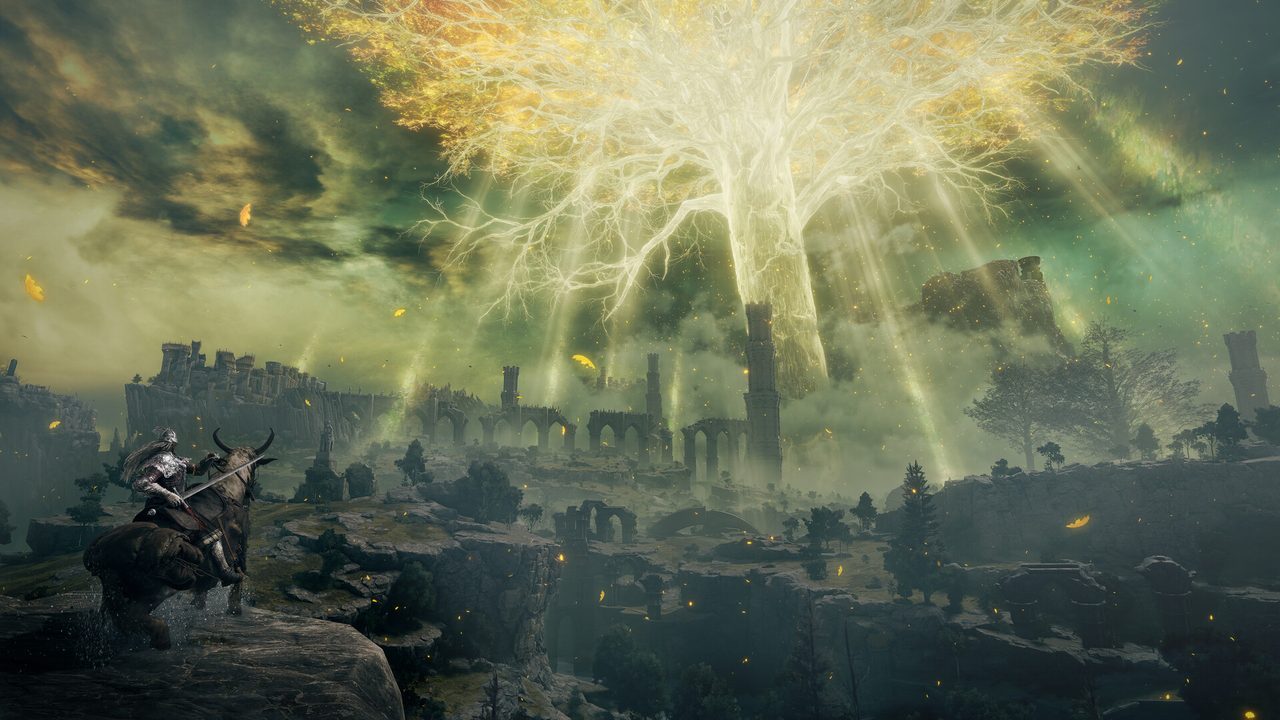
Godwyn's fame was earned in the War against the Ancient Dragons. When the colossal dragon Gransax assaulted Leyndell and broke the capital's walls — the only time in history those walls ever fell — it was Godwyn who stood to meet the attack. He defeated Fortissax, among the mightiest of the ancient dragons, but instead of killing his foe, he spared its life and befriended it. That friendship founded the Ancient Dragon Cult in the heart of the capital, and the dragons' golden lightning became part of the Golden Order — the Death Lightning spell still records that it was wielded by Godwyn, who befriended Fortissax.
Only by grasping that stature can one feel the full weight of the assassination. Godwyn was not merely a demigod: he was the most promising heir, living proof of the Order's permanence. To kill him was to declare before the whole world: the Golden Order can bleed. And that is exactly what the mastermind wanted.
Death confined — Maliketh and the Rune of Death
To understand how an “unkillable” demigod could die, one must return to the founding of the Golden Order. When Marika established her order, she removed the Rune of Death — also called Destined Death — from the Elden Ring. With that, true death was withdrawn from the world: the demigods became immortal, and mortal souls returned to the Erdtree instead of passing away.
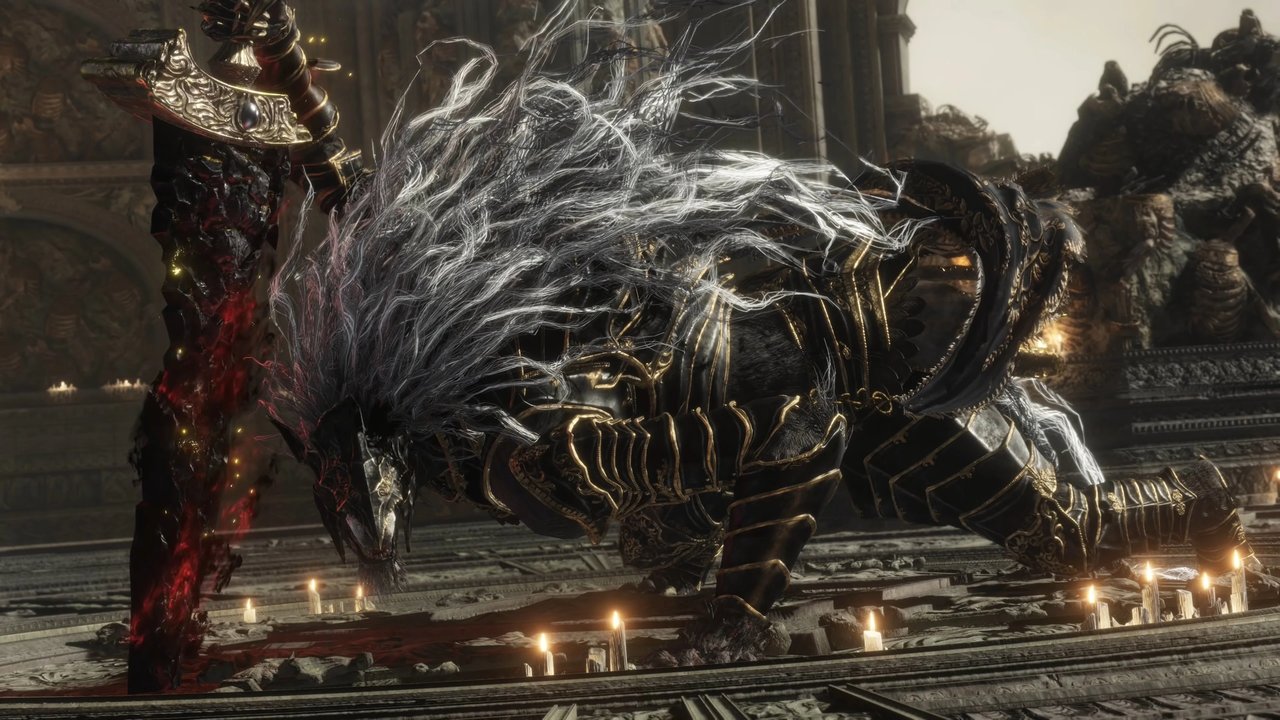
The confiscated rune was given to Maliketh, the Black Blade — Marika's half-sibling and shadow — to keep sealed within his black blade. Maliketh's own Remembrance states the tragedy of that role plainly: “Marika's sole need of her shadow was a vessel to lock away Destined Death.” Maliketh was no general; he was a prison that walks.
And that prison was breached. The sorcerer Rogier, who spent the rest of his life investigating the case, recounts: “Someone stole a fragment of the Rune of Death from Maliketh, the Black Blade. And on a bitter night, murdered Godwyn the Golden. That was the first recorded Death of a demigod in all history.” The game never tells how the thief slipped past Maliketh — only that after that night, Maliketh bound the rest of the Rune of Death within his own flesh, “such that none might ever rob Death again.” One small stolen fragment was enough to kill a god.
The Night of the Black Knives — wintry fog and godslaying blades
The weapons were black knives forged through a fearsome rite, imbued with the power of the stolen fragment of the Rune of Death. The one who admits to creating them is Ranni the Witch herself. Confronted by the Tarnished with the evidence, she does not deny a thing: “I stole a fragment of the Rune of Death, and used it to forge the godslaying black knives through fearsome rite. I did it all.”
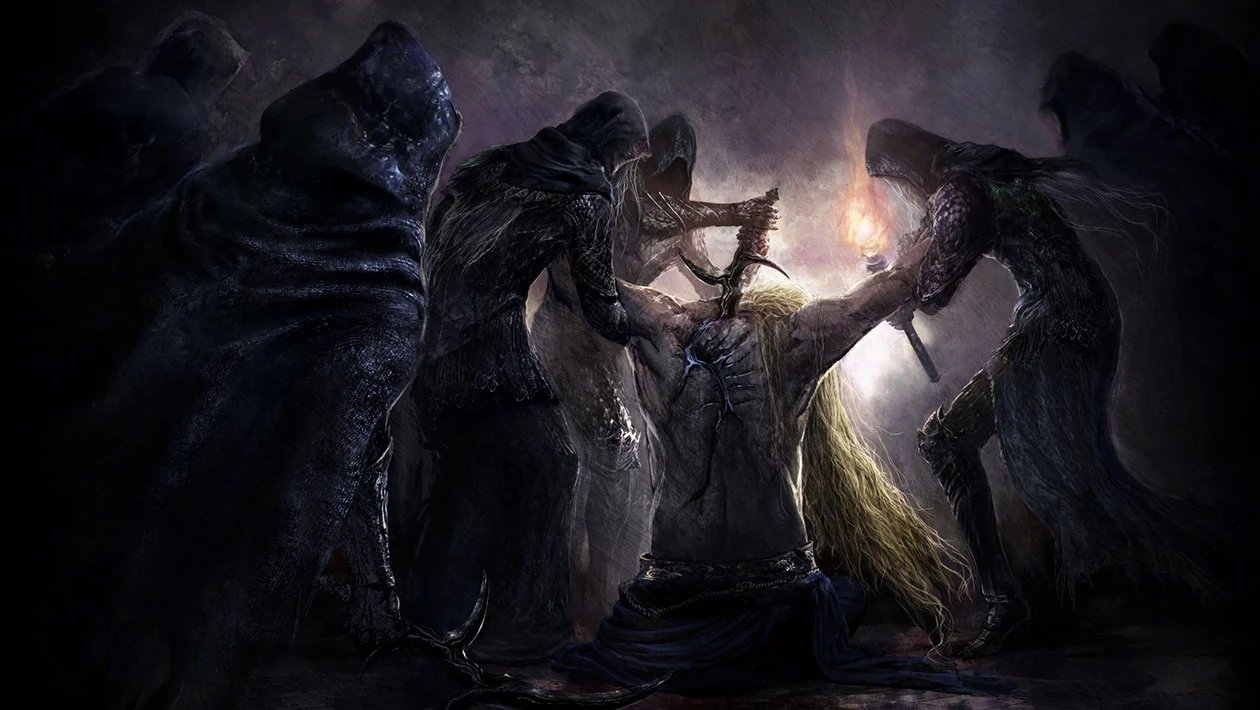
The hands that did the deed belonged to the Black Knife Assassins — a company of women in silver armour beneath cloaks that fool the eye. Rogier traced their origin: they were “scions of the Eternal City,” and according to the Black Knife armour, they were “rumored to be Numen who had close ties with Marika herself.” Their ringleader was Alecto; the one who drove the blade imbued with the Rune of Death into Godwyn was her daughter — Tiche. Fleeing the capital after the murder, Tiche was killed protecting her mother; Alecto was imprisoned in an evergaol on the Moonlight Altar.
Ranni's motive lay in her station as an Empyrean: chosen by the Greater Will as a potential successor, but at the price of a flesh watched and directed by the Two Fingers. Ranni wanted to decide her own fate — and the first step was to escape that god-given body itself. To kill the flesh of a demigod, she needed the one thing that can kill gods: the Rune of Death. But her rite carried a cruel condition, which the next chapter will make clear: her death required another death as its counterweight, at the very same moment.
Two halves of the cursemark — Ranni died in body, Godwyn in soul
That same night, atop the Divine Tower of Liurnia, Ranni used a black knife to end her own fleshly life. Two demigods fell in the same instant — and that is when the Cursemark of Death split in two.
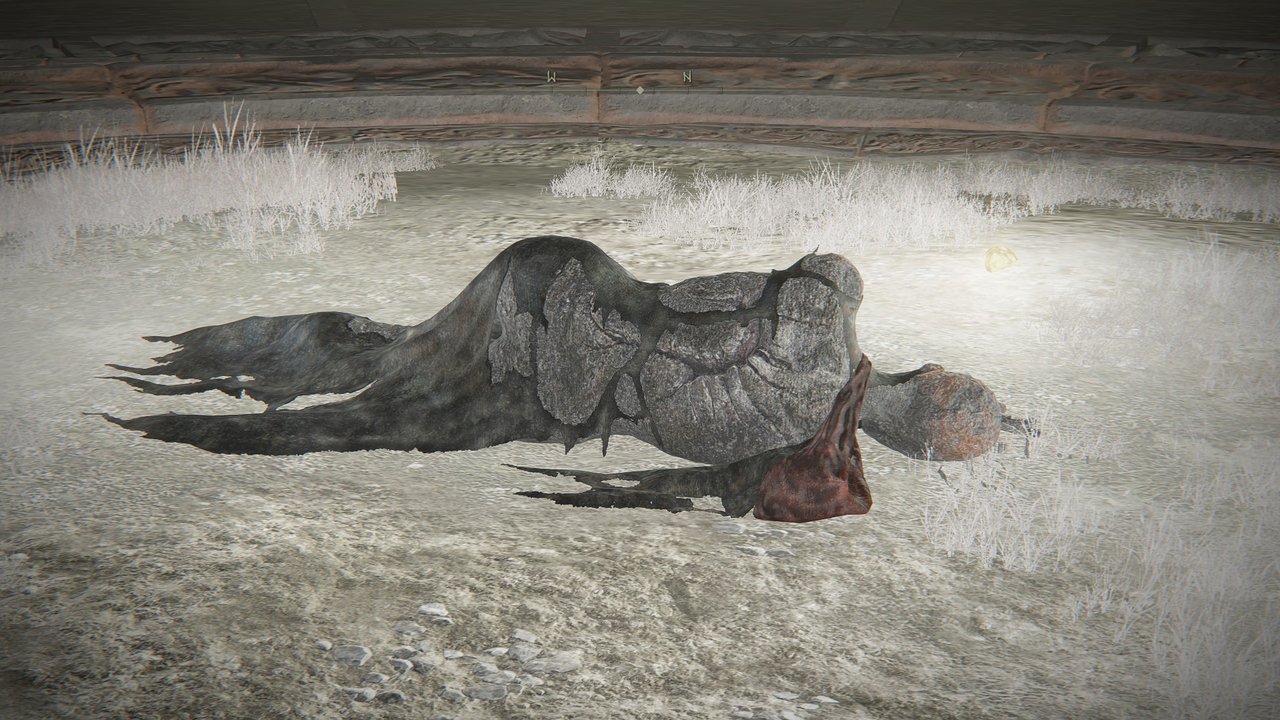
The Cursemark of Death's own item description explains the mechanics precisely: the mark “should have taken the shape of a circle,” but because “two demigods perished at the same time, [it broke] into two half-wheels.” And most importantly: “Ranni was the first of the demigods whose flesh perished, while the Prince of Death perished in soul alone.”
In plain terms: a complete death — soul and body together — was divided by the rite into two halves, and each victim received one. Ranni took the death of the body — her flesh blackened atop the tower, but her soul escaped and later came to inhabit a doll's body of her own making. Godwyn took the death of the soul — his soul was utterly erased, yet his body never died at all. It stayed warm. It kept growing. And a soulless demigod body, lying at the heart of the world, was the greatest time bomb in the Lands Between.
Marika's shock — from mourning to the Shattering
Rogier concludes his account with one short verdict: the murder “became the catalyst. Soon, the Elden Ring was smashed.” The game's opening narration confirms the same chain of cause and effect: after the demigods began to fall, starting with Godwyn, Queen Marika was “driven to the brink,” and in the end struck the Elden Ring apart — unleashing the Shattering, the civil war over the Great Runes among her own remaining children.
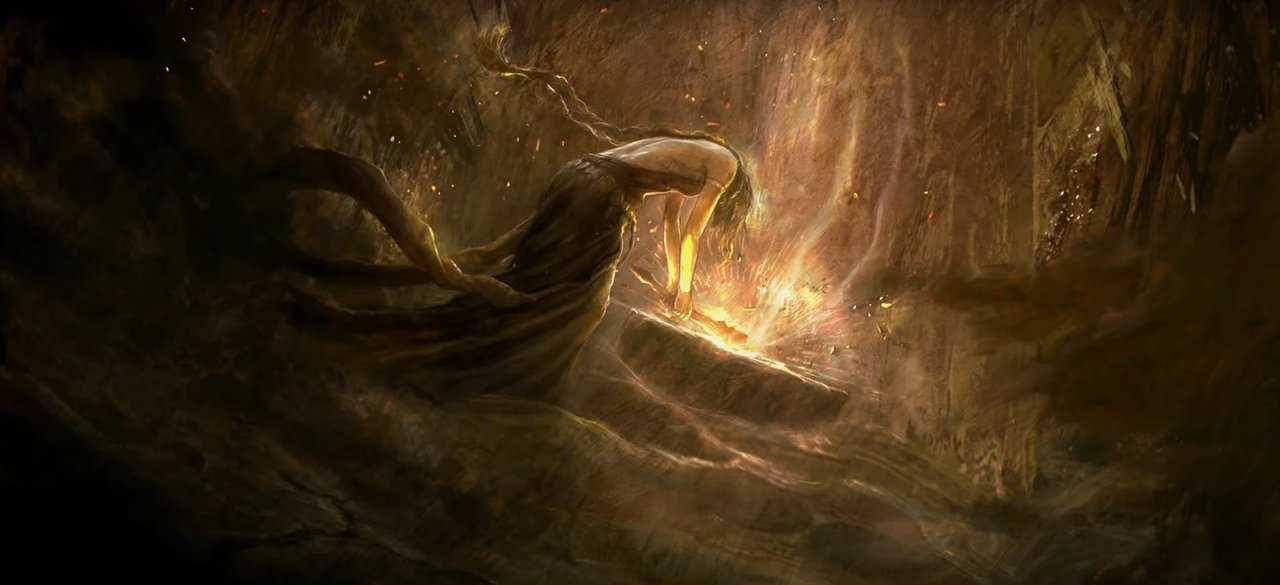
It is worth separating what the game confirms from what remains conjecture. The game confirms the sequence: the Night of the Black Knives happened first, the Shattering followed, and the assassination was the catalyst. That Marika acted “out of grief for her son” is the most common reading of the narration's “driven to the brink” — but her true motive is never stated outright, least of all when the assassins themselves carried Numen blood like hers. Marika's real relationship to the assassination remains one of the greatest mysteries in all of Elden Ring, and it returns in the theories section at the end of this article.
Prince of Death — the living corpse and the Deathroot plague
After his death, Godwyn was buried with the most solemn rite of all: an Erdtree Burial — laid beneath the roots of the Great Tree so his body would return to it, in the deep land of Deeproot Depths directly below the capital. But that rite was designed for the ordinarily dead, not for a body that was still alive. The corpse did not decay. It changed.
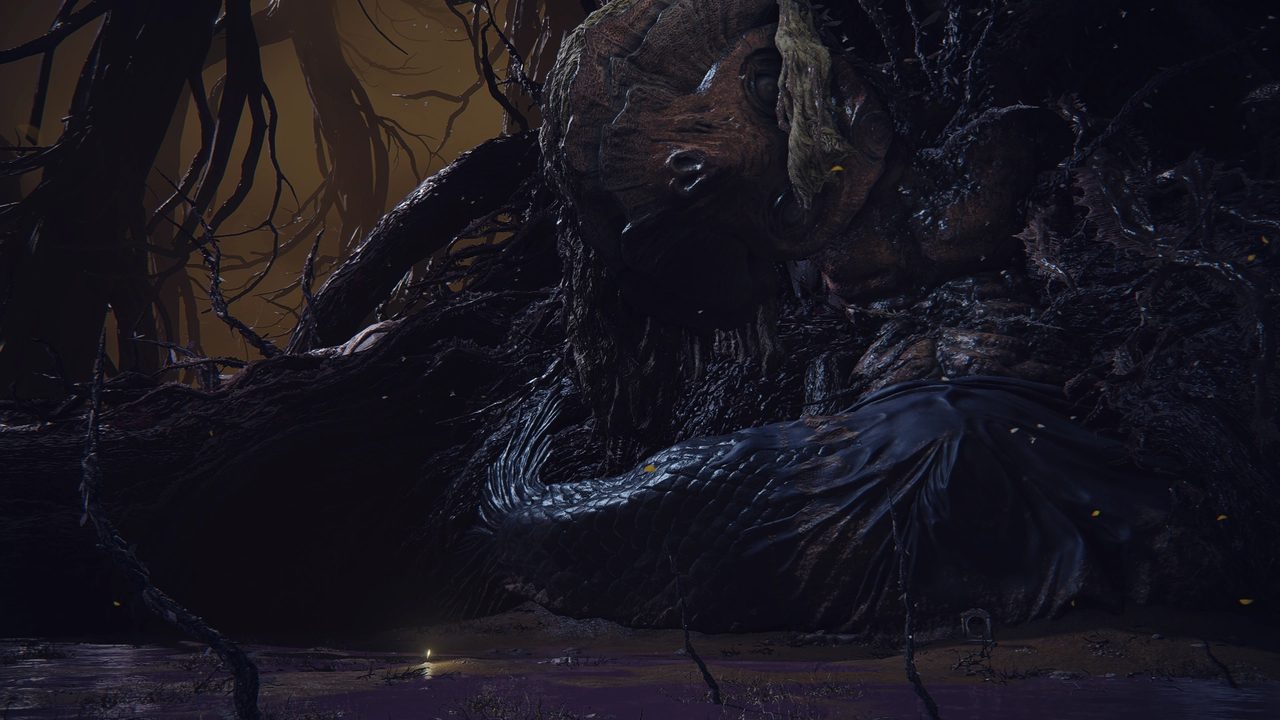
A thousand years later, Godwyn's body has swollen into a colossal, deformed mass in Deeproot Depths: scaled and tailed like a fish, webbed of hand, its face flattened into a strange disk with no eyes or nose left. He is Godwyn no longer — the world knows him by a new title: the Prince of Death, First of the Dead. From that corpse, a plague spread through the vast network of roots beneath the earth: Deathroot. Wherever Deathroot takes hold, the dead do not rest — they rise again as Those Who Live in Death, skeletons and wandering ghosts, an existence that runs against the very law of the Golden Order.
Proof of how far the contamination reaches lies right beneath Stormveil — the first castle the player ever visits. Hidden in Stormveil's deepest crypt is a giant warped face growing out of the roots, identical to the face of the Prince of Death. Rogier calls it “a sacred relic of the black knives plot” — and it was there that he was infected with Death Blight, the curse of death itself.
The purge of the Order — the hunter, the investigator, and the penitent
The Golden Order did not stand idle while the plague spread. To them, Those Who Live in Death are a heresy “at odds with the Golden Order” that must be eradicated root and branch. At the forefront stands D, Hunter of the Dead — the knight in the Twinned armour whom the Tarnished meets at Roundtable Hold — alongside the theologians of Golden Order Fundamentalism. For D this is more than duty: his twin brother fell into slumber near the corpse of the Prince of Death, giving D's hatred of those who live in death a deeply personal edge.
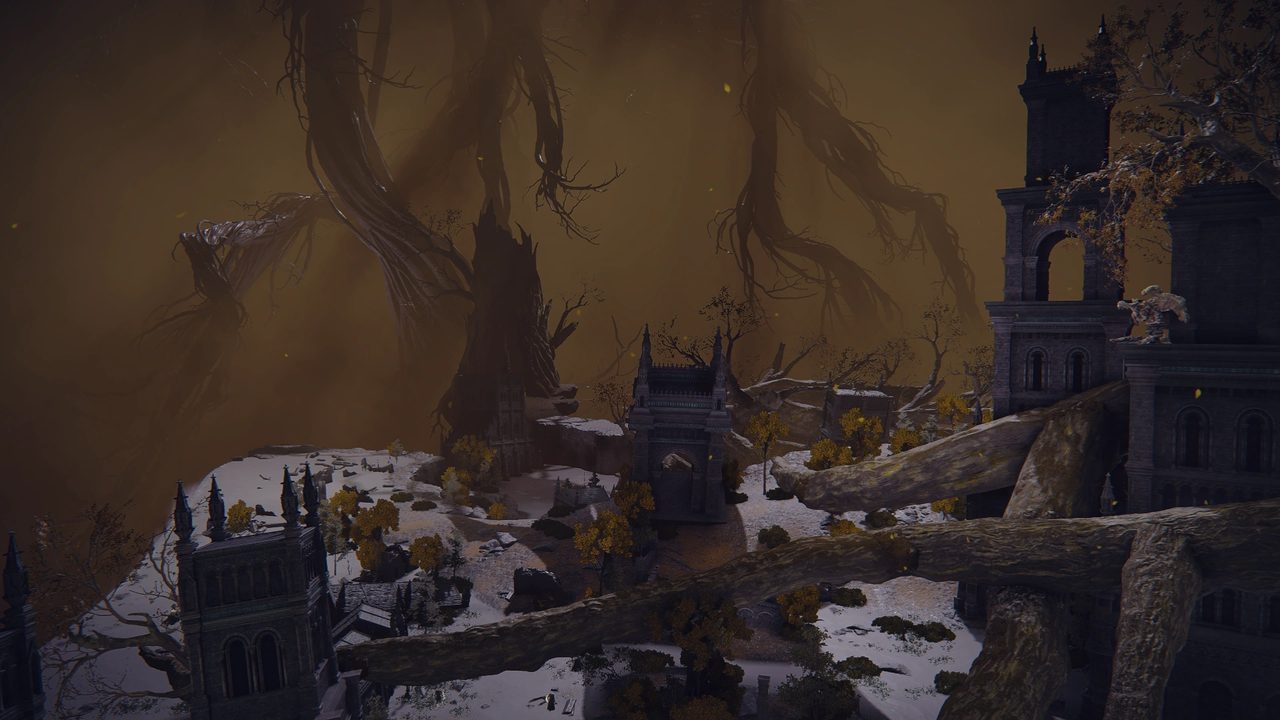
On the other side of the investigation stands Rogier. This sorcerer, once a spy of Roundtable Hold, is the only person in the game who truly connects the clues: from the face beneath Stormveil he traced the imprint carved on a dagger — the Black Knifeprint — and from the imprint, the name behind the whole rite: Ranni herself. But the truth cost him his life: Death Blight rotted his legs until he was confined to a wheelchair in Roundtable Hold's church, and after pointing the Tarnished to where the imprint lay hidden, Rogier quietly passed away.
And the most silent penitent of all is Maliketh himself. In the guise of Gurranq, Beast Clergyman of the Bestial Sanctum, he tasks the Tarnished with gathering Deathroot from across the Lands Between and bringing it back to him… to eat. Every root he swallows is a way of punishing himself for that ancient failure: had he guarded the Rune of Death more carefully, the Night of the Black Knives would never have happened.
Fia — mother of the dead, and the Mending Rune of the Death-Prince
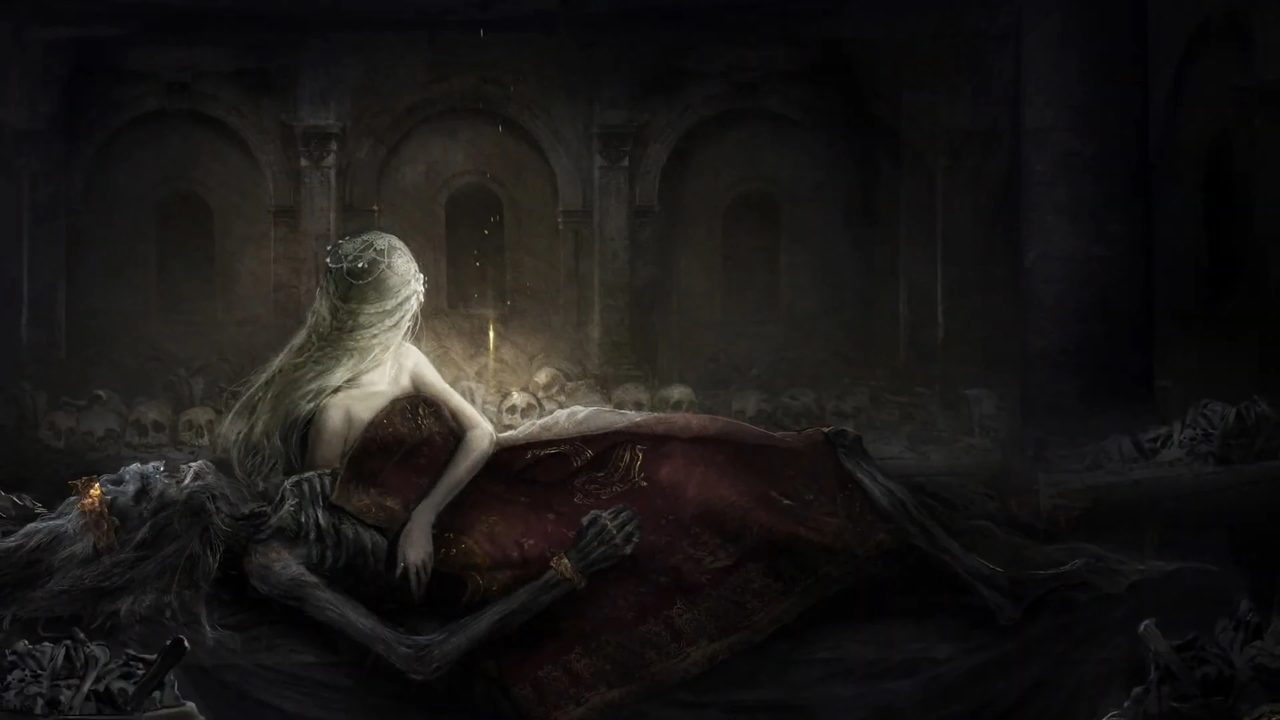
Amid the purge, one exiled woman looked upon the Prince of Death with entirely different eyes. Fia is a Deathbed Companion, from a distant land where a strange and sacred profession endures: to lie beside dying heroes, keep them warm, and gather the vigour of many so that one day the hero may be revived. Cast out and exiled for that very calling, Fia came to the Lands Between with a purpose she states without any concealment: “For I am the companion of Godwyn, Prince of Death. I wished to be a mother to Those Who Live in Death.”
That loyalty made her an enemy of the Order within Roundtable Hold itself: after the Tarnished unwittingly carried an old dagger — the Weathered Dagger — for her, to “return it to its owner,” D was murdered inside the safest stronghold the Tarnished had. Fia departed for the Prince of Death in Deeproot Depths — and began the greatest rite of her life.
To complete it, she needed the other half of the cursemark: the half carved into Ranni's corpse atop the Liurnia tower. When the Tarnished brings that half back, the two half-wheels of the mark are joined as Fia embraces Godwyn's corpse and falls into slumber — and she conceives the Mending Rune of the Death-Prince. That rune's description is the manifesto of an entire ending: “The Golden Order was created by confining Destined Death. Thus, this new Order will be one of Death restored.” Whoever mends the Elden Ring with this rune ushers in the Age of the Duskborn — an age where death returns as a natural part of the world, and Those Who Live in Death may exist lawfully instead of being hunted.
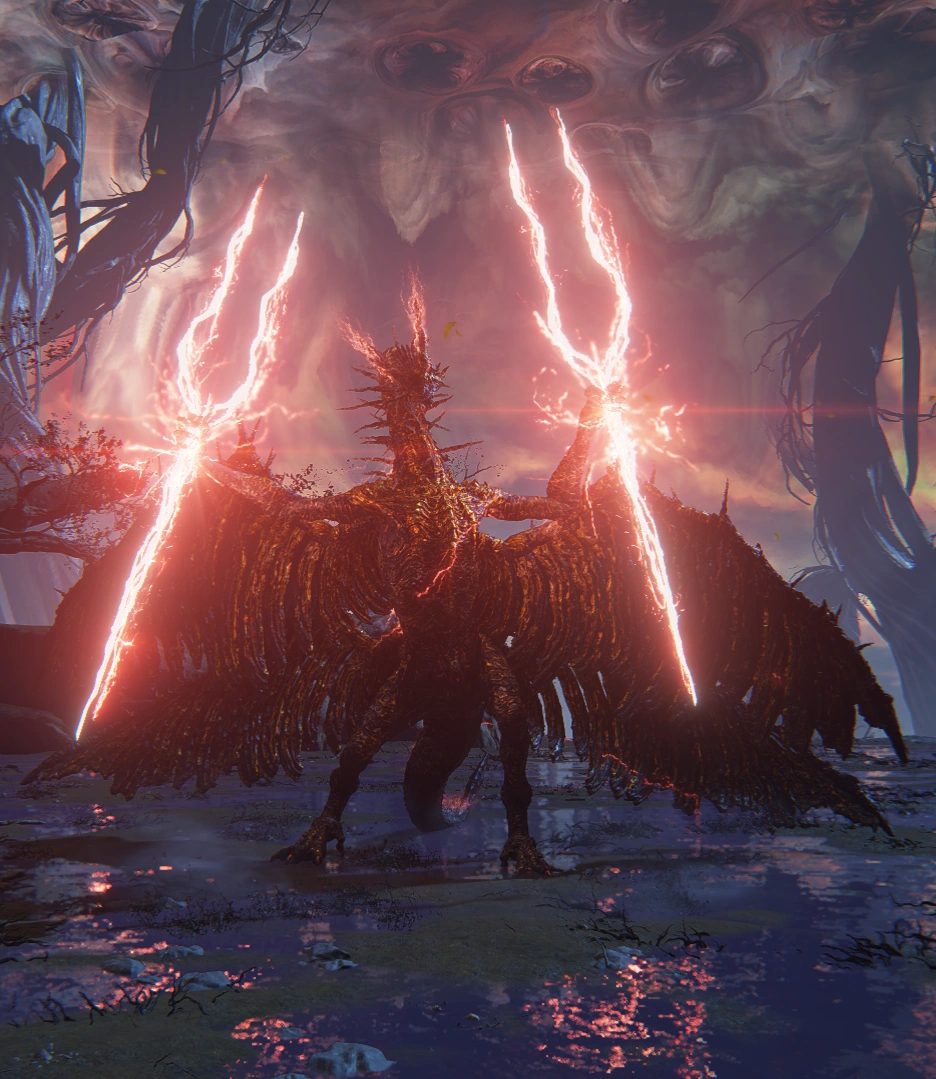
But before the rune can be completed, the Tarnished must enter Fia's dream and face the one who has guarded Godwyn in his own way for a thousand years: Lichdragon Fortissax. Once the proud ancient dragon who befriended Godwyn, Fortissax fought without rest against the death festering within his friend's corpse after Godwyn became the Prince of Death — and was corrupted into an undead dragon wreathed in red lightning. Defeating Fortissax in the Deathbed Dream is the only way for Fia to rest and complete the rune; and she, after surrendering the fruit of her life's work, dies peacefully — one of the few “true” deaths in the entire story. Before Fia, another had tried to save Godwyn in a wholly different way: Miquella raised Castle Sol and prayed for an eclipse so that his lord brother might “die a true death” — but that eclipse never came.
What became of them
Godwyn the Golden — His soul was annihilated forever on the Night of the Black Knives; his body became the Prince of Death in Deeproot Depths, the source of Deathroot and of all Those Who Live in Death.
Ranni the Witch — Having escaped her Empyrean flesh, she lives on in a doll's body and pursues her own path: to become the god of a new age beneath the dark moon, beyond the Greater Will's control.
Queen Marika — She shattered the Elden Ring after Godwyn's death and was punished by the Greater Will with imprisonment and crucifixion inside the Erdtree — where the Tarnished finds her at the journey's end.
Maliketh — He sealed the rest of the Rune of Death into his own flesh and hid in Farum Azula beyond time, all the while quietly gathering Deathroot in the guise of Gurranq to atone, until the Tarnished defeats him.
Black Knife Tiche — She died fleeing the capital after the assassination, protecting her mother Alecto; her ashes can still be summoned, still wielding a blade imbued with the Rune of Death, as on that night.
Fia, Deathbed Companion — She completed the Mending Rune of the Death-Prince and died peacefully beside Godwyn's corpse — though in one branch of events, D's twin brother comes to Deeproot Depths to avenge his sibling.
Sorcerer Rogier — The only one who traced the whole truth of the case, but Death Blight claimed him, and he died at Roundtable Hold after handing the Tarnished his final clue.
D, Hunter of the Dead — Murdered inside Roundtable Hold by Fia's side; his Twinned armour later passes to his twin brother, asleep near the Prince of Death.
Common misconceptions
Did Ranni kill Godwyn with her own hands?
No. Ranni was the mastermind and the one who forged the black knives, but the hands that struck belonged to the Black Knife Assassins — specifically Tiche, according to her ashes' description. And at the very moment Godwyn was murdered, Ranni was atop the Liurnia tower ending her own fleshly life. She accepts total responsibility (“I did it all”), but distinguishing “mastermind” from “murderer” is essential to understanding the case.
Did Godwyn “die completely” on the Night of the Black Knives?
He never did. Only Godwyn's soul died — and died permanently, beyond any revival. His body not only failed to die, it kept growing, warping into the Prince of Death and festering like a plague pit beneath the Erdtree's roots. That is why Godwyn is called the First of the Dead: he did not die as the living die, but “lives” as the dead live.
Was Marika the true mastermind behind the assassination?
Nothing confirms this. The assassins were Numen “with close ties to Marika,” and Ranni publicly claims the entire plot — not one line in the game says Marika ordered or aided it. The Marika theory is community inference built on indirect details (see Theories & mysteries below) and should be read as theory, not established story fact.
Was Maliketh defeated in battle and robbed of the Rune of Death?
No battle is recorded anywhere. Ranni merely “stole a fragment” of the rune — by what means, the game absolutely never reveals; Maliketh was not beaten in combat, he was outmanoeuvred. That is precisely why his response was to seal the remainder in his flesh and spend the rest of his life in guilt and penance, rather than in vengeance for a battlefield defeat.
Is Fia a villain manipulating the player?
It is not that simple. Fia's side did strike down D inside Roundtable Hold, but her purpose is stated openly from the beginning and stays consistent to the end: to win back a place for death within the Order, and the right of Those Who Live in Death to exist. The Age of the Duskborn is one of the game's “reform” endings rather than a ruinous one — Fia is a revolutionary of the dead, more than a villain.
Theories & mysteries
Why Godwyn? — Beyond the symbolic reason (the most beloved heir), the community theorises that Ranni's rite required a matching counterpart: for her body to die while her soul lived on, another soul had to die while its body lived on — at the very same moment. Godwyn, the first and mightiest demigod of the Golden Lineage, may have been chosen precisely because the rite demanded a victim of equal weight. This is a reasonable inference from the Cursemark's description, but the game has never confirmed any criteria for choosing the victim.
How deep did Rykard's involvement run? — What is certain: the Blasphemous Claw's description reveals that Ranni gave her brother, Praetor Rykard, a trace of the Rune of Death as a last resort “if Rykard were to challenge Maliketh” — meaning Rykard knew of the whole plot in advance. Whether he was merely a contingency or an active accomplice on the night itself, there is no further evidence.
The shadow of Marika. — Two details keep the community suspicious: the assassins were Numen close to Marika, and Maliketh's Remembrance ends with a chilling line — “Even then, she betrayed him.” That “betrayal” may simply mean Marika shattering the Elden Ring and abandoning the order Maliketh had guarded all his life; but some read it as a trace that Marika had wearied of her own Order long before the Night of the Black Knives. The game deliberately refuses to answer.
The many faces of the Prince of Death. — The warped face beneath Stormveil is not the only case: Godwyn's influence seems to reach even farther than the root network. In the Shadow of the Erdtree expansion, the Death Knights — Godwyn's loyal former guards — still wander in search of their lord's “cadaver surrogate,” as though the Prince of Death had more than one body. Godwyn's soul died a thousand years ago; but it seems his “death” is still growing.
👤 Main characters
A quick introduction to the central characters of the story — portraits taken from the game itself.
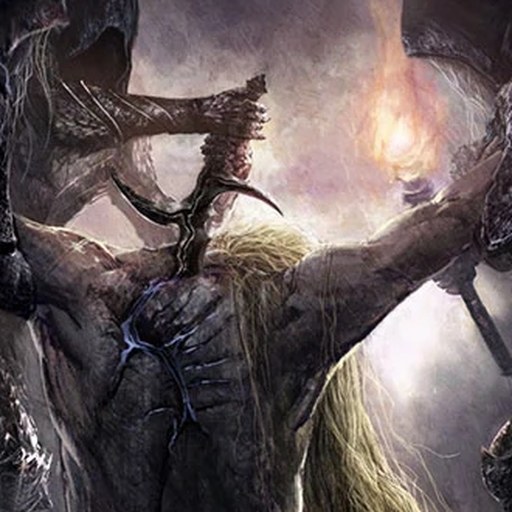
Firstborn of Marika and Godfrey, hero of the War against the Ancient Dragons, who defeated Fortissax and then befriended him. On the Night of the Black Knives his soul was erased by the Rune of Death while his body lived on, becoming the Prince of Death — the source of Deathroot and of all Those Who Live in Death.
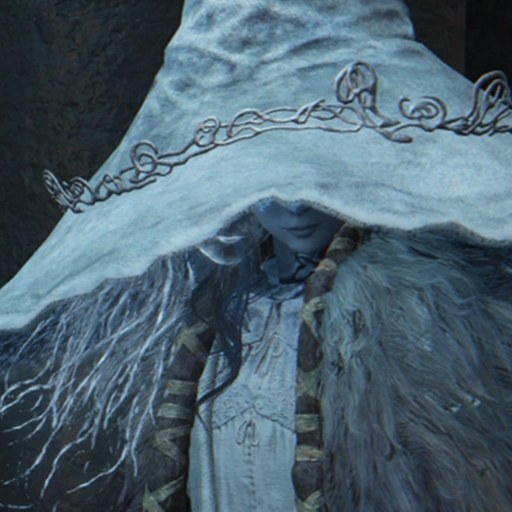
Daughter of Rennala and Radagon, chosen as an Empyrean by the Greater Will but unwilling to let the Two Fingers dictate her fate. She forged the black knives, used Godwyn's death as the counterweight to kill her own flesh while keeping her soul, and lives on in a doll's body, pursuing her ambition of an Age of the Stars.
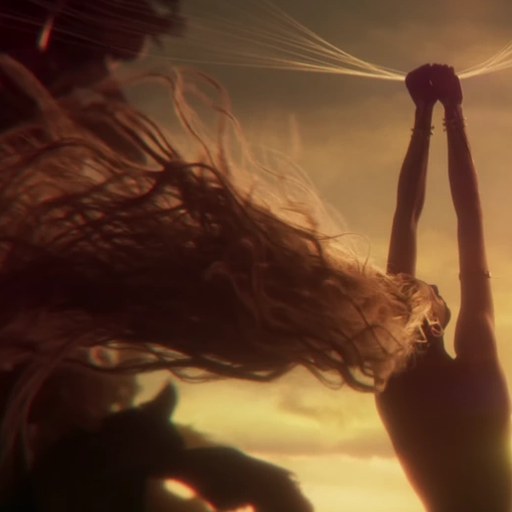
Marika confined the Rune of Death with Maliketh so her demigods would be immortal under her Order. Godwyn's death drove her “to the brink”: she shattered the Elden Ring, unleashing the Shattering, and was imprisoned within the Erdtree by the Greater Will. Her true role in the assassination remains the greatest mystery in Elden Ring.
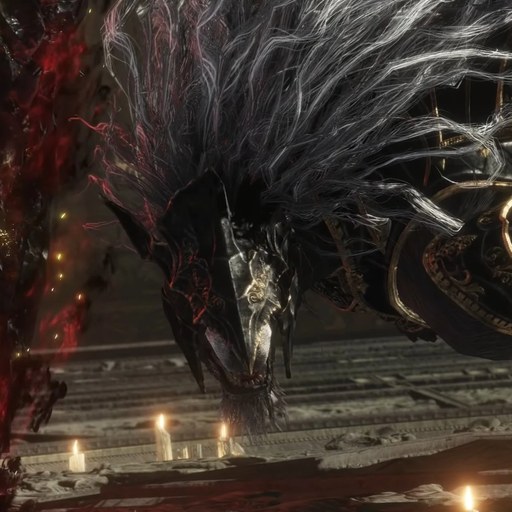
Marika's half-sibling and shadow, charged with sealing Destined Death within his black blade. After a fragment was stolen, he bound the remainder into his own flesh, then quietly atoned in the guise of Gurranq by gathering and devouring Deathroot across the Lands Between.
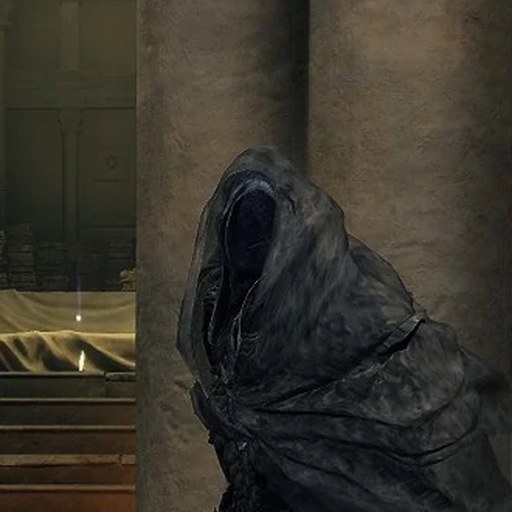
One of the all-female Numen assassins who carried out the Night of the Black Knives. Tiche died protecting her mother during their flight from the capital after the murder. Her ashes — summonable in the game — still fight with that same black knife.
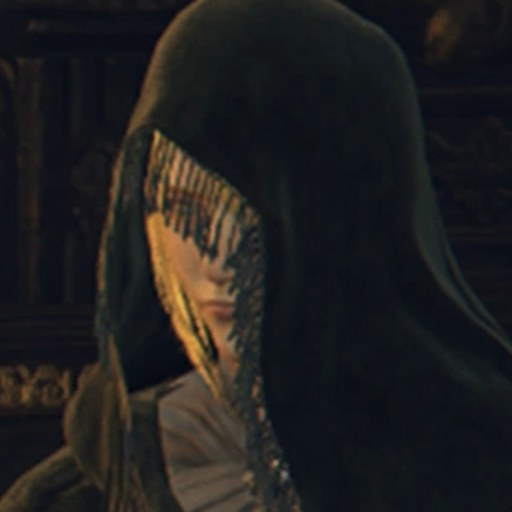
From a land where lying beside the dying is a sacred calling, Fia came to the Lands Between for Godwyn's sake. She defied the Golden Order within Roundtable Hold itself, then withdrew to Deeproot Depths to conceive the Mending Rune of the Death-Prince — the seed of the Age of the Duskborn ending.
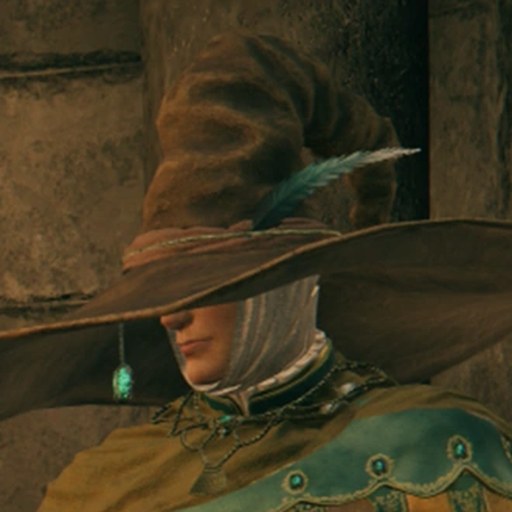
A former spy of Roundtable Hold. From the warped face beneath Stormveil, Rogier followed the imprint on the dagger and named the one behind the rite: Ranni. But Death Blight contracted at the scene wasted his legs away, and he died quietly after passing on his final clue.
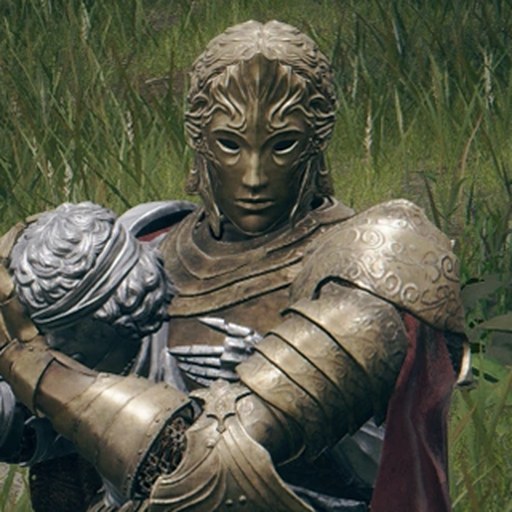
A knight in the Twinned armour who devoted his life to hunting Those Who Live in Death — in part because his twin brother lies in slumber near the Prince of Death. D was murdered inside Roundtable Hold by Fia's side, the first casualty of the struggle over the fate of death itself.
📚 Read the Elden Ring series in story order
- Elden Ring Story Explained: The Shattered Ring, the Demigods, and the Age of the Stars
- Miquella and Malenia Explained: The Cursed Twins and the Dream of a Kinder World
- Marika and Radagon Explained: One God, Two People — Elden Ring's Greatest Secret
- Melina Explained: The Kindling Maiden, the Gloam Eye, and the Vow of Destined Death
- Godwyn and the Night of the Black Knives Explained: When the First Demigod Died — you are reading this one
- Radahn Explained: The Starscourge Who Held the Heavens, the Battle of Aeonia, and Miquella's Promised Consort


