Marika and Radagon Explained: One God, Two People — Elden Ring's Greatest Secret

📋 Quick facts
- Game
- Elden Ring
- Developer
- FromSoftware
- Release year
- 2022 (February 25, 2022)
- Platform
- PlayStation 4/5, Xbox One/Series X|S, PC
- Genre
- Soulslike (Open-world action RPG)
- Director
- Hidetaka Miyazaki
- Worldbuilding
- George R.R. Martin & Hidetaka Miyazaki
- Notable feature
- An in-depth analysis of the 'Radagon is Marika' secret, including lore from the Shadow of the Erdtree DLC
- Expansion
- Shadow of the Erdtree (2024)
Every tragedy in Elden Ring begins and ends with the same person — or rather, the same body containing two people. Marika, the Eternal Queen, built the Golden Order and then shattered it with her own hands. Radagon, the red-haired champion, was her second husband — and was Marika herself. "Radagon is Marika" is the greatest secret of the Lands Between, a riddle the game repeats through stone statues, whispers in churches, and a sage struck dumb for having solved it. This analysis follows the entire trail: from the Shaman girl in a village where no one remains, through the blood-stained Gate of Divinity and the marriage in Liurnia, to the central question — why would a god turn against her own order, and how far did her other half resist? Warning: this article spoils the entire base game and the Shadow of the Erdtree expansion.
📌 Quick summary: The greatest secret of Elden Ring sits right on the throne: Radagon, Queen Marika's second husband, is Marika herself — two personalities in one divine body. This analysis traces the trail from the Shaman girl in a massacred village, through the Gate of Divinity and the marriage in Liurnia, to the central question: why did Marika build the Golden Order only to shatter it with her own hands?
The Shaman Girl and the Village Where No One Remains
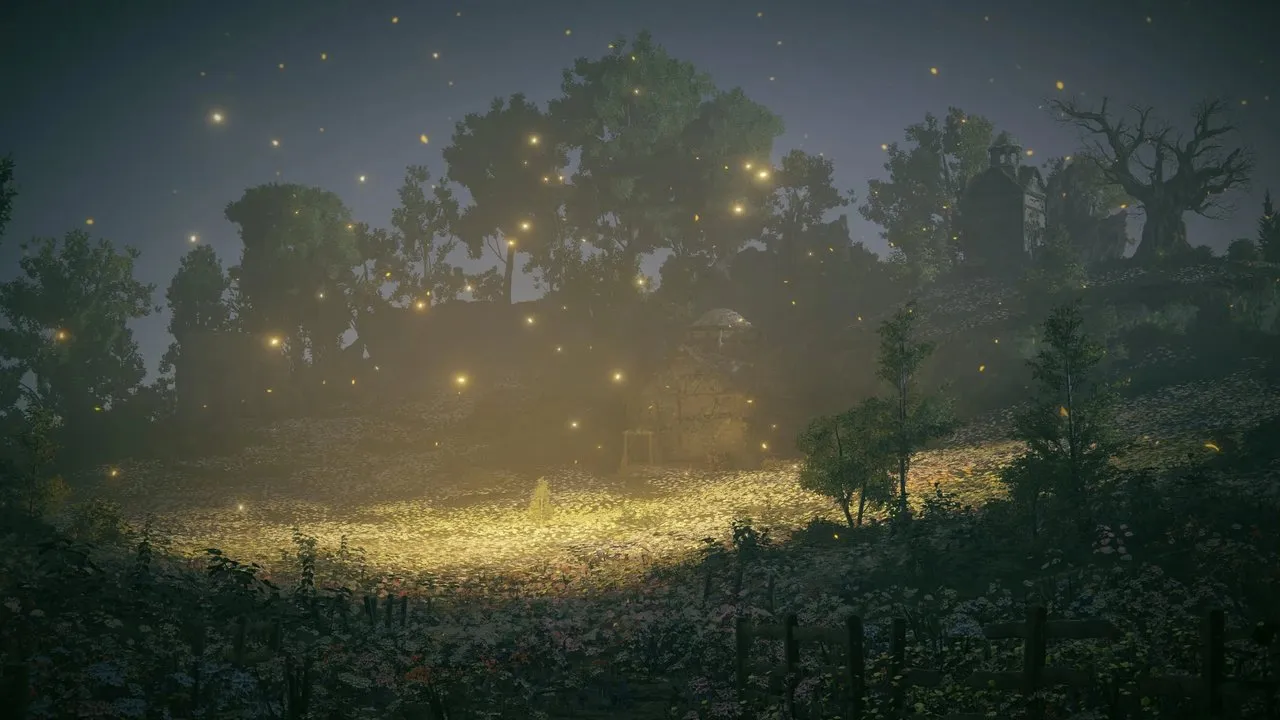
Before she was a goddess, Marika was a Shaman — of the people in the Land of Shadow whose flesh "blends harmoniously" with all other living things. To the Hornsent, who worshipped the Crucible and held power in that land, this trait turned the Shaman people into raw material: they were stuffed alive into enormous jars together with the flesh of sinners, in a sick ritual meant to create "saints" — the true origin of the Living Jars the player meets all across the Lands Between. The Shaman Village — Marika's homeland — is today a valley of golden flowers, peaceful to an eerie degree, tucked in a hidden corner of the map, and absolutely empty.
The DLC's most moving item is found there: the Minor Erdtree incantation, left by Marika in her village, whose description says she "bathed the village of her home in gold, knowing full well that there was no one to heal." No one — because everyone had been stuffed into jars, or had died. Marika was the survivor, and everything she did afterward — from ascending to godhood to building an uncompromising empire — should be read through the lens of a girl who lost her entire family to a religion. FromSoftware never shows us the village being massacred; they leave only a field of flowers and a single sentence. That is enough.
The Gate of Divinity and the Original Sin
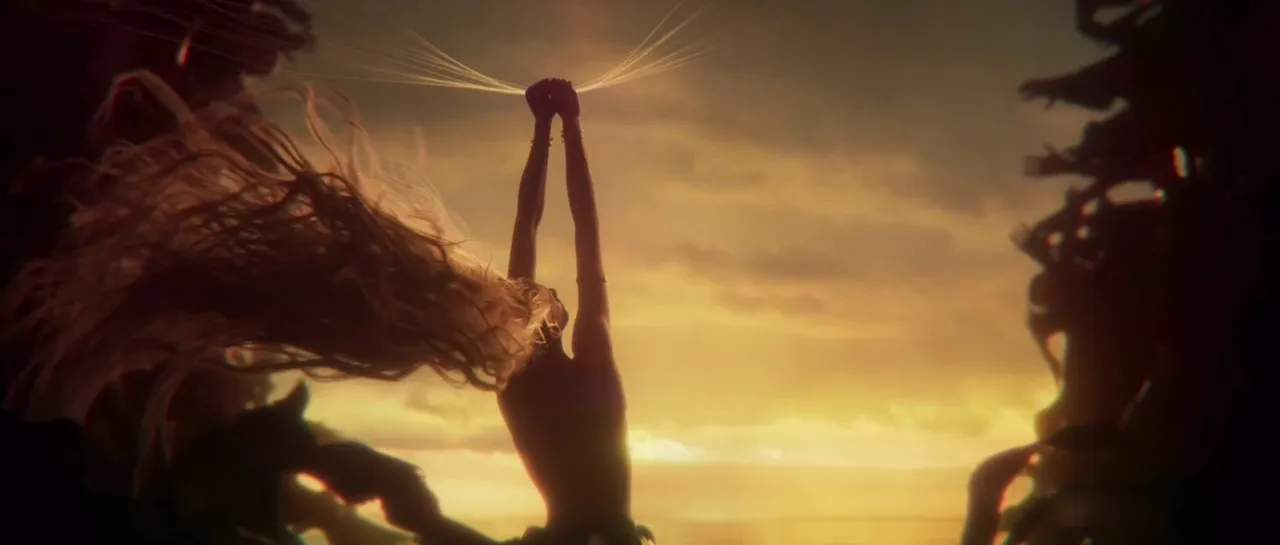
The story trailer for Shadow of the Erdtree opens with whispers that have become iconic: "The seduction and the betrayal. An affair from which Gold arose. And so too was Shadow born." At the top of the tower of Enir-Ilim stands the Gate of Divinity — a structure of flesh built by the Hornsent to reach the gods. It was there that Marika stepped through that gate and became a god: the image of her standing between the gate's two pillars of flesh, both hands raising radiant golden threads to the sky, is the founding moment of an entire age — the Erdtree, the Golden Order, and an endless war against everything belonging to the old world.
What does "betrayal" mean here? The game lets the player piece it together: Marika was, in all likelihood, once part of the Hornsent order (perhaps a "saint" raised by them for the ascension ritual itself), and then used their own ritual to steal divinity and turn back and destroy them. Her first son, Messmer, was given the task of carrying out that vengeance — a crusade that burned Belurat, the Hornsent's city — and was then sealed away by his own mother in the Land of Shadow together with the crime of the entire dynasty, so that the outside world would never learn that the Golden Empire began with a massacre and a stolen godhood. The history of the Lands Between, from its very first page, was history rewritten by the victor.
An Empire Built on Exclusion
Marika's Golden Order was radiant indeed — but radiant for some. Children born with traces of the ancient Crucible (horns, scales, tails) were branded "Omen", ill omens: royalty were chained and imprisoned in the sewers below (Morgott, Mohg), while commoners had their horns cut off at birth — most died from it. The misshapen Misbegotten were turned into slaves. The artificial Albinaurics were hunted like animals. And when Marika removed the Rune of Death from the world so her empire would never decay, she inadvertently created a universe in which death was stuck — the seed of Those Who Live in Death to come.
In fairness, not every exclusion was decided by Marika alone: she was a goddess, but also a puppet of the Greater Will and the Two Fingers — that "order" may never have been hers alone. That is precisely the paradox that makes this character: Marika was at once the empire's perpetrator and its highest-ranking prisoner. Messmer's crusade is the clearest proof: she ordered a massacre to avenge her people, then buried the son who carried out that order together with the truth — as if, by sealing the Land of Shadow behind a veil, she could also seal away the part of her own past she did not want to look back on.
Radagon — the Red-Haired Champion and the Marriage in Liurnia
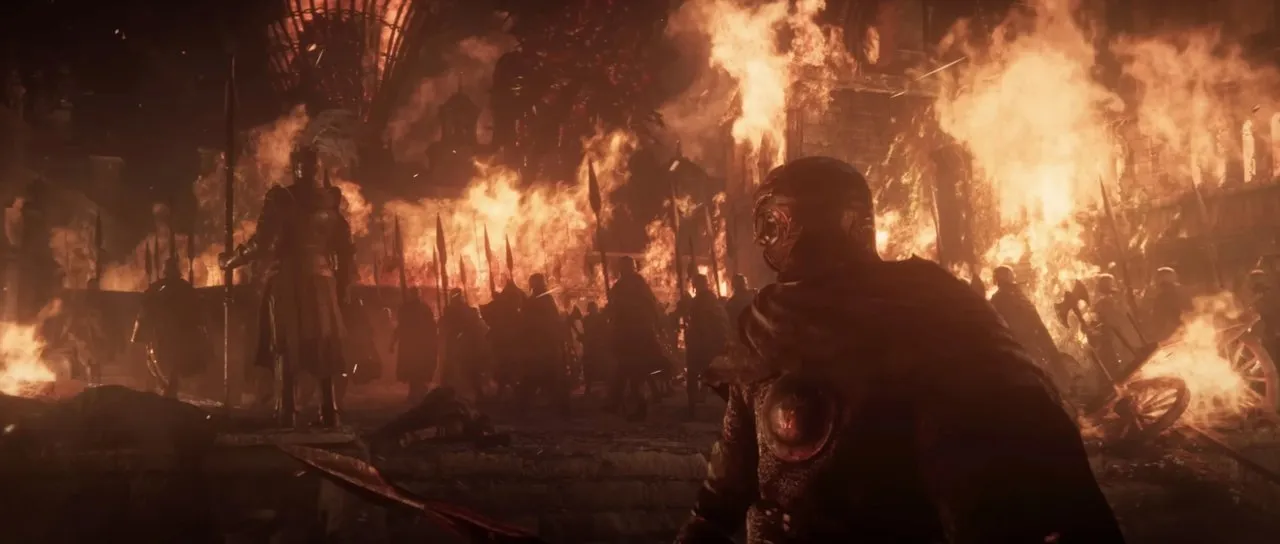
Radagon enters history as a red-haired "champion" who led Leyndell's forces down into Liurnia in the two wars against the Carian royal family. His only recorded weakness was that very hair: the Giant's Red Braid item tells that Radagon "loathed his red hair" — perhaps because it recalled the Giants, the empire's enemies; there is even a theory that he carried their curse, or their blood, within him. Then something strange happened: in the middle of the war, Radagon met Rennala on the battlefield, fell in love with her, and instead of conquering, he went to the Church of Vows and performed the rite of Celestial Dew to "repent all territorial aggressions, and absolve himself of all sins" — in the words of Miriel, the giant turtle pastor who guards that church to this day. They married, and the marriage was a rare exchange of knowledge: Radagon learned the sorceries of the Carian royal family, Rennala learned the incantations of the Order; two rival systems completed each other within a family of three children: Radahn, Rykard, Ranni.
The end of that marriage is one of the game's most painful details: when Marika needed a new Elden Lord (Godfrey had just been exiled), Radagon was summoned back to Leyndell — and he went, leaving Rennala behind with a parting gift: an amber egg containing the Great Rune of the Unborn. Rennala never recovered after that day. The question still divides the community: did Radagon leave because he was ordered to by... himself (Marika), or because the other half within him never had a choice? Either way, it is the earliest proof that within this god's body, the wills of two people were nothing alike — one ready to throw away personal happiness for the sake of order, the other never even asked about their own happiness.
"Radagon Is Marika" — Dissecting the Greatest Secret
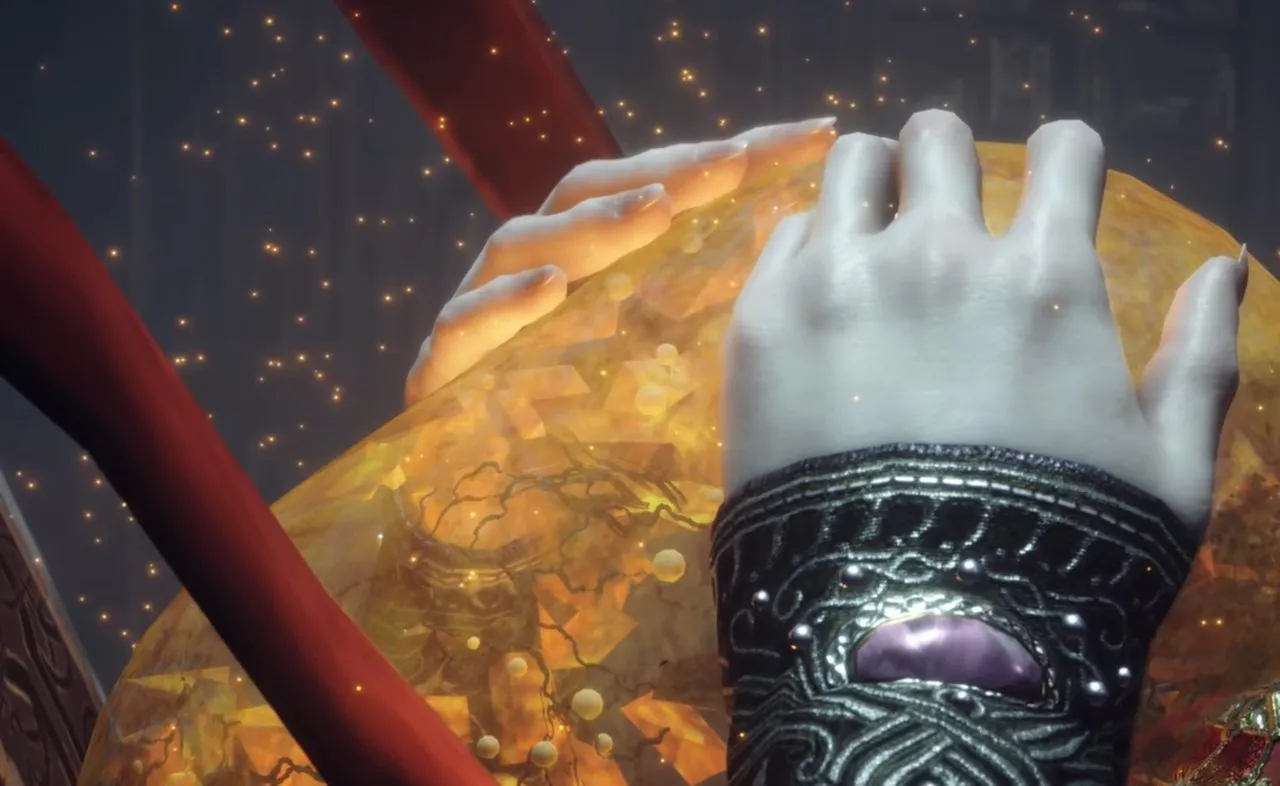
The evidence for this secret lies scattered everywhere for those willing to look. In Leyndell there stands a statue of Radagon; cast the Law of Regression — Radagon's own incantation, founded on the principle that "all things yearn to converge" — before that statue, and the statue transforms into Marika, revealing the message of the sculptor who carved it: he discovered the earth-shattering secret while carving the statue, and hid it away for someone wise enough in the future. Goldmask, the Golden Order's greatest sage, was struck dumb before that discovery, conveyed through the Fingers: the god he worshipped consisted of two people.
But the most damning evidence comes from Marika's own mouth. At the Site of Grace in the Queen's Bedchamber in Leyndell, Melina can recite "Marika's own words" from long ago — the echoes she left at churches across the kingdom: "O Radagon, leal hound of the Golden Order. Thou'rt yet to become me. Thou'rt yet to become a god. Let us be shattered, both. Mine other self." This line, most likely spoken just before the Shattering, confirms three things at once: Radagon is a part of Marika, the shattering of the Ring was her decision alone and not "theirs", and she knew full well that her other half would object.
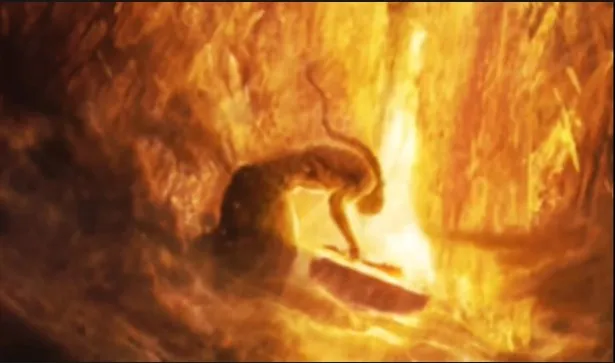
So exactly when did the two become one? The game never answers outright, and two main schools still argue the point. The "always one" school: Radagon was an aspect of Marika from the very beginning — the loyal, conservative, order-bound part of her splitting off into a separate person when needed, exactly the way Miquella would later have St. Trina as an "other self". This explains why history records nothing of where Radagon came from — he simply "appeared" because Marika needed a champion. The "merged later" school: Radagon was once a genuinely independent mortal/champion, and the line "thou'rt yet to become me, thou'rt yet to become a god" implies a process: when he was summoned back to become Elden Lord, he was merged into Marika — and their marriage, taken literally, was two souls bound into a single divine body. Supporting this school is the fact that Radagon has a past, friends, insecurities (the red hair) and a family of his own — far too "human" to be merely an aspect. Whatever the answer, Elden Ring's structure is plainly parallel: Marika/Radagon in the earlier generation, Miquella/St. Trina in the next — divinity in this world seems always to come with a soul split in two.
Why Did Marika Shatter the Elden Ring?
This is the question every analysis of Marika must answer, and the honest answer is layers stacked upon layers. The outermost layer — a mother's grief: the Night of the Black Knives killed Godwyn, her golden child, in the cruelest way possible (dead in soul, alive in body). Many characters in the game believe the Shattering was a desperate mother's reaction. The second layer — doubt accumulated over a long time: Marika's echoes at the churches show she was no blind believer in her own religion: she declared her intent to "plumb the depths of the Golden Order", saying that the age of blind faith had long since passed. A woman whose people were destroyed by a religion perhaps understood better than anyone how wrong a religion can be — including her own.
The third layer — a rebellion prepared over thousands of years: this is the most frightening layer. The echo at the Church of Pilgrimage records the words Marika spoke to Godfrey and his army before exiling them: she stripped them of grace and ordered them to leave the Lands Between, to wage war, to die — "and afterwards, you shall return, you who died in distant lands" — and take the Elden Ring. In other words: the return of the Tarnished (the player's entire journey!) was a move Marika had arranged long before the Shattering — a reserve army of the dead, called back to topple the order when she could no longer do it herself. She exiled her husband not because she had stopped loving him, but because she needed an army beyond the control of the Greater Will. Read this far, and the Shattering no longer looks like the madness of a mother who lost her child — it looks like the opening shot of a coup coldly prepared over a very long time, with Godwyn merely the final spark.
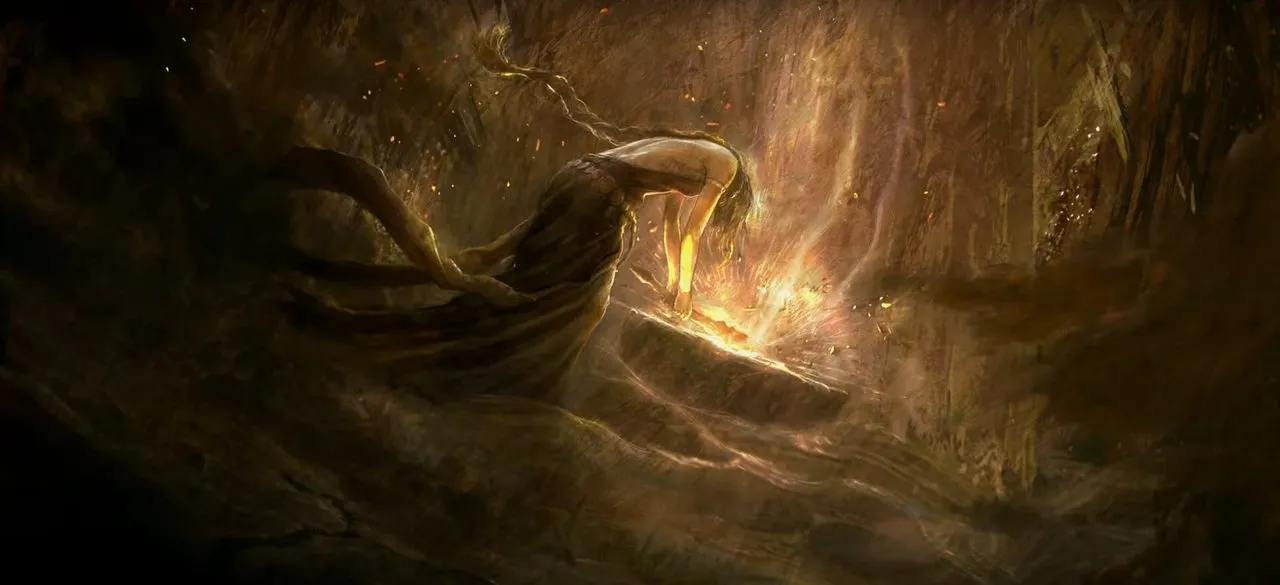
Goldmask and the Perfect Mending — the Final Verdict on Two Gods
The story of Marika and Radagon has an unexpected judge: Goldmask, the sage in the golden mask, who spent his life standing motionless, pointing up at the Erdtree in order to "read" the Golden Order like a text. When his disciple Corhyn learned the truth that "Radagon is Marika", Corhyn's faith collapsed completely — he concluded that Goldmask had gone mad and abandoned his master in despair. But Goldmask was not mad; he simply went on to the final conclusion, recorded in his Mending Rune of Perfect Order: the imperfection of the Golden Order lies in "the fickleness of the gods — beings no better than men".
That is the sharpest verdict the game passes on the subject of this article: the problem of the Lands Between was never the Elden Ring, nor the laws, nor the alien gods — the problem was that the supreme ring was entrusted to a person with a heart: grieving for a lost child, hating for a lost homeland, and at war with her own other half. Goldmask's solution for the Age of Order is to remove that factor entirely — an order that not even gods can change on a whim of emotion. The player may agree or disagree with that solution; but the journey to find it — from a sage standing still as a statue to a corpse collapsed at the foot of a tower with the perfect Great Rune in hand — is FromSoftware's most profound commentary on Marika's tragedy: she did not lose because she was evil; she lost because she was human.
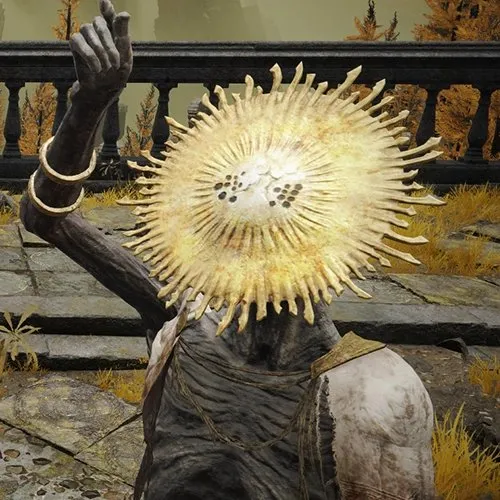
The Characters' Fates After the Endgame
Marika: in every Elden Lord ending, her cracked stone body remains the place where the player sets the mending Great Rune — she is not revived, not freed in any ordinary sense; the god who founded the empire ends as a stone pedestal for the next order. Only in Ranni's ending does Marika's head crumble entirely as Ranni lifts it — her final, most decisive death. Radagon disappears along with that body; the sacred Relic Sword in the final arena is forged from his very corpse — the loyal champion ends his life as a weapon in the hands of the one who killed him. Rennala still sits in the academy's library, cradling the egg, forever. Godfrey falls at the very threshold of the Erdtree, in the arms of the son he had only just met for the first time — and the last. Messmer dies in the Land of Shadow with a curse for his mother on his lips — and only when the seal in his eye breaks does his true self get to look upon the world one last time. Goldmask is found dead at the foot of a bridge in ash-covered Leyndell, leaving the perfect Great Rune behind as a last will.
Common Misconceptions
Was Radagon simply Marika's second husband?
No — the game itself denies this through the stone statue, through the Regression incantation and through Marika's own mouth. He is "her other self". The statue of Radagon in Leyndell hides its sculptor's message, and when the Law of Regression incantation is used before that statue, the secret appears verbatim: Radagon is Marika.
Is Marika the main villain of Elden Ring?
It's not that simple. She is the architect of a cruel empire, and at the same time the only person in that empire who tried to destroy it from within. Calling her the villain is like calling Radagon the hero: half true — and not the interesting half.
Did Marika shatter the Elden Ring only out of grief for Godwyn?
No. The grief was a real spark, but the plan to call the Tarnished back had been arranged by her long beforehand; a spontaneous outburst does not prepare an entire army in the world beyond. She exiled Godfrey and the Tarnished in peacetime, with the promise to call them back when needed.
Was Messmer an illegitimate child who was hated and cast aside?
No. Messmer is a son Marika entrusted with an entire war, carrying his own kindling and a seal made of his mother's grace placed in his eye — his abandonment came later, and was political (burying the dynasty's crime) far more than emotional.
Unresolved Theories
Was Radagon a "leash" planted in Marika by the Greater Will? The way Marika addresses him — "leal hound of the Golden Order" — suggests an unequal relationship: if Radagon was the absolutely order-loyal aspect split off (or implanted) to restrain a goddess growing ever more doubtful, then the entire tragedy is the story of a god monitored by her own system from inside her own body. The fact that Radagon personally sealed the Erdtree with his own sigil after the Shattering (the thorn barrier bearing his signature criss-cross pattern) shows that this "other half" truly carried out a counter-coup within their shared body. Who is the father of Messmer and the twins? The game confirms Marika is the mother of Messmer, of Morgott/Mohg (with Godfrey) and of the twins (with "Radagon") — but for Messmer, the father's identity is never confirmed; the red hair and the connection to fire make the community lean toward Radagon, which would make Messmer the eldest full sibling of the youngest twins. Did Marika truly want to die? There is a very persuasive reading in which the entire chain of events — from exiling the Tarnished, removing the Rune of Death and entrusting it to Maliketh's guard, to shattering the Ring and accepting being hung upon a cross — is the journey of a goddess who could not end herself (because of her divinity, and because the Greater Will would not permit it), and so carefully arranged for someone else to come and do it in her place. If this reading is right, Elden Ring is not a story about fighting over her throne — it is about a god who spent thousands of years earning the right to rest.
👤 Main characters
A quick introduction to the central characters of the story — portraits taken from the game itself.
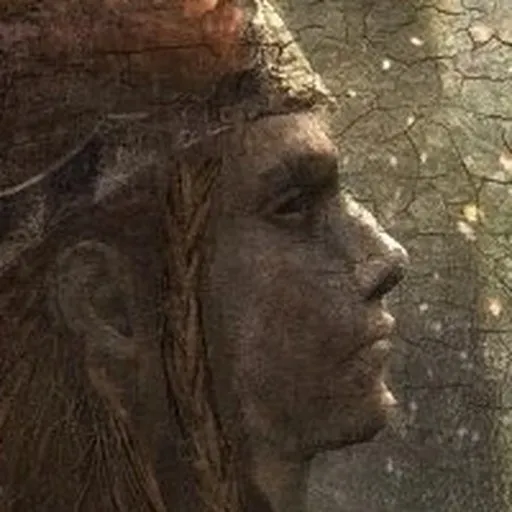
Marika went from a Shaman girl who had lost her entire people to the goddess of the Lands Between, and Radagon — "mine other self", as she called him — is the part of her that never betrayed the Order. The entire history of Elden Ring is a civil war lasting thousands of years between these two wills in a single body: one brought the hammer down to shatter the Ring, the other desperately tried to mend it.
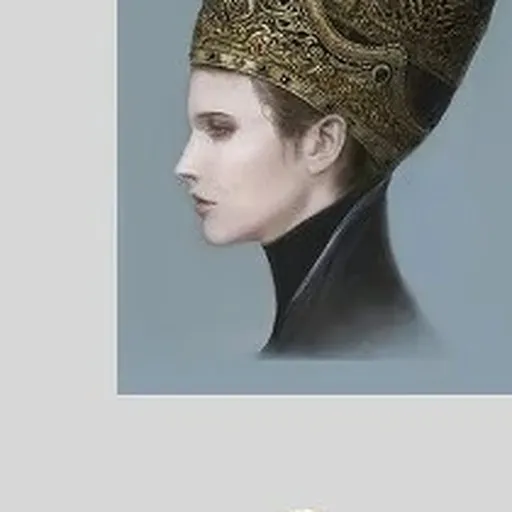
Rennala and Radagon's marriage is the most "human" evidence about the red-haired champion: he had loved, he had repented, he had learned the sorceries of his enemy. The day he was summoned back to Leyndell as Elden Lord was also the day Rennala lost everything — and her collapse is the first crack showing that, in that god's body, not every will gets a say.
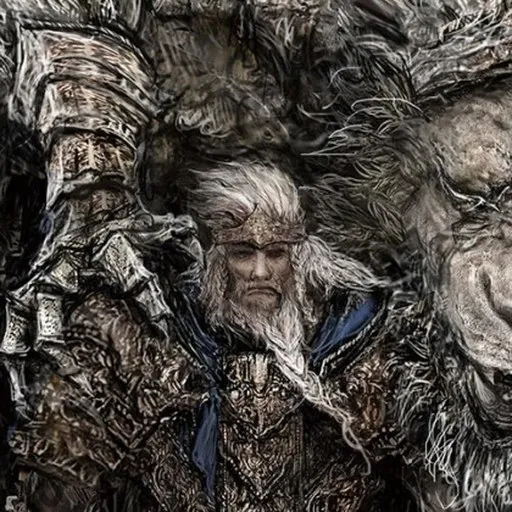
Godfrey believed himself discarded, but his exile was Marika's longest move: an army outside the order, promised a day of return to claim the Elden Ring when the time came. He did return — and fell at the very threshold of the Erdtree, holding his son Morgott for the first time, and the last, in his life.
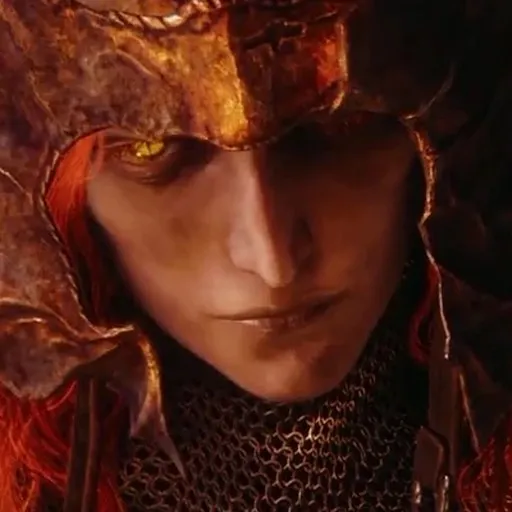
Messmer carries in his eye a seal made of his mother's grace to hold back the abyssal serpent within him, and on his shoulders the dynasty's greatest crime: the massacre that birthed the empire. He remained loyal to the very last second of being abandoned — and his dying curse upon his mother is the voice of every child Marika sacrificed to her order.
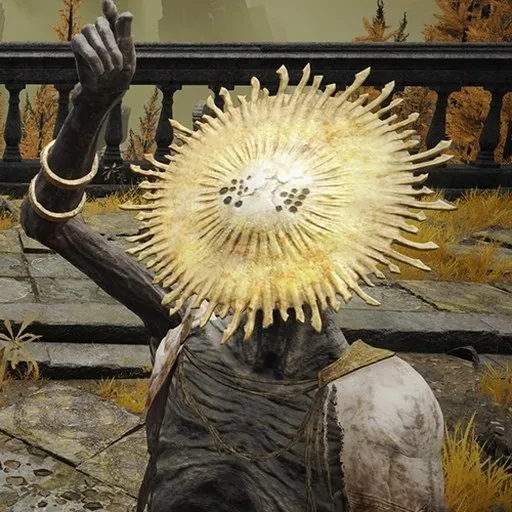
Goldmask stood motionless his entire life to "read" the Golden Order, and his final conclusion is the sharpest verdict passed on Marika: the world's imperfection lies in "the fickleness of the gods, who are no better than men". His Mending Rune of Perfect Order — a world where not even gods are allowed to change things on emotion — is the testament he left behind after being struck dumb by his own discovery.
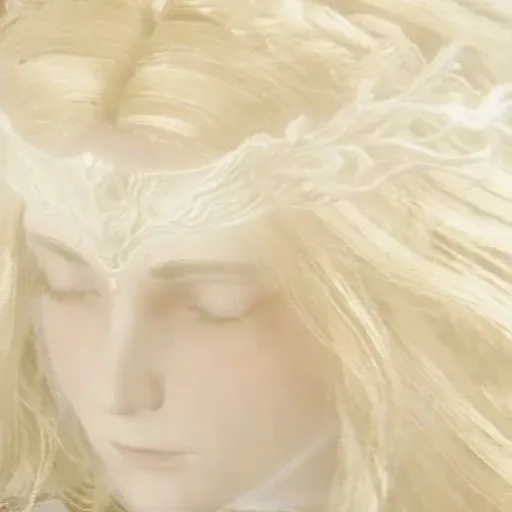
Miquella and his "other self", St. Trina, repeat his parents' structure exactly: a (future) god bearing two people in a single body. To understand Marika and Radagon is to understand why Miquella was forced to cast away his other self on the path to godhood — and why, perhaps, this family's tragedy never ends with any single generation.
📚 Read the Elden Ring series in story order
- Elden Ring Story Explained: The Shattered Ring, the Demigods, and the Age of the Stars
- Miquella and Malenia Explained: The Cursed Twins and the Dream of a Kinder World
- Marika and Radagon Explained: One God, Two People — Elden Ring's Greatest Secret — you are reading this one

