Elden Ring Story Explained: Shadow of the Erdtree — Miquella's Path to Godhood and Radahn, the Promised Consort

📋 Quick facts
- Game
- Elden Ring: Shadow of the Erdtree
- Developer
- FromSoftware
- Release year
- 2024 (June 21, 2024)
- Original platform
- PlayStation 4/5, Xbox One/Series X|S, PC
- Genre
- Soulslike (open-world action RPG)
- Director
- Hidetaka Miyazaki
- Worldbuilding
- George R.R. Martin & Hidetaka Miyazaki
- Notable feature
- Elden Ring's only expansion: a separate Land of Shadow map, closing Miquella's journey with the final battle against Promised Consort Radahn at the Divine Gate
- Base game
- Elden Ring (2022)
At the end of the base game of Elden Ring, there is one mystery the game deliberately leaves hanging: Miquella — Malenia's Empyrean twin, Marika's most gifted and most kindly child — is found as a withered corpse, one arm dangling from the stolen cocoon in Mohgwyn Palace. He is not dead. He is also no longer there. Shadow of the Erdtree (2024), Elden Ring's only expansion and its closing chapter, is the answer: Miquella's spirit left his flesh behind and crossed into the Land of Shadow — a half of the world Marika buried from history — to walk the road his mother once walked: through the Divine Gate, into godhood. This article tells the expansion's full main story, from the cocoon in Mohgwyn Palace to the final memory before the Divine Gate. If you have not yet, read the story of the Elden Ring base game and the article on Miquella and Malenia first. Warning: this article spoils the entire expansion, including the final boss.
📌 Quick summary: After Mohg stole him from the Haligtree, Miquella left his flesh in the cocoon and crossed into the Land of Shadow — the realm Marika sealed away, where Messmer wages a crusade history erased. There, Miquella follows the road to godhood: he leaves crosses marking each part of himself cast aside — flesh, strength, fear, and at last love itself, embodied in St. Trina. The fellowship bound by his charm shatters when his Great Rune breaks. And atop Enir-Ilim, beyond the Divine Gate, the Tarnished faces the newborn god and his consort: Radahn, Conqueror of the Stars, called back from death in Mohg's stolen body.
The empty cocoon in Mohgwyn Palace
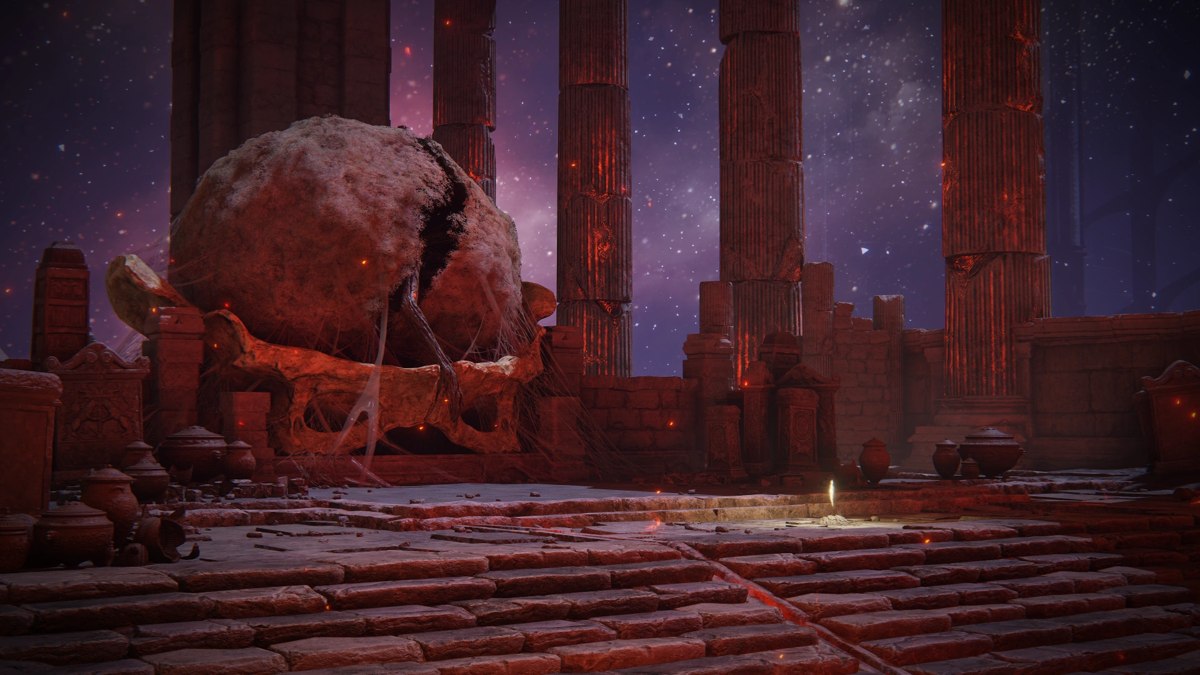
Everything begins with a sight from the base game. Deep underground, in the palace of the unborn Mohgwyn dynasty, Mohg — Lord of Blood, Marika's exiled Omen child — cradles an enormous cocoon. Inside it is Miquella, kidnapped from the roots of the Haligtree while he was incubating himself to break his curse of eternal childhood. Mohg's plan was to drench the cocoon in blood and raise Miquella as the god of a new dynasty — with himself as that god's consort.
But Miquella never answered. When the Tarnished defeats Mohg and touches the withered arm hanging from the cocoon, the truth opens: the cocoon is only a husk. Miquella used the abduction itself as cover — his flesh stayed behind like a butterfly's chrysalis, while his spirit went far away, to a land no map of the Lands Between records. Waiting by the cocoon is Needle Knight Leda, Miquella's knight, with a simple invitation: touch that arm, and follow her master. Mohg's story and the cocoon are told in full in the article on Mohg and the Mohgwyn dynasty.
The Land of Shadow — the half of the world Marika hid
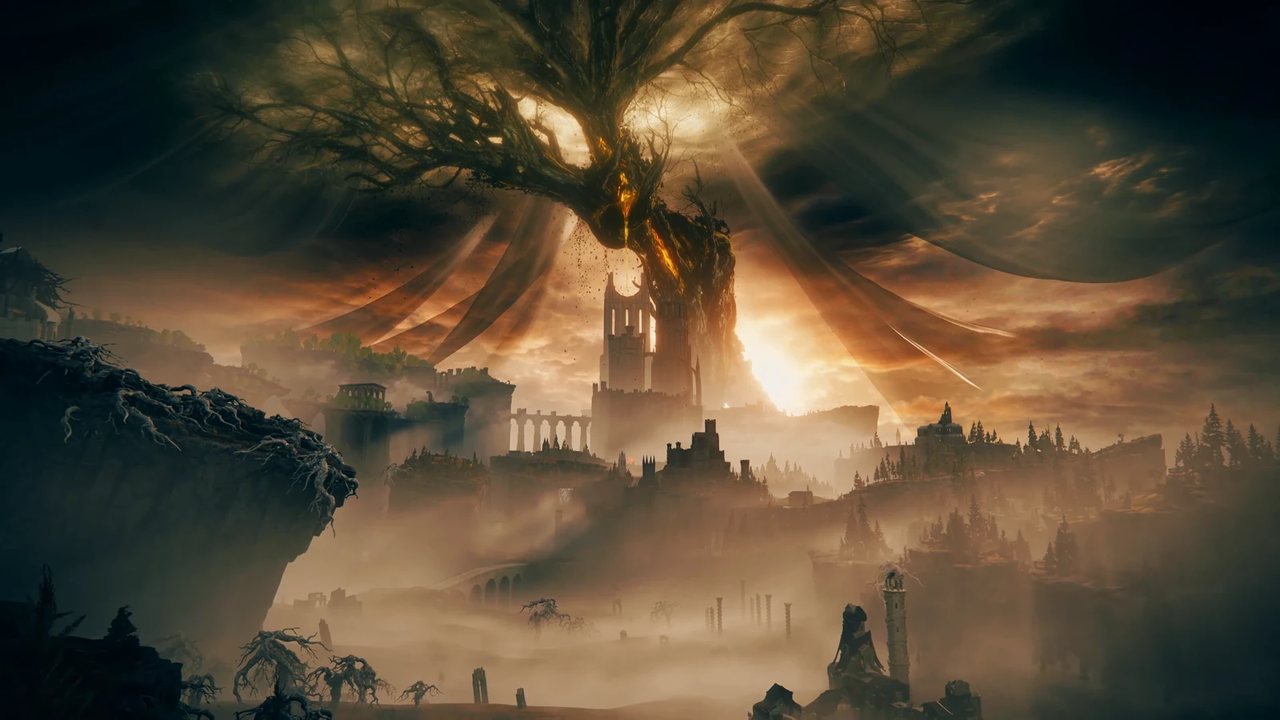
Touch the arm of Miquella, and the Tarnished wakes in a cave in the Land of Shadow. This was once part of the Lands Between — in fact, its oldest part: Marika's homeland in the Shaman Village, where she was born before she became a god. The whole land lies veiled beneath the Scadutree — the Erdtree's warped, sap-leaking shadow — sealed away by Marika, cut off from the world, erased from every record of the Golden Order.
Why would a queen bury her own homeland? Because the Land of Shadow keeps two secrets that must never surface. First: the Divine Gate atop the tower of Enir-Ilim — where Marika once passed through into godhood in an event the expansion's trailer calls “the seduction and the betrayal” from which Gold arose. Second: her own people, the village shamans, were seized by the Hornsent — the horn-worshipping natives of the tower settlement of Belurat — and stuffed into enormous jars in a grotesque ritual meant to create “saints.” The Land of Shadow is living proof of both Marika's godhood and her shame — and she chose to bury it along with every witness.
At the center of the Gravesite Plain — the first land the Tarnished sets foot in — stands the Suppressing Pillar, carved with a chilling line: this is “the very center of the Lands Between,” where all manner of death washes up and was suppressed in the most ancient of ages. In other words, the Land of Shadow is no distant country severed later — it is the world's primordial heart, cut out and hidden along with its true history. Across the land, colossal Furnace Golems woven from corpses still patrol with Messmer's flame in their breasts — in a sense, the crusade never ended.
A crusade without grace — Messmer's crime and the Hornsent
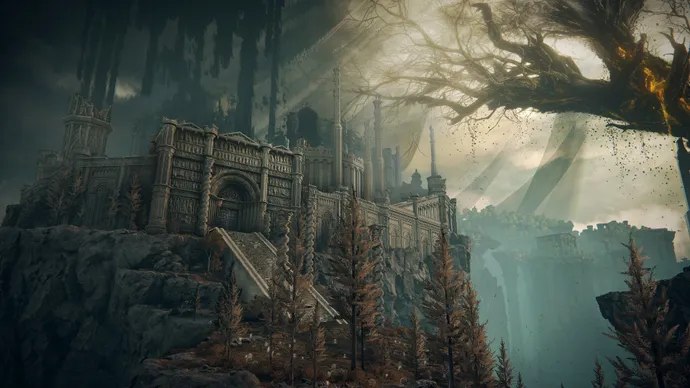
Before sealing the land, Marika sent her own cursed son — Messmer the Impaler — back into the Land of Shadow at the head of an army, on a purging crusade against the Hornsent. It was not a war: it was systematic extermination. Belurat, the Hornsent's sacred tower settlement, was burned; its people impaled, immolated, wiped out in the name of a Golden Order that would never acknowledge the crusade existed. The expansion's trailer names it plainly: a purge without grace, and without honor.
To understand the two-way hatred of this land, look into the jars of Belurat. The Hornsent believed the flesh of shamans — Marika's people — had a unique power to “melt and harmonize,” so they seized the shamans, butchered them, and packed them into jars with other foul matter in a ritual to make “jar saints.” The Shaman Village today holds one old woman and jars of screaming flesh in Belurat's gaols. Marika survived that horror, became a god, and came back with an army: Messmer's crusade was the revenge of a victim turned queen — carried out upon an entire people, including those who had no part in the crime of old.
Then, when the work was done, Marika left Messmer there — forever. He was both executioner and sacrifice: the flame of destruction and the abyssal serpent within him frightened even his mother, so much that she plucked out one of his eyes and replaced it with a seal of grace to cage the serpent. Messmer remains in Shadow Keep, keeping his hatred for all those spurned by grace, waiting for a mother who will never return. His whole tragedy is analyzed in the article on Messmer and the erased crusade.
Miquella's crosses — the journey of casting himself away
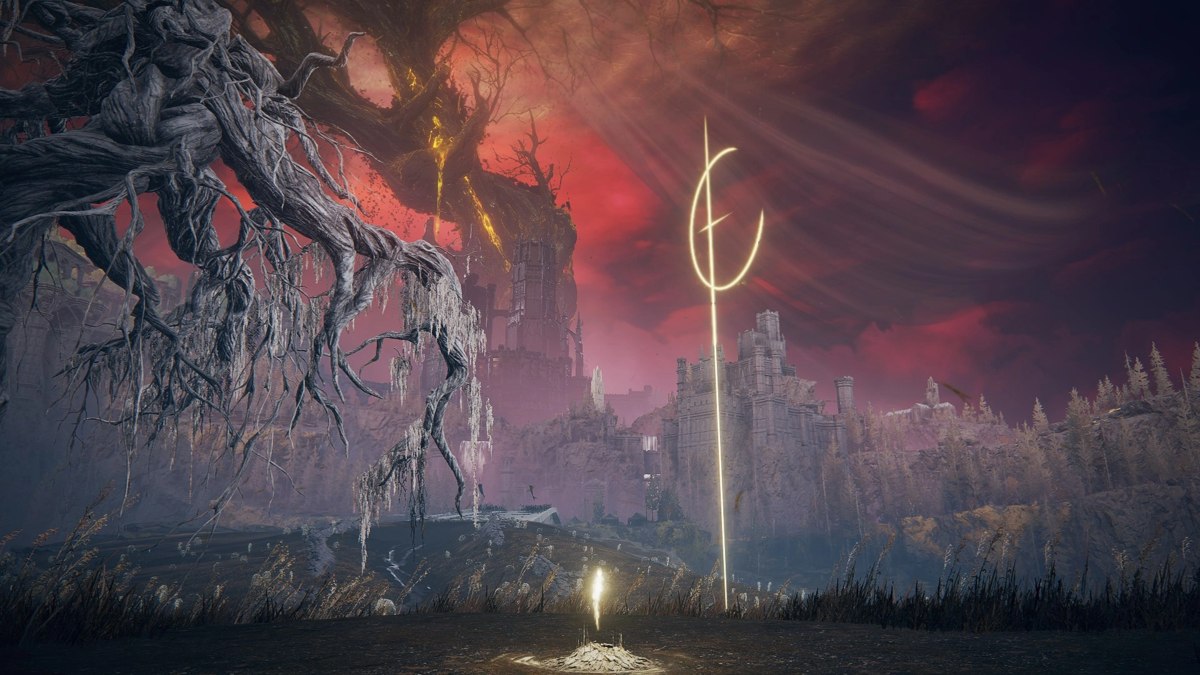
The Tarnished is not the first of Miquella's company to set foot here. Scattered across the Land of Shadow stand golden crosses — Miquella's Crosses — each carved with a cold line, like a ledger entry: “I abandon here…” The first cross records only that he cast aside a part of his flesh. The later ones go deeper into the person: an arm, an eye, his strength, his fear, his doubt and vacillation — and on the Cerulean Coast, at the land's southernmost shore, the words “I abandon here my doubt and vacillation.”
This is the rite of godhood as Miquella understands it: to pass through the Divine Gate as his mother did, he must cast off everything of his Empyrean blood and his former self — including his own Great Rune. The fellowship follows the crosses like footprints of a man tearing himself apart piece by piece. And at the deepest cross, at the bottom of the Stone Coffin Fissure, stands the line that makes a nearby ghost weep: “I abandon here my love.” That ghost says aloud what no one in the company dares: one who could not save his own other self — how will he save those who cannot be saved?
The fellowship of kindness — Leda and the charmed
Following Miquella's trail is a strange company, each drawn to him for their own reason. Leda, the Needle Knight, is the leader in practice — zealous and devoted. Sir Ansbach, former captain of Mohg's Pureblood Knights, is a prisoner of conscience: he once cut Miquella in an effort to free his lord from the charm — and was charmed the instant his blade landed. Redmane Freyja, Radahn's warrior, owes him her life: Miquella sucked the Scarlet Rot poison from her wound with his own lips on the field of Aeonia. Thiollier, the timid poisoner, seeks St. Trina. Dryleaf Dane, the martial monk sworn to silence. And Hornsent, Belurat's survivor, who wants one thing only: a blood debt paid.
One more member is easily forgotten: Moore, the hulking, quiet merchant of the Forager Brood, who simply gathers things to “make everyone happy.” Moore is the charm's saddest measure: when it breaks, he is not angry, not paranoid — he simply cannot understand why everyone is unhappy now, and asks the Tarnished whether he should be sad, or angry. The fellowship meets in fragments at cross sites across the land — each meeting a puzzle piece: at the Belurat cross, Hornsent cooks scorpion stew for the stranger he has just met, in a rare moment of peace before everything falls apart.
What binds these utterly different people is Miquella's charm — the power of the Great Rune he bears, which can compel loyalty and love like a grace that cannot be refused. Miquella the Kind is himself a charmer: everyone who follows him follows “willingly,” in a way no one can tell apart from true willingness. The fellowship is the Age of Compassion he promises, in miniature: peaceful, harmonious — and with not one person in it entirely free.
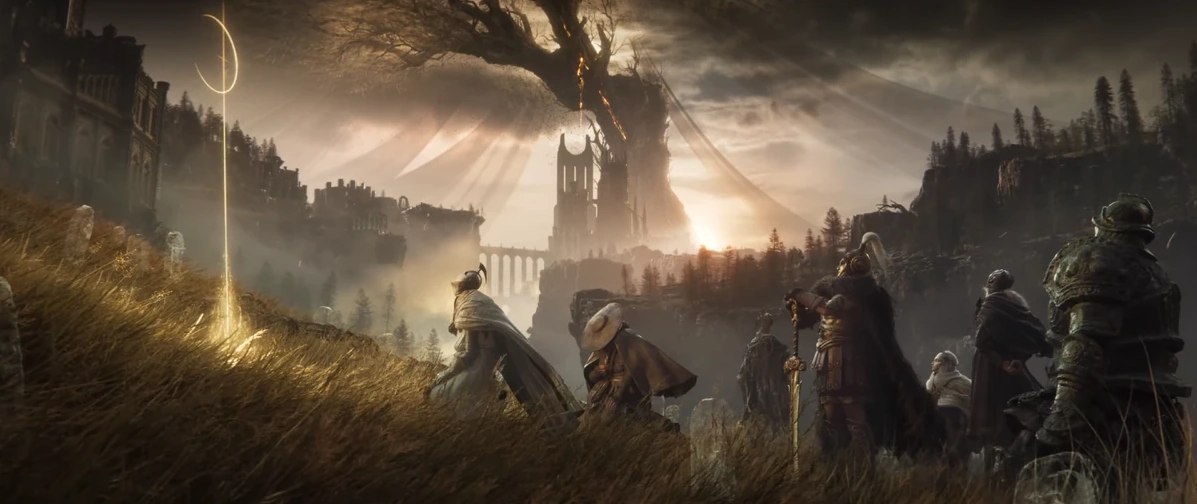
Belurat and Castle Ensis — Rellana, the Twin Moon Knight
The road into the depths of the Land of Shadow passes Belurat, where the Divine Beast Dancing Lion — the Hornsent's lion spirit — still guards the ruins of the burned city, and through Castle Ensis in the east. Ensis is held by Rellana: the Twin Moon Knight, younger twin sister of Queen Rennala of Caria. Rellana was once a princess of the moon, but she renounced both her royal standing and her moon to follow Messmer into this exiled land — and became his most loyal sword, bearing Messmer's flame and Caria's moon sorcery in the same pair of hands.
Before Ensis, Belurat holds a memorable battle of its own: the Divine Beast Dancing Lion, a lion of paper and wood crafted by Hornsent sculptors for the gods to inhabit during festivals. That lion still dances its dance of storm, lightning, and frost atop the tower of a dead city — the Hornsent's religion still lives, even though its believers were slaughtered to the last. It is a reminder that the Land of Shadow has more than one victim: every civilization here lost everything to one god or another.
Rellana has not a single line of dialogue in the expansion. Her story is told only through item descriptions and the place she stands: the eastern gate of Shadow Keep, guarding the road for a man who no longer even remembers home. She is the first proof of the expansion's refrain — in the Land of Shadow, everyone has sacrificed a part of themselves for someone else, and no sacrifice is ever repaid.
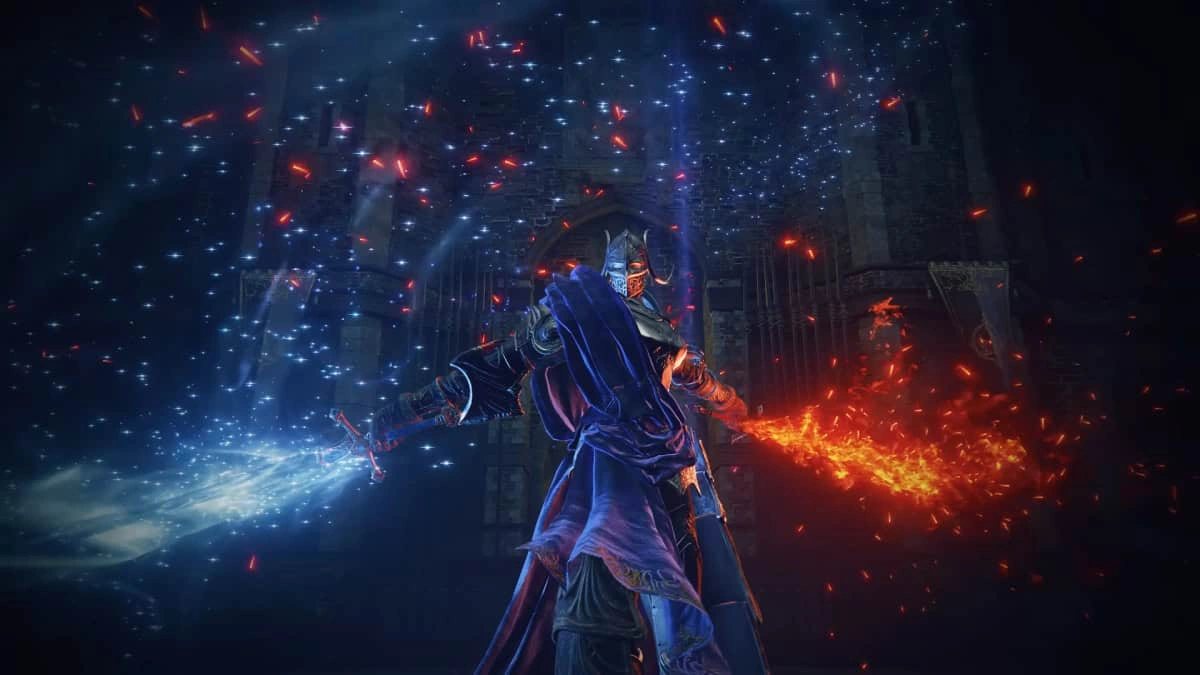
Messmer the Impaler — the flame and the abyssal serpent
At the center of the Land of Shadow, Shadow Keep is where Messmer waits on his throne, surrounded by his specimen storehouse — colossal jars of human remains, evidence of the old crime, kept like a museum of buried truth. The battle with Messmer is the expansion's emotional heart: he fights with the flame that bears his name, and when he is driven to the brink, he crushes out his own seal-eye — the one his mother gave him — releasing the base serpent caged within him since birth, the thing Marika feared so much she blinded her own son to contain it.
Messmer dies cursing his mother — who bore him with this darkness and then abandoned him for it. But his death leaves behind the thing the Tarnished needs most: Messmer's Kindling, the flame within him, the only fire that can burn the sealing tree barring the way to Enir-Ilim. Used as an executioner and then forgotten, in death he is still a tool for someone else's plan — this time, the Tarnished's.
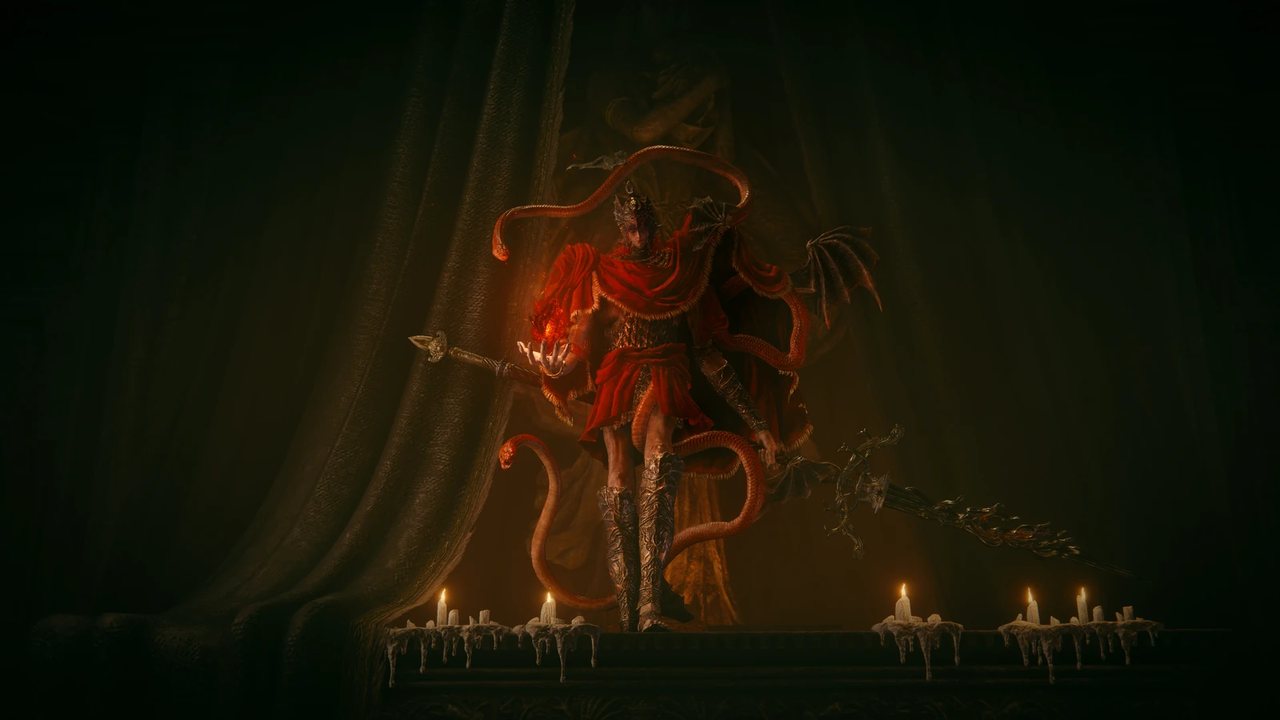
Romina, Saint of the Bud — burning the sealing tree
The way to Enir-Ilim is barred by a sealing tree that only Messmer's kindling can burn. The tree stands in the ancient ruins of Rauh, beside the Church of the Bud, where Romina — Saint of the Bud — keeps watch. Romina was an ordinary believer until the day her church burned in Messmer's crusade; amid the ashes she found the warped “divine bud” of Scarlet Rot and wove it into her own body, becoming a creature half woman, half centipede, half butterfly — the saint of rot, born of her enemy's own crime.
Defeating Romina and burning the sealing tree with Messmer's flame is the moment the expansion turns its own card over: to reach the god of compassion, the Tarnished must complete the chain of violence Marika and Messmer began — using the slaughterer's fire to open the way. The veil over Enir-Ilim burns away, and the tower of the Divine Gate stands revealed in full against the sky of the Land of Shadow for the first time.
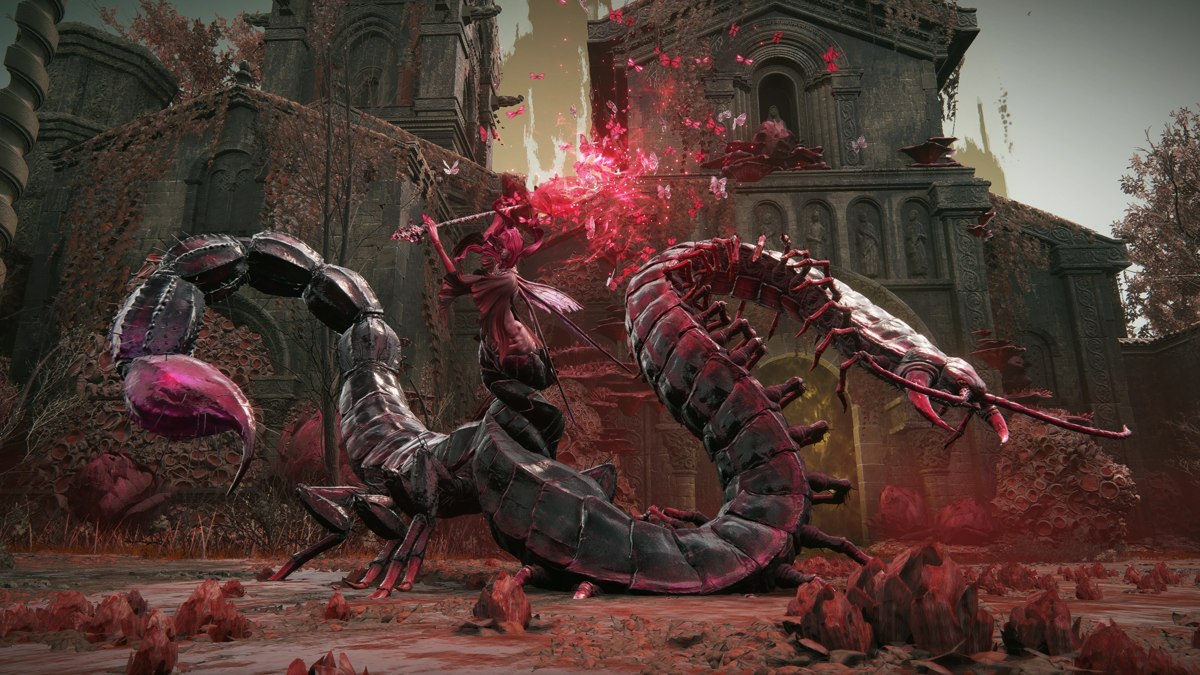
The Garden of Deep Purple — St. Trina and the plea to kill a god
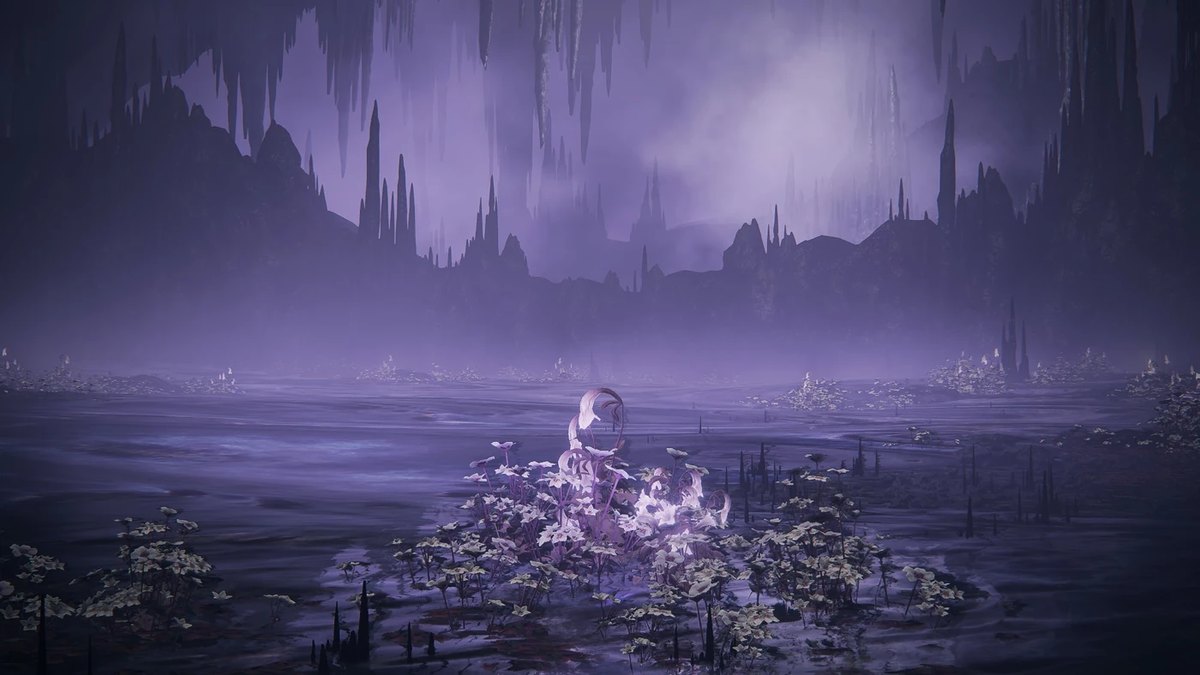
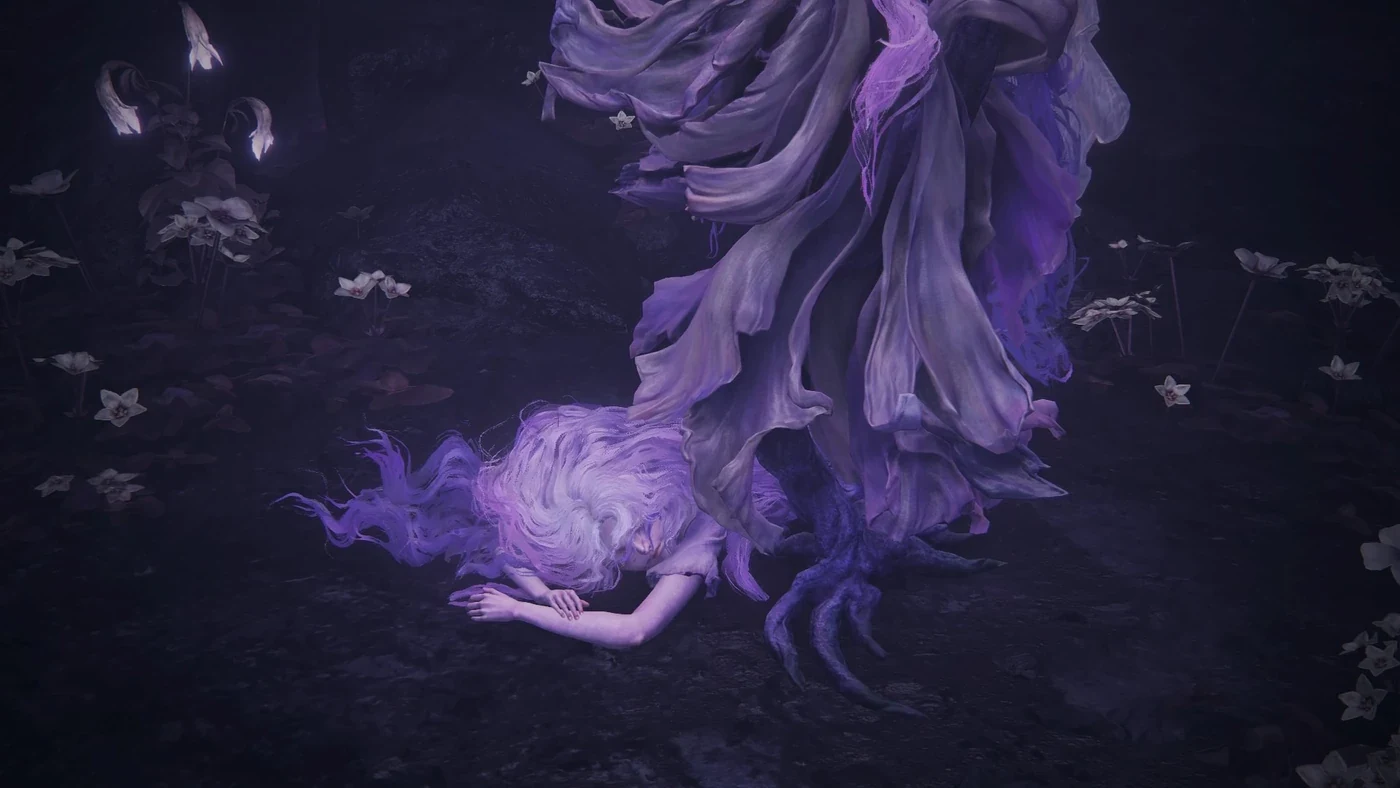
Before climbing Enir-Ilim, there is one more journey: down. At the southernmost end of the Land of Shadow, at the bottom of the Stone Coffin Fissure — where the dead who cannot die ooze into putrescent stone — lies the Garden of Deep Purple. There, the Tarnished finds what Miquella cast aside at the final cross: St. Trina, his other half, become an enormous purple flower in deep sleep, guarded by the Putrescent Knight — the clump of tainted flesh that drank her nectar and became her knight in eternal rest.
Thiollier, too, follows down into the Garden of Deep Purple — and collapses with jealousy when Trina's voice chooses the Tarnished over him, the man who worshipped her all his life. Mad with love and poison, he invades the Tarnished's world right there in the garden to seize his “right” to hear her. Only when he is defeated and comes to his senses does he accept the bitter truth: what Trina wants is not worship — it is freedom for the one who cast her away. From that moment, Thiollier becomes the most trustworthy ally left in the shattered fellowship.
To hear Trina's voice, the player must drink her nectar — and die, again and again, in poisoned sleep. The price buys the plea of the cast-off half: stop Miquella. Godhood would be his prison; a caged god can save no one. “You must kill Miquella… Grant him forgiveness.” This is the moral knot of the entire expansion: the only one who asks the Tarnished to kill Miquella is the part of Miquella that knew how to love. Her whole story is told in the article on St. Trina, Miquella's other half.
The Great Rune breaks — when the charm fades
On the road deeper into the Land of Shadow, a message rings across the realm: a Great Rune has broken — and with it, a powerful charm. It is the moment Miquella casts off his own Great Rune on the road to godhood, and the moment the fellowship wakes. One by one, each must face themselves without the charm to cover their eyes.
The key lies in Shadow Keep's Specimen Storehouse, where Ansbach finds the Secret Rite Scroll: an ancient text recording the rite of godhood — the soul of a sovereign shall return in a vessel when the god passes through the Divine Gate. The old man sets it beside his lord's vanished corpse and understands the whole plan. That is also when Leda strikes: she declares Ansbach a threat to be eliminated, and only the Tarnished's intervention saves the old man's life. From here on, the fellowship is a fellowship no longer — it is two sides of a civil war waiting to ignite.
Ansbach remembers everything: his loyalty to Mohg, and his horror at the plan's truth — Miquella needed Mohg dead, because the Lord of Blood's corpse had been reserved as the vessel to call Radahn's soul back. Freyja, hearing that truth from Ansbach himself, chooses to stand with the plan: to her, Radahn alive and battling forever is a cause for joy. Leda — whose loyalty never needed the charm — begins hunting her old comrades out of suspicion, setting her sights on Hornsent, then Ansbach. And Hornsent, when the charm fades, has only the blood debt owed by Messmer and Marika. The fellowship of kindness dissolves exactly the way every order built on enchantment must: not because of an outside enemy, but because everyone in it finally gets to be themselves.
Enir-Ilim — climbing to the Divine Gate
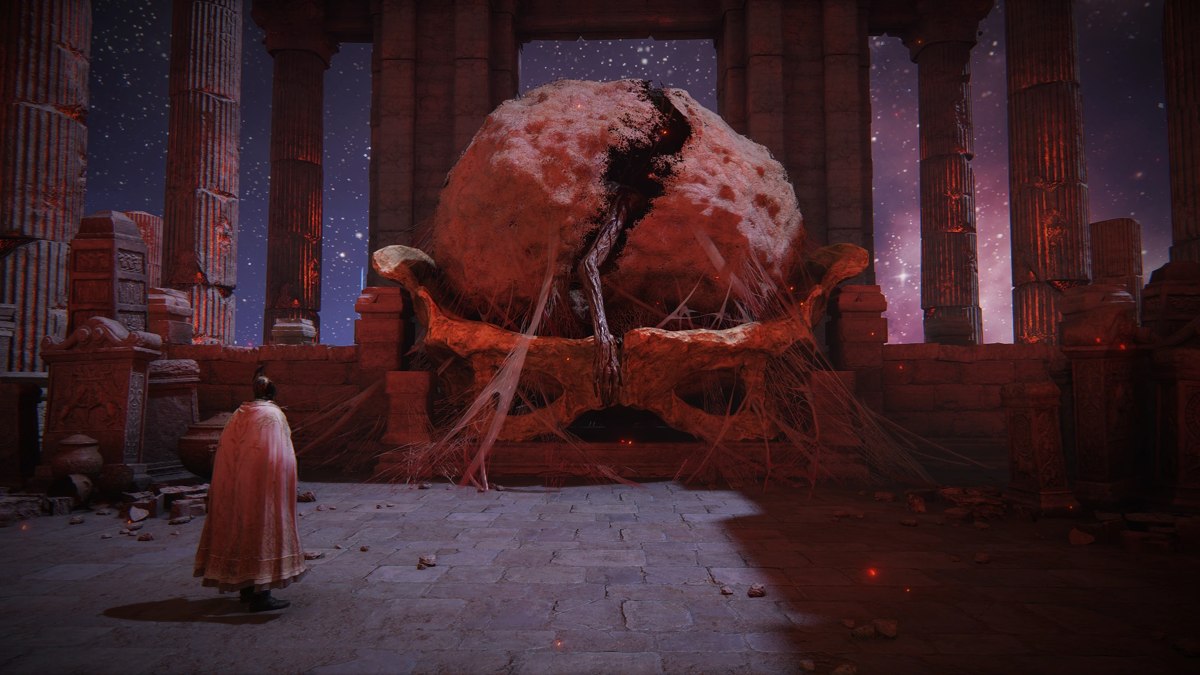
When the sealing tree burns, the Tarnished returns to Belurat and climbs Enir-Ilim — the Hornsent's spiraling tower, the city of horned faithful who once reached toward the heavens to touch the divine, and the place where Marika passed through the Divine Gate in ages past. Enir-Ilim is the Erdtree's warped mirror inside the Land of Shadow: where an erased civilization once dreamed of godhood, before being slaughtered by the very god they unwittingly helped create.
And the Divine Gate itself is an accusation. On either side of it rise structures woven from countless corpses — the legacy of the ancient rite of godhood, where divinity was bought with mass sacrifice. When Marika passed through this gate in the past, and when Miquella passes through it once more in the present, the price is written in human bodies. The expansion never says this in dialogue; it lets the player look up at the two colossal pillars of the dead flanking the final boss, and understand.
At the foot of the Divine Gate, the fellowship meets one last time — at swordpoint. Leda leads those who stayed loyal (Dane, and depending on the player's journey, perhaps Freyja or Moore) to bar the Tarnished's path, while Ansbach and Thiollier — if the player has walked their stories to the end — stand on the other side, fighting for a dead lord and a discarded saint. It is a battle with no villains: only people once bound by a single charm, now killing each other over the different pieces of truth they woke up to.
Promised Consort Radahn — the final battle
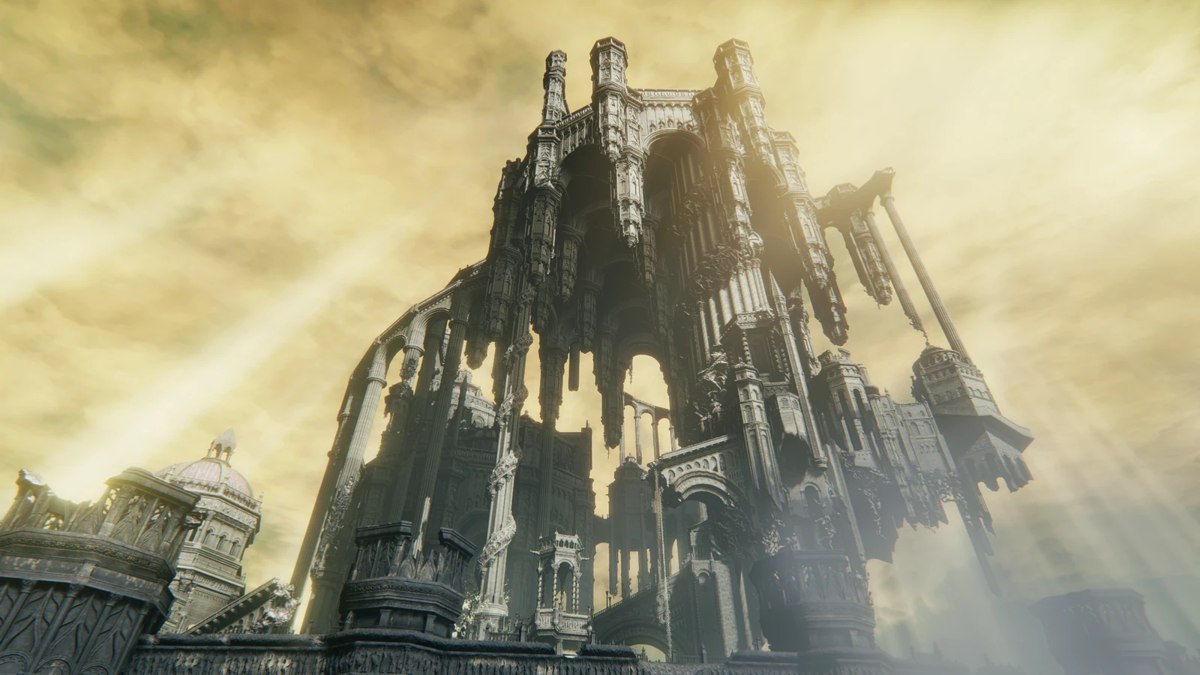
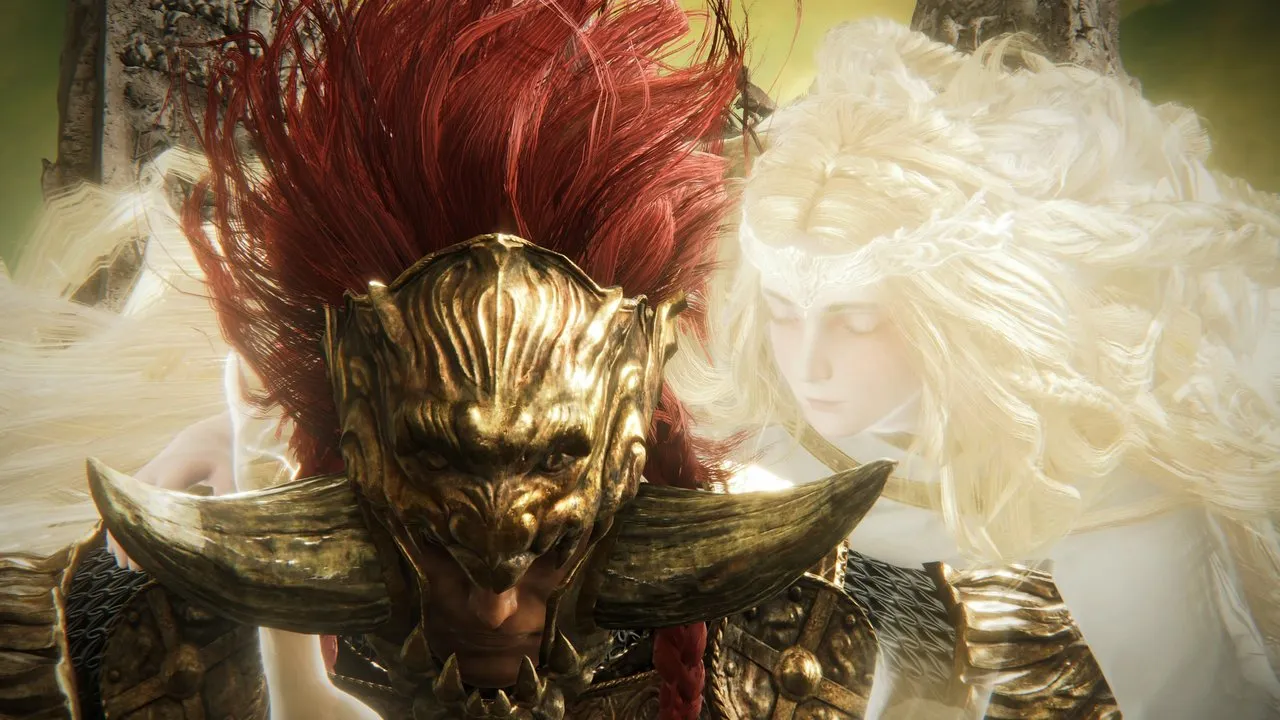
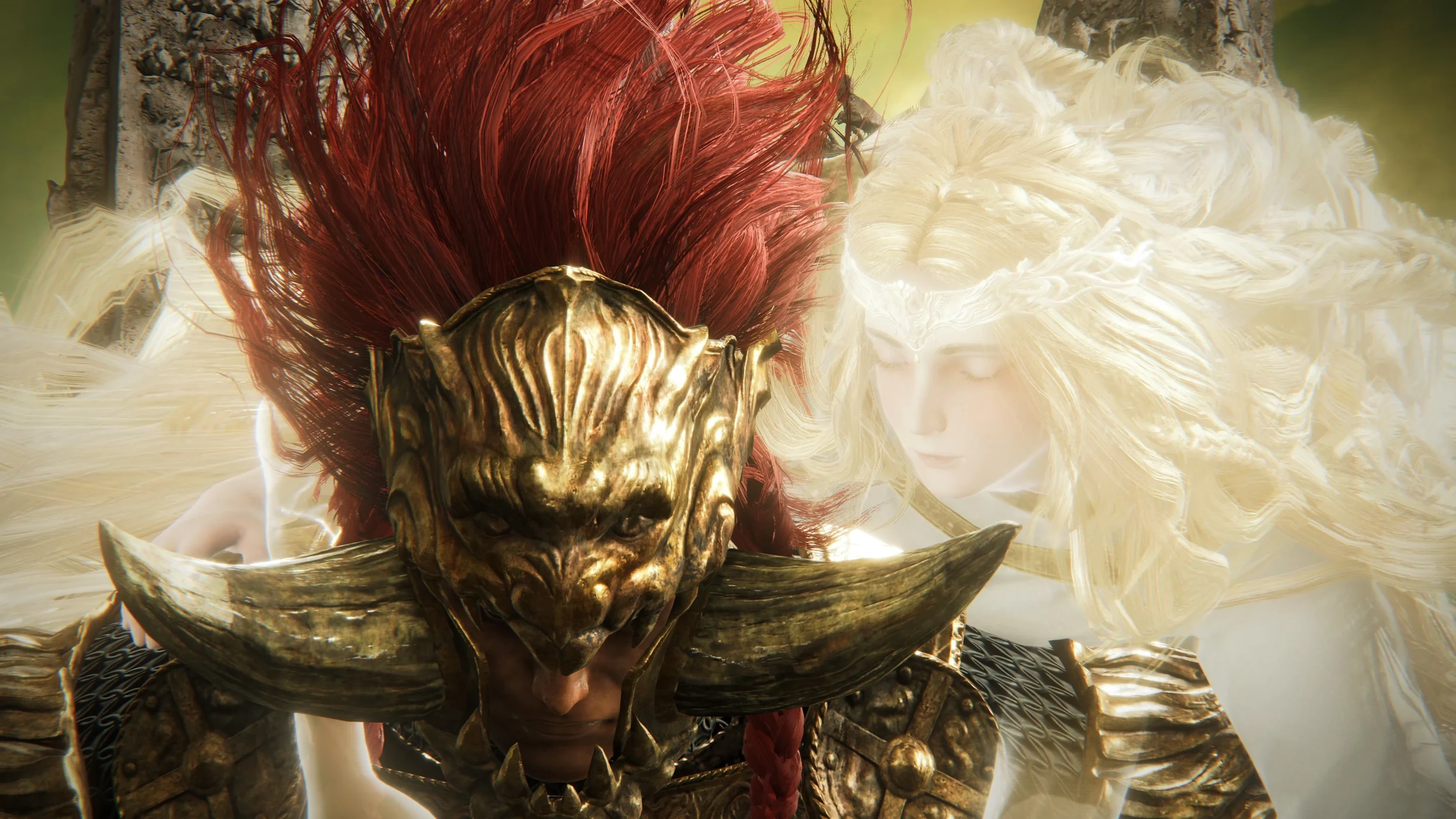
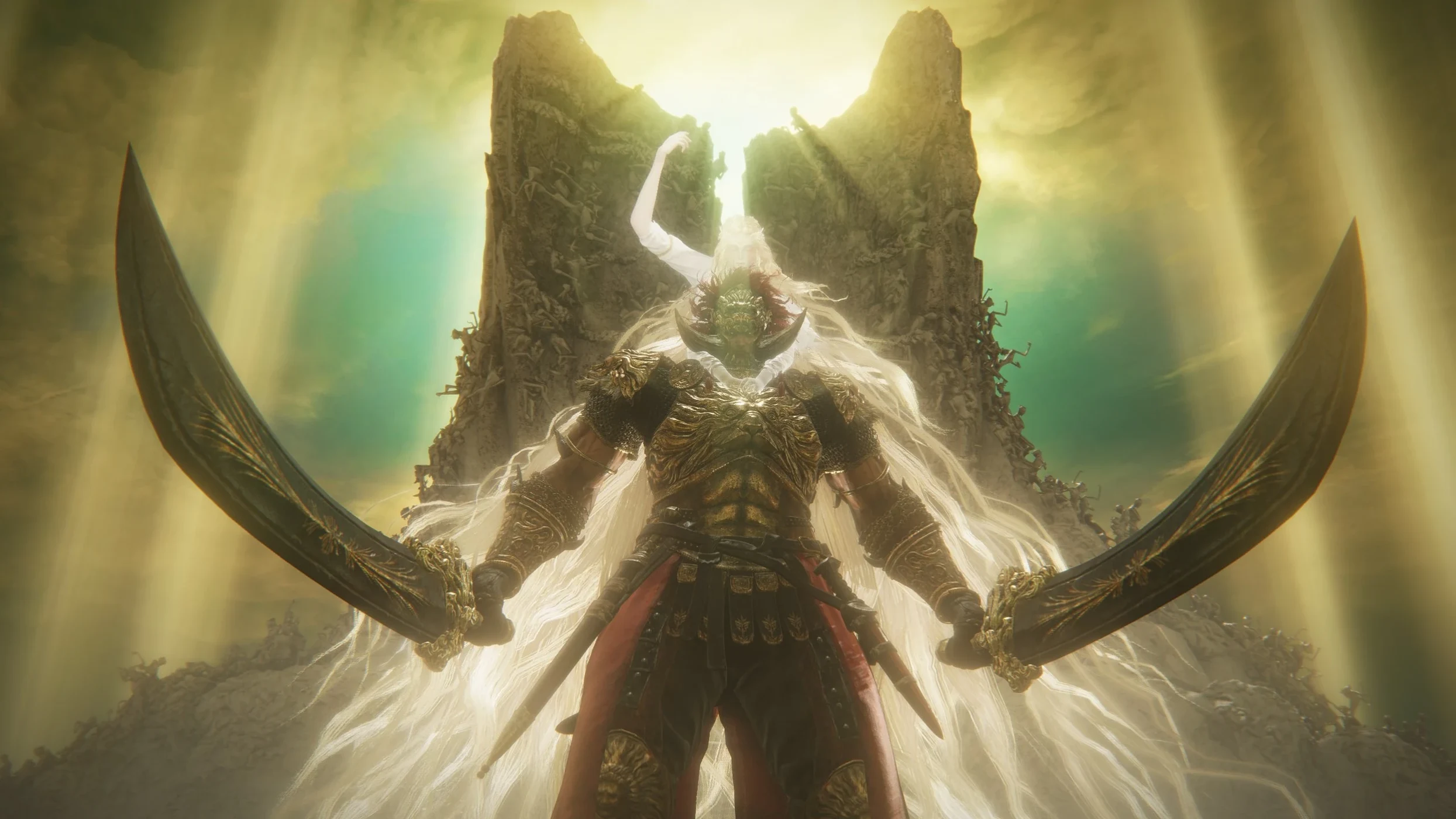
Beyond the Divine Gate lies the arena where every thread of Elden Ring converges. Radahn has returned. The Conqueror of the Stars — the hero who died with honor at the Caelid festival after Malenia bloomed the Scarlet Rot into him (recounted in the article on Radahn, Conqueror of the Stars) — stands there in a body not his own: the corpse of Mohg, Omen horns sprouting from its arms, holding Radahn's soul, called back by Miquella through the Divine Gate. Every piece falls into place: Malenia was sent to Caelid to kill Radahn and free his soul; Mohg was charmed and killed to provide the vessel; and Malenia's whisper on the field of Aeonia long ago — “Miquella awaits thee, O promised consort” — was a death sentence read aloud a thousand years early.
The description of the Remembrance of a God and a Lord, earned after the battle, confirms the final piece: in their childhood, Miquella and Radahn made a vow — Miquella would become a god, and Radahn would be his lord consort. Whether the vow was one-sided or two, the text does not say; but it shows this plan was no desperate impulse — it was Miquella's lifelong dream, pursued through the Haligtree, through the cocoon, through the deaths of two brothers, to this very moment.
Midway through the battle, Miquella emerges from the Divine Gate — now a god, with four arms and the halo of a new Order — and embraces his consort from behind. Radahn, Consort of Miquella, rains down attacks of holy light, and Miquella himself strikes directly: his supreme charm can touch the Tarnished's heart in the middle of the fight — be charmed twice, and your heart is stolen, and the battle ends. It is the expansion's cruelest and most honest mechanic: the god of compassion wins not by strength, but by making you love him.
The “Lord Miquella” memory — the end of the Age of Compassion
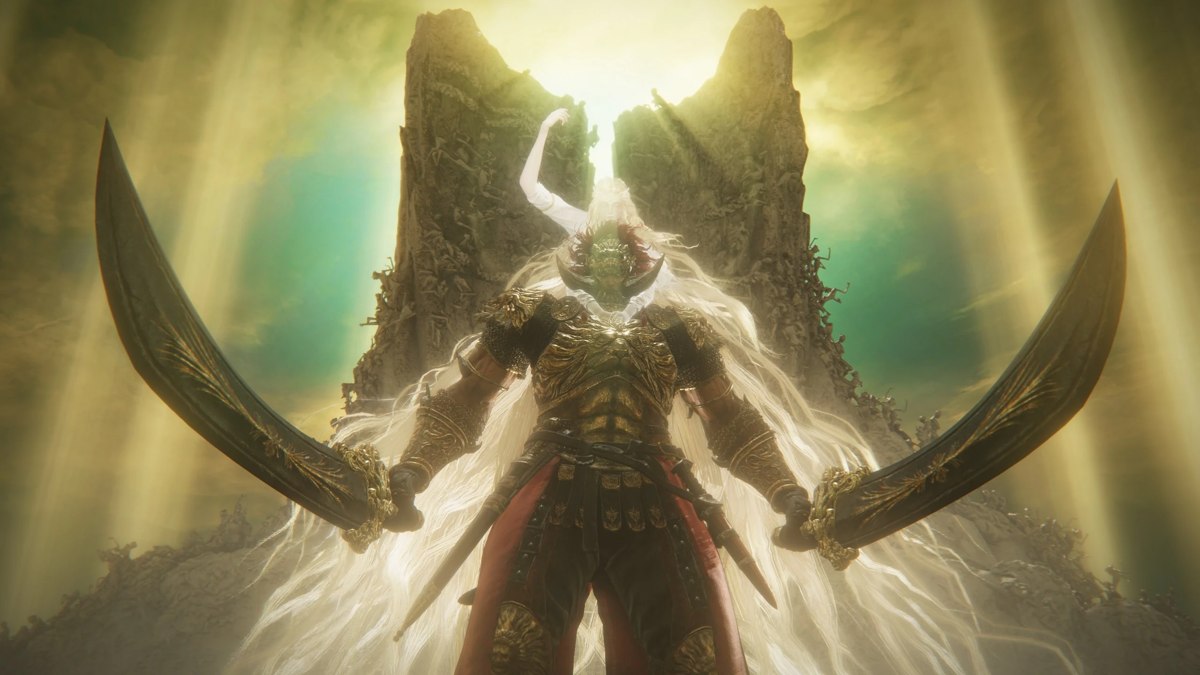
When both of them fall, the game offers no grand ending cinematic. Only a short, quiet memory, in darkness: a young Miquella, alone, speaking of the old vow. “If we honour our part of the vow, promise me you'll be my consort, Lord Radahn.” And his reason, simple to the point of heartbreak: “I'll make the world a gentler place.”
The only thing Miquella leaves behind is the Circlet of Light — the halo he wore as a god, which the game's text calls the very foundation of his Age of Compassion. A crown made of light, weightless, without material power: Miquella's new order, in the end, existed only by the strength of his enchantment — he dies, and it dissolves. Set beside Marika's shattered Elden Ring, Miquella's circlet shows mother and son making the same mistake at opposite extremes: one ruled by law so iron-hard the world broke apart; the other by love so compulsory that no one in it remained themselves.
That is all of Elden Ring in a single line. Miquella is no power-hungry Rykard, no maddened Mohg, no despairing Ranni. He is the only one of the royal family who truly wanted to mend the world — and the road he chose was to cast away his own heart, charm the very people who loved him, and resurrect a dead general into a stolen corpse. The Age of Compassion dies before it can begin, at the hand of the Tarnished — who is on the road to lordship of another order entirely. After the battle, in the Garden of Deep Purple, St. Trina withers and dies with her other half, leaving behind a single harmless lily: Miquella's love is only truly harmless when it belongs to no god at all.
Common misconceptions
Did Radahn agree to be Miquella's consort?
No one knows for certain. The final memory shows only Miquella's side: he makes the vow and waits. No text or line of dialogue records Radahn's answer, and the fact that Malenia had to march on Caelid in person to kill Radahn suggests the vow — whether it was once accepted or not — had to be enforced by arms. The community remains split: Radahn refused and was compelled, or Radahn once agreed, but an honorable death at the festival was his true wish.
Was Mohg's abduction of Miquella entirely his own desire?
Quite possibly Mohg was the victim. Sir Ansbach insists Miquella used his charm on Mohg — and the Lord of Blood's obsession with the cocoon, long read as proof of his guilt, may itself be the charm's product. When the charm began (before or after the abduction) is never confirmed; the only certainties are that Miquella needed Mohg dead and needed his body, and that everything unfolded exactly so.
Is Miquella the villain of the expansion?
In story structure, he is the final boss. In nature, it is not so simple: Miquella's goal — a gentler world for every outcast — is the noblest aim of any demigod. What is frightening about him is the means: a peace built on enchantment, and on unmaking everything human in himself. FromSoftware leaves the verdict to the player, placing the plea “grant him forgiveness” in the mouth of the very half he threw away.
Unanswered theories
Some great questions are still debated by the community and have not been confirmed by the game. First: what exactly was “the seduction and the betrayal” of the trailer — the event of Marika's ascension at the Divine Gate — and who did she betray? Second: what is the base serpent inside Messmer, how does it relate to the Land of Shadow's other ancient divine powers, and why did Marika fear it so? Third: the true roles of Torrent and Melina — the image of Miquella riding a spectral steed in the expansion's first promotional art leads many to believe Melina and the cocoon are connected more deeply than the expansion reveals. All of it remains grounded speculation — and perhaps that is FromSoftware's intent: the Land of Shadow is told the way it was buried — in fragments, never quite enough to assemble the whole truth.
One thing, at least, closes completely: Miquella's journey — from the cursed child who sowed himself into the Haligtree, through the cocoon in Mohgwyn, to the Divine Gate — is the most tragic story Elden Ring has ever told. He is the final proof of this world's cruel law: in the Lands Between, to become a god you must stop being human — and that price, Marika paid once, and her son very nearly paid a second time.
👤 Main characters
A quick introduction to the central characters of the story.
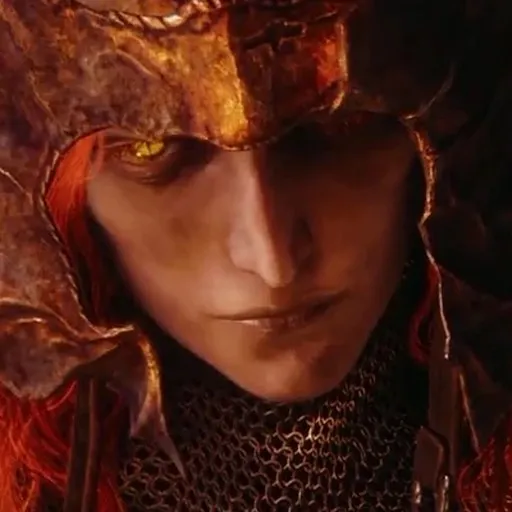
Miquella tried everything within the old order: unalloyed gold to repel the outer gods, the Haligtree to shelter the outcast. When all of it stalled, he chose his mother's ancient road — to the Land of Shadow, to the Divine Gate. But the price of godhood was piece after piece of the person: his flesh, his strength, his fear, his doubt, his fate — and at last his love, embodied in St. Trina. The god of the Age of Compassion is born from a journey of destroying everything that made him worthy of compassion.
📚 Read the Elden Ring series in story order
- Elden Ring Story Explained: The Shattered Ring, the Demigods, and the Age of the Stars
- Miquella and Malenia Explained: The Cursed Twins and the Dream of a Kinder World
- Marika and Radagon Explained: One God, Two People — Elden Ring's Greatest Secret
- Melina Explained: The Kindling Maiden, the Gloam Eye, and the Vow of Destined Death
- Godwyn and the Night of the Black Knives Explained: When the First Demigod Died
- Radahn Explained: The Starscourge Who Held the Heavens, the Battle of Aeonia, and Miquella's Promised Consort
- Metyr Explained: The Mother of Fingers and the Greater Will That Stopped Answering
- Messmer and the Erased Crusade Explained: Marika's Abandoned Son, the Serpent Behind the Sealed Eye and the Flame No History Dares to Name
- Rykard and the God-Devouring Serpent Explained: The Blasphemous Praetor Who Dreamed of Eating the Gods
- Mohg and the Mohgwyn Dynasty Explained: The Lord of Blood, the Formless Mother, and the Truth About the Charmed Demigod
- The Frenzied Flame and the Three Fingers Explained: The One Great, the Buried Caravan, and the Embrace Beneath Leyndell
- Vyke Explained: The Knight Who Nearly Became Elden Lord and the Embrace That Cost Him Everything
- St. Trina Explained: Miquella's Discarded Other Half, the Saint of Sleep Who Begged for a God's Death
- Elden Ring Story Explained: Shadow of the Erdtree — Miquella's Path to Godhood and Radahn, the Promised Consort — you are reading this one


