Hollow Knight Story Explained: A Dead Kingdom, a Forgotten God, and the Hollow Vessels

📋 Quick facts
- Game
- Hollow Knight
- Developer
- Team Cherry (Australia)
- Release year
- 2017 — February 24, 2017 (PC)
- Original platform
- PC (Windows / macOS / Linux)
- Genre
- Metroidvania, action-adventure
- Director
- Ari Gibson and William Pellen
- Music
- Christopher Larkin
- Notable feature
- A successful crowdfunding project on Kickstarter; after release it received 4 free expansions, for a total of 5 main endings and 1 secret ending
- Next entry
- Hollow Knight: Silksong (2025) — starring Hornet
Hallownest was once the greatest insect kingdom beneath the earth: cities carved with exquisite detail, tramways running through the caverns, and a promise that this kingdom would last forever. By the time our little nameless knight sets foot in the town of Dirtmouth, all that remains is ruins. The inhabitants have either died or become shambling corpses whose eyes glow orange. Hollow Knight tells almost none of its story through cutscenes: the entire tragedy of Hallownest lies scattered across stone tablets, dreams, and item descriptions. This article pieces them all together in chronological order — from the forgotten goddess to the game's five endings — along with the fates of the characters, the lore points most often misunderstood, and the community's most prominent theories.
📌 Quick summary: Hallownest, the glorious underground insect kingdom, has fallen into ruin: its inhabitants have either died or become undead with eyes glowing orange. A nameless Knight arrives in the town of Dirtmouth to uncover the secret of the Infection — the plague that comes from the Radiance, the forgotten goddess invading the dreams of the kingdom's people — and to confront the Pale King's plan to seal her away with a Vessel, and the terrible price it demanded.
Chapter 1: The Forgotten Goddess and the Pale King
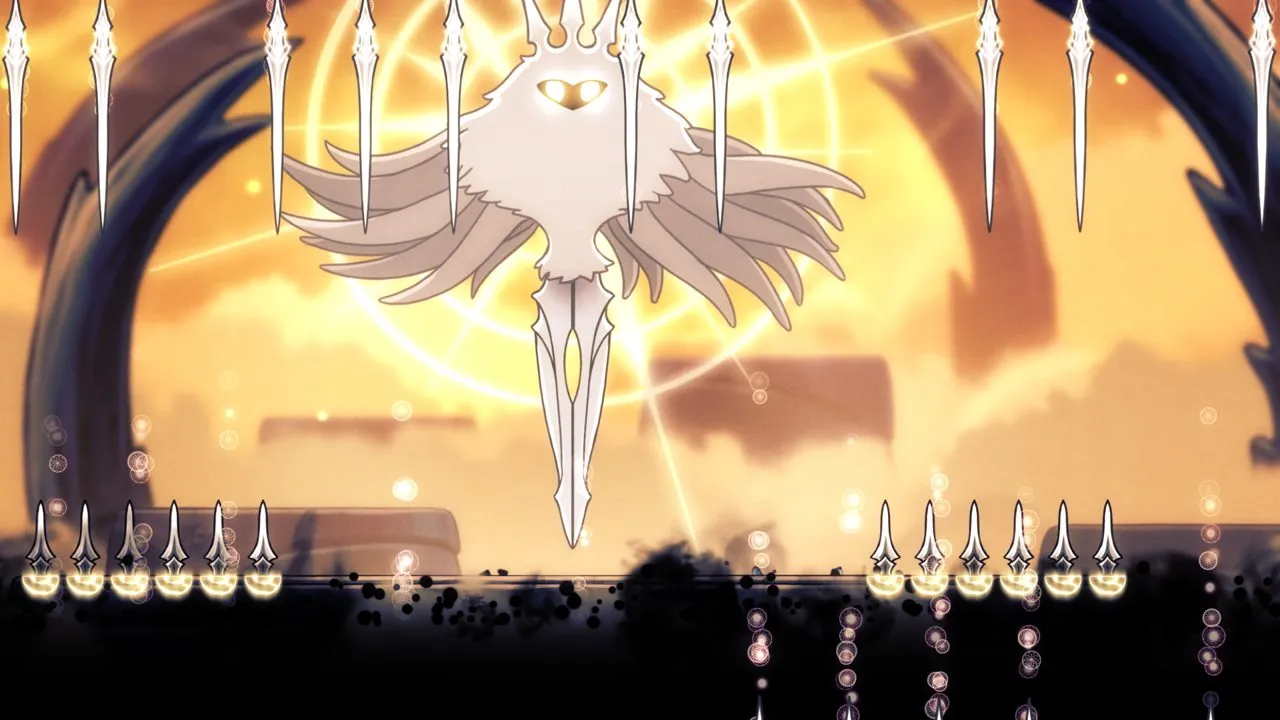
In the beginning, this land belonged to the Radiance — a moth-like goddess of light, worshipped by the insect tribes, whose first and most loyal believers were the moth tribe. The Radiance did not rule through laws: she lived within the minds and dreams of her worshippers, uniting them into a single collective consciousness with no individual self. Change came when an ancient creature in the form of a colossal worm — a Wyrm — made its way to this land, shed its giant shell in the place now known as Kingdom's Edge (the corpse still lies there to this day), and was reborn in a smaller form: the Pale King. Unlike the Radiance, the Pale King gave the bugs the most dangerous gift of all: intellect and individual consciousness. One tribe after another abandoned the old goddess to follow the new king, and built Hallownest. The Radiance was gradually forgotten — and a forgotten god does not die. She waited.
Chapter 2: The Infection and the Vessel Plan
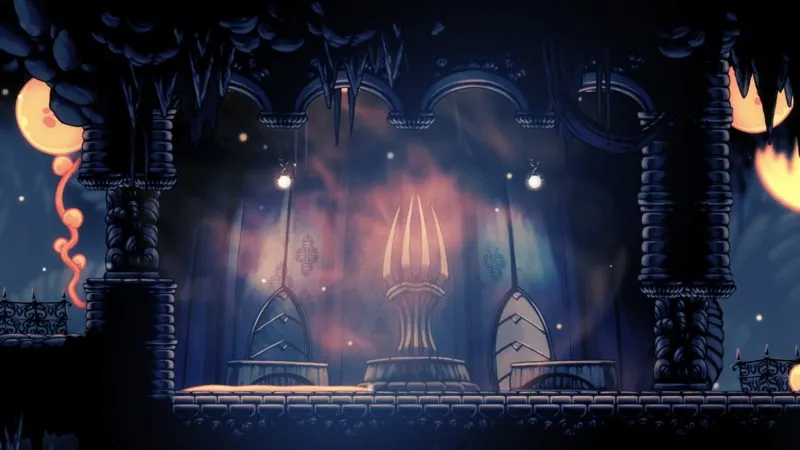
The Radiance returned by the one road no wall could block: dreams. Bugs began to dream of blinding light, then slowly lost their reason, grew aggressive, and came to be controlled by a single will. The people of Hallownest called it the Infection. The Pale King tried everything: he studied and harnessed the thick black Void drawn from the Abyss at the bottom of his kingdom — an ancient substance opposed to light — but nothing could stop a disease that spread through sleep itself. In the end, he reached a ruthless conclusion: to cage a god who lives in dreams, he needed a living prison 'hollow' enough to hold her forever.
And so the cruelest plan in the history of Hallownest was born. The Pale King and the White Lady gave birth to countless children in the Abyss — the Vessels — beings of royal blood whose insides were filled with Void instead of a mind. The criteria for selection were carved upon a tablet: no mind to think, no will to break, no voice to cry out in suffering. Only one child was chosen, became the Hollow Knight, and was chained inside the Temple of the Black Egg at the heart of the kingdom after the Radiance had been sealed within it. The thousands of remaining siblings were left to die in the Abyss. To tighten the seal still further, the three most powerful bugs in the kingdom — Monomon the Teacher in Fog Canyon, Lurien the Watcher in the City of Tears, and Herrah the Beast in Deepnest — willingly sank into eternal sleep as the three Dreamers, locking the temple's door with their own souls. Herrah alone set one condition before agreeing: the King had to give her a child. The child born of that bargain was Hornet.
Chapter 3: Why the Seal Failed
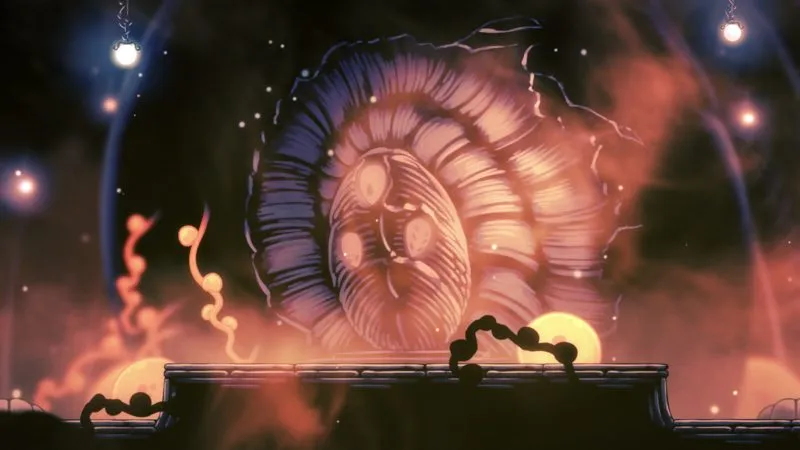
The plan sounded perfect — except for one detail that the Pale King himself had ruined. In the flashback players are shown when they return to the Abyss, the chosen child, as it was being led out of the Abyss, turned its head to look back at its father. A very small moment, but enough to plant in it something it was never permitted to have: an idea, an attachment. The White Lady would later call this the 'flaw' that made the Vessel no longer completely hollow. Over the years, the Radiance seeped out through that very crack of emotion, the Infection erupted once more, and it swallowed the kingdom region by region.
As for the Pale King, he vanished. His White Palace vanished with him — players later learn that it had been hidden inside the dream of a Kingsmould guard, and can only be entered with an Awoken Dream Nail. No one in the kingdom knows whether he died, fled out of guilt, or simply had no answers left. Our protagonist — the Knight — is one of the Vessels abandoned long ago: it crawled out of the Abyss, wandered beyond the edge of the world until it sensed the faint call of its sibling slowly faltering inside the temple, and returned to Hallownest. Hornet — daughter of Herrah and the Pale King, and the Knight's half-sister — travels the kingdom to test anyone who comes near the seal: she must be certain that whoever breaks it is strong enough to finish everything, rather than merely releasing the Radiance sooner.
Chapter 4: The Knight's Journey — Kill the Three Dreamers to Open the Temple
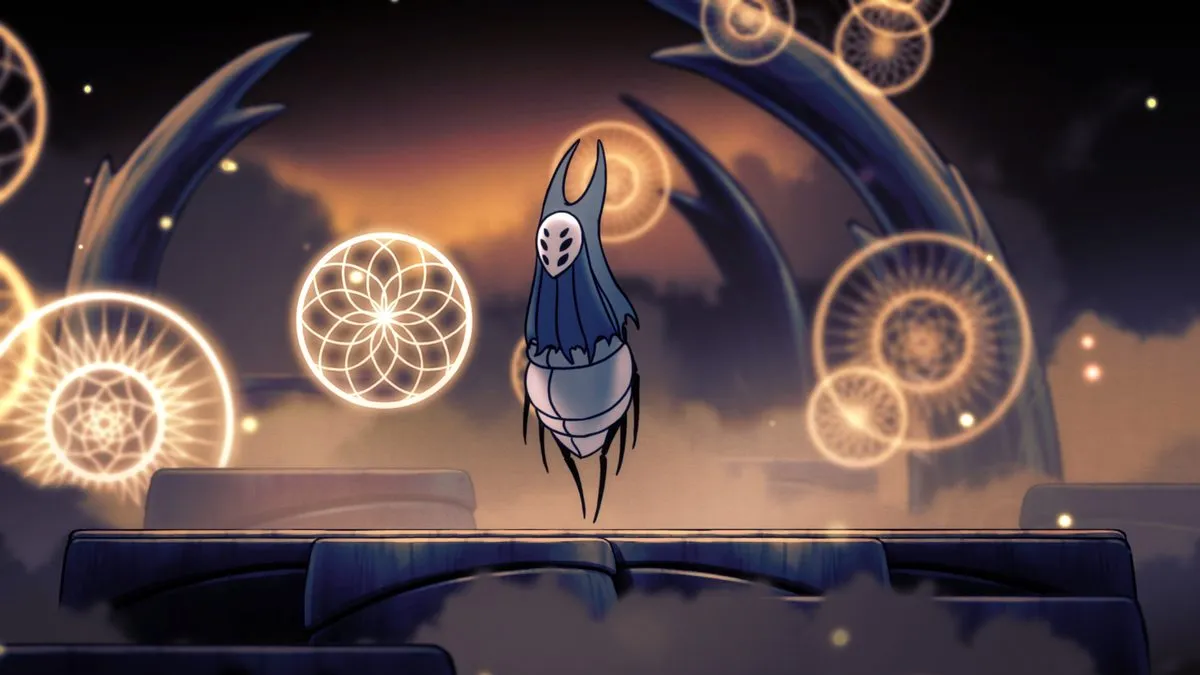
The Knight's task is to break the seal from the outside: seek out the three Dreamers sleeping all across Hallownest, and use the Dream Nail — a nail woven from dream essence, granted by the Seer, the last surviving member of the moth tribe — to step into their dreams and end them there. This is one of the game's boldest storytelling choices: to save the kingdom, the player must kill the very heroes who sacrificed themselves to protect it, one by one, while their souls still speak words of pleading or warning. One detail leaves many players with an ache: Quirrel, the friendly wandering knight who accompanies you throughout the journey, was Monomon's own assistant long ago — he lost his memory and roams the kingdom without understanding why he has been drawn back to this place, until he stands before the door of her chamber one last time.
Once the seal breaks, the Knight steps into the Temple of the Black Egg and faces the Hollow Knight — now wholly overtaken by the Infection, its body cracked from containing a god for too long. This battle is among the most tragic boss fights in the game: midway through, the Hollow Knight repeatedly stabs itself — as if the fragment of will still left inside it were wrestling with the thing controlling it from within. It is not a villain. It is a child who tried its very best, in absolute silence, for hundreds of years.
Before that battle, the Knight can go further than any Vessel ever has: gather both halves of the Kingsoul charm — one half from the White Lady in the Queen's Gardens, the other from the Pale King's throne in the White Palace within the dream realm — and carry it down to the bottom of the Abyss, where it was born. There, the charm becomes the Void Heart: the Knight accepts its origin, and all the Void in the depths acknowledges it. This very choice opens entirely different endings — and decides Hornet's fate as well.
Chapter 5: The Five Endings of Hallownest
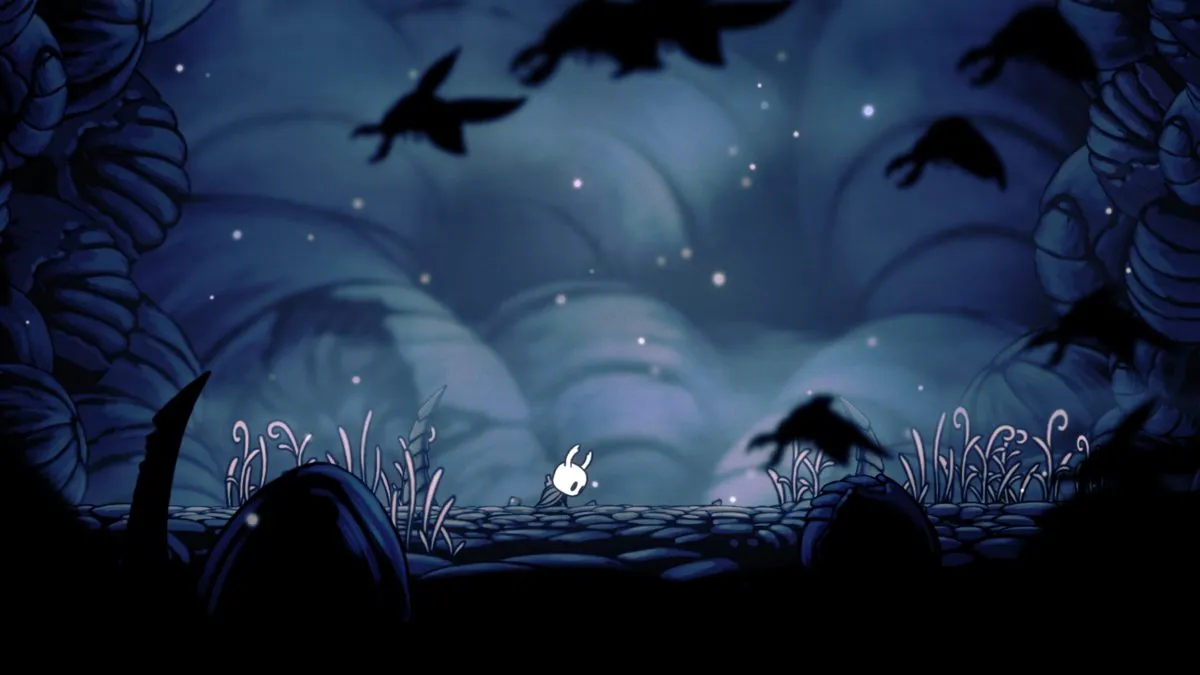
Hollow Knight has five main endings. Ending 1 — 'The Hollow Knight': without the Void Heart, the Knight defeats its sibling and... takes its place: absorbing the whole Infection into its own body, then letting the temple seal shut once more. The tragic cycle continues — just a different Vessel in a different prison, waiting for the day the seal leaks and cracks again.
Ending 2 — 'Sealed Siblings': if you carry the Void Heart into the battle, Hornet will rush in and restrain the Hollow Knight partway through the fight. If the player keeps attacking until it falls completely instead of using the Dream Nail, the Knight replaces its sibling as in ending 1 — but this time Hornet is trapped inside with it, and her mask appears upon the sealing door like a new Dreamer. The two siblings are buried together forever within the Black Egg — the ending the community considers the saddest in the game.
Ending 3 — 'Dream No More': also with the Void Heart and Hornet's intervention, if the player strikes the restrained Hollow Knight with the Awoken Dream Nail, the Knight steps straight into its mind and confronts the Radiance in person. Aided by the shade of the Hollow Knight itself and by countless Vessel siblings from the Abyss, the Knight tears the goddess of light apart right there in the dream realm. This time the Infection truly ends — no seal, no replacement. The price is the Knight's shell, shattered in the depths: it returns to the Void and to its siblings. Hornet wakes beside the opened temple, alive — a detail that matters for the theory about the sequel below.
Endings 4 and 5 belong to the Godmaster expansion, in Godhome — the dream realm of the Godseeker, a being from a distant land who came to Hallownest to worship the mightiest of gods. In 'Embrace the Void', the Knight overcomes all of the pantheons, defeats the Pure Vessel and Absolute Radiance, then allows the Void to merge into a single entity — the Lord of Shades — which devours both the goddess and the Godseeker. Ending 5, 'Delicate Flower', differs in only one small detail: if the player gives the rare white flower to the Godseeker before the final battle, a similar flower blooms where she vanished — suggesting that something has changed. Beyond these five endings, the game also hides a witty secret ending called 'Passing of the Age', for whoever completes Mister Mushroom's chain of quests across all seven regions.
The Fates of the Characters
The Knight — its fate depends on the ending: either sealed inside the Black Egg in its sibling's place, or dissolved into the Void after ending the Radiance, or become the unified Void entity at Godhome. In every case, it never 'lives an ordinary life' — and that is precisely the tragedy of a being created to be sacrificed.
The Hollow Knight — dies in every main ending: either defeated by the Knight and replaced, or set free when the Radiance is destroyed. After hundreds of years of imprisonment and pain in silence, death is the only release the game grants it.
Hornet — survives in the 'Dream No More' and Godmaster endings; is sealed away forever together with the Knight in the 'Sealed Siblings' ending. Her own journey in the kingdom of Pharloom is the subject of the sequel, Hollow Knight: Silksong.
The Pale King — missing since before the game begins, and he never appears in person. Players can only enter the White Palace within a dream and find the throne standing empty amid a palace in decay: whether he died alone in his hiding place, or vanished in some other way, the game flatly refuses to say.
The White Lady — still alive, withdrawn into the Queen's Gardens and binding herself within restraining roots. She recognizes the Knight as her child the moment it draws near, and gives it one half of the Kingsoul charm — like a belated apology on behalf of the entire royal court.
The Radiance — sealed away again (endings 1 and 2), torn apart in the dream realm (ending 3), or devoured by the unified Void (endings 4 and 5). Notably, in no ending is she 'killed' in the ordinary sense — for a god who lives by belief and dreams does not die like a creature of flesh and bone.
The Three Dreamers — Monomon, Lurien, and Herrah all die by the Knight's Dream Nail; their willing sacrifice ends at the very moment the seal they guarded is broken by the one that seal had been waiting for. Quirrel, Monomon's assistant, vanished from Hallownest after standing before her chamber one last time — only his nail remains, planted by the shore of the Blue Lake, and no one knows where he went.
Common Misconceptions
Is the protagonist of Hollow Knight the Hollow Knight?
Not quite. The name in the game's title does not refer to the little Knight the player controls, but to its sibling inside the Black Egg — the 'genuine' Hollow Knight. This confusion is actually part of the design: the whole kingdom, and the player as well, simply assumed that the Vessel abandoned down in the Abyss was nameless and worthless.
Is Hornet a Vessel too?
No. Hornet is a child born in the ordinary way, from the bargain between the Pale King and Herrah — she contains no Void, and she has a voice, a will, and a gender — which is why she is called 'the Gendered Child', the complete opposite of the genderless Vessels.
She is the Knight's half-sister, but she was never a candidate for the sealing.
Is the Infection a kind of virus or plague?
No. The Infection does not spread through contact or the air: it is the Radiance's influence, transmitted through dreams and minds. That is why bugs with strong wills, or who live apart, can resist it far longer — and why every physical barrier of the Pale King's was meaningless.
Hallownest's enemy did not lie outside the city gates — it lay within the sleep of every inhabitant.
Is the Pale King a pure villain?
No. The Pale King did unforgivable things to the Vessels, but the full picture is more complicated: he had tried many approaches before arriving at that plan, the three Dreamers were entirely willing, and he himself was a man haunted to the point of not daring to face his own failure.
Hollow Knight deliberately gives the player no character to hate completely — not even the Radiance, who in essence is only a native god who was stripped of her worshippers and forgotten before she 'took her revenge'.
Was the Knight the perfect Vessel that was chosen?
Quite the opposite: the Knight is one of the rejects. And a big question in the community is whether any Vessel was ever truly 'completely hollow' at all. The Knight itself shows very 'willful' behavior: it returned to Hallownest in answer to the call, it accepted the Void Heart, and in one flashback, it once turned its head to watch its chosen sibling being led away.
If the Hollow Knight failed because an idea was instilled in it, then perhaps no Vessel could ever be a perfect prison — the Pale King's plan was flawed from its very foundations.
Community Theories and Debates
Which ending leads into Silksong? In Silksong, Hornet is alive and has been captured and taken to the kingdom of Pharloom — this rules out the 'Sealed Siblings' ending (she is entombed in the Black Egg) and leads the community to lean toward 'Dream No More' or the Godmaster endings, in which Hornet walks out of the temple unharmed. Team Cherry has never confirmed a 'canonical' ending for Hollow Knight, so this remains the fandom's most heated topic of debate.
What is the Wyrm corpse at Kingdom's Edge? The community is almost unanimous that the giant worm's corpse at the edge of the kingdom is the Pale King's old, cast-off shell — proof that he was once an ancient Wyrm who shed his form to become small and rule over small creatures. This is one of the rare theories very strongly supported by details in the game itself (the Wyrm corpse, the words of Bardoon, the creature living beside it), even though the game never says it outright.
Is the Void a force even older than the Radiance? Beneath the Abyss lie the remains of an ancient civilization that worshipped the Void — older than Hallownest, and perhaps older even than the age of the Radiance. Part of the community believes the war between light and darkness in the game is only the latest chapter of a primordial conflict, and that the 'Lord of Shades' in the Godmaster ending is proof that the Void, once unified, is an entity with a will of its own — not the mindless substance the Pale King once believed it to be.
Where did the Pale King go? Three main theories still stand side by side: he died in the White Palace out of guilt and despair; he is still alive somewhere beyond the edge of the world, as the Knight once wandered; or he 'dissolved' into his own kingdom, in the way the gods of this world tend to do. That Team Cherry keeps absolute silence about this central character is regarded by the community as a deliberate storytelling choice: Hallownest is a kingdom of questions with no one left to answer them.
Source note: The content of this article was cross-checked against the Hollow Knight Wiki — particularly on the points of Hornet's parentage, the mechanics of the five endings and the Void Heart conditions, the identities of the three Dreamers, and the nature of the Hollow Knight's 'flaw' as described by the White Lady.
👤 Main characters
A quick introduction to the central characters of the story — portraits taken from the game itself.
- Nature
- Vessel
- Weapon
- Nail
- Origin
- The Abyss
A Vessel abandoned at the bottom of the Abyss, returning to Hallownest as the Radiance's call rises once more. No dialogue, no expression — yet the Knight's journey is the heart of the entire story.
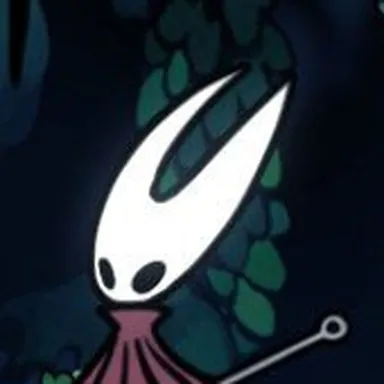
- Parents
- The Pale King & Herrah
- Weapon
- Needle
- Role
- Protector of Hallownest
Daughter of the Pale King and Herrah the Beast, Hornet guards the ruins of the kingdom. She tests the Knight again and again — to be certain this 'little ghost' is worthy of entering the Temple of the Black Egg.
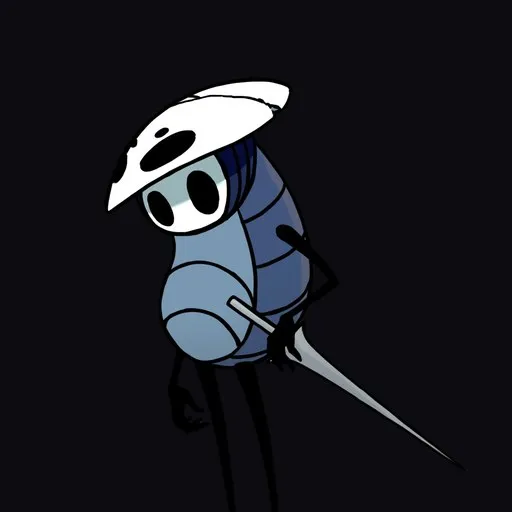
- Weapon
- Nail
- Master
- Monomon, one of the Three Dreamers
- Trait
- Has lost his memory of his mission
A curious warrior roaming all of Hallownest with a strange mask and an empty memory of his mission. Quirrel is Monomon's own disciple — she entrusted him with keeping her sealing mask, and the final stop of his life is at the Blue Lake, where his master's seal stands.
- Nature
- Ancient Wyrm
- Kingdom
- Hallownest
- Plan
- Created the Vessels
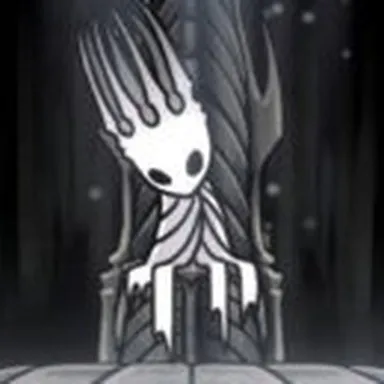
A mighty Wyrm who took the form of a king and raised the glorious kingdom of Hallownest. To seal the Radiance, he created a succession of Vessels — a grand plan, but a bloody one, and in the end a failure.
- Identity
- Queen, wife of the Pale King
- Nature
- One of the ancient root-like beings
- Residence
- Queen's Gardens
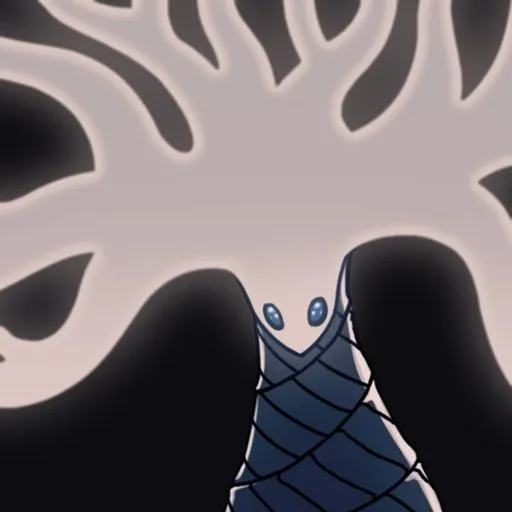
Queen of Hallownest and an ancient being in the form of a root, who together with the Pale King gave birth to thousands of Vessels in the Abyss in search of one that could contain the Radiance. She binds herself within the Queen's Gardens to restrain her own propagation, and lives out the remainder of her life in remorse over the children who were cast aside.
- Species
- Moth
- Worship
- Supplanted by the Pale King
- Power
- The Infection
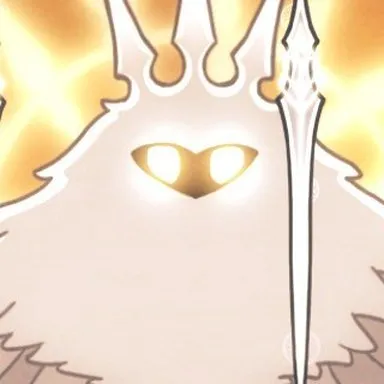
Goddess of light of the moth tribe, forgotten when the people of Hallownest turned to worship the Pale King instead. From the dream realm, she sows the Infection — the nightmare that devoured the entire kingdom.
- Role
- The vessel sealing the Radiance
- Place of imprisonment
- Temple of the Black Egg
- Relation
- 'Brother' of the Knight
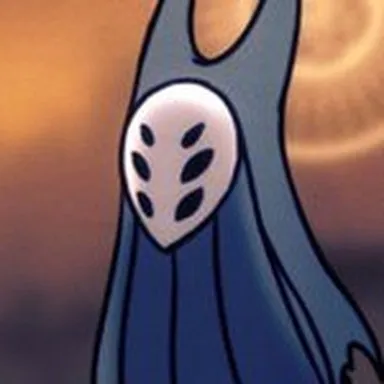
The Vessel chosen by the Pale King as 'pure', to imprison the Radiance within the Temple of the Black Egg. But because feeling arose within it — an 'idea instilled' — the seal gradually cracked.
- Members
- Lurien, Monomon, Herrah
- Role
- Lock the Temple of the Black Egg
- State
- Eternal sleep
Lurien the Watcher, Monomon the Teacher, and Herrah the Beast — three mighty beings who willingly sank into eternal sleep to keep the door of the Temple of the Black Egg shut. To enter the temple, the Knight must 'kill' all three in the dream realm.
📚 Read the Hollow Knight series in story order
- Hollow Knight Story Explained: A Dead Kingdom, a Forgotten God, and the Hollow Vessels — you are reading this one
- Hollow Knight: Silksong Story Explained: Hornet's Pilgrimage and the Kingdom on Strings
