Hollow Knight: Silksong Story Explained: Hornet's Pilgrimage and the Kingdom on Strings

📋 Quick facts
- Game
- Hollow Knight: Silksong
- Developer
- Team Cherry
- Release year
- 2025 (September 4, 2025)
- Platforms
- PC, Nintendo Switch, PlayStation 4/5, Xbox One/Series X|S
- Genre
- Metroidvania
- Director
- Ari Gibson & William Pellen
- Music
- Christopher Larkin
- Notable feature
- Hornet — the warrior-princess of the first game — becomes the protagonist; set in the entirely new kingdom of Pharloom, the ancestral homeland of the Weaver line
- Previous entry
- Hollow Knight (2017)
Hollow Knight: Silksong (2025) is Team Cherry's long-awaited sequel, more than six years in the making — and this time the protagonist is not the silent Knight, but Hornet: the warrior-princess of Hallownest, daughter of Herrah the Beast. Kidnapped from her homeland and carried to Pharloom, a strange kingdom that worships Silk and Song, Hornet must climb from the deepest depths of this land to the Cradle atop the Citadel — where a sleeping god betrayed by her own faithful lies waiting, and where every thread of the kingdom is poised to be pulled once more. This is the darkest pilgrimage in the series. Warning: this article spoils everything, including Act 3 and the true ending.
📌 Quick summary: Hornet, warrior-princess of Hallownest, is kidnapped and taken to Pharloom — a kingdom that worships Silk and Song, rotting under the rule of the Citadel and the goddess Grand Mother Silk. From its deepest depths she climbs toward the Cradle to find a way home, but this kingdom's silk binds every soul who lives in it — and when the Haunting fades, an older darkness from Hallownest begins to stain everything black.
Pharloom — kingdom of Silk and Song
Long before Hornet ever set foot there, Pharloom had kingdoms of its own — such as the mighty Order of Karak in the Sands of Karak. Then a higher being appeared: Grand Mother Silk, a colossal spider “Mother.” With her silk she “evolved” the native Pharlids into the Weavers — female spiders gifted with intelligence and divine weaving power — and lied to them, claiming they were her own flesh-and-blood daughters, demigods in their own right. Under the rule of the Mother and her Weavers, Pharloom became a kingdom of silk: every road, every ritual, every fate was woven.
But the Weavers gradually realized they were merely servants dressed up in finery, and they betrayed their creator: they lulled Grand Mother Silk into an eternal slumber, built the Cradle at the kingdom's peak as her prison, and raised the Citadel — the Citadel of Song — directly beneath it, using endless hymns and prayers themselves as the mechanism that held the seal. Then the Weavers withdrew to distant Weavenests, tried to create a pure being of their own (the creature named Eva in Weavenest Atla — a frail failure), and finally, in despair, abandoned Pharloom and scattered to the winds. One group of them, led by Herrah the Beast, settled in Deepnest in the neighboring kingdom of Hallownest — and that is Hornet's bloodline. Pharloom, in other words, is her ancestral homeland.
The Haunting and the rune cage
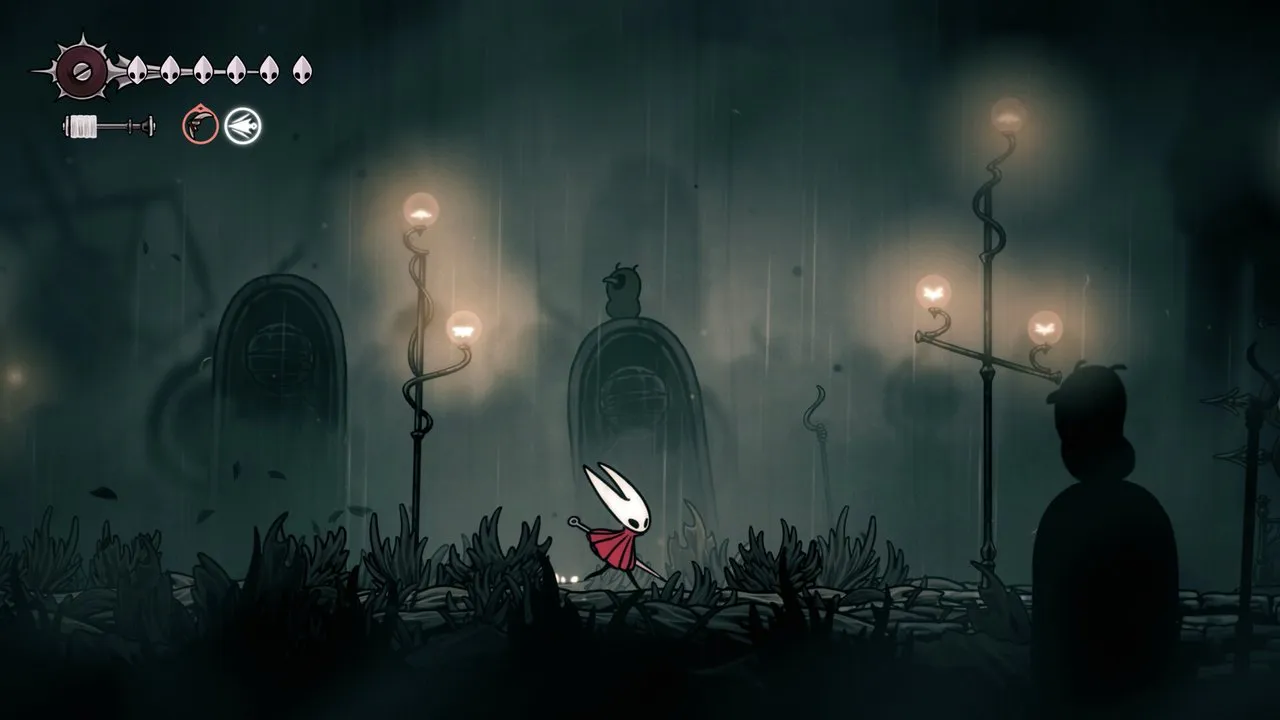
After the Weavers vanished, the Citadel's ruling class — the Conductors and the Choir — turned the religion meant to seal the goddess into a tool for profit: they exploited the pilgrims climbing up from the lowlands, built the Cogwork Core, a colossal machine gradually replacing true song, and slowly neglected the very rituals that held the seal. The hymns grew fewer and further between. And Grand Mother Silk, after centuries, began to wake in a rage. Though still imprisoned in the Cradle, her power seeped across Pharloom through a phenomenon called the Haunting: every citizen of the kingdom has a thread of silk wound around their heart, and the Mother need only pull that thread — even in her sleep — to turn anyone into her puppet.
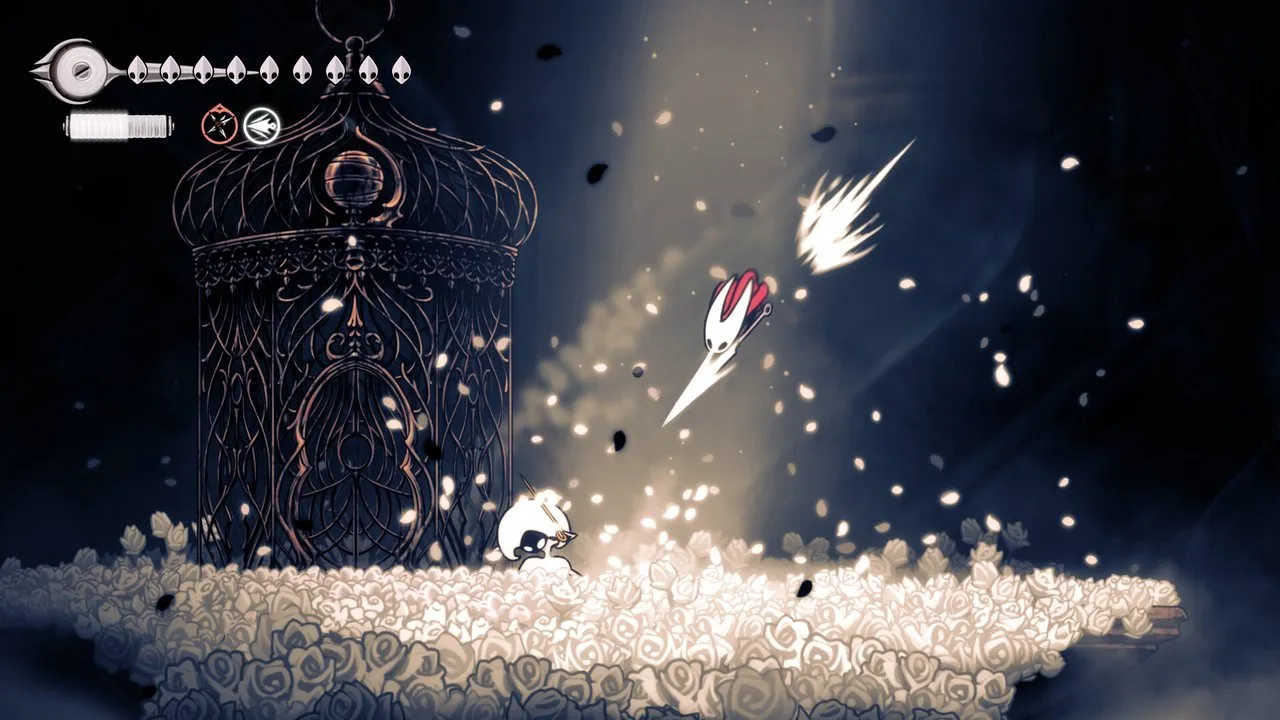
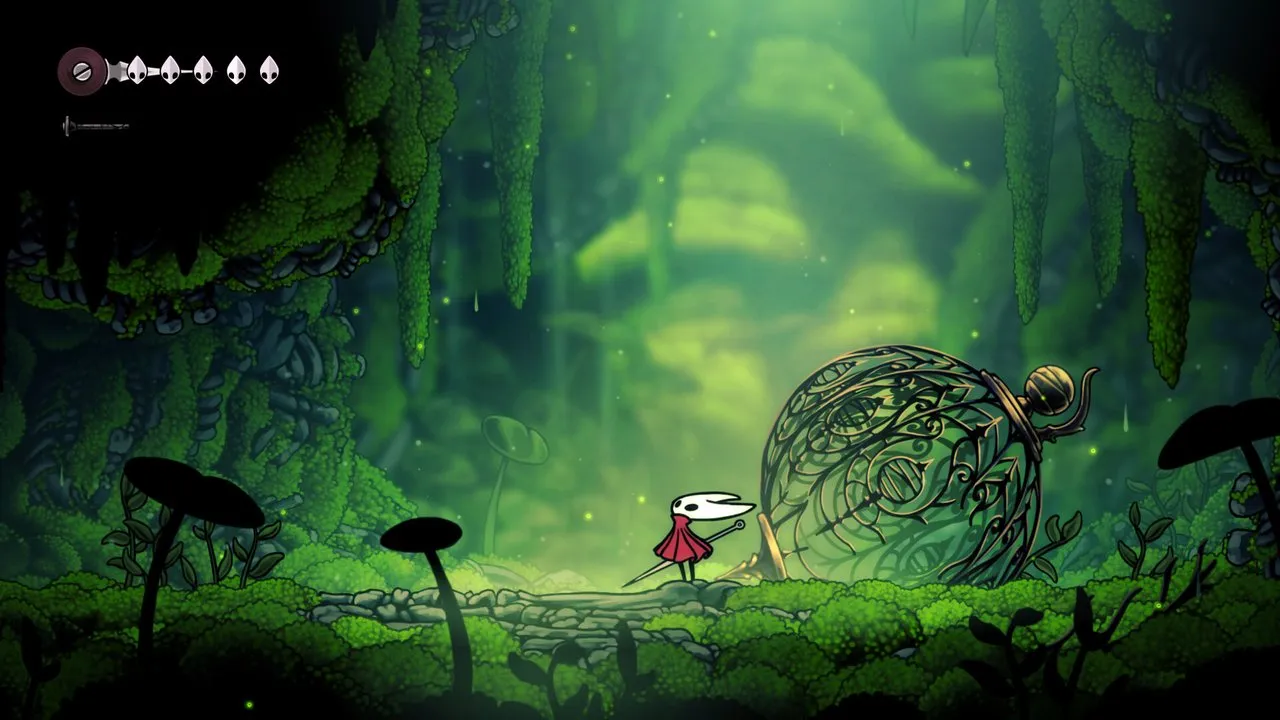
Her first command upon waking: hunt down every being carrying Weaver blood anywhere in the world and bring them to Pharloom, so that she might absorb their power and restore her full divinity. A Choral Commandment recorded in the game spells out the mission to seize Hornet: “A full envoy party to the kingdom of the White Wyrm. Take the Weaver, the one of half blood. The last descendant of the line. Silk sensed, very strong. Resistance expected. Restrained by rune cage.” Hornet was captured right there in Hallownest, locked in a rune-etched cage and transported along the long road to Pharloom. But on the way, disaster struck the caravan, the cage tumbled down into Moss Grotto — and the warrior-princess, drained of most of her silk and strength, woke at the bottom of the kingdom that had kidnapped her, with a single goal: climb to the top and demand answers.
The pilgrimage to the top of the world
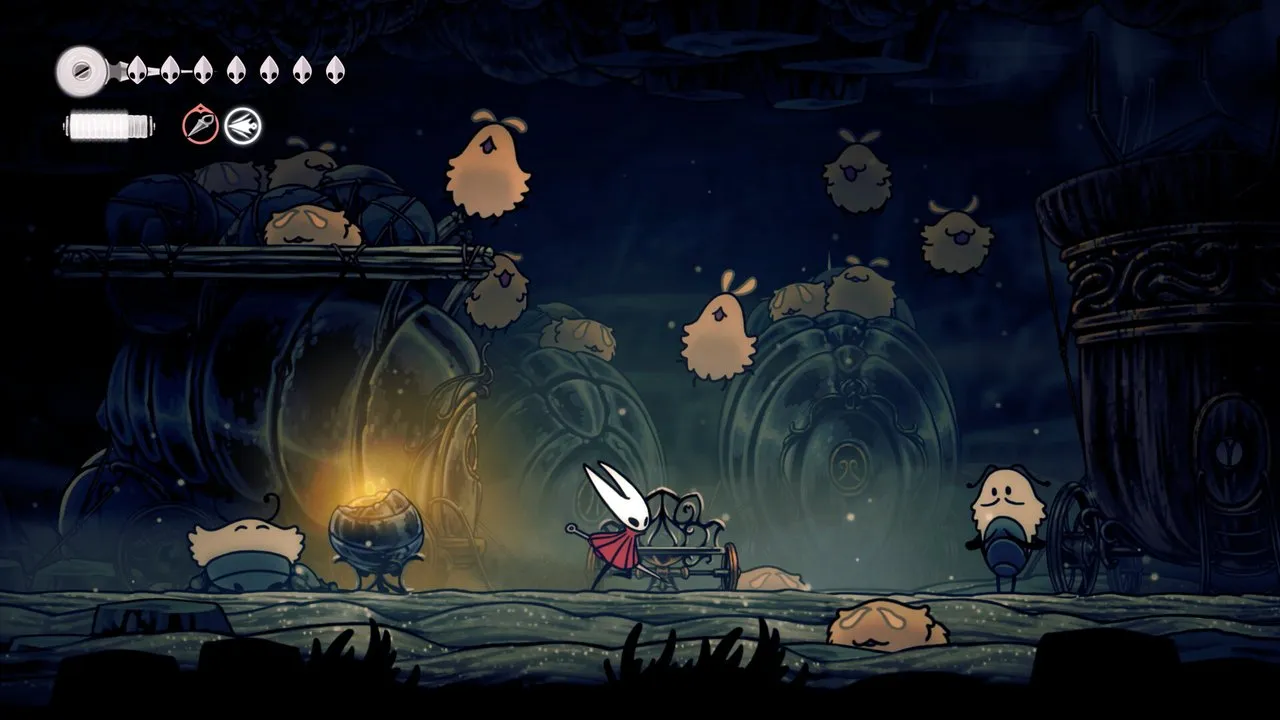
Pharloom works like a giant religious funnel: every being in the lowlands believes that reaching the Citadel is salvation, and the entire kingdom is organized to serve that belief — from the porters of the Deep Docks and the hunters of the Far Fields, to the condemned sentenced to hard labor in the Underworks beneath the Citadel to “atone” for their sins. Hornet climbs the pilgrims' own road: Moss Grotto, Bone Bottom (where the poorest pilgrims gather), The Marrow, the Deep Docks — where she first crosses paths with Lace, the mysterious white-clad fencer who is also climbing to the Citadel for purposes of her own — then Greymoor, and the town of Bellhart, hanging suspended in strands of silk.
Traveling alongside Hornet on the road are the faces that give Silksong its soul: Shakra, a warrior and mapmaker of a warrior tribe devoted to recording the world, who is climbing through Pharloom in search of her missing master; and little pilgrims like Sherma, a tiny bug with a wide-brimmed hat, tapping his little bell as he climbs with an utterly pure faith in the “holy land” above — never knowing what manner of thing he is climbing into the jaws of. It is beside people like these that Hornet (and the player) truly sees the human cost of the Citadel's system: those above live on song and golden light, while those below slowly die on the very road that leads to that “paradise.”
Bellhart and the Widow's curse
Bellhart, the town of bells, was once a warm stop for pilgrims — until it was seized by a surviving Weaver named Widow: she strung the town's entire population up in curtains of silk, turning them into living puppets dangling through a ghost town, and made Bellhart her nest. Hornet breaks the curse by defeating Widow — and Bellhart lives again: the citizens are let down, the shops reopen, and the town becomes Hornet's main home throughout the journey, the place where the friends she rescues along the way gradually find their way back to.
Widow matters because she is the first living proof of what became of the Weavers after they abandoned the Citadel: not the noble demigods of myth, but powerful, lonely beings slowly going mad in nests of their own. The battle with Widow also marks a turning point in how Pharloom sees Hornet: from a wanted stranger, she becomes “the savior of Bellhart” — the one the people of the lowlands begin whispering about to one another, while high above, the Citadel starts to truly take notice of her.
The Citadel — when the machine replaces faith
The gate into the Citadel is guarded by the Last Judge, a colossal judge standing at the Blasted Steps, passing judgment on every pilgrim who wishes to cross: worthy, or not. Hornet answers his judgment with her needle — and steps into the city that millions of beings have dreamed of all their lives. Inside is no paradise: it is a colossal administrative–religious machine run on gears, song, and systematic exploitation. The Choral Chambers ring with unceasing singing; the Whispering Vaults hold all the kingdom's knowledge; and at its center stands the Cogwork Core, where the Fourth Chorus — a gigantic choral machine, a “choir” of metal built to sing in place of believers who no longer have the strength to sing — still roars out its hymn.
The deeper she goes, the clearer the truth becomes to Hornet: most of the Citadel's citizens are now walking husks driven by the Haunting, still repeating their everyday work in a trance, because the threads around their hearts were pulled by the Mother long ago. This holy city does not need to be “saved” from Grand Mother Silk in any simple way — it had already rotted from within before she ever woke: the Choir class used faith to rule, used machines to replace faith, and when their goddess returned, they were the first to become her puppets. At this point Silksong is no longer an adventure tale; it is an indictment of every religion once it becomes a machine of power.
Lace — the child woven of silk
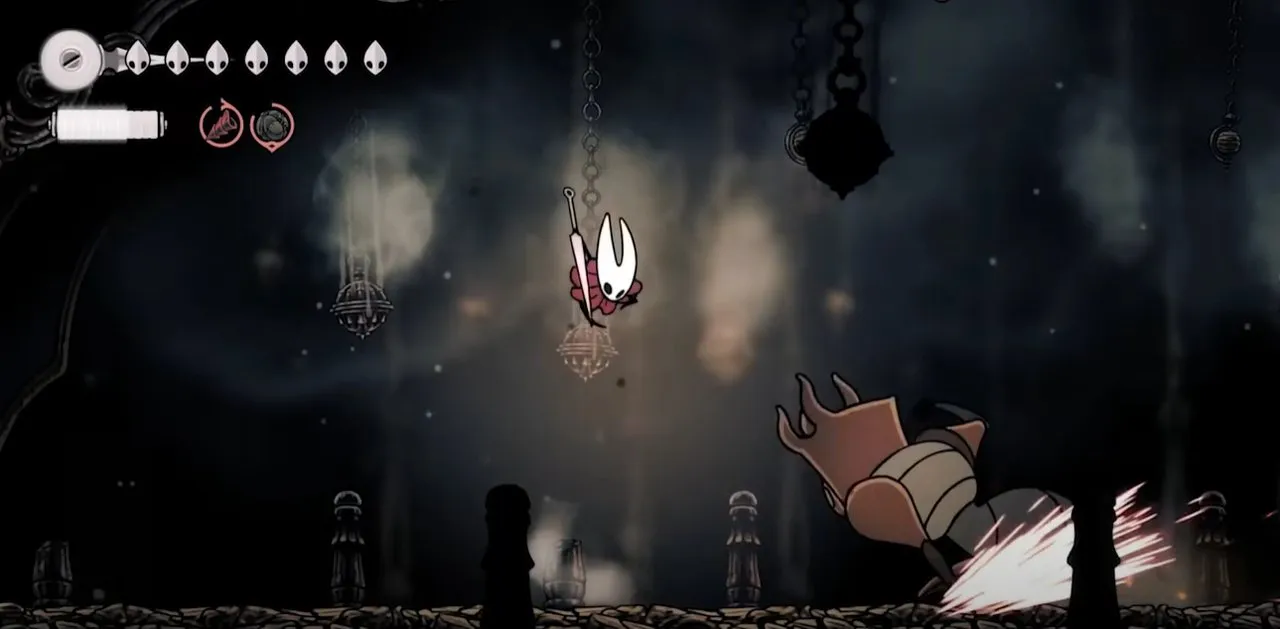
Lace is Silksong's most tragic character. She was not born in any ordinary way: she was woven entirely of silk by Grand Mother Silk herself — a child of silk in the most literal sense, the Mother's first child, created and raised within the Citadel itself. When the Weavers and the Choir imprisoned her Mother in the Cradle, Lace became her last loyalist: her entire reason for living is to climb to the top of the Citadel, wake her Mother, and take revenge on those who betrayed her. Her two duels with Hornet along the road are not only the game's most beautiful sword fights — they are a confrontation between two “daughters” of the same legacy: one woven to serve the Mother, and one born of the Weaver line but raised (by Herrah) never to kneel before any god.
What sets Lace apart from every ordinary “rival” is that she is not evil at all: she is courteous, proud, and even somewhat admiring of Hornet. But her loyalty is a noose — she has no choice but the Mother, because she was created for that one purpose alone. The question Silksong poses through Lace is more haunting than any boss fight: can a being woven with a ready-made purpose in life ever truly be free?
The Cradle — and the two endings of Act 2
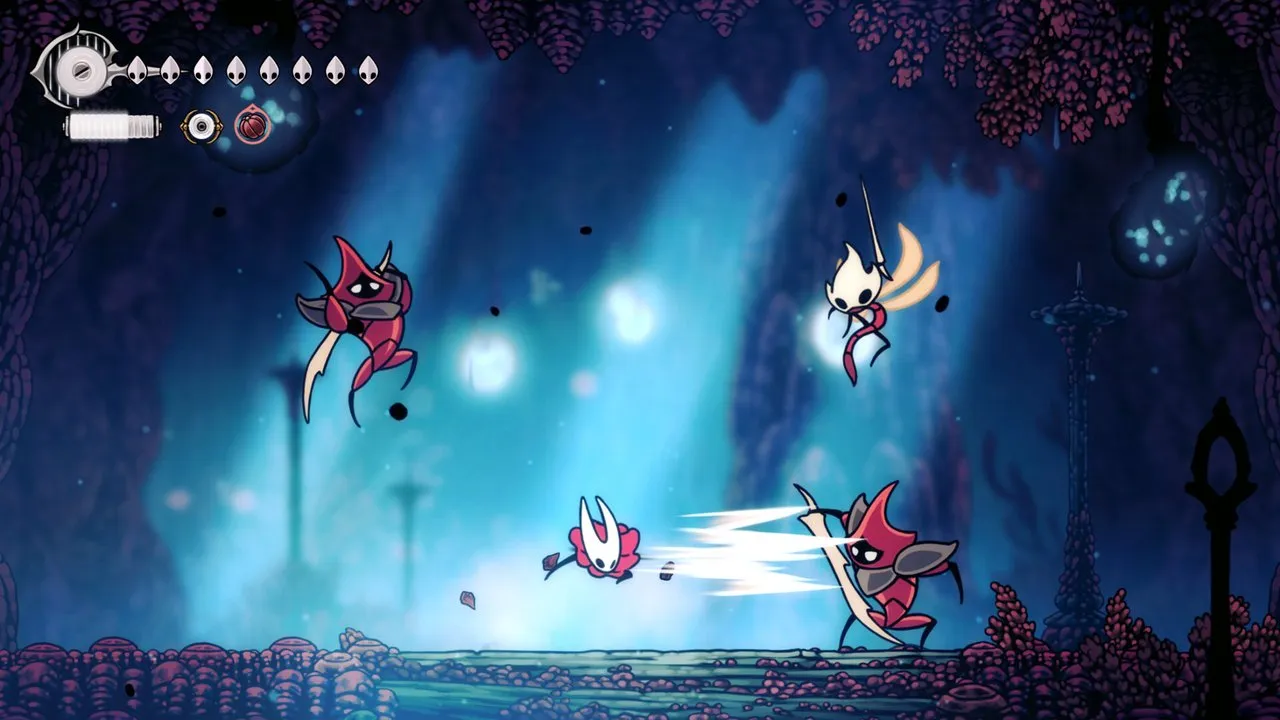
Atop the Citadel lies the Cradle — both prison and throne of Grand Mother Silk, where she lies within her enormous cocoon, half awake, half dreaming, pulling the threads of the entire kingdom. The final battle of Act 2 is the confrontation between Hornet and the goddess who kidnapped her — and how the player ends this battle splits the story into two completely different paths.
In the Weaver Queen ending (the default ending), Hornet binds Grand Mother Silk the way higher beings have always done in this world: she absorbs and replaces the Mother, becoming the new Weaver Queen upon Pharloom's peak. But the power of an ancient god is not something one person can contain: Hornet gradually warps into a colossal spider-being, her silk spills out and drowns all of Pharloom, and the kingdom she climbed to free is destroyed by her own hand, in silk and silence. It is the bitter, Hollow Knight kind of ending: killing a god by becoming the next god is never a victory. In the Snared Silk ending — unlocked only when the player completes the preparation quest chain with the Snail Shamans and their soul snare — Hornet does not bind the Mother but traps her in a snare, intending to end everything more cleanly. But at the final moment, as Grand Mother Silk falls, Lace dives in after her to save her mother — and both plunge into what has long been waiting beneath Pharloom: the Void, the primordial darkness, has returned.
Act 3 — when the Void stains the silk black
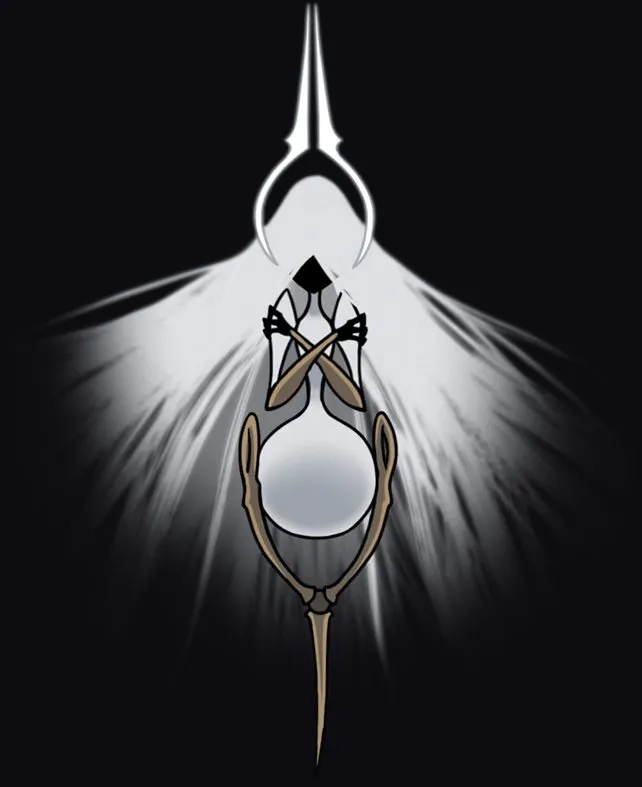
Act 3 opens with Pharloom under attack by the very weapon that once destroyed Hallownest: the Void. The darkness at the bottom of the world has climbed up along the Haunting's threads — the Mother's white silk gradually turns black, and the beings she controlled now serve a new master, far worse. Hornet learns that Grand Mother Silk is not dead: down in the Abyss, she is spending all her remaining strength to weave a shelter of silk around Lace amid the sea of Void — Hornet's enemy, in her final breaths, doing exactly the thing a mother does. Hornet's final mission thus becomes cruelly paradoxical: she must dive into that sea of Void and make sure Grand Mother Silk dies for good, before the Void seizes both her and the kingdom through the Haunting's web of silk — while also saving Lace, the only innocent person in this entire tragedy.
With the help of the Snail Shamans, Hornet obtains the Everbloom — the eternal flower that can withstand the Void (a relic tied to the world's oldest memories) — and uses it as a shield to dive to the bottom of the Abyss. There, she faces the final trial: Lace, completely possessed by the Void, becomes Lost Lace — a warped, dark version of the elegant fencer of old, and terrifyingly fast. The battle with Lost Lace is a fight to reclaim a person from nothingness, and Hornet wins it the only way she knows: by not letting go.
The true ending — Sister of the Void
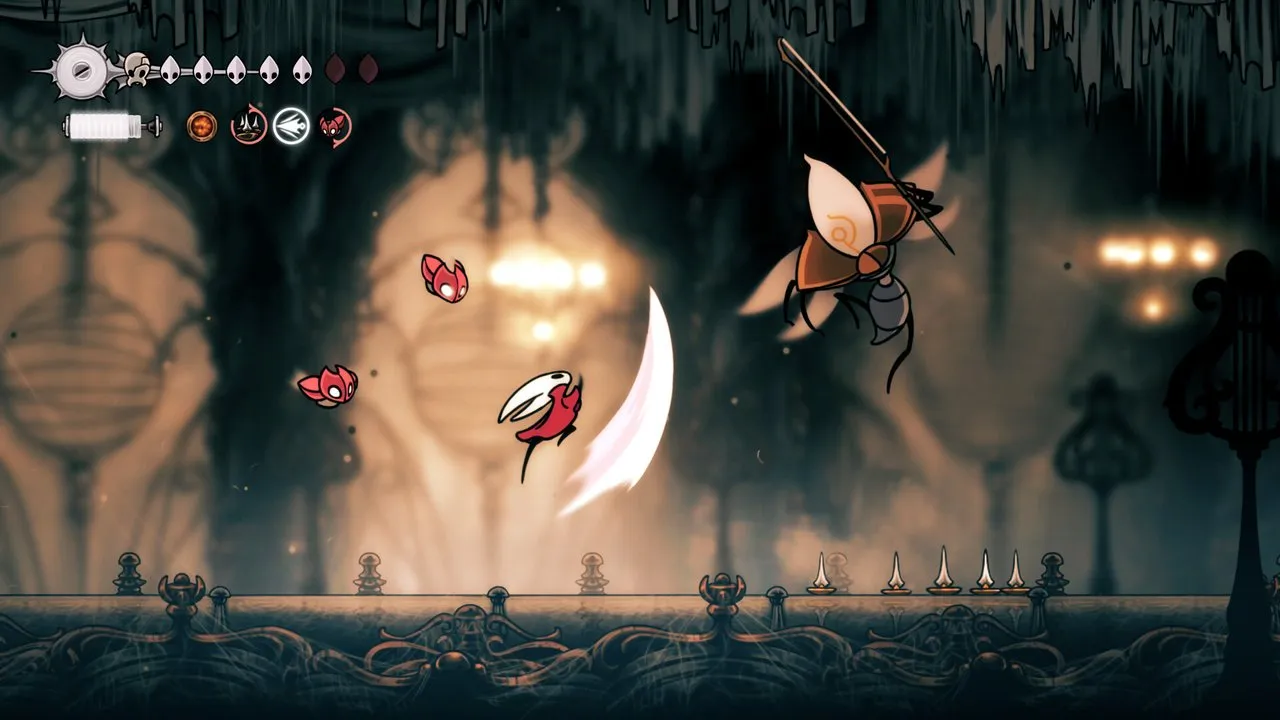
When Lost Lace falls and Lace becomes herself again, Grand Mother Silk does the last thing no one — not even the player — expected of the story's “villain”: she pours all of a god's remaining strength into lifting Hornet and Lace (unconscious) up out of the sea of Void, staying behind herself and dissolving away. On the way up, as the Void's tendrils reach out to seize the two of them one last time, the Everbloom shatters — and at that very moment, from within the Void, the Knight of the first game appears together with its sibling Vessels, crossing the nothingness to pull Hornet and Lace to safety. This detail quietly and beautifully stitches the two games together: Hornet's strange family — the children of the Pale King and the Weavers — finally save one another for once, instead of killing each other.
Pharloom after everything: the Haunting dissolves together with the Mother and the Void, the threads around every heart snap, and for the first time in its history the kingdom belongs to its own people — no god, no choir, no one pulling the strings. Hornet survives, uncorrupted by either of the two powers that sought to devour her (the silk of her Weaver blood, and the Void), and stays at Lace's side like a sister — two children of two enemy worlds, walking together out of the ashes of the gods. After six years of waiting, Silksong ends its story with the one thing Hollow Knight never dared to give its characters: a true dawn.
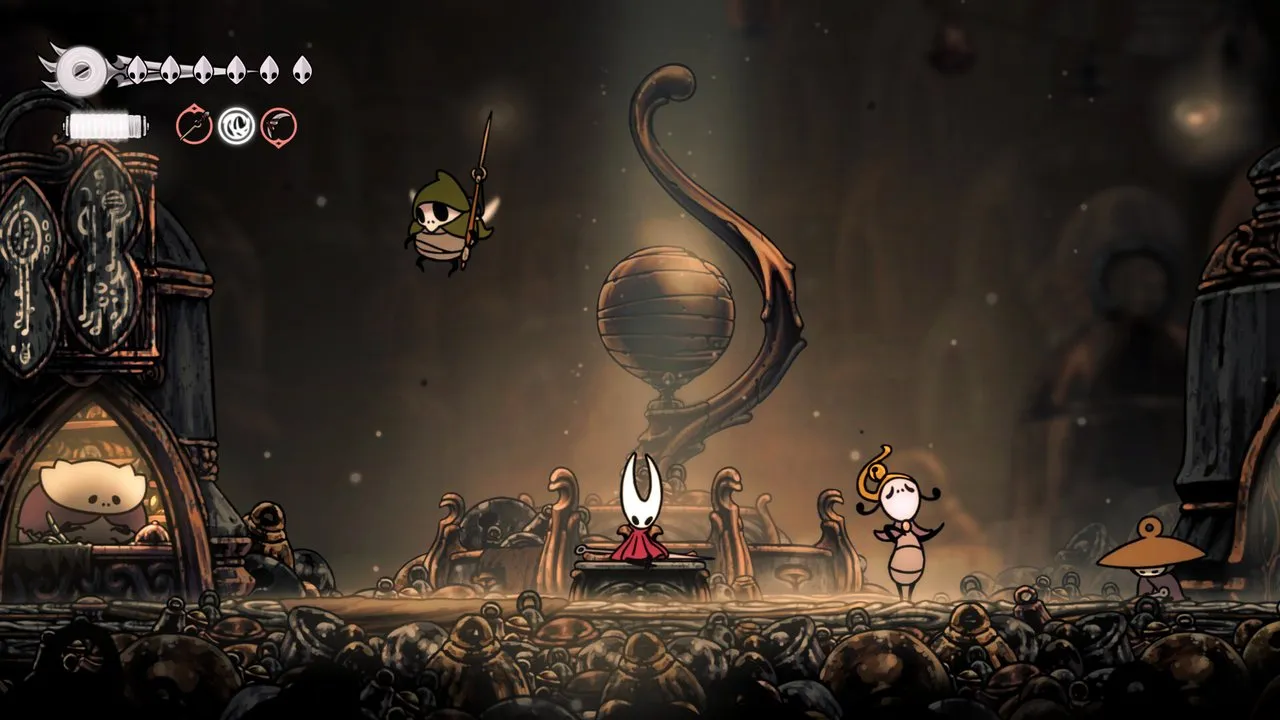
Where the characters end up after the finale
Hornet remains in Pharloom as a guardian without a throne — the role she once held in Hallownest, but this time by her own choice. Lace survives her liberation from the Void and loses her only mother that same day; her sisterly bond with Hornet is the first family she ever got to choose. Grand Mother Silk dies in the Abyss, spending her final breath to save her two “children” instead of her kingdom — a death that completely changes how this character is seen. Shakra completes her search and continues her mapmaking in a changed Pharloom. Sherma and the surviving pilgrims become the first citizens of a kingdom with no coerced faith. The Knight and the Vessels return to the Void after their final appearance — this time not as monsters, but as saviors.
Common misconceptions
Is Silksong really just overhyped DLC?
No — it is a complete game with its own kingdom, systems, and story, larger than the first game. It was indeed originally planned as DLC, but Team Cherry had developed it into a full sequel years before it launched.
Is Grand Mother Silk a purely evil villain?
Not quite. She is a genuine oppressor, but also a god betrayed, lulled to sleep, and exploited for centuries by her own “daughters” and faithful; and her final act is to sacrifice herself for two children she could perfectly well have abandoned.
Is Lace Hornet's blood sister?
Not by ordinary blood: Hornet is the biological daughter of a Weaver (Herrah), while Lace is a being woven entirely from Grand Mother Silk's silk — their “sisterhood” is a relationship chosen at the end of the game, not a given from the start.
Is the Weaver Queen ending the true ending of Silksong?
No. It is the default and most tragic ending; the full storyline — Snared Silk and all of Act 3, ending with Sister of the Void — is the conclusion that the community and analysis sources regard as the story's canonical ending.
Unanswered theories
Where did Grand Mother Silk come from? The game never explains her origin — a higher being “appearing” in Pharloom is as mysterious as the Pale King's arrival in Hallownest; some theorize she is also an ancient being of the same kind as the Wyrms and Roots of this world. How were the Vessels able to save Hornet? The Knight's appearance in the Void at the end suggests that “dead” Vessels still exist within the nothingness as a collective consciousness — and that they chose to save their sister shows this family bond is stronger than the very nature of the Void. What really is the Everbloom? This Void-resisting flower is tied to the ancient creator-entities of the Hollow Knight world, and its shattering upon completing its mission has led the community to believe that the age of divine relics is closing along with the age of the gods. What becomes of Pharloom with no one pulling the strings? For the first time in either game, a kingdom is left to its own people to decide its fate — and Team Cherry deliberately leaves that question unanswered, letting it stand as an open note for the future of the series.
👤 Main characters
A quick introduction to the central characters of the story — portraits taken from the game itself.
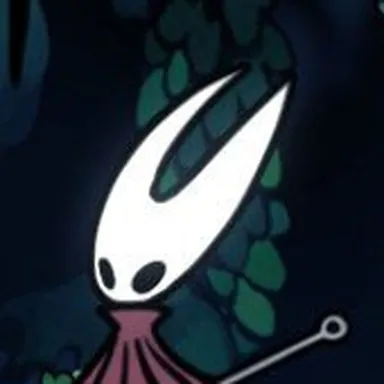
Hornet is the red thread connecting two kingdoms and two games: in Hallownest she is the keeper of a dead kingdom's ruins, while in Pharloom she is the 'last descendant' that a dying goddess wants to devour in order to be reborn. Hornet's journey is one of refusing every string the world tries to tie to her — the Citadel's, Grand Mother Silk's, and finally that of the Weaver blood within her — in order to become a guardian in her own way.

Lace is Hornet's mirror opposite: both are 'daughters' of the Weaver legacy, but one was born to be free and the other woven to serve. Lace's entire reason for living is to free her imprisoned Mother and avenge her — and her tragedy is that when that thread of purpose snaps, she has almost nothing left to hold on to, so much so that even the Void can take hold of her. Hornet saving her at the end of the game does more than save a life: it gives Lace the first thing in her life that no one wove for her — a family of her own choosing.
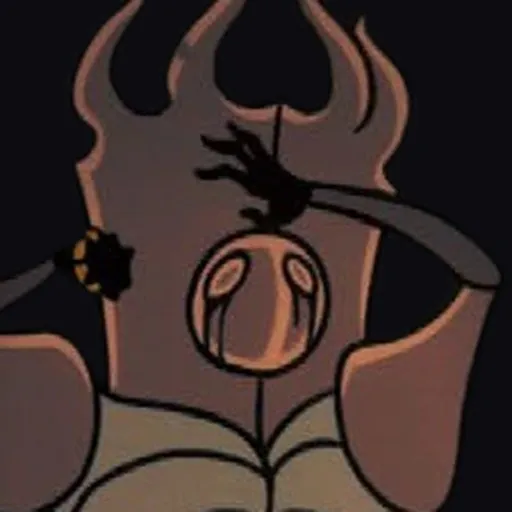
The colossal judge who guards the gate of the holy Citadel, where every pilgrimage must pass in order to be judged. Any pilgrim who wishes to enter the city must withstand the tolling of her judgment bell — the final trial before stepping into the heart of Pharloom.
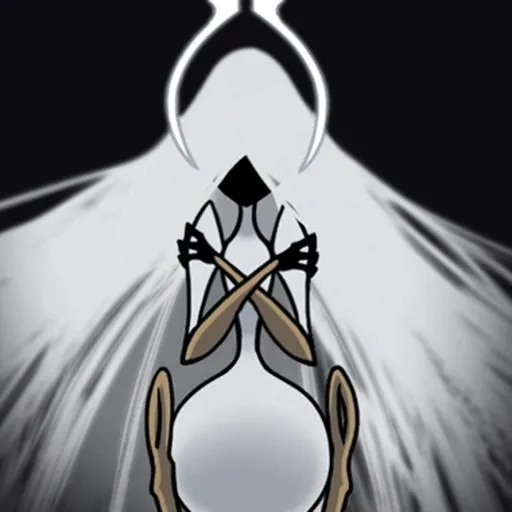
Grand Mother Silk is one of the most complex 'gods' in the series: at once the oppressor pulling the strings of an entire kingdom and the victim of the greatest betrayal in its history. She lied to the Weavers about their origins, ruled through silk and song, and was then overthrown and exploited by the very system she had built. Her final sacrifice for Hornet and Lace does not erase her sins — but it proves that even a god imprisoned for centuries can, in the final second, choose to be a mother rather than a ruler.
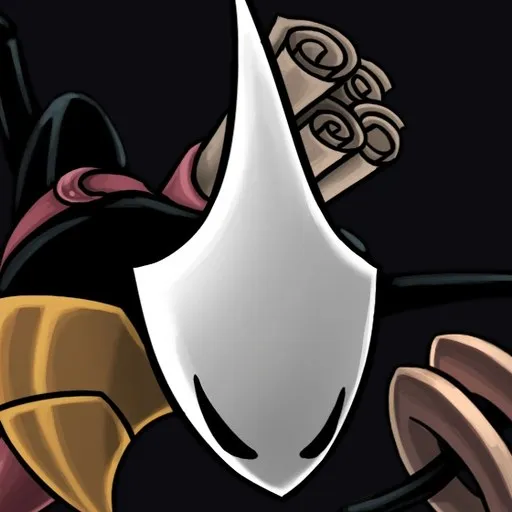
Shakra embodies a kind of faith completely unlike the Citadel's: her tribe records the world not to rule it, but so that those who come after will not lose their way. She is both Hornet's most reliable ally on the road — appearing in many lands to fight at her side — and proof that Pharloom still holds people who live with purpose amid a kingdom run on strings.
An ancient Weaver hidden in Weavenest Mosshome above Moss Grotto, one of the last weavers remaining in Pharloom. Eva recognizes the Weaver blood within Hornet and grants her the Weaversong, while also binding the Crests to her — unlocking the ability to change her fighting style.
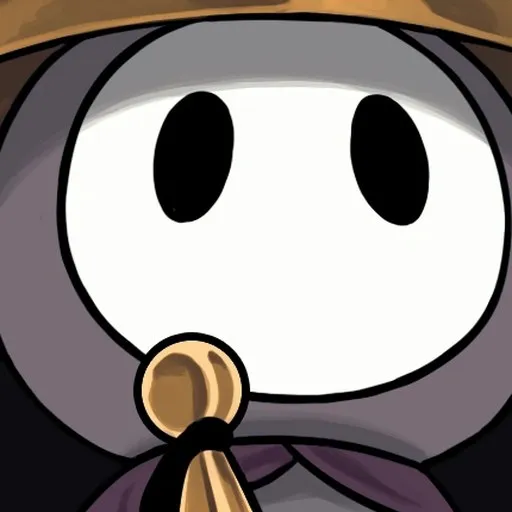
Sherma is the heart of Silksong: while every power in the game schemes, lies, or pulls strings, this little pilgrim simply believes and climbs, tapping his small bell all along the way. Sherma's journey shows the player the purest version of the same road Hornet walks — and serves as a reminder that beings like him are precisely the ones the Citadel's system weighs upon most heavily.
Widow shows what the Weavers — the 'demigods' of the Citadel's mythology — truly became after centuries of abandonment: powerful, solitary beings gone feral within their own domains. The battle with her does more than free Bellhart; it is the first time Hornet directly confronts the true legacy of her own bloodline, before climbing up to face its very source.
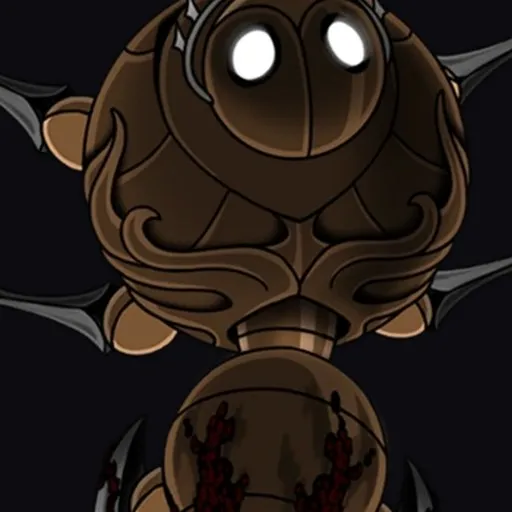
The Fourth Chorus is the perfect embodiment of the Citadel's rot: when faith becomes duty and duty becomes burden, people build a machine to believe in their place. This colossal machine still roars out its hymn in the depths of the city long after the hymn's meaning has died — an image at once majestic and horrifying, of every system that keeps running on sheer inertia long after its soul is gone.
📚 Read the Hollow Knight series in story order
- Hollow Knight Story Explained: A Dead Kingdom, a Forgotten God, and the Hollow Vessels
- Hollow Knight: Silksong Story Explained: Hornet's Pilgrimage and the Kingdom on Strings — you are reading this one
