Castlevania: Symphony of the Night Story Explained: Dracula's Son and the Castle in the Sky Turned Upside Down

📋 Quick facts
- Game
- Castlevania: Symphony of the Night
- Developer
- Konami Computer Entertainment Tokyo (KCET)
- Release year
- 1997 — March 20, 1997 in Japan
- Original platform
- PlayStation
- Genre
- Metroidvania, action role-playing
- Director
- Toru Hagihara (Koji Igarashi — assistant director, co-writer)
- Music
- Michiru Yamane
- Notable feature
- Defined the Metroidvania genre together with Super Metroid; its second half hides inside an inverted castle; artist Ayami Kojima's first character designs for the series
- Previous entry
- Castlevania: Rondo of Blood (1993)
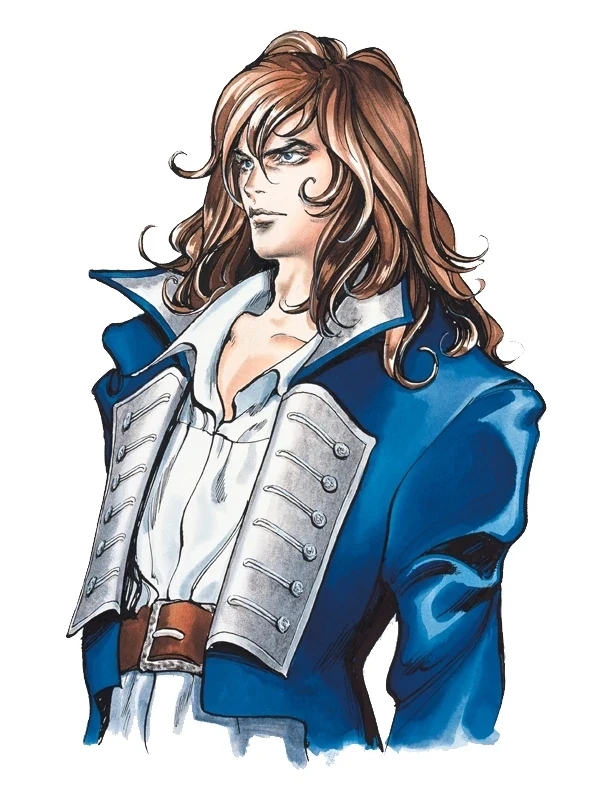
Some games open with a brand-new journey. Castlevania: Symphony of the Night opens with… the final battle of the previous game. The moment you start, you are handed the Vampire Killer whip of Richter Belmont and sent into the throne room to face Count Dracula — a shot-for-shot re-enactment of the ending of Castlevania: Rondo of Blood (1993). It is in that room that the original English PlayStation 1 dub produced one of the most famous lines in gaming history. Richter shouts: "Die monster. You don't belong in this world!" — and Dracula, hurling his wine glass aside, answers: "What is a man? A miserable little pile of secrets. But enough talk… Have at you!" Richter wins, Dracula dissolves — as he has every time for hundreds of years.
But this time, victory does not close the story. The game's original opening narration continues: four years later, on a night of the full moon in 1796, Richter Belmont vanished without a trace. In 1797 — exactly five years after Rondo of Blood — Dracula's castle, rumored to appear only once every hundred years, suddenly materialized out of the mist, as if to show the way to Maria Renard, the girl desperately searching for Richter. And somewhere else, a man who had slept for three centuries opened his eyes: Alucard — who once fought beside Trevor Belmont to defeat Dracula, then sealed away his vampiric powers and sank into what was supposed to be an eternal slumber, so the world would forget the cursed blood in his veins. The Belmonts were nowhere to be found. The one who entered Dracula's castle this time, ironically, was Dracula's own son.
📌 Quick summary: In 1792, Richter Belmont defeated Dracula, but in 1796 he mysteriously vanished and Dracula's castle returned in 1797. Alucard — Dracula's son — awakens and enters the castle to find Richter alongside Maria Renard. He discovers Richter is being mind-controlled by the dark priest Shaft to resurrect Dracula, frees him, then ventures into a second, inverted castle in the sky, defeats Shaft and his own father, and chooses to vanish from the world.
Alucard awakens — and Death strips him of everything
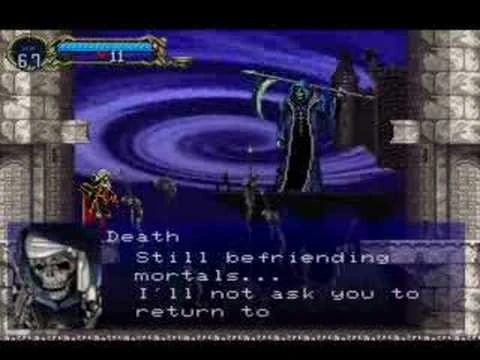
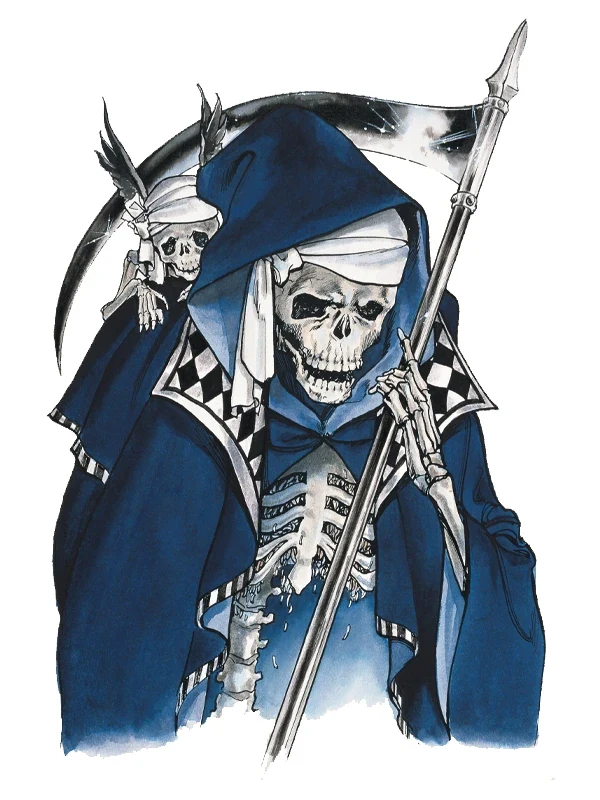
Alucard arrives at the castle carrying his finest equipment — a sword, armor and shield bearing his own name — strong enough to fell the first monsters in a single slash. But that "unstoppable" run lasts only a few minutes. Near the entrance, a robed figure wielding an enormous scythe steps out to block his path: Death, Dracula's most loyal right hand. He has not come to fight. He has come to ask a question: is Alucard still siding with mortals? When the answer does not waver, Death coldly replies, "You shall regret those words. We will meet again" — and in a blink, all of Alucard's equipment is stolen, scattered across the castle. The vampire prince is reduced to punching zombies bare-handed like a complete novice.
It is both a plot twist and the game's design manifesto: this is no longer the stage-by-stage march of earlier Castlevania titles. Alucard must rebuild his strength from zero inside one giant, interconnected labyrinth, where almost every door only opens once he is strong enough to come back for it later.
Maria Renard — the 17-year-old searching for her missing brother-in-law
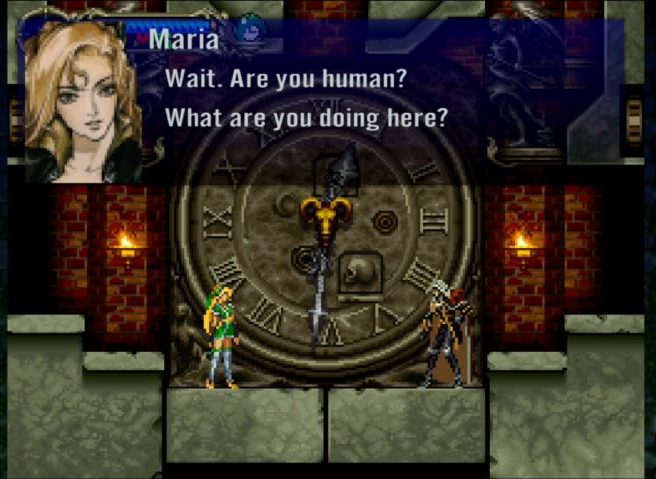
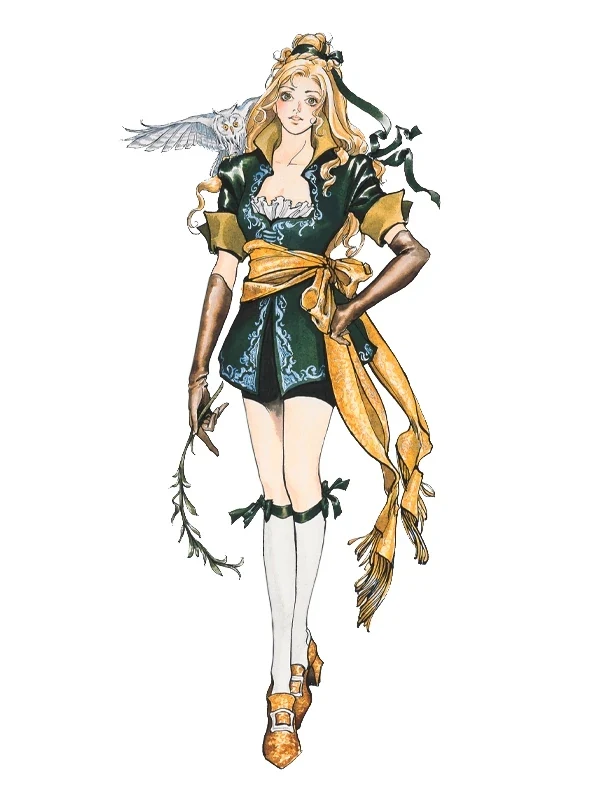
Alucard is not the only one hunting for traces of Richter. In the great clock room of the Marble Gallery, he runs into a blonde girl — Maria Renard, 17 years old, Richter's sister-in-law. She is no helpless young lady either: in 1792, at only 12 years old, Maria was kidnapped by Shaft and then fought her way back to Richter's side through the whole Rondo of Blood campaign, commanding guardian spirit animals. Now, with the castle appearing as her only clue, she has stormed in alone to find him.
The two meet repeatedly throughout the castle, and each time Maria reveals another piece of the puzzle: she has found Richter nowhere, but she senses something deeply wrong is operating this castle. And it is Alucard who first brings her the news she least wants to hear.
A castle to explore — the library, the double, and the sealed forms
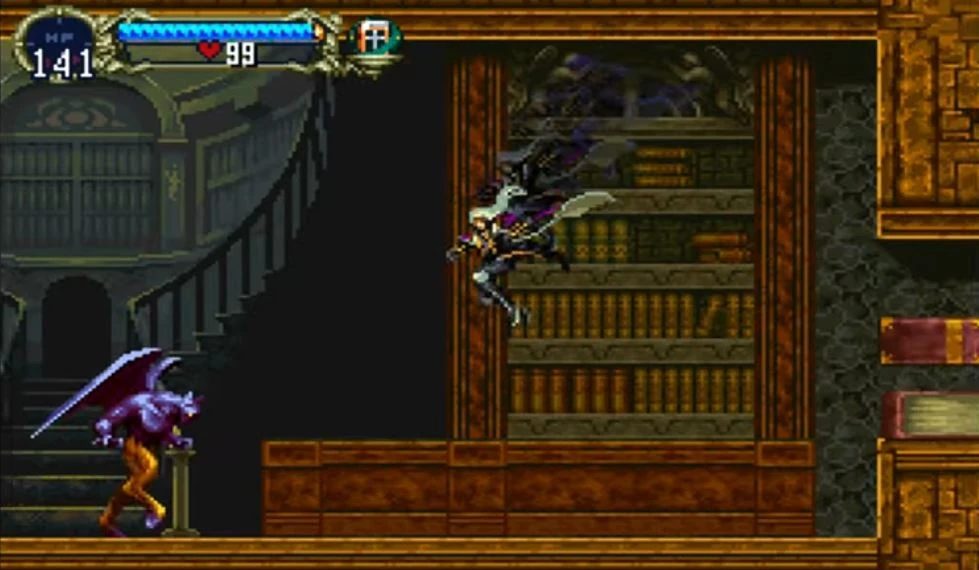
Most of Symphony of the Night is a journey threading through the castle's regions: the Alchemy Laboratory, the Marble Gallery, the Outer Wall, the Long Library, the Royal Chapel, the Clock Tower, the Colosseum, the Catacombs… In the Long Library, the old Master Librarian happily sells weapons, armor and information to anyone with money — even his master's own son. At the Outer Wall, Alucard must defeat his own copy, the Doppelganger that steps out of a mirror. Each relic he recovers unlocks another layer of power: the Soul of Wolf, the Soul of Bat, the Power of Mist — abilities that let him fly down corridors he could never reach before, and pass through places that once seemed like dead ends.
This structure — one giant map, opened up gradually by new abilities — is what made Symphony of the Night, together with Nintendo's Super Metroid, the founding milestone of an entire genre named by mashing the two series together. Decades later, descendants like Hollow Knight still follow the exact same formula. But inside that beautiful labyrinth, Alucard gradually uncovers a strange truth: the castle's monsters are obeying a new "lord" — and it is not Dracula.
Richter Belmont — the hero who calls himself lord of the castle
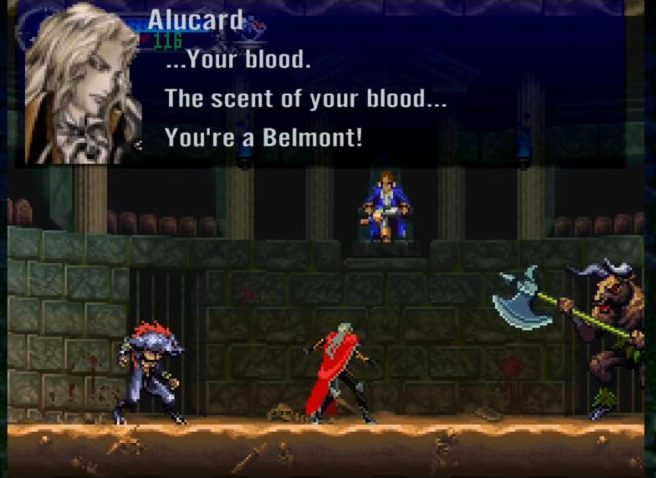
The truth reveals itself in the castle's Colosseum. Seated above the arena like a king, Richter Belmont — the hero of 1792 — orders a giant Minotaur released into the pit to "entertain" Alucard. By the scent of his blood, Alucard recognizes the man above him at once. But this is not the Richter Maria knew: he declares himself the new lord of this castle, and seems to relish the prospect of fighting forever.
When Alucard returns and tells Maria, she refuses to believe it. Maria insists Richter could never do this willingly — someone must be controlling him. She leaves to verify it herself. And in the end, it is Maria's unshakable faith, not Alucard's sword, that saves Richter.
A nightmare wearing his mother's face — the Succubus, two rings and the Holy Glasses
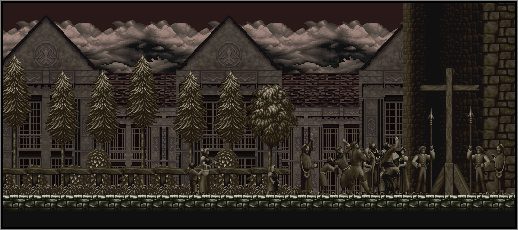
The true tragedy of Dracula's family has one name: Lisa — the mortal woman Dracula loved, Alucard's mother, and the woman burned at the stake as a witch merely for using medical knowledge to heal the sick. Before she died, she left her son a final wish that defied every instinct for revenge: do not hate humans; if you cannot live with them, at least do them no harm, for theirs is already a hard lot. Alucard has held those words for three centuries. Dracula chose the opposite path: Lisa's death is why he swore to wipe out humanity.
The castle knows that wound well. In a strange room in the Underground Caverns, Alucard falls into a nightmare where "Lisa" appears on a cross and whispers the exact opposite of her real final words: hate humans, hunt them down. He recognizes the impostor the moment she speaks — it is the Succubus, a demon who preys on memories. Defeating her earns him the Gold Ring. Together with the Silver Ring, found beyond the spiked hallway of the Royal Chapel (thanks to the Spike Breaker armor in the Catacombs), Alucard returns to the clock room where he first met Maria, puts on both rings — and the floor opens, leading down to a hidden chamber. Maria is waiting there. She gives him the Holy Glasses, which can see through any illusion, and asks only one thing of him: please, do not kill Richter.
The castle keep — the green orb and the true face of Shaft
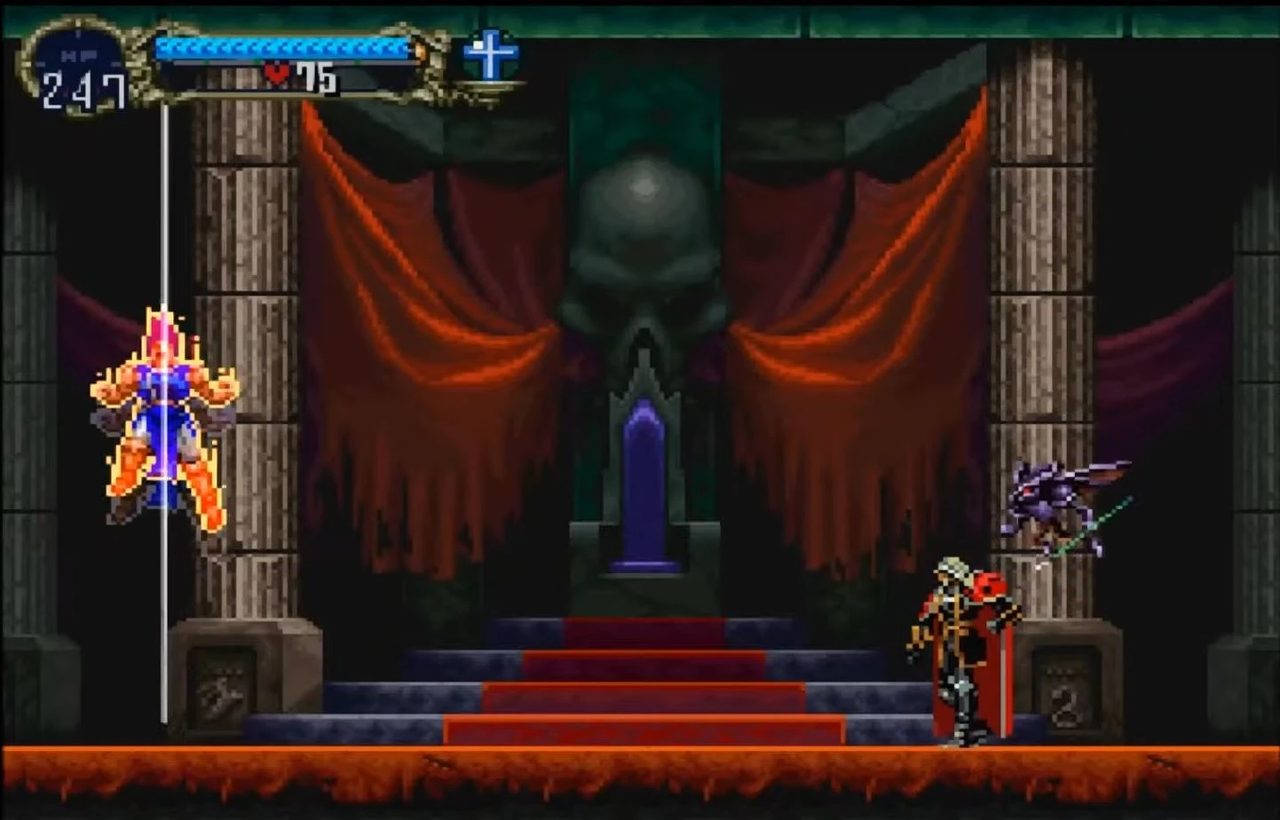
At the top of the castle, in the very throne room where Richter defeated Dracula in 1792, the two face each other one last time. Richter — his whip now wreathed in flame — states his plan plainly: he intends to resurrect Dracula so he can defeat him again and again, forever. A Belmont is born to destroy Dracula; when Dracula is gone, the hero loses his reason to exist. It is the logic of a madman — or of a man who has had someone whispering in his ear for years.
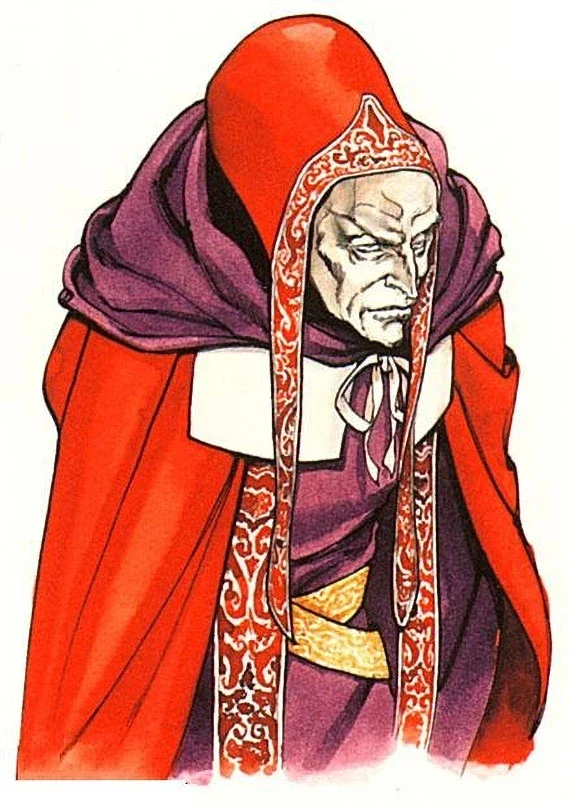
If Alucard is not wearing the Holy Glasses, the player sees only a boss fight like any other — and if they kill Richter, the game ends right there with a bad ending, while the real puppeteer slips away untouched. But wearing the glasses Maria gave him, Alucard sees what the naked eye cannot: a green magical orb hovering above Richter's head, controlling his every move. He pours every attack into the orb instead of Richter — and when it shatters, the one hiding inside is revealed: Shaft, Dracula's dark priest, who resurrected Dracula in Rondo of Blood and was believed destroyed by Richter. Richter collapses, horrified at what he has done. But Shaft only laughs: Dracula's resurrection is nearly complete. At that moment, above the castle, a second castle appears — identical to the first, but completely upside down.
Alucard leaves Richter in Maria's care, tells the two of them to leave this place, and steps alone into the inverted castle. The real battle — the secret second half of the game that many players in 1997 nearly missed — has only just begun.
The inverted castle — the five relics of Vlad and a rematch with Death
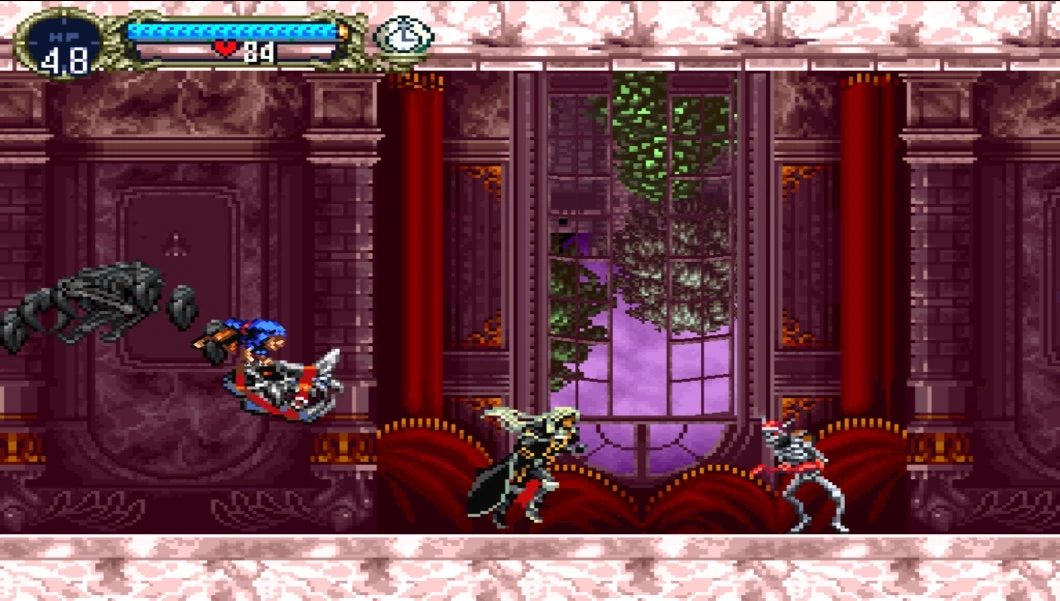
The inverted castle is the same castle flipped 180 degrees: familiar corridors must now be walked on their ceilings, waterfalls flow upward into the sky, and everywhere are enemies far stronger than anything in the first half. Shaft hides at its center, completing the resurrection ritual. To open the door to that center, Alucard must gather all five relics of Vlad — Dracula's heart, rib, fang, ring and eye — each guarded by a powerful boss, a direct nod to the relic hunt of Castlevania II: Simon's Quest.
Along the way, Alucard meets nearly every ghost of his family's past: in the reverse Colosseum, he must fight fake copies of Trevor Belmont, Sypha Belnades and Grant DaNasty — the three companions who once fought beside him, now sculpted by the castle into puppets meant to mock him. And in the Floating Catacombs, Death waits for the rematch he promised at the entrance. This time there are no words of restraint — Alucard, his full strength restored, defeats him and claims the Eye of Vlad. Relic by relic, the door to the castle's center opens.
Father and son — the final battle and Lisa's last words
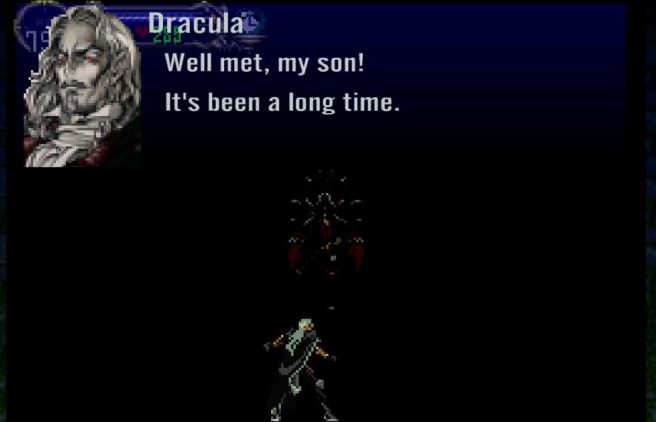
At the center of the inverted castle, Alucard confronts Shaft one final time. The dark priest confesses the whole plan: by controlling a Belmont as the castle's lord, he would make the Belmont clan destroy itself — history's strongest vampire hunter would kill anyone who came to investigate, and if someone managed to kill him, the Belmont threat would end itself. While every eye was fixed on "Richter gone mad," Shaft calmly resurrected Dracula inside a second castle no one knew existed. He miscalculated exactly one person: the only being strong enough to enter the castle who was not a Belmont — his own master's son.
Shaft falls, but the ritual is complete: Dracula is resurrected. The game's final conversation is not between a hero and a monster, but between a father and a son. Dracula declares he will exterminate humanity to avenge Lisa. Alucard tells his father the truth he never knew — that Lisa's final words were not a curse upon humanity, but eternal love for him, and a plea that he not hate, not harm humankind. In Alucard's words, Dracula lost long ago — on the day he lost the ability to love after Lisa's death. Before he dissolves, he — in the original dub even quoting a Bible verse (Matthew 16:26) about the price of a soul — asks Lisa's forgiveness, and bids his son farewell.
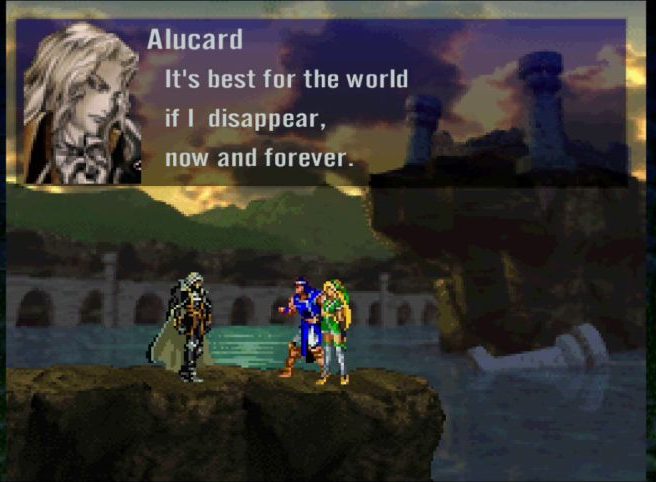
Outside the collapsing castle, Richter blames himself for forcing Alucard to fight his own father. Alucard answers with a borrowed piece of wisdom: the only thing necessary for evil to triumph is for good men to do nothing. Then he declares his intent: the blood in his veins is cursed blood, and it is best for the world if he disappears forever. Which ending the player receives depends on how much of both castles they explored: if they explored deeply enough (the community commonly cites a threshold of about 196% of the map, out of a 200.6% maximum), Maria — with Richter's blessing — will chase after Alucard; if not, she respects his choice and leaves with Richter. And those who killed Richter in the throne room will never even know the second castle existed.
What became of the characters
Alucard defeats his father for the second time in his life, saves Richter, and chooses to vanish from the world because of his cursed blood — unless Maria catches up with him in the best ending. He does not die: centuries later, Alucard still quietly protects humanity under the identity of Genya Arikado in Aria of Sorrow and Dawn of Sorrow.
Richter Belmont is freed from Shaft's control, carrying the guilt of having nearly become the instrument of Dracula's resurrection. After this event, the Belmont clan fades into silence for two centuries, and the Vampire Killer whip leaves their hands for a long time.
Maria Renard accomplishes what she came to the castle to do: she finds Richter and brings him home. In the best ending, she does one thing more — she refuses to let Alucard condemn himself, and goes after him. Their continuing story is told in the official radio drama Nocturne of Recollection in Japan.
Dracula is defeated, but hears Lisa's true final words before he dissolves, and departs with a belated apology. He will be resurrected many more times, but this is a rare defeat inflicted not by force alone — rather by the very love he believed he had buried with his wife.
Shaft is destroyed by Alucard at the center of the inverted castle, taking his "let the Belmonts destroy themselves" plan to the grave — dying before he could even see his master fully resurrected and brought down.
Death is defeated by Alucard in their rematch in the inverted castle. But Death, true to his nature, is never something that can be killed permanently — he returns to serve Dracula in many later resurrections across the series.
Common misconceptions
Did Richter Belmont really betray humanity and turn evil?
No. Richter is completely controlled by Shaft through the magical orb hovering above his head — visible only while wearing the Holy Glasses. Every "lord of the castle" act is Shaft's doing. However, his talk of resurrecting Dracula to fight forever shows the spell exploited a real emptiness inside Richter: a hero who loses his enemy also loses his reason to exist.
The detail makes Richter one of the most tragic Belmonts in the series: he does not fall through ambition, but is turned into a puppet inside the very castle he once liberated.
Is Symphony of the Night the first Castlevania game?
No. It is a direct sequel to Castlevania: Rondo of Blood (1993) — it opens with that game's final battle. Alucard himself is not a new character either: he debuted in Castlevania III: Dracula's Curse (1989) as Trevor Belmont's companion, and Symphony of the Night is his first outing as the protagonist.
Was Maria a boss and a playable character in the original PS1 version?
No. In the original 1997 PlayStation release, Maria is a supporting character who appears in dialogue scenes and gives Alucard the Holy Glasses. The Maria boss fight and Maria as a playable character were added in later ports — the Sega Saturn version (1998) and the PSP version in The Dracula X Chronicles (2007). Players of the original never had to fight her.
Does killing Richter in the throne room mean you have beaten the game?
No — that is a bad ending, and the game is only half over. If Richter is killed, the castle crumbles and the credits roll, but Shaft remains free and Dracula never appears. To see the true second half, the player must wear the Holy Glasses and destroy the controlling orb instead of killing Richter, opening the inverted castle — a second map as large as everything played so far.
Does the line "What is a man? A miserable little pile of secrets" exist in the Japanese original?
Not in that form. The line was created by the English translator Jeremy Blaustein, inspired by the works of French novelist André Malraux; the original Japanese dialogue is quite different. When the game was re-dubbed for the PSP's The Dracula X Chronicles, this famous opening exchange was rewritten as well — which is why many fans remain loyal to the PS1 dub to this day.
Theories & mysteries
How did Shaft survive Rondo of Blood? The game never explains it. Shaft was defeated by Richter and presumed dead, yet by Symphony of the Night he exists as a spirit still powerful enough to control Richter and raise an entire inverted castle. The community's most common explanation — that he persists as a ghost — is speculation: Konami has never officially confirmed it.
A cut ending: Maria turned demon. The game disc contains voice files for an ending variant that was never fully programmed: Maria comes to Richter's rescue, is transformed into a demon, and forces Alucard to fight her — evidence that the original script was far darker than the released version.
Why did Dracula return after only 5 years, instead of the 100-year cycle? Dracula's own line offers the clue: "I was called here by humans who wish to pay me tribute." In Castlevania's world, he returns when the darkness in human hearts grows strong enough — no full century required. Shaft and his worshippers were the human hand that shortened the cycle.
Did Richter truly want to fight forever? The throne-room declaration was spoken while he was being controlled, so it cannot be taken as Richter's real will. But many players believe — and this remains speculation — that Shaft merely amplified the fear of being forgotten already present in a 19-year-old hero who had reached his peak too early.
The legacy of a symphony that defined a genre
Few expected it to succeed at first — including Konami. Released in 1997, in an era when the whole industry was obsessed with 3D graphics, a sprite-based 2D game was dismissed as outdated, received little promotion and sold slowly. But word of mouth did the rest: the game became a sleeper hit, selling over 700,000 copies in the United States and Japan alone, and it now appears regularly on lists of the greatest games of all time. Its formula became the template for countless descendants, from the handheld Castlevania titles to indie landmarks like Axiom Verge. Koji Igarashi himself later left Konami and made Bloodstained: Ritual of the Night (2019) as its direct spiritual successor.
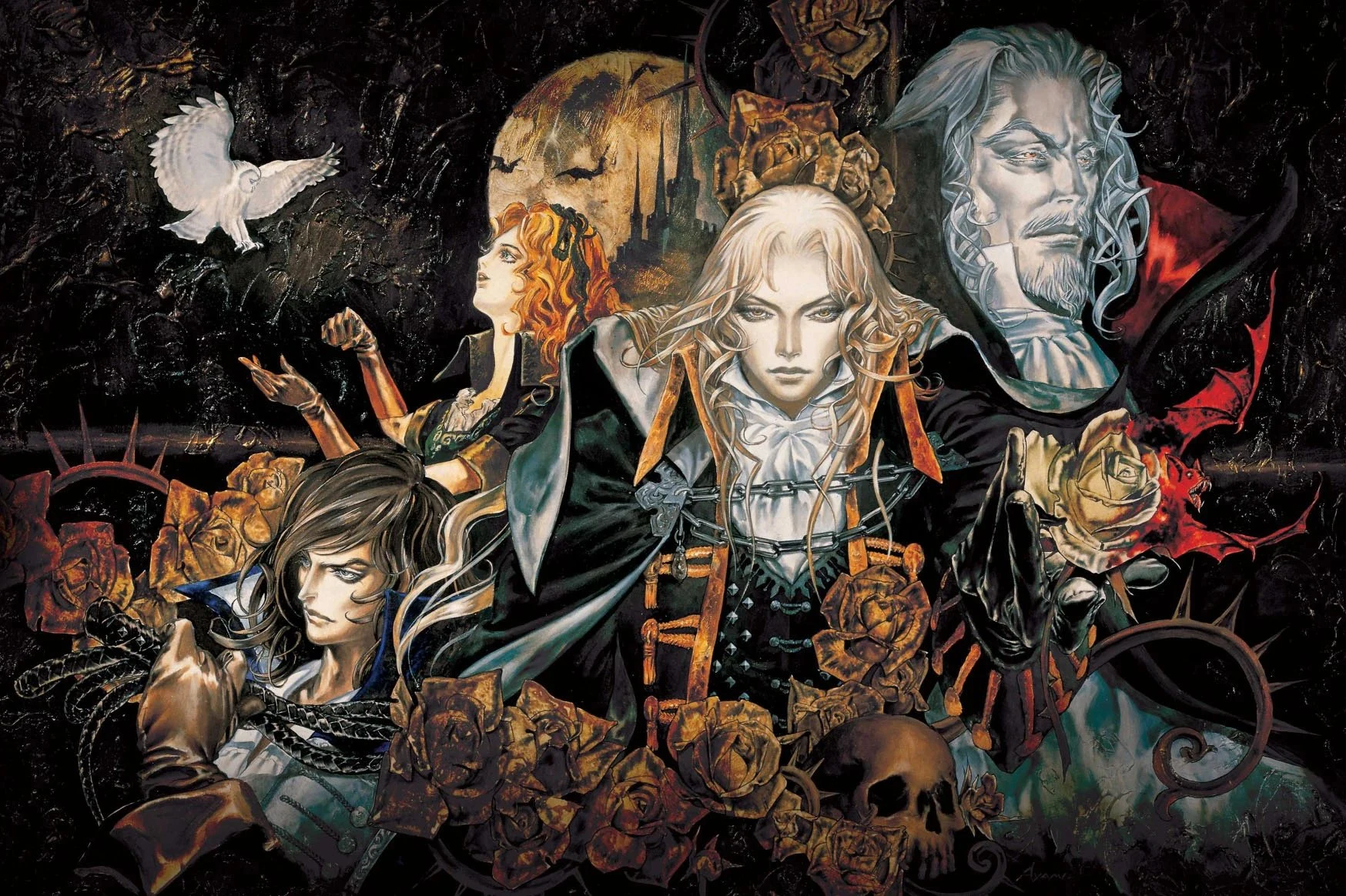
Michiru Yamane's music, Ayami Kojima's artwork — her first character designs for the series, which went on to define Castlevania's look for a decade — and a line about "a miserable little pile of secrets" that was mocked as cheesy for years before becoming an immortal meme: together they form a symphony still being replayed three decades later. And this is only the first Castlevania chapter here — every article in the series is collected on the Castlevania series page.
👤 Main characters
A quick introduction to the central characters of the story.
- Real name
- Adrian Fahrenheit Tepes
- Parents
- Dracula and Lisa
- Species
- Dhampir — half human, half vampire
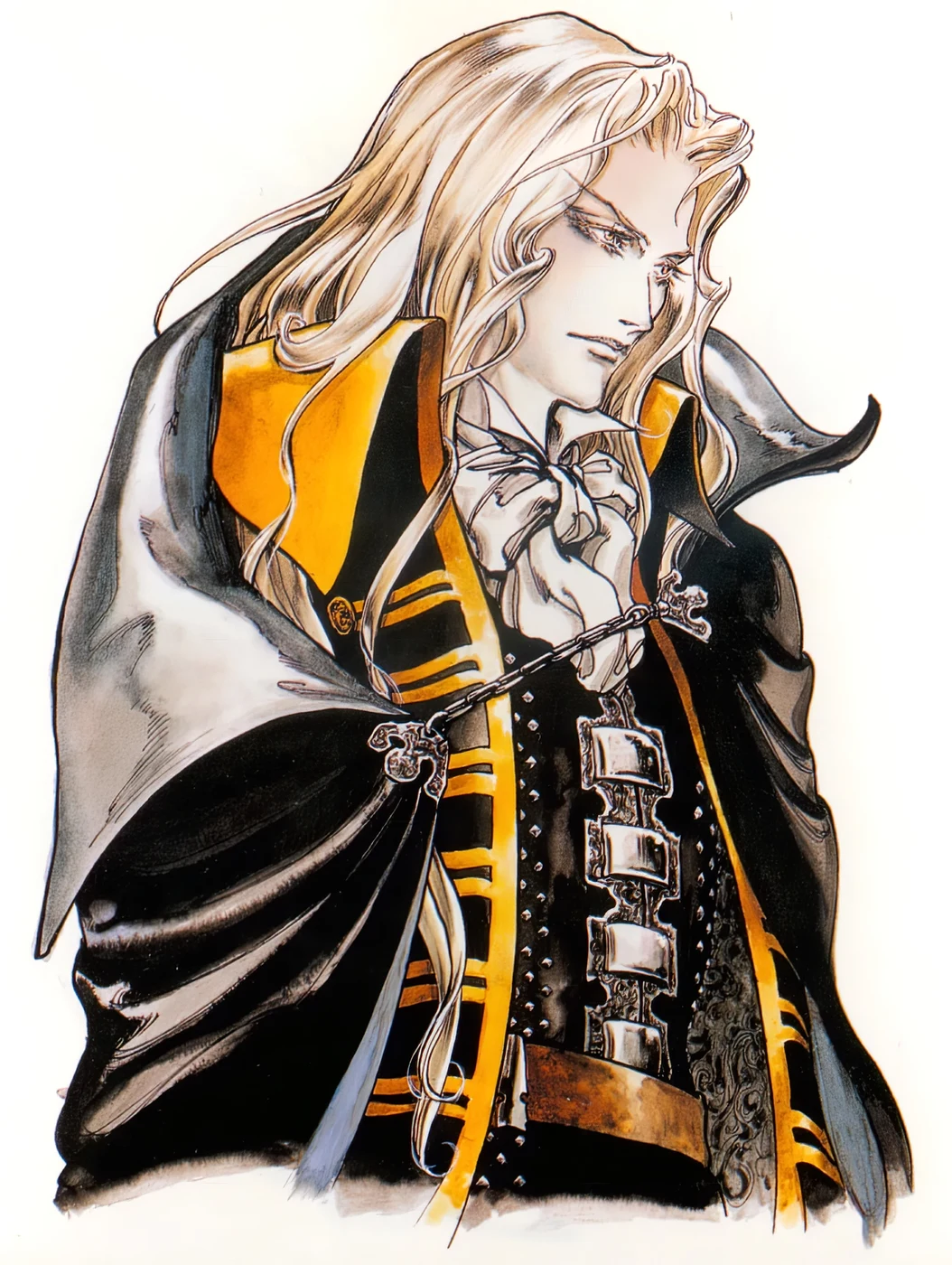
The son of Dracula and the mortal woman Lisa, Alucard once fought beside Trevor Belmont to defeat his father three centuries earlier, then sealed his powers and slept so the world would forget his cursed bloodline. He awakens in 1797 because the castle has returned with no Belmont to face it — and becomes the only one who can save his own father's enemy.