The Legend of Zelda: Link's Awakening Story Explained: The Island Inside the Wind Fish's Dream

📋 Quick facts
- Game
- The Legend of Zelda: Link's Awakening
- Developer
- Nintendo EAD
- Release year
- 1993
- Original platform
- Game Boy
- Genre
- Action-Adventure
- Director
- Takashi Tezuka (writers: Yoshiaki Koizumi, Kensuke Tanabe)
- Music
- Kazumi Totaka, Minako Hamano, Kozue Ishikawa
- Notable feature
- The first Zelda on a handheld; no Zelda, no Triforce, no Hyrule — the whole game takes place inside the Wind Fish's dream
- Next entry
- The Legend of Zelda: Ocarina of Time (1998)
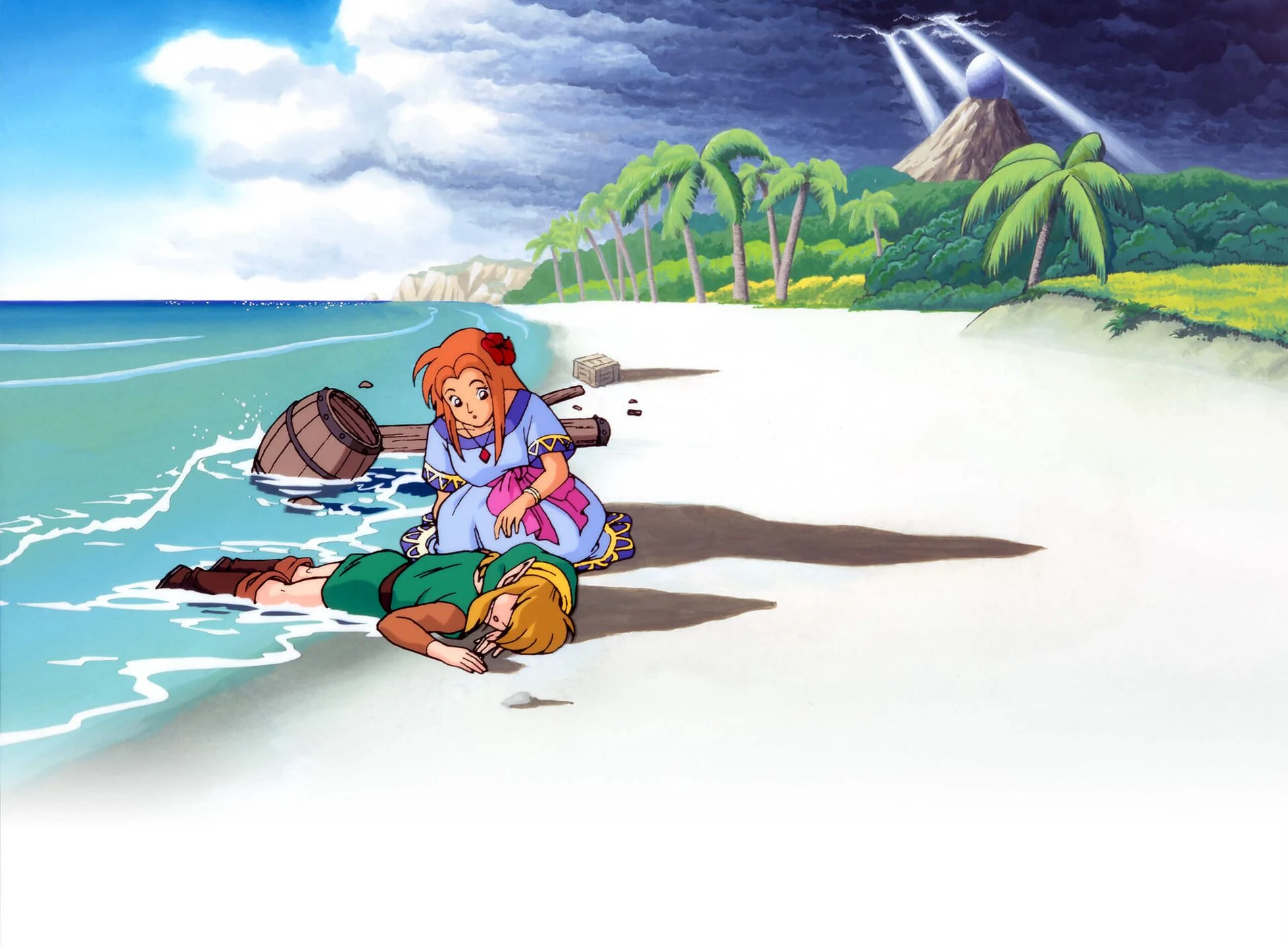
After defeating Ganon and bringing peace back to Hyrule, Link did not stay to enjoy the glory. The young hero sailed out to sea alone, training himself for threats still unknown in the future. But that voyage never reached any shore: a violent storm struck in the middle of the ocean, lightning tore his ship apart, and Link was swept away into the darkness.
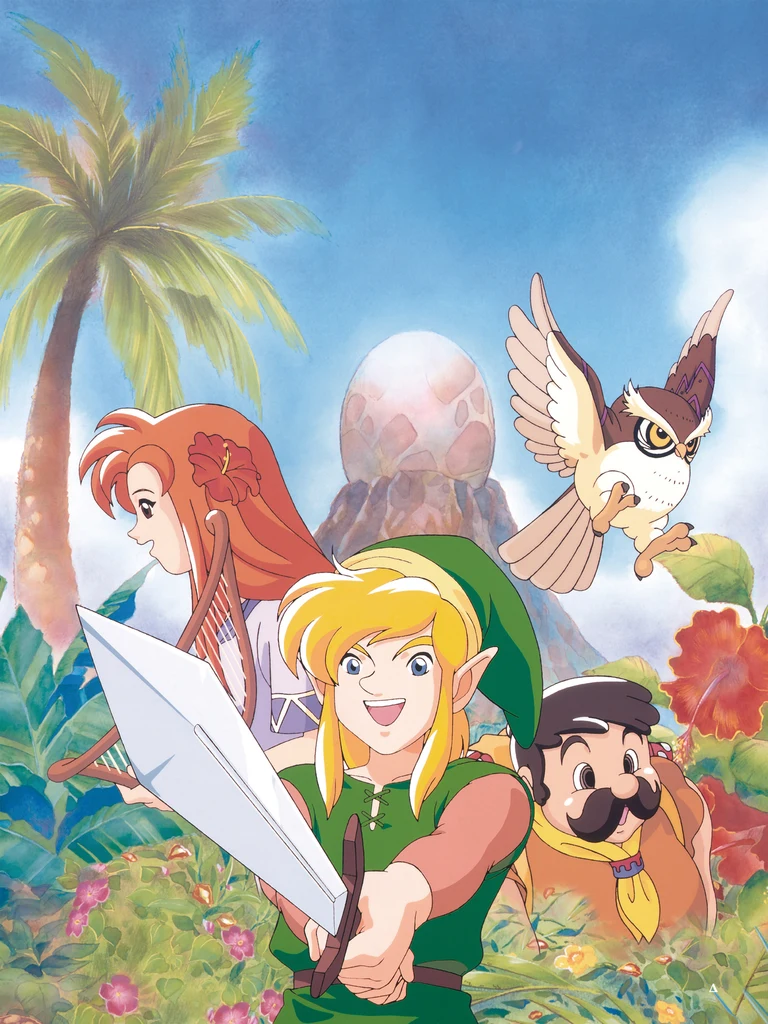
When he opened his eyes, he was no longer in Hyrule. Before him lay white sand, palm trees, and a strange girl leaning over him with worry. That was Marin — and this island was called Koholint. There is no Princess Zelda here, no Triforce, and no kingdom of Hyrule. Instead, atop the island's highest mountain sits a giant egg, and inside it sleeps a creature called the Wind Fish — and only by waking it can Link find his way home.
Released in 1993 for the Game Boy, The Legend of Zelda: Link's Awakening is the fourth game in the series, following the very first game and its two sequels, and the first Zelda ever made for a handheld — as well as one of the saddest and most beautiful stories in the whole series. This article retells the complete story of the original 1993 game — from the opening storm to the moment the island fades away at dawn.
📌 Quick summary: Link washes ashore on Koholint Island after a storm and is rescued by Marin. Following the Owl's guidance, he must collect the eight Instruments of the Sirens from eight dungeons to wake the Wind Fish sleeping in an egg atop Mt. Tamaranch. But an ancient mural reveals the truth: Koholint is only the Wind Fish's dream. After defeating the Nightmare Dethl inside the egg, the Wind Fish wakes, the island vanishes, Link wakes up on a piece of driftwood in the middle of the sea, watching the Wind Fish fly into the sky — and if the player never loses a life, Marin becomes a seagull and flies after it.
The Storm and the Strange Island
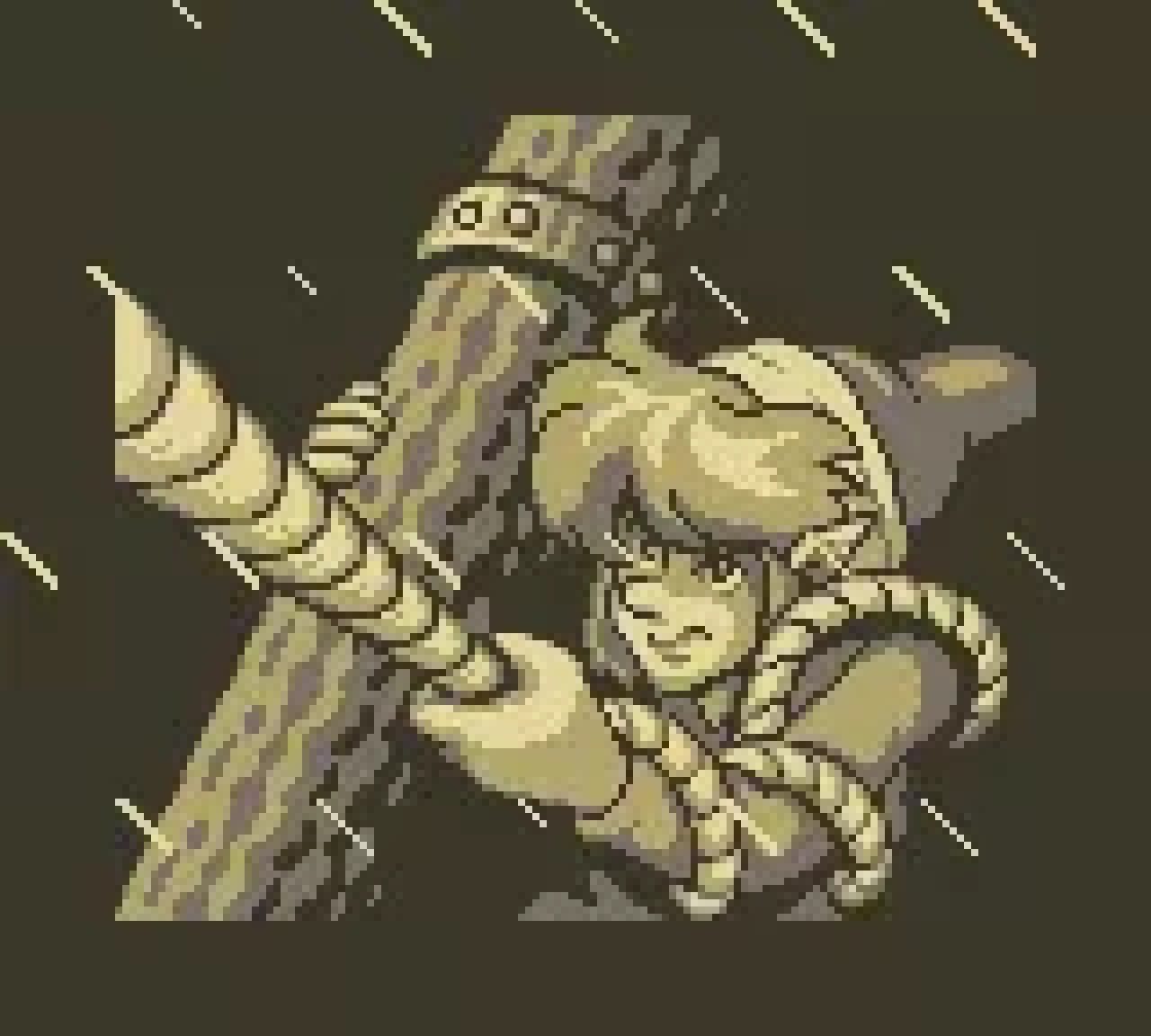
It all begins at sea. After the events in Hyrule, Link sails away to train, but the storm strikes without warning. Lightning hits the ship, huge waves swallow everything, and the young hero sinks into darkness in the middle of the ocean. When he wakes, he is lying on Toronbo Shores — and beside him is Marin, the girl who found him washed up on the beach.
Marin takes Link to the house she shares with her father in Mabe Village. Her father, Tarin, is a cheerful man who bears a certain resemblance to a certain plumber that sharp-eyed players will recognize. It was Tarin who picked up Link's shield and returned it to him. But the sword is still lying somewhere out on the beach — and when Link returns to Toronbo Shores to find it, a strange visitor appears: a giant owl, able to speak, calling itself his guide.
The Owl tells Link the first truth about the island: Koholint is protected by the Wind Fish, and the Wind Fish sleeps inside a giant egg atop Mt. Tamaranch, the tallest mountain on the island, visible from everywhere. To leave the island, Link must wake the Wind Fish — and the only way is to gather all eight Instruments of the Sirens, hidden in eight dungeons scattered across the island. Those instruments are guarded by creatures called Nightmares, who do not want the Wind Fish ever to wake.
Waking Up in Marin's House
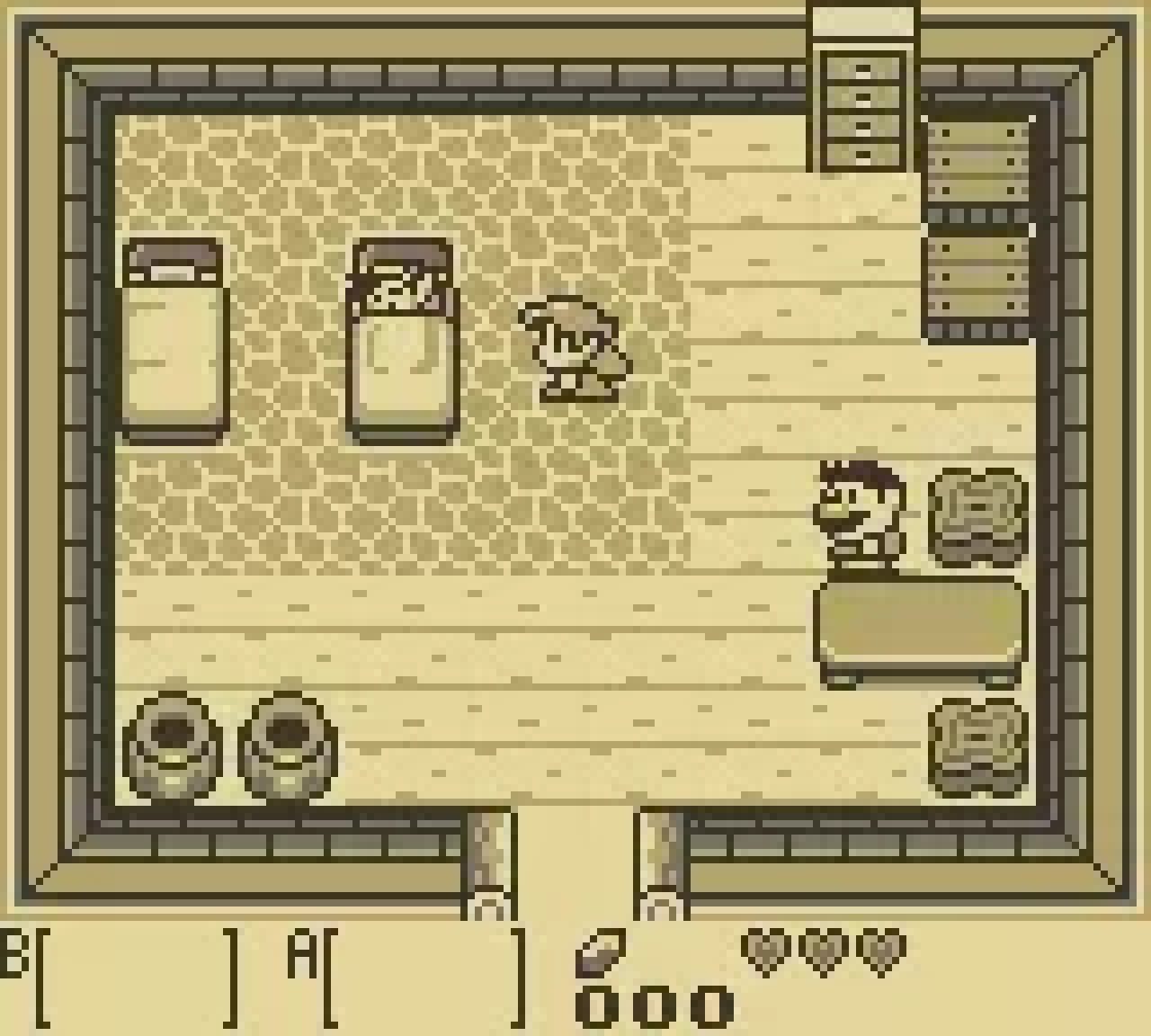
In his first days on the island, Link gets used to the strange rhythm of Koholint. Mabe Village is small but full of unforgettable characters: old man Ulrira, who will only talk on the telephone; Syrup the witch, selling medicine from her hut in the forest; the shopkeeper, always on guard against thieves; and little children whispering odd advice about how to... save the game, as if they knew they were inside one. That atmosphere — a small town where everyone seems slightly "off" — is exactly what director Takashi Tezuka wanted to borrow from the television series Twin Peaks.
The Owl appears again and again, each time leaving a riddle instead of a straight instruction. At first, the Owl itself did not believe Link was real — only after Link obtained the first instrument did it admit that until then it had thought Link was merely another part of the dream. That detail, which at first sounds like a joke, turns out to be the key to the entire story.
Before entering the first dungeon, Link learns a song from Marin. On the beach, she sings him the "Ballad of the Wind Fish" — the melody that will echo again at the most decisive moment of the journey. Marin tells him she wishes she were a seagull, so she could fly away from the island and see the world beyond the sea. Link does not yet grasp the full meaning of that wish. At this point, he is still thinking simply: collect all eight instruments, wake the Wind Fish, and go home.
The First Three Instruments
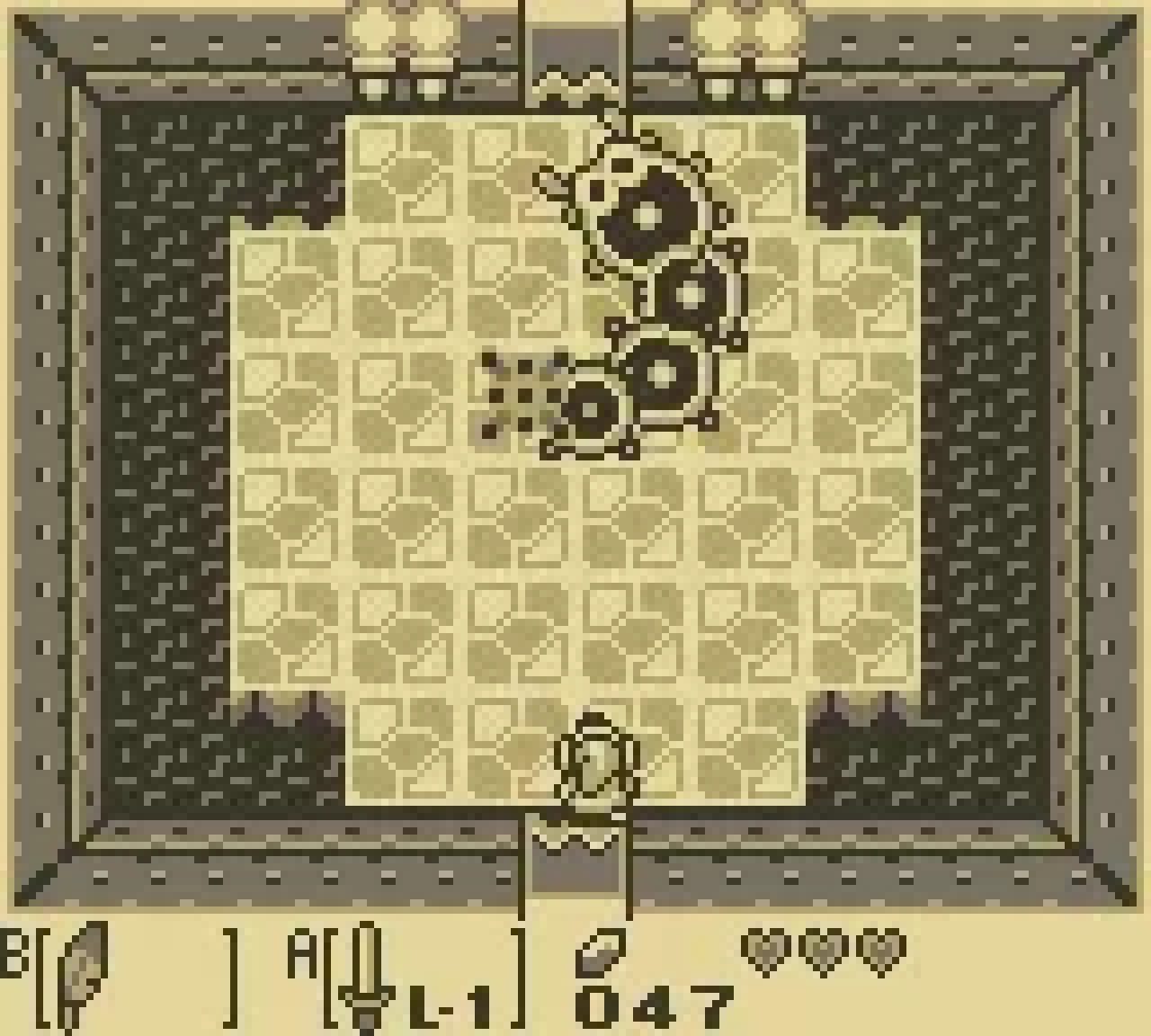
The first dungeon is Tail Cave, deep in the mysterious forest. At the end of it, the giant worm Moldorm guards the first instrument: the Full Moon Cello. Defeating it by slashing its glowing tail earns Link the first instrument — and the first time the Owl admits he is real.
The second instrument lies in Bottle Grotto, a cave in Goponga Swamp. To get in, Link must borrow BowWow — Madam MeowMeow's giant chain chomp — so it can eat the flowers blocking the entrance. At the end of the cave waits the Genie, a clown-like spirit hiding in a jar: the jar must be smashed before he can be slashed. The reward is the Conch Horn.
The third instrument, the Sea Lily's Bell, lies in Key Cavern on Ukuku Prairie. To open this cave, Link needs the Slime Key — and to get the Slime Key, he must help Richard, an exiled prince living in a frog-filled villa, recover five golden leaves stolen by monsters in Kanalet Castle. At the end of Key Cavern, Slime Eye — a giant eye clinging to the ceiling — only reveals itself when Link rams the wall with the Pegasus Boots. Three instruments are in hand, but the road ahead is still long, and the island's people are becoming ever dearer to him.
One more thing worth noting: Link's Awakening is the first top-down Zelda to let Link jump, opening side-scrolling platforming sections reminiscent of Zelda II — a mechanic that later became standard for the handheld games.
Marin and the Island's Friends
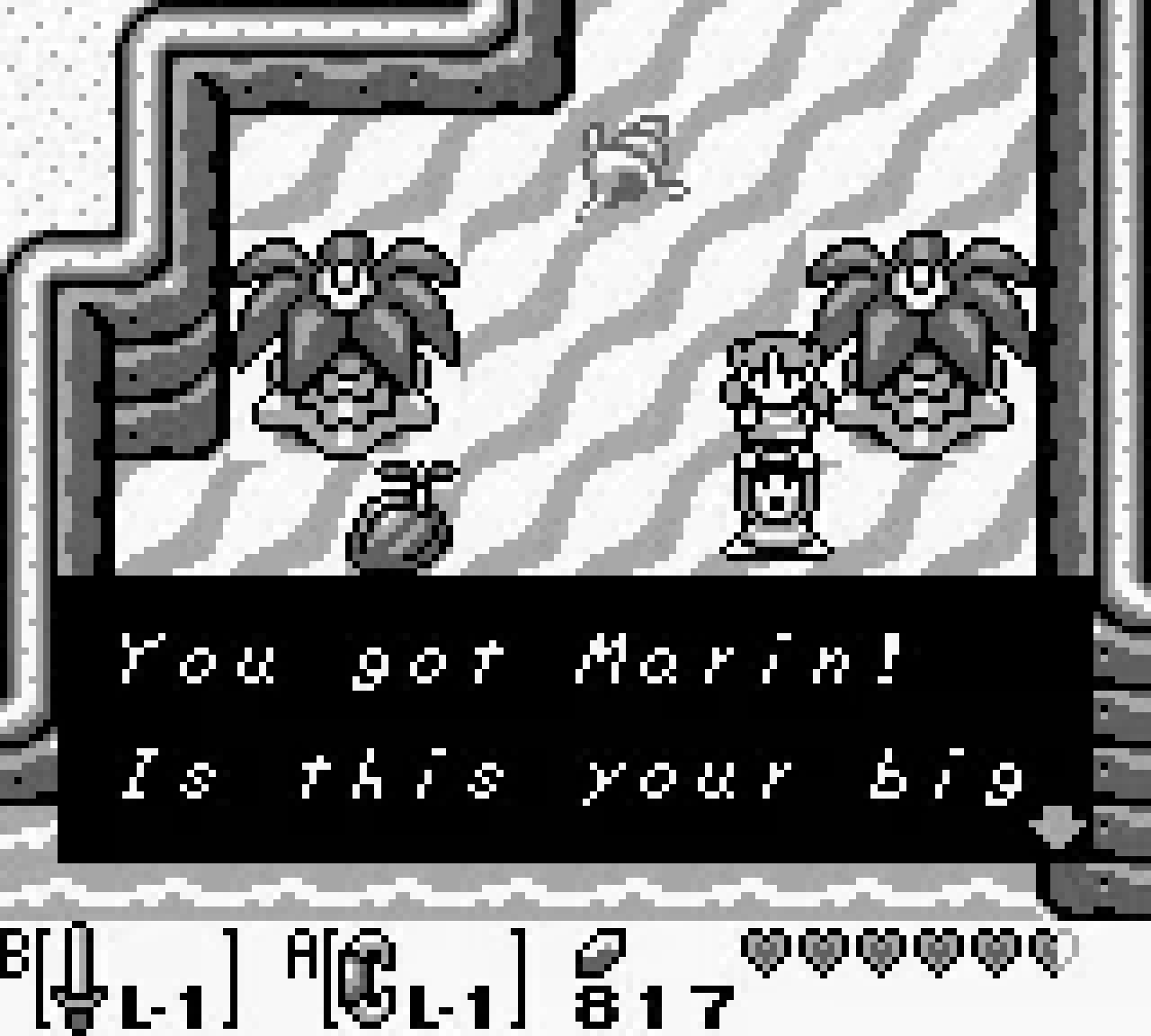
Between dungeons, Koholint slowly opens its heart to Link — and Link slowly opens his to Koholint. In the mysterious forest, Tarin eats a strange mushroom and turns into a raccoon; only when Link sprinkles Magic Powder on him does Tarin turn back into a man. In Animal Village, talking animals live together in harmony, and a giant walrus lies fast asleep across the road to Yarna Desert, impossible to move.
Only Marin's singing can wake the walrus. The girl follows Link all the way there, raises her voice in song, and the huge beast yawns, then hops into the water, clearing the path for both of them. From then on, Marin follows Link for a stretch of the road — across the bridge, along the beach, up flower-covered slopes. She sings, she laughs, she asks Link about the world beyond the ocean. And it is in those very moments that the player begins to feel a vague unease: if this island disappears, what will happen to Marin?
Around this time, Link also dives into the game's famous trading sequence: from a Yoshi doll traded for a ribbon, then dog food, bananas, a stick, a honeycomb, a pineapple, a hibiscus, a letter, a broom, a fishing hook, a necklace, and finally a mermaid's scale. Each item is a small story, each islander another piece of a world that seems far too alive to be fake.
Underwater and the Catfish's Maw
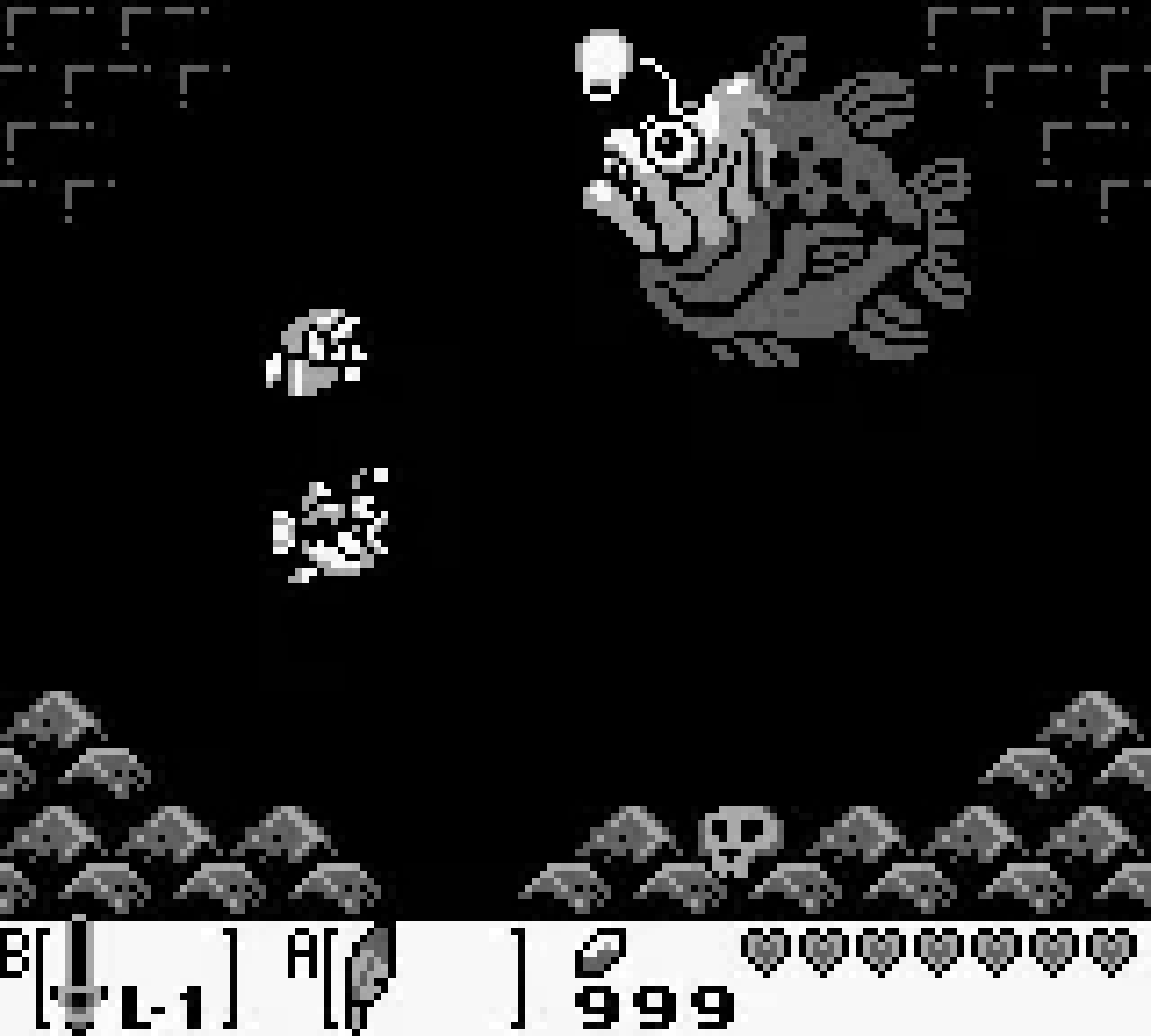
The fourth instrument lies in Angler's Tunnel, a cave behind a waterfall that can only be entered with the Angler Key from Yarna Desert. Inside the cave, Link finds the Flippers — from now on he can swim in the deep waters around the island. At the end of the cave, the giant Angler Fish, its glowing lure hanging above its head, guards the Surf Harp.
The fifth instrument lies in Catfish's Maw, the cave shaped like a catfish head in Martha's Bay. It is one of the most confusing dungeons in the game: Link must defeat Master Stalfos — a skeletal knight — four times in four different rooms, as he keeps fleeing from one room to the next. The reward for such patience is the Hookshot, the grappling hook that lets Link cross wide pits. At the end of the cave, the Slime Eel — a giant eel whose tail sweeps the whole room — guards the Wind Marimba.
Five instruments are in hand. And it is now that the Owl leads Link to a place it calls the Ancient Ruins — where the truth begins to come out.
The Mural and the Final Three Instruments
Inside Face Shrine — the sixth dungeon, beneath the ancient ruins — Link finds a mural carved into the wall. The ancient writing says: Koholint Island is only the Wind Fish's dream. If the Wind Fish wakes, the island will disappear. The mural also depicts the Wind Fish — and beside it, the Owl, standing as its guardian.
Outside the shrine, the Owl is waiting. It neither denies nor confirms. It only says that this is merely a rumor, that no one knows for sure except the Wind Fish itself, and that Link should "trust his feelings". At the end of Face Shrine, Facade — a giant face appearing on the floor, hurling tiles at Link — guards the Coral Triangle.
Even knowing the truth, Link presses on. He climbs Eagle's Tower, the towering spire where the Evil Eagle guards the Organ of Evening Calm, then descends into Turtle Rock, the volcanic mountain where Hot Head — a fiery human head leaping out of lava — guards the final instrument: the Thunder Drum. All eight instruments are gathered. The only road left is up Mt. Tamaranch, to the giant egg he has seen since his very first day on the island.
The Wind Fish's Egg and the Dream's End
Atop the mountain, before the giant egg, Link draws his ocarina and plays the "Ballad of the Wind Fish". The eight instruments join in on their own. The egg cracks open, revealing an endless maze inside — and at the end of the maze, the thing that has waited for him from the start: the final Nightmare.
The Shadow Nightmare has no fixed form. It takes on, one after another, fears drawn from Link's own memories: a giant Gel, the shadow of Agahnim, the shadow of Moldorm, and then the shadow of Ganon — the enemy Link once defeated in Hyrule. Each form defeated, it shifts into another, until at last it shows its true shape: Dethl, a one-eyed shadow with two tentacles, claiming that as long as it lives, nightmares will never vanish.
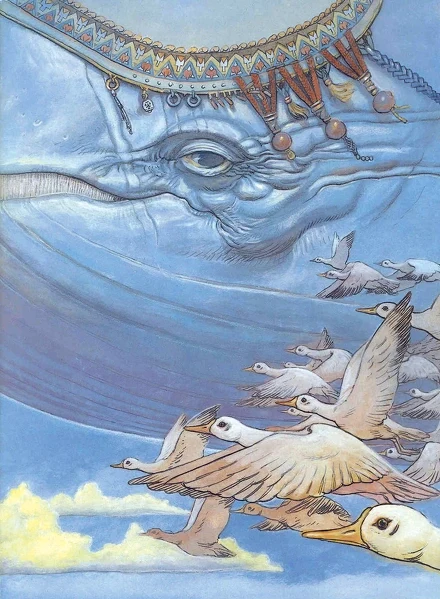
When Dethl falls, the Owl appears one final time — and this time it tells the truth it has kept throughout the journey: it is itself a part of the Wind Fish's spirit, the guardian of the dream. A staircase of light carries Link upward, where the awakened Wind Fish appears: a giant whale, draped in cloth, metals, and precious stones. The Wind Fish speaks: "I AM THE WIND FISH... LONG HAS BEEN MY SLUMBER... IN MY DREAMS... AN EGG APPEARED AND WAS SURROUNDED BY AN ISLAND, WITH PEOPLE, ANIMALS, AN ENTIRE WORLD! ... ... ... ... BUT, VERILY, IT BE THE NATURE OF DREAMS TO END! WHEN I DOST AWAKEN, KOHOLINT WILL BE GONE... ONLY THE MEMORY OF THIS DREAM LAND WILL EXIST IN THE WAKING WORLD... SOMEDAY, THOU MAY RECALL THIS ISLAND... THAT MEMORY MUST BE THE REAL DREAM WORLD... ... ... ... ... COME, Link ... LET US AWAKEN... TOGETHER!!"
And then Koholint fades away. Every roof, every road, every islander — all dissolving like morning mist. Link wakes in the middle of the ocean, lying on a broken plank from his old ship. He looks up at the sky — and sees the Wind Fish flying away, together with a flock of seagulls. If the player finishes the journey without losing a single life, after the credits, a seagull flies up into the sky: that is Marin, her wish finally granted.
The story closes on an unanswered question: did Koholint truly disappear, or does it still exist — in Link's memory, the only place where a dream can go on living? See more articles in The Legend of Zelda series.
Fate of the Characters
Link wakes in the middle of the sea on a broken plank, watching the Wind Fish fly away. He is still the living hero — but he carries the memory of an island that no one else in the world has ever known. His journey ends, but the question of the dream stays with the player.
Marin — the girl with the finest voice on the island, who wished she were a seagull — fades away with the dream. But if Link completes the journey without losing a life, she appears after the credits in the form of a seagull flying into the sky: her wish was granted by the Wind Fish at the very last moment.
Tarin, Marin's cheerful father, also fades away with Koholint — like every other islander, who existed only in the Wind Fish's sleep.
The Owl returns to its master: it was ever a part of the Wind Fish's spirit, tasked with guarding the dream and guiding the one who could wake its master.
The Wind Fish wakes from its long sleep, flies up into the sky and departs — leaving behind an empty ocean and a memory.
The Nightmare (Dethl) is destroyed inside the egg. It was the invader of the dream, wanting to keep the Wind Fish asleep forever so it could rule Koholint — and when the dream ends, its power ends with it.
Common Misunderstandings
Is Koholint a real island?
No. Koholint exists only in the Wind Fish's dream — that is the truth carved on the mural in Face Shrine and confirmed by the Wind Fish itself at the end of the game. When the Wind Fish wakes, the entire island and all its inhabitants vanish, leaving only the memory in Link's mind.
That is why, from the very beginning, the Owl doubted whether Link was even real: in a world where everything is a dream, a real human walking in from outside is an anomaly.
Is Marin Princess Zelda?
No. Marin is a completely separate character, even though her appearance and role make many players think of Zelda. She is a resident of Koholint — that is, a creation within the Wind Fish's dream — and the emotional heart of the story: the girl who sings the ballad, wishes she were a seagull, and gives the player pause before deciding to wake the Wind Fish.
The game's deliberate omission of Zelda, the Triforce, and Hyrule was the writers' choice, to tell a Zelda story that stands on its own, independent of the series' familiar symbols.
Did Link drown in the storm?
No. Link is alive — he was simply pulled into the Wind Fish's dream while drifting at sea. The proof is at the end of the game, when he wakes on a broken plank in the middle of the ocean and watches the Wind Fish fly away: he has escaped the dream and returned to the real world.
Some players have theorized that the whole game is Link's own dream, but the official story states clearly that the dreamer is the Wind Fish, and Link is a real person drawn into that dream.
Is the Owl the Wind Fish?
Not quite, but not wrong either. The Owl is a part of the Wind Fish's spirit — an incarnation tasked with guarding the dream and guiding the one who could wake its master. In other words, the Owl is the Wind Fish's "voice" inside the dream, not the Wind Fish itself sleeping in the egg.
That is also why the mural depicts both the Wind Fish and the Owl side by side: the guardian and the dreamer are two faces of the same being.
Is there any way to save Koholint?
No. The game offers no choice to keep the island alive — waking the Wind Fish is the only way for Link to return home, and the price is Koholint's disappearance. That is the central tragedy of the game: the more faithfully the hero does his duty, the more he must erase the friends he has made.
The only consolation is the no-death ending, where Marin becomes a seagull: her dream is preserved, albeit in another form, in the waking world.
Theories & Mysteries
Who is really dreaming? The official story says the dreamer is the Wind Fish. But players still debate: if Link was pulled into the dream the moment he drifted at sea, could Link himself be dreaming of the Wind Fish? The game never answers directly — and perhaps that ambiguity is deliberate: at the end, when Link looks up at the flying Wind Fish, the line between "the Wind Fish's dream" and "Link's memory" has already blurred into one.
Where did the Nightmares come from? The game only says that the Nightmares invaded the Wind Fish's dream to keep it asleep forever and rule Koholint. They are not creations of the Wind Fish, but invaders from outside the dream — and they are clever enough to use Link's own memories (Ganon, Agahnim) as weapons against him in the final battle.
Why does Marin wish to be a seagull? Marin's wish is the saddest detail in the game: a resident of the dream longing to fly out of that very dream. When she becomes a seagull in the special ending, it is the game's way of saying that a dream — even one born inside a dream — can still come true.
Its place in the Zelda timeline. According to the official timeline, Link's Awakening takes place after A Link to the Past and before the two Oracle games — with the same Link as A Link to the Past, on his training journey after defeating Ganon. That is also why the final battle includes Ganon's shadow: the Nightmare digs fear out of Link's real memories.
Why is the game so "off"? Link's Awakening began as an after-hours project by programmer Kazuaki Morita, who wanted to try bringing A Link to the Past to the Game Boy. That "after-school club" atmosphere let the team experiment freely: Mario characters flashing by, children whispering about how to save the game, and a whole world where everything feels slightly strange — exactly the Twin Peaks spirit that director Tezuka loved.
👤 Main characters
A quick introduction to the central characters of the story.
- Homeland
- Hyrule (left to train)
- Weapon
- Sword and shield
- Quest
- Wake the Wind Fish to return home
The young hero who has just defeated Ganon in Hyrule, sailing out to sea to train when a storm wrecks his ship and washes him ashore on Koholint. He is the only real human inside the Wind Fish's dream — and the only one who can wake it, even though the price is erasing the island.
📚 Read the The Legend of Zelda series in story order
- The Legend of Zelda Story Explained: Eight Triforce Shards and the Boy Who Saved Hyrule
- Zelda II: The Adventure of Link Story Explained: The Sleeping Princess and the Last Triforce Piece
- The Legend of Zelda: Link's Awakening Story Explained: The Island Inside the Wind Fish's Dream — you are reading this one

