The Legend of Zelda Story Explained: Eight Triforce Shards and the Boy Who Saved Hyrule

📋 Quick facts
- Game
- The Legend of Zelda
- Developer
- Nintendo EAD
- Release year
- 1986 (Japan, Famicom Disk System); 1987 (international, NES)
- Original platform
- Family Computer Disk System / NES
- Genre
- Action-Adventure
- Director
- Shigeru Miyamoto, Takashi Tezuka
- Music
- Koji Kondo
- Notable feature
- First NES cartridge in North America with battery-backed saving; non-linear open world; gold cartridge
- Next entry
- Zelda II: The Adventure of Link (1987)
In 1986, Nintendo released a gold cartridge that contained no instructions whatsoever: no quest markers, no map waypoints, nobody telling you where to go first. Players got a boy in a green tunic, a wooden sword, and the entire kingdom of Hyrule sinking into darkness. Out of that minimalism, The Legend of Zelda became one of the most important games in history — and the starting point of the greatest adventure series Nintendo ever created.
The game's story is told briefly in its intro and instruction booklet: a legend of three golden triangles holding divine power, a dark lord invading with an army, and a princess who gambled her entire kingdom to keep the last piece safe. But what made the legend was not the intro — it was the journey after it: eight labyrinths, nine bosses, dozens of secrets hidden under trees, behind bombable walls, inside nameless caves.
This article retells the complete story of the original 1986 The Legend of Zelda — from the night Hyrule fell to the moment dawn returned — along with its secrets, its common misconceptions, and the theories fans have debated for nearly forty years.
📌 Quick summary: When Ganon steals the Triforce of Power and imprisons Princess Zelda, she manages to split the Triforce of Wisdom into eight shards hidden in eight labyrinths across Hyrule. A boy named Link rescues her nursemaid Impa, receives his first sword, and travels the kingdom, defeating each guardian beast to gather all eight shards. With the Triforce complete, Link enters Death Mountain, destroys Ganon with the Silver Arrow, recovers the Triforce of Power, and rescues Zelda, bringing peace back to Hyrule.
Hyrule Falls Into Darkness
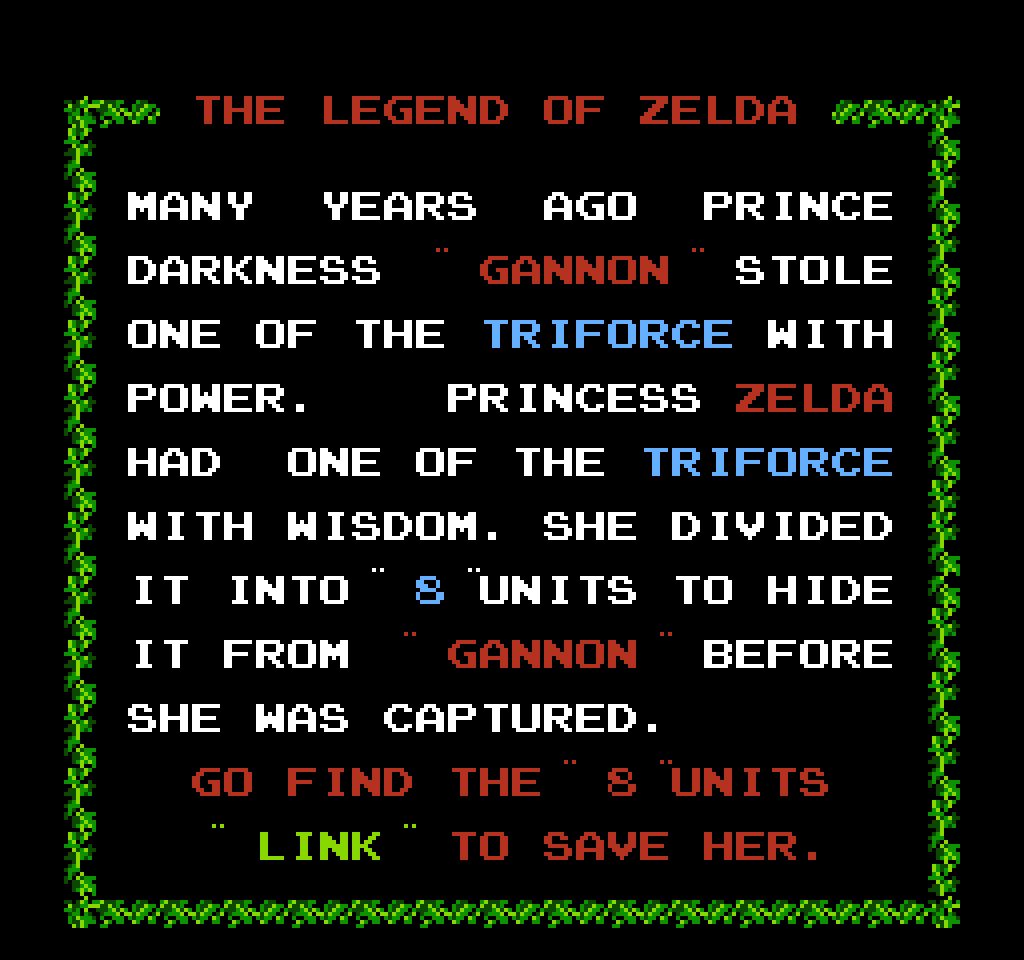
Long before Link appears, Hyrule is a small but peaceful kingdom where people pass down the legend of the Triforce — three golden triangles possessing mystical powers. The legend does not say clearly who created the Triforce, only that whoever holds it gains overwhelming power. And then one day, an army of darkness floods into the kingdom, led by Ganon, who calls himself the Prince of Darkness.
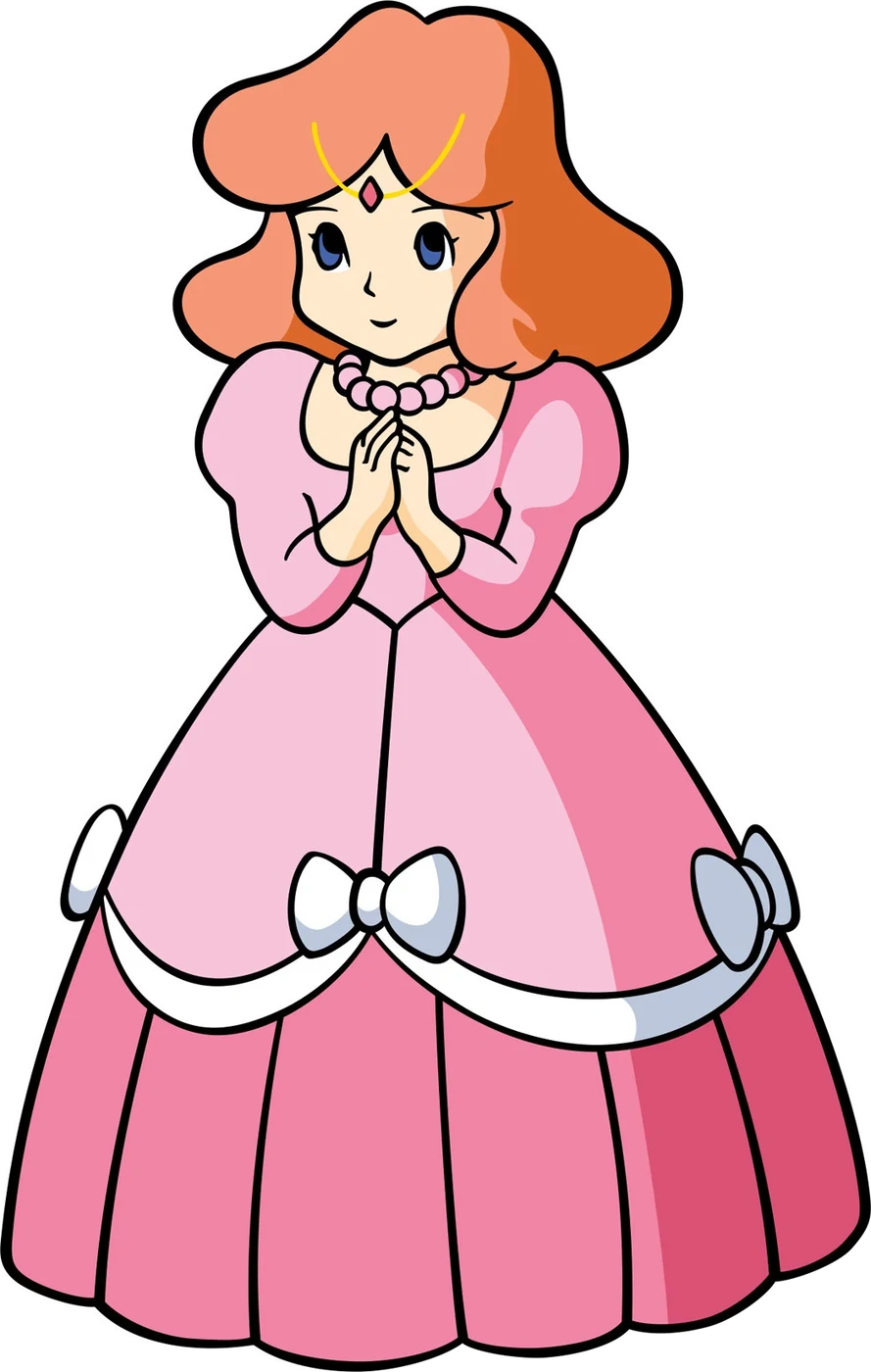
Ganon seizes the Triforce of Power, the triangle of strength. With it in hand, he is nearly unbeatable. But before she is captured, Princess Zelda makes a bold move: she splits the Triforce of Wisdom — the triangle of wisdom — into eight small shards and hides them in eight secret labyrinths scattered across Hyrule. Ganon has power, but not wisdom, and as long as the eight shards remain beyond his reach, Hyrule still has hope.
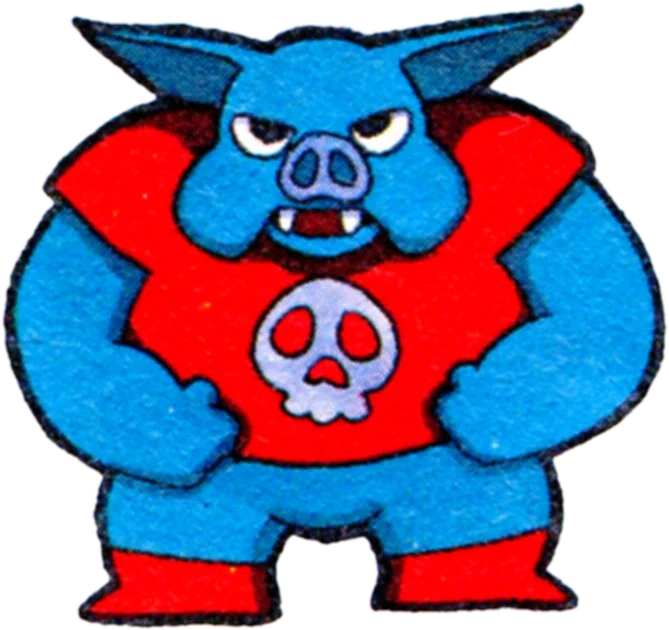
At the same time, Zelda orders her most trusted nursemaid, Impa, to escape and find a person brave enough to destroy Ganon. Enraged, Ganon imprisons the princess in a dungeon deep inside his stronghold on Death Mountain and sends his minions to hunt Impa down across the kingdom. When the story begins, Hyrule has already fallen, the princess is already imprisoned, and the last hope is fleeing through the forest — an unarmed old woman, surrounded by monsters.
"It's Dangerous to Go Alone!"
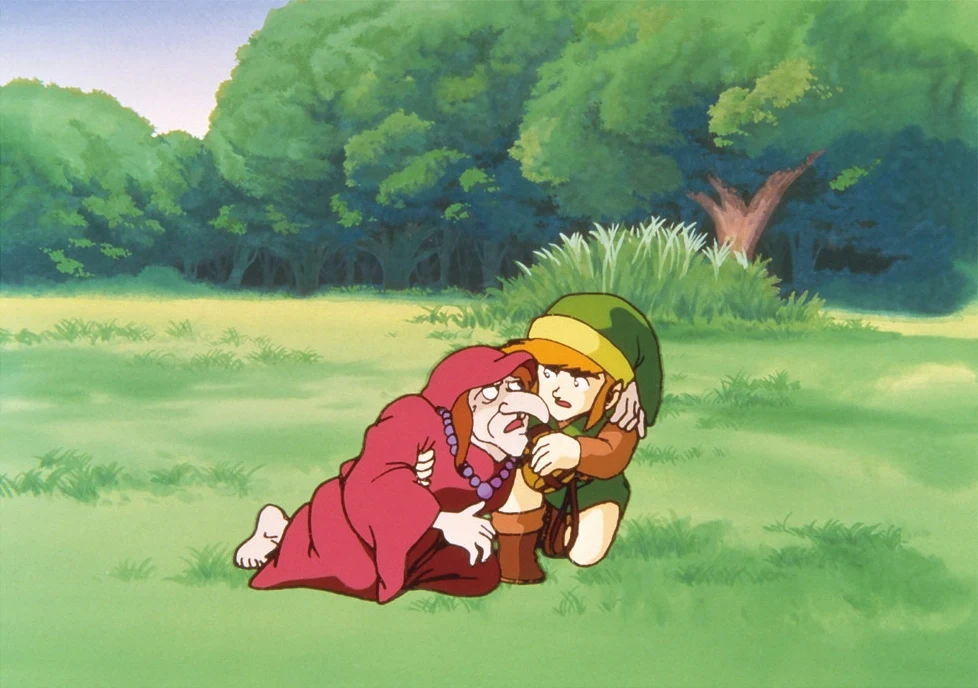
Impa flees until her strength gives out, and Ganon's henchmen surround her. At the moment of despair, a boy appears and drives the monsters off. His name is Link. Impa tells him the whole story: the imprisoned princess, the eight lost Triforce shards, the Dark Lord on Death Mountain. And Link — an ordinary boy, of no royal bloodline, named in no prophecy — accepts. He will find the eight shards and save Zelda.
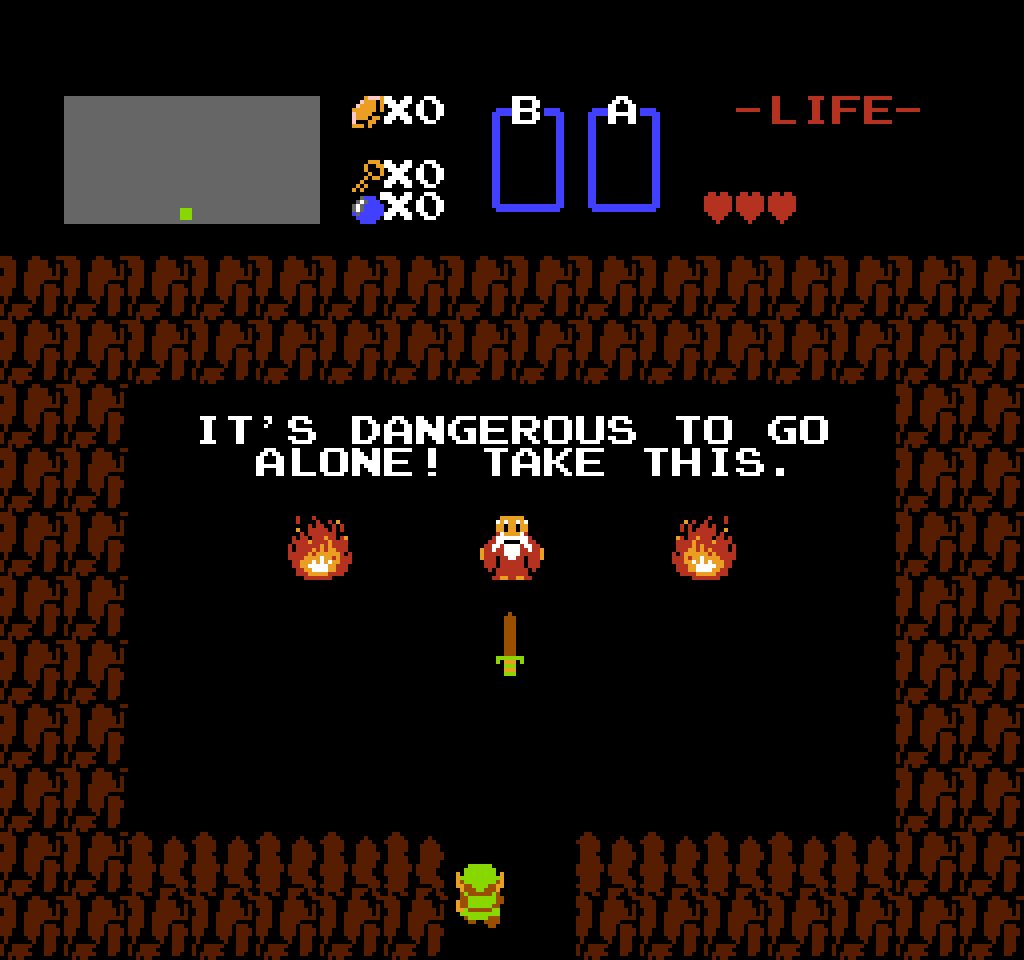
The journey starts in a small cave near where the game begins. Inside, an old man waits by a torch, and he speaks the line that entered video game history: "IT'S DANGEROUS TO GO ALONE! TAKE THIS." The "this" is a wooden sword, Link's first weapon. No long cutscene, no drawn-out tutorial: just one line and one sword, and then the cave door opens onto an entire world.
That old man is not the only one who helps Link. Scattered across Hyrule are other old men in caves — some give medicine, some give hints, some sell goods — and merchants hiding behind walls that can be blown open with bombs. They are the game's only guidance system, and part of its daring design philosophy: players must find, ask, and try things for themselves.
A Hyrule With No Directions
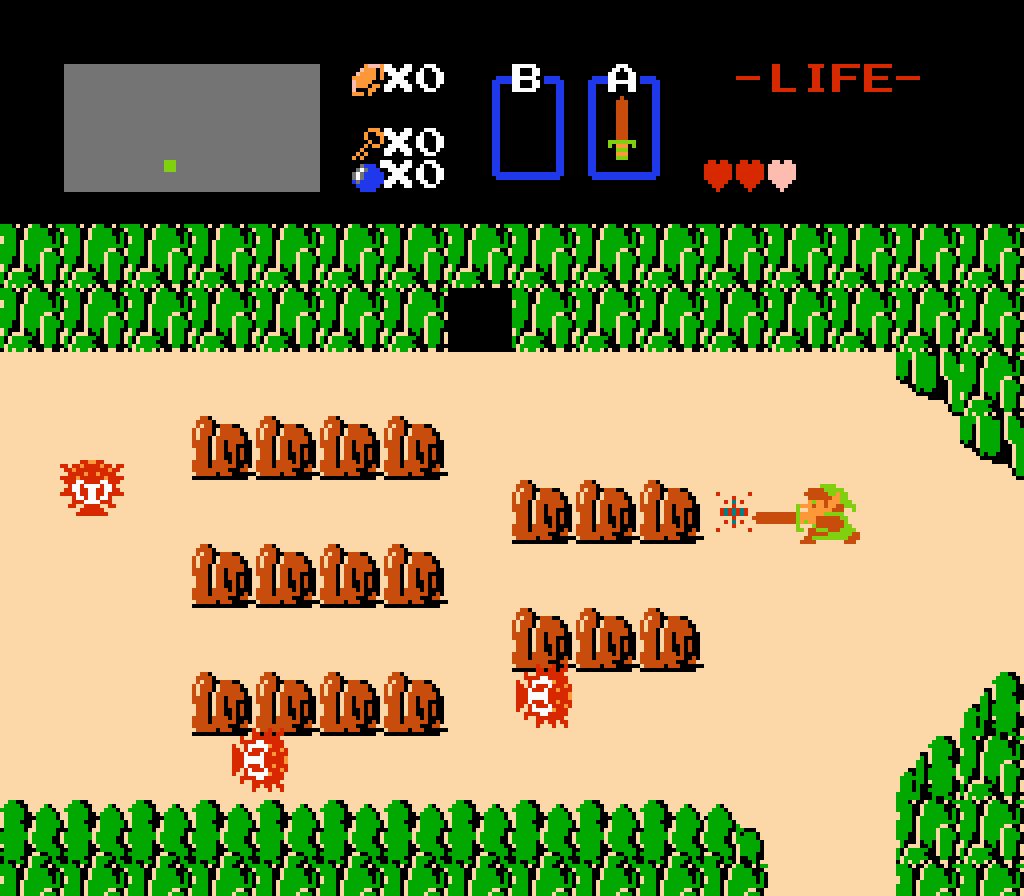
Stepping out of the cave, Link stands before a vast Hyrule shown from above, scrolling screen by screen: forests, deserts, mountains, lakes, graveyards, coastlines. Nothing tells you where to go. The first labyrinth lies nearby, but the eighth hides behind a tree that must be burned with a candle, and the final one sits behind a rock that must be bombed on a mountaintop. Players back then drew their own maps on paper, noted down every secret, and asked each other at school which tree was the right one.
This very lack of direction was the revolution. Before 1986, most adventure games followed a straight line: finish one stage, move to the next. The Legend of Zelda let players go anywhere, do anything, in any order — as long as they had the required items. You could walk into the third labyrinth before the first if you found the way, and you could even wander all the way to Death Mountain without a sword (though you could not defeat Ganon). The "open world" concept we take for granted today started here.
Along the way, Link collects Rupees — currency dropped by monsters and hidden in grass — to buy shields, healing medicine, and strange items in secret shops. He meets fairies in fountains who restore his health; he learns to bomb walls, burn trees, and use a magic flute to teleport instantly. Every item is not just an object: it is a key that opens a new land, a new labyrinth, a new secret.
Eight Labyrinths Beneath the Earth
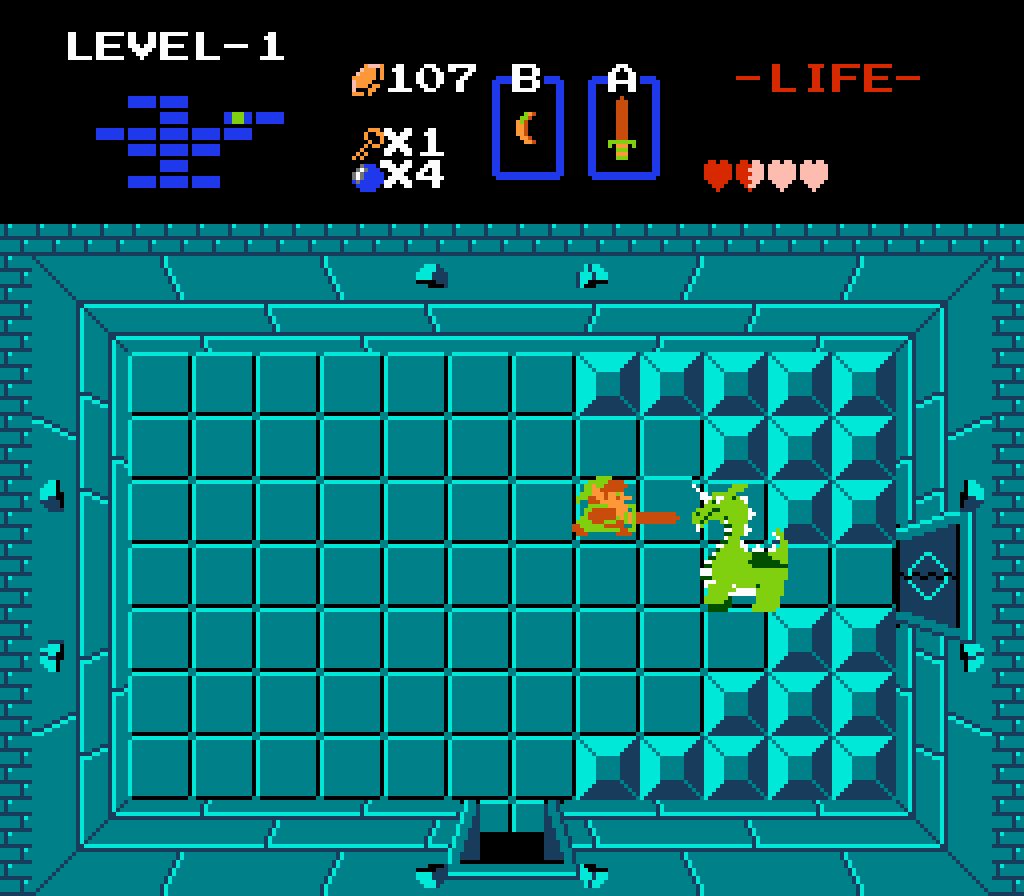
The eight Triforce of Wisdom shards lie in eight labyrinths, each an underground maze of rooms connected by doors, locked doors, and secret passages opened by pushing a block or bombing a wall. Each labyrinth has its own name, inspired by its shape on the map: the Eagle, the Moon, the Manji, the Snake, the Lizard, the Dragon, the Demon, and the Lion.
Each labyrinth has a beast guarding its Triforce shard. The Eagle is guarded by Aquamentus — a dragon breathing three streams of fire, simple enough to teach players how to dodge and counterattack. The Moon holds Dodongo, a thick-skinned dinosaur no sword can pierce: the only way is to place a bomb in front of its mouth so it swallows it. The Manji holds Manhandla, a man-eating flower with four claws that attacks faster as it loses them. The Snake holds the two-headed Gleeok, the Lizard holds Digdogger — a giant sea urchin that only reveals its weakness when it hears the Recorder's melody. The Dragon holds Gohma, a giant crab whose single eye is its weak point. The Demon brings Aquamentus back, and the Lion — hidden behind a burnable tree in the forest — holds the fiercest four-headed Gleeok.
But labyrinths hold more than bosses. Inside each one, Link finds a map, a compass, keys, and most importantly items that change the whole game: the Raft in the Manji labyrinth to cross rivers, the Stepladder in the Snake labyrinth to step over gaps, the Recorder in the Lizard labyrinth to teleport and defeat Digdogger, the Magical Rod in the Dragon labyrinth. Each item opens a new region on the surface — and that is the loop players cannot stop: enter a labyrinth to get an item, go outside to open a new path, find the next labyrinth.
The Equipment of a Hero
Link starts with a wooden sword, but he does not end with it. After collecting enough hearts, he trades up to the White Sword — a sharper white blade — and finally the Magical Sword, the strongest sword in the game, hidden in a cave beneath a grave in the graveyard. Alongside swords come shields: from the wooden shield to the magical shield that can block even Wizzrobe spells. And after finding the Blue Ring and then the Red Ring, the damage Link takes drops to one half, then one quarter.
Link's arsenal also includes a Boomerang to stun enemies from afar and collect items, bombs to blast walls and feed Dodongo, a bow for ranged attacks — and above all the Silver Arrow, the only arrow that can finish Ganon, hidden deep inside the final labyrinth. He also carries a blue then red candle to light the way and burn trees, the Power Bracelet to push boulders, and the Recorder that can summon a whirlwind to carry him anywhere. Blue and red healing medicines bought from old medicine women are lifesavers in long labyrinths.
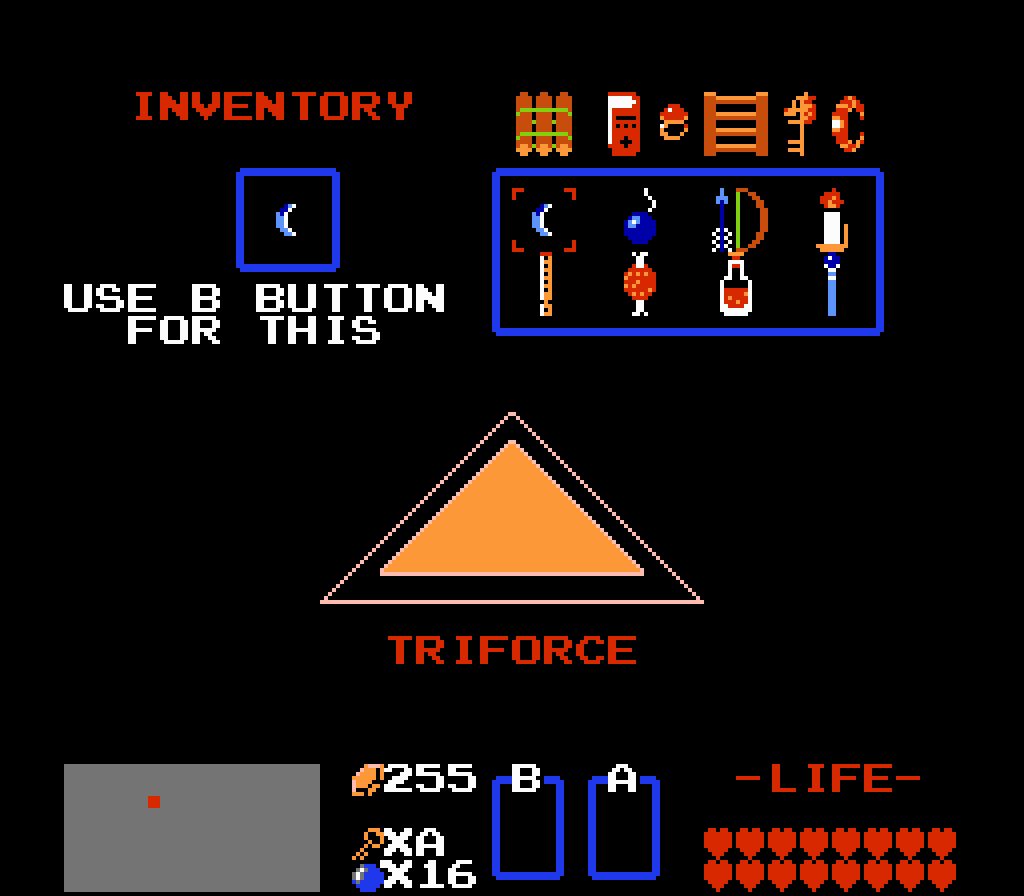
All of this is managed on a simple yet effective inventory screen, where players assign a secondary item to the B button while the A button is always the sword. That very simplicity — one button to attack, one button to use an item — became the template for the entire series that followed. And above the inventory sits the Triforce symbol, with each shard lighting up as Link defeats a boss: the most direct measure of the journey's progress.
Death Mountain and the Dark Lord
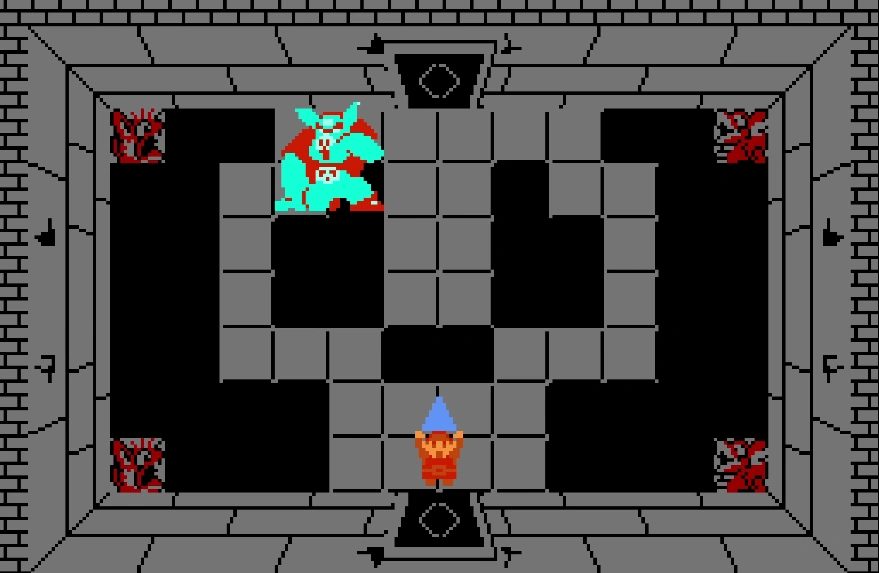
When the eight Triforce of Wisdom shards are reunited, the final door opens: Death Mountain. The entrance to the ninth labyrinth lies behind Spectacle Rock on the mountaintop — two giant boulders shaped like a pair of spectacles, where only a bomb placed in exactly the right spot reveals the way down. Inside is the largest, longest, and hardest labyrinth in the game: a maze of identical rooms, secret passages, circling Patras, and Wizzrobes appearing and vanishing.
At the end of the labyrinth, Link faces Ganon. But the Dark Lord does not fight like an ordinary boss: he turns invisible. He moves unseen around the room, only becoming visible for a moment when Link's sword strikes him. Players must guess his direction, slash blindly, and stay patient: each hit makes Ganon stay visible a little longer. Only when he is wounded enough to turn red does the decisive moment arrive: Link draws his bow, fires the Silver Arrow — and Ganon crumbles to ashes.
From the ashes, the Triforce of Power appears. Link picks it up, walks through the final room, and opens the prison door where the princess is held. That is the moment every labyrinth, every boss, and every secret has led to — not a grander battle, but a quiet and complete liberation.
Dawn Returns to Hyrule
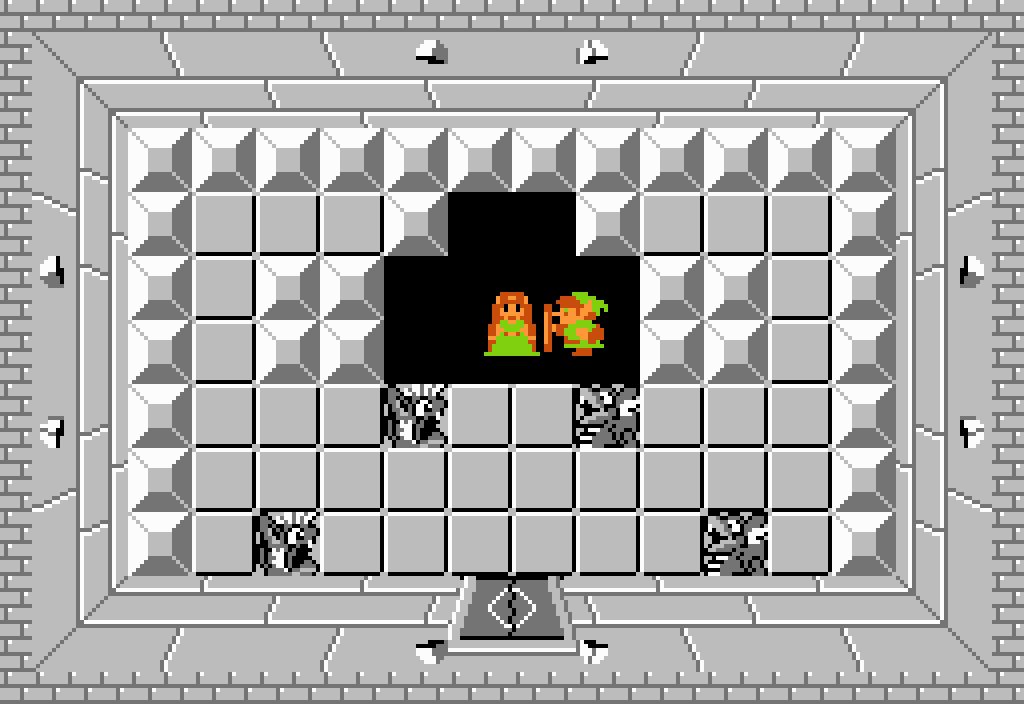
Zelda is free. With both Triforce pieces — Power recovered from Ganon and Wisdom newly reunited — Link returns them to the princess, and in her words, peace returns to Hyrule. There is no long ending, no coronation ceremony, no promise of a sequel. Just a congratulations message and a choice: play again from the start, or enter the Second Quest — a second adventure with completely different labyrinths, item placements, and tougher enemies.
That modest ending was the beginning of everything. The Legend of Zelda sold 6.5 million copies worldwide, becoming the best-selling Zelda game until Ocarina of Time broke the record twelve years later. It was the first NES cartridge in North America with a battery-backed save — players no longer had to write passwords on paper — and the first game to prove that an open world, where players explore freely and tell their own story, could be a massive success.
And the story did not stop there. Just one year later, Link returned in Zelda II: The Adventure of Link — the direct sequel, where he sets out to wake another Princess Zelda from a thousand-year sleep. Ganon, though reduced to ashes, still haunts Hyrule: his minions seek to revive their master with Link's blood. The legend that began in 1986, with a boy and a wooden sword, became one of the longest sagas in video game history — and every chapter since has begun with these eight Triforce shards.
Fates of the Characters
Link completes his quest: gathering all eight shards, destroying Ganon, rescuing Zelda. But his journey is not over — in the very next game, he sets out again to break the sleeping curse on another Princess Zelda and to stop Ganon's minions from reviving their master with his blood.
Princess Zelda is freed from her dungeon cell on Death Mountain and receives both Triforce pieces. Thanks to her decision to split the Triforce of Wisdom just before being captured, she saved Hyrule from Ganon's rule — and became the model for every Princess Zelda after her: not merely someone to be rescued, but someone who took a gamble to save her own kingdom.
Ganon crumbles to ashes under the Silver Arrow, leaving behind the Triforce of Power. But his death is not the end: in the sequel, his minions already seek to revive him, and across many generations of games, Ganon — in many forms, from beast to the sorcerer Ganondorf — keeps returning to haunt Hyrule.
Impa fulfills the mission Zelda gave her: finding a brave soul and leading him to the decisive battle. From an old woman fleeing through the forest, she becomes the first link in the entire legend — and a character who will return, in many different roles, throughout the series' history.
Common Misconceptions
Is the main character named Zelda?
No. The main character — the boy in green holding the sword — is named Link, while Zelda is the princess he sets out to rescue. The confusion is so common that even the game's title misleads people: the game is called "The Legend of Zelda" because Zelda is at the center of the legend and holds the Triforce, but players control Link throughout the journey.
The confusion is easier to understand because Link is a silent protagonist: he does not speak a single line in the whole game, and every line of dialogue belongs to other characters. But every official document — from the 1986 instruction booklet to later games — confirms it: the hero is Link, the princess is Zelda.
Are Ganon and Gannon two different villains?
No, they are the same villain. In the in-game intro text, his name is written as "GANNON", but the instruction booklet and all later official documents write it as "Ganon". This is simply an inconsistent spelling from the early days, before Nintendo standardized the names for the whole series.
Similar small differences appear elsewhere in the original — for example, the Book of Magic item is called the Bible in the Japanese version — because Nintendo of America at the time strictly censored religious content. These small differences are fascinating traces of gaming's early era.
Can you enter Death Mountain without all eight Triforce shards?
No. The door to the ninth labyrinth — Ganon's stronghold on Death Mountain — only opens once Link has reunited all eight Triforce of Wisdom shards. This is a mandatory story condition: only the completed Triforce allows Link to confront the holder of the Triforce of Power.
Interestingly, players can still wander to the Death Mountain area very early, even without a sword — but they cannot get inside, let alone defeat Ganon. And even once inside, without the Silver Arrow hidden within that very labyrinth, Link cannot finish Ganon off no matter how much he slashes him.
Where is the Triforce of Courage in this game?
It does not appear. In the first game, only two Triforce pieces are mentioned: Power, which Ganon steals, and Wisdom, which Zelda splits into eight shards. The third piece — Courage, of bravery — only debuts in the sequel, Zelda II: The Adventure of Link, where Link must collect it to awaken the sleeping princess.
Later, the trio of Power – Wisdom – Courage becomes the central symbol of the whole series, tied to the three characters Ganon – Zelda – Link. But in 1986, the legend had only two pieces — and that was enough to create one of the most classic stories ever.
Is the game over once you beat it?
No. After rescuing Zelda, players unlock the Second Quest — a second adventure with completely different labyrinth layouts, item placements, and enemy difficulty, not merely a health boost for monsters. It was one of the first "replay modes" in console game history.
Players do not even need to beat the game to enter the Second Quest: naming the character "ZELDA" on the file select screen starts it immediately — a secret code fans have passed along for decades.
Theories & Mysteries
Who is the old man in the cave? The game never says. The old men appear all over Hyrule — one gives a sword, one sells medicine, one gives hints — but none has a name or a backstory. The most popular fan theory is that they may be sages or ancient guardians of the Triforce, quietly preparing for the day Link appears. Another theory holds that the first old man is simply a "guide" in the literal sense — and that very anonymity is what makes him legendary.
Why does Ganon never truly die? In this game, Ganon crumbles to ashes — a seemingly final death. But in the very next game, his minions already seek to revive him, and across dozens of games, he keeps returning. The official explanation only arrived years later, in Skyward Sword: the curse of the Demon King Demise, whose hatred would pursue the goddess's bloodline and the hero's spirit forever. Looking back from there, Ganon's death in 1986 was only one victory in a much longer war.
Where does this game sit in the Zelda timeline? According to the official timeline Nintendo published, The Legend of Zelda sits at the end of the "Era of Decline" branch — an age when Hyrule has withered into a small kingdom whose people live in caves — and immediately before its direct sequel, Zelda II. That explains why Hyrule in this game feels desolate and ancient: this is not the kingdom's golden age, but its twilight.
Secrets nobody has fully explained. Why does Pols Voice — the big-eared ghost — hate loud noises? In the original Famicom version, it dies instantly upon hearing a sound from the microphone on the second controller, a feature the international NES version lacks, so players must use arrows instead. And why does walking the wrong way in the Lost Woods send you back to the start, while going up five times leads to the Lizard labyrinth? These puzzles with no explanations are exactly what made players in 1986 share secrets by word of mouth — and what keeps the game alive today.
To continue this journey, start at the series page The Legend of Zelda — which gathers all the main installments in release order, from the 1986 original to the newest entries.
👤 Main characters
A quick introduction to the central characters of the story.
- Homeland
- Hyrule
- Weapon
- Sword and shield
- Quest
- Collect the 8 Triforce of Wisdom shards
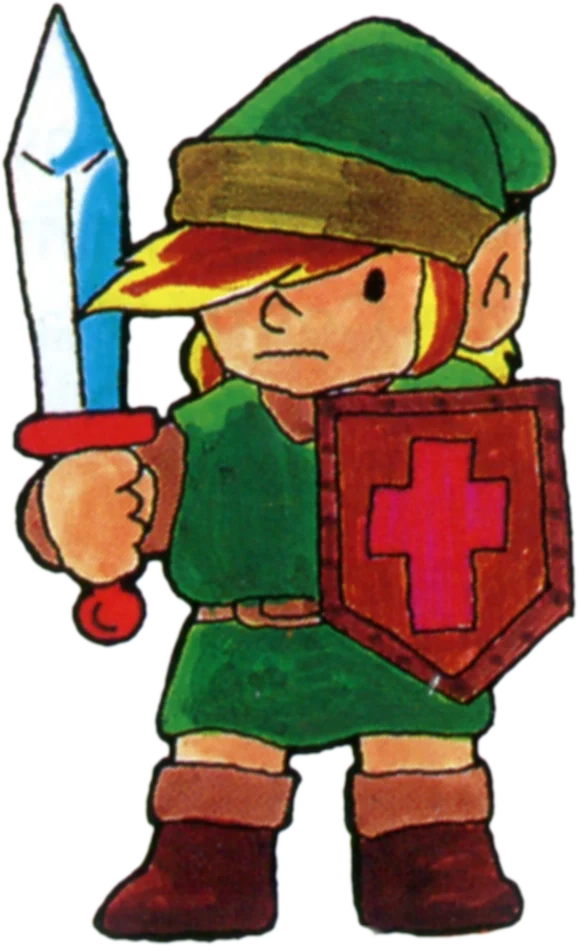
An ordinary boy from Hyrule, of no royal bloodline and named in no prophecy. After rescuing Impa from Ganon's minions, Link takes up his first sword and sets out to gather all eight Triforce of Wisdom shards to defeat the Dark Lord and rescue Princess Zelda.