Grand Theft Auto: The 2D Era Explained: Where the Crime Empire Began

📋 Quick facts
- Game
- Grand Theft Auto (1997) & Grand Theft Auto 2 (1999)
- Developer
- DMA Design (later Rockstar North)
- Release year
- 1997 (GTA) — 1999 (GTA 2)
- Original platform
- PC (MS-DOS/Windows), PlayStation
- Genre
- Open-world action-adventure (top-down perspective)
- Designer
- David Jones & Mike Dailly
- Music
- Craig Conner and DMA Design's audio team (the tracks play on the in-game radio under the names of fictional bands)
- Notable feature
- Laid the foundation for the series' entire formula: the three cities Liberty City, Vice City, San Andreas, the wanted system, missions via public payphones; GTA 2 introduced Claude Speed and the gang Respect system
- Next entry
- Grand Theft Auto III (2001)
Before there were 3D cities stretching hundreds of square kilometers, before there were protagonists with names and cinematic cutscenes, Grand Theft Auto was just a top-down game with tiny cars running along pixel-drawn streets. But that "tiny" game of 1997 — and its strange sequel of 1999 — contained the entire DNA of the most successful game series in history: an open city, a criminal, and absolute freedom to do whatever you want. This is the origin story of the GTA empire, from the nearly-cancelled Race 'n' Chase sketch to Anywhere City and the gang Respect system that was a decade ahead of its time.
📌 Quick summary: In 1997, a top-down game by DMA Design was born from a cancelled racing-game sketch: an open city, a criminal, and absolute freedom. Grand Theft Auto and its sequel set in Anywhere City (1999) — with the series' first named protagonist, Claude Speed, and the gang Respect system — contained the entire DNA of the series, while igniting the controversy storm that turned it into a global phenomenon.
Race 'n' Chase — when the cops turned out to be the boring side
In 1995, in Dundee, Scotland, DMA Design — then world-famous for the puzzle game Lemmings — began a new project. Programmer Mike Dailly built a graphics engine that could display an entire city from above, and the first design document he wrote in March 1995, titled Race 'n' Chase, described a destructive racing game in which players could choose to be police chasing criminals, or criminals fleeing the police. Three cities were planned right from that sketch: a New York, a Miami, and another city inspired by California.
Then the development team discovered the simple truth that would shape the next 30 years of the games industry: playing the criminal is far more fun than playing the cop. The "cop" side was cut, the game was renamed Grand Theft Auto — the English legal term for motor vehicle theft — and David Jones, DMA's founder, together with his team built the entire game around a single philosophy: give the player a living city, a bunch of vehicles, a few objectives, and never order them to play "the right way". In 1997, that was an almost insane philosophy — in that era, games meant straight lines, levels, and scripted scores. GTA had almost no script: only the city and you.
The GTA formula was born in a phone booth
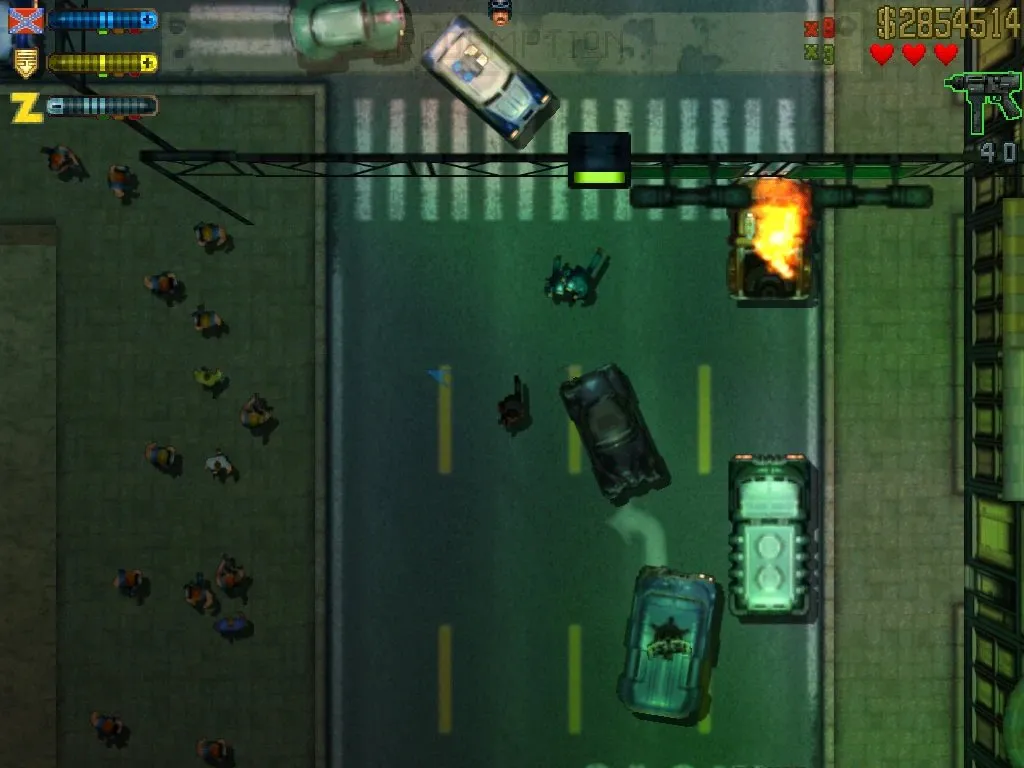
Released in November 1997 on PC (and December on PlayStation), the first Grand Theft Auto put players in the role of a nameless criminal working for gangs through ringing public payphones scattered across the city. No opening cutscene, no narration: you walked to a phone booth, took a job — assassinate a rival, rob a bank, deliver a "hot" car, be a getaway driver — and did it any way you could think of. Progression didn't follow a storyline either: each city required you to accumulate enough points, up into the millions, and you earned points through missions, by selling stolen cars to the crane at the docks, or simply by causing enough chaos.
Almost every signature mechanic of the series was already there in this first entry. Carjacking was the central act — any car on the street was yours if you were fast enough. The wanted system appeared with police-head icons (a maximum of four in the first game) escalating with the scale of your destruction, from a single curious patrol car to street roadblocks. Kill Frenzy mode gave you a weapon and 60 seconds of free destruction to earn bonus points. And the detail that became legend: a line of Hare Krishna devotees walking along the sidewalk — run over the whole line without missing anyone and the words "GOURANGA!" would appear along with a large point bonus, an internal joke by the Scottish team that became one of the most famous Easter eggs in gaming history. No mid-game saving, death meant losing progress, and the protagonist went down after a single bullet without armor — early GTA was ruthless, chaotic, and completely unapologetic about it.
Three cities and the first three crime bosses
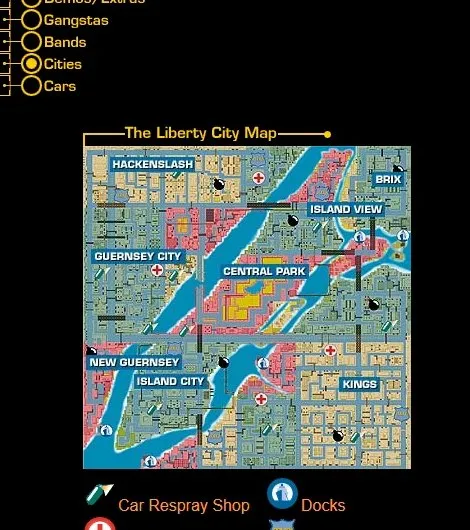
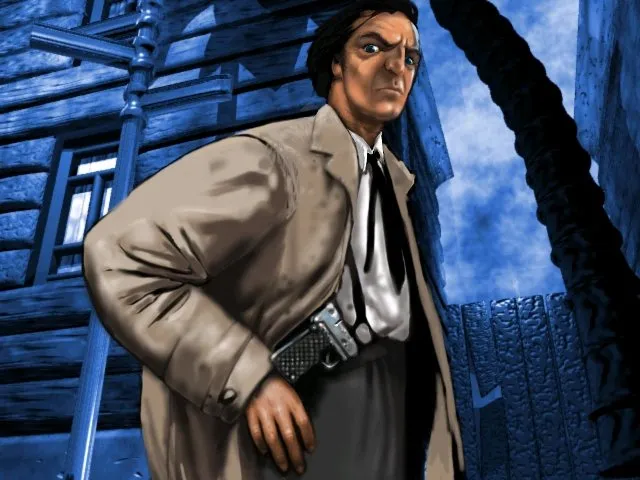
The three cities of the 1997 game are the "holy trinity" that would follow the series for three decades: Liberty City (modeled on New York), San Andreas (modeled on San Francisco — at that point still just a city, not yet a state) and Vice City (modeled on Miami). Each city was the territory of a different criminal power that hired you: in Liberty City, the crime family of Robert "Bubby" Seragliano; in San Andreas, the gang of Uncle Fu, the Asian crime lord with an empire in Chinatown; and in Vice City, Samuel Deever — the strangest final boss of the first game, a corrupt cop who used hired criminals like you to do his dirty work for him. This "three cities, three bosses, climbing the ladder of crime" structure is the very skeleton that every later GTA — including San Andreas and GTA IV — would inherit in one way or another.
In 1999, the series gained two expansions, Grand Theft Auto: London 1969 and London 1961, taking players to 1960s London, working for British gangs like the Crisp twins — special products because this was one of the rare times GTA left the United States and used a real city's name instead of a fictional one. But they were only the appetizer. The main course of 1999 was a sequel whose direction nobody anticipated.
The controversy storm and the most ruthless marketing genius of the 90s
GTA might have died quietly if not for one shocking marketing decision: the publisher hired Max Clifford, Britain's most notorious publicist, and his strategy was to deliberately ignite public outrage. A game where you earned bonus points for running over pedestrians and shooting police was something British politicians and tabloids couldn't ignore: the game was debated in Parliament, calls were made to ban it, it was condemned across the press — and every condemning headline was a perfect piece of free advertising aimed straight at the game's exact target audience: teenagers who hated being told what not to do by adults.
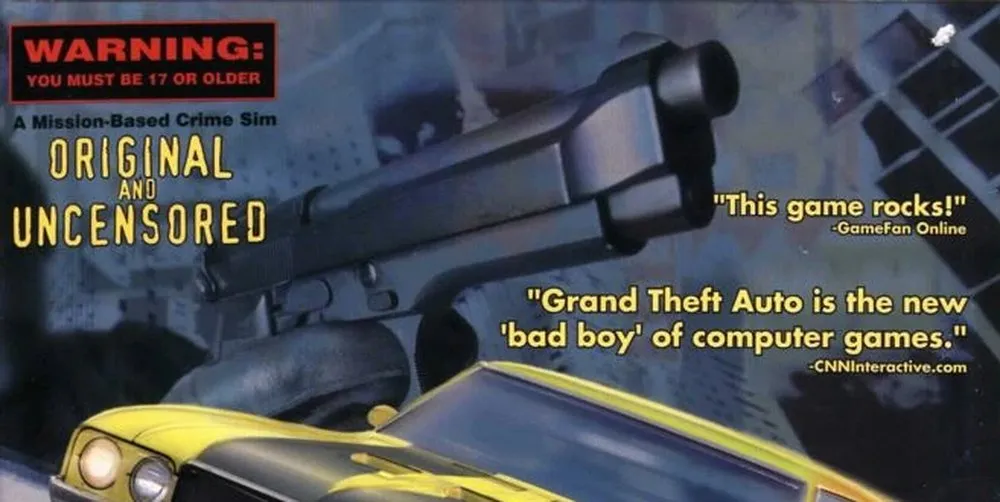
The peak of this brazenness sat on the box itself: the American release printed the words "ORIGINAL & UNCENSORED" as a badge of honor. Critics of the time were deeply divided — many dismissed the game's graphics as dated next to Quake II or Tomb Raider II, but that very "dated" top-down perspective was what allowed the game to exist: violence in the form of abstract pixel sprites looked like a cartoon, "distant" enough to slip through the censorship net yet close enough to shock. The lesson the games industry learned from GTA 1997 wasn't only in game design; it was also the lesson that controversy, if steered correctly, is the most powerful marketing fuel ever invented.
GTA 2 — Anywhere City and a very near future
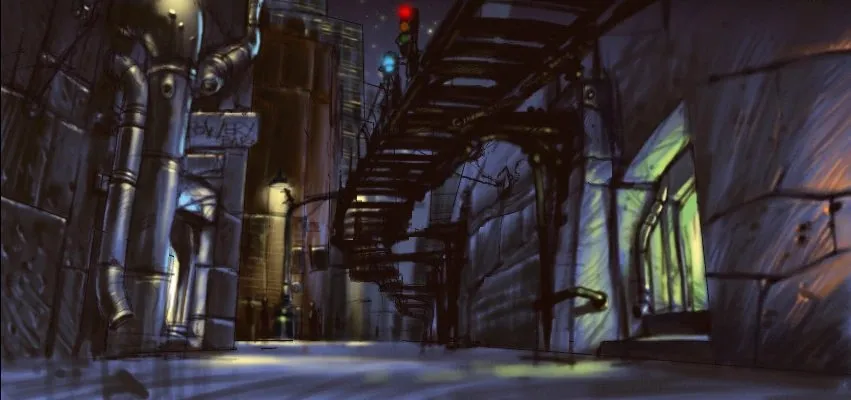
Grand Theft Auto 2 launched in October 1999 and did something no GTA entry has dared to do a second time: it jumped into the future. Anywhere City is a grim retro-future metropolis divided into three districts: Downtown (the commercial district), Residential, and Industrial, each with its own architecture, lighting, and atmosphere. The game was deliberately vague about its timeframe: in-universe documents suggest the year 2013, while the manual joked the setting was "three weeks into the future". Whichever it is, this remains the strangest GTA of all: futuristic-styled vehicles, an electro-gun, and a giant pharmaceutical-weapons corporation called Zaibatsu running everything from the shadows.
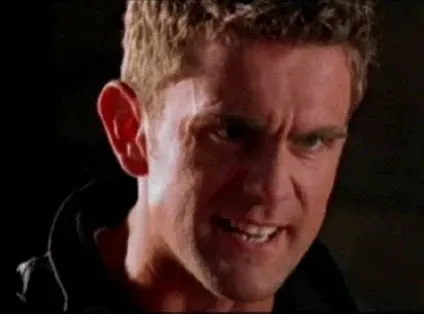
But the most important thing about GTA 2 isn't the setting. It's that the series had a named protagonist for the first time: Claude Speed. In the 8-minute live-action opening film (shot in New York, with actor Scott Maslen in the role) — a rare luxury promotional product for the time — Claude is a young criminal hired by Zaibatsu and then hunted by them, forced to work for every gang in the city to earn enough money to leave. He has no dialogue, no past, no conscience — only skill and ambition. This template of "the cold outlaw climbing the criminal ladder by playing every side" is exactly the mold Rockstar would reuse for GTA III two years later, and for most of the series' later protagonists.
The Respect system — a mechanic a decade ahead of its time
GTA 2's biggest design contribution to the games industry is the Respect system. Anywhere City has seven gangs: the Zaibatsu Corporation (present in all three districts), the Yakuza, the Loonies (escaped lunatics), the SRS (human-cloning scientists), the Rednecks (explosives-obsessed extremist country folk), the Hare Krishna, and the Russian Mafia. Each gang has an arch-enemy, and your Respect meter with each gang changes in real time based on what you do: taking a job from one gang means sabotaging its rival, and killing members of one gang makes their enemies like you more. The higher your Respect, the harder and better-paying missions you unlock through yellow and red phone booths; let Respect hit rock bottom, and the whole gang will shoot you the moment you step onto their turf.
Today, dynamic faction reputation systems are common in open-world games. In 1999, it was an almost crazy idea on early PlayStation hardware — and GTA 2 also packed in the series' first complete escalating law-enforcement system: local police, then SWAT, then the FBI, and at maximum wanted level the US Army itself with tanks rolling into the streets (the ceiling rose with each district, from four "heads" in Downtown to six in Industrial). The game also allowed saving progress for the first time — at the "Jesus Saves" church, at the price of 50,000 in-game dollars, a satirical jab at commercialized religion that became legendary. And in the final mission of each district, every gang boss — including those who once valued you — would hunt Claude down all at once, as a reminder that in this world, loyalty does not exist. Sadly, those very ahead-of-their-time ideas were buried under the mixed reviews of contemporary critics; GTA 2 became the most forgotten entry of the series, a "cult classic" only dug back up by fans years later.
Legacy — the end of the 2D era and the door to legend
Looking back, GTA's 2D era was a perfect laboratory. Everything that would build the later empire was tested here: the open city that never judges the player, the steal-car – commit-crime – escape-the-cops formula, the job-giving crime bosses, the unflinching satire of American society (a pharmaceutical corporation selling drugs, a church selling salvation services, corrupt cops), and the art of turning controversy into sales. DMA Design was later bought by Take-Two and became Rockstar North — that small Scottish team would go on to make GTA III (2001), the game that shattered every limit of the two 2D entries with a fully 3D Liberty City and changed the games industry forever.
GTA 2 itself had a rare, beautiful behind-the-scenes ending: in 2004, Rockstar released both GTA 1 and GTA 2 for free for PC players to download as a thank-you gift, turning two games once demanded to be banned into an open legacy anyone can experience. The 2D era closed that way — not as loudly as it began, but with the status of an irreplaceable opening chapter: before GTA was a global cultural phenomenon, it was just a few ringing phone booths in a pixel city, waiting for a player bold enough to pick up.
The fate of the 2D era
DMA Design renamed itself Rockstar North in 2002 and became the flagship studio of the entire GTA series to this day. Anywhere City and Claude Speed never returned in later main entries — the 2D universe was frozen as its own chapter, completely separate from the 3D universe (GTA III onwards) and the HD universe (GTA IV onwards). The Zaibatsu Corporation survived as Easter eggs and small nods in later entries, one of the few threads connecting the series' universes together. The three cities Liberty City, Vice City and San Andreas had the completely opposite fate: they became the three biggest stages of the entire series, rebuilt again and again in new graphics eras.
Common misconceptions
Is GTA III's Claude the same person as Claude Speed?
This is a fan theory, never officially confirmed by Rockstar. The two characters share the name Claude, the same silent style, and appearances in related products, but GTA III belongs to the 3D universe, separate from GTA 2's 2D universe, and Rockstar has always deliberately stayed silent about the connection.
Was GTA 1 a blockbuster right at launch?
No. In reality, the first game's sales and fame came mostly from the controversy storm created by Max Clifford's marketing campaign; review scores at the time were only average, with many complaints about the graphics.
Is GTA 2 set in the far future?
Not exactly. The game is deliberately vague: internal documents suggest the year 2013, while the manual joked it was "three weeks into the future"; in essence it is a present day exaggerated in retro-future style, not pure science fiction.
Has the GTA series always belonged to Rockstar?
No. Rockstar Games was only founded in 1998, after the first GTA had already launched under DMA Design and publisher BMG Interactive. That very DMA Design team later became Rockstar North — the flagship studio of the entire series to this day.
Unresolved theories
What is Anywhere City, really? A long-standing community theory holds that Anywhere City is actually a future version of Liberty City — the live-action film was shot in New York, and the in-game city has many traits of an American East Coast metropolis — but others argue the name "Anywhere" is the answer: it was designed to not be any specific place at all. Why did Rockstar never return to the Respect system? GTA 2's gang reputation mechanic is considered ahead of its time, but later entries replaced it with tighter linear storytelling; the community still debates whether that was a step forward in narrative or the loss of a genius idea. Where did Claude Speed go after GTA 2? If — only if — he and GTA III's Claude are one, then this silent character's journey stretches across the series' first three eras, something Rockstar will probably never confirm or deny, letting the legend live its own life.
👤 Main characters
A quick introduction to the central characters of the story — portraits taken from the game itself.
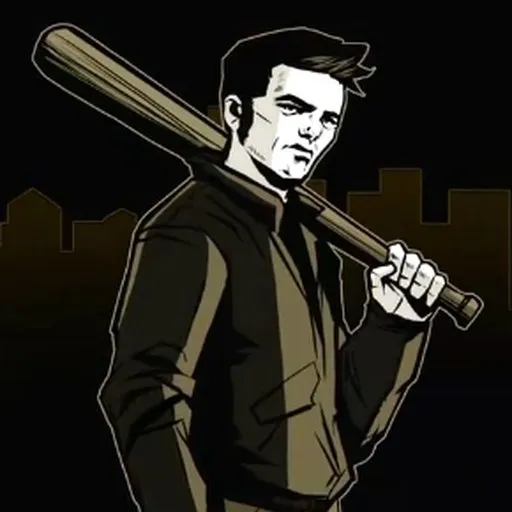
Claude Speed is the original template for almost every later GTA protagonist: silent, cold, with no past, climbing the criminal ladder by playing every side and staying loyal to none. He came with his own live-action film — unheard of for a game in 1999 — and left behind the question that has hung over the community for 25 years: is he the Claude of GTA III or not?
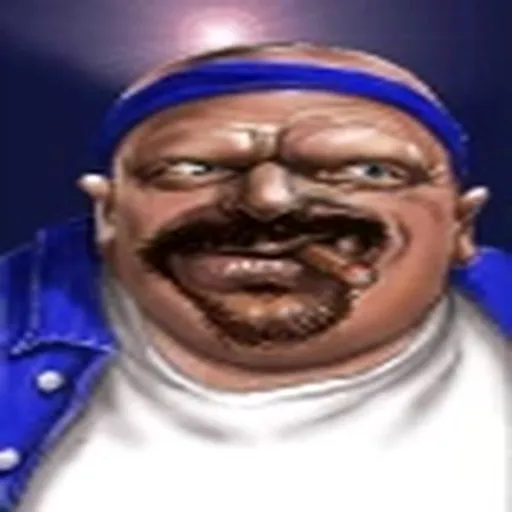
Bubby is the first "job-giving boss" in the series' history — before Tommy Vercetti, before any character with a cutscene, GTA's missions began from men like him through a public payphone. His Seragliano family is also one of the first fictional criminal organizations to appear in the GTA universe.
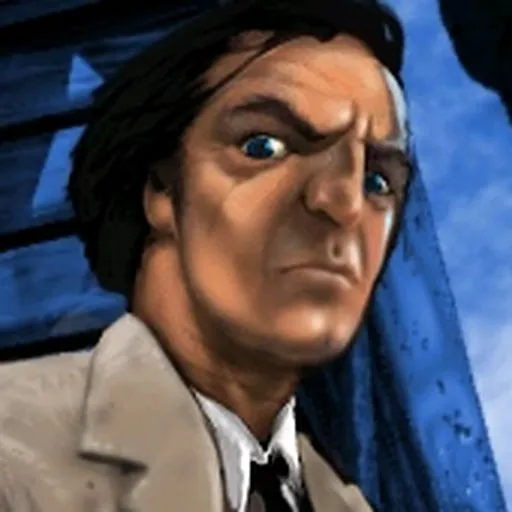
Deever began a long tradition of the series: the scariest villain is often the one wearing a badge. As early as 1997, GTA made a city's final boss a rotten cop running the underworld from inside the system — the anti-establishment satire that later GTA games would elevate into an art form.
Trey Welsh represents GTA 2's most distinctive type of villain: not a traditional mobster but a corporation. Zaibatsu sells drugs, sells cars, sells contract-killing services too, and appears in every district of the city — an image satirizing unchecked capitalism that was far ahead of its time.
Johnny Zoo is one of the first faces GTA 2 players meet through the Respect system: working for his Yakuza means becoming an enemy of Zaibatsu, and vice versa. Through choices like that, GTA 2 taught players the core lesson of every GTA: in this city, every ally is temporary.
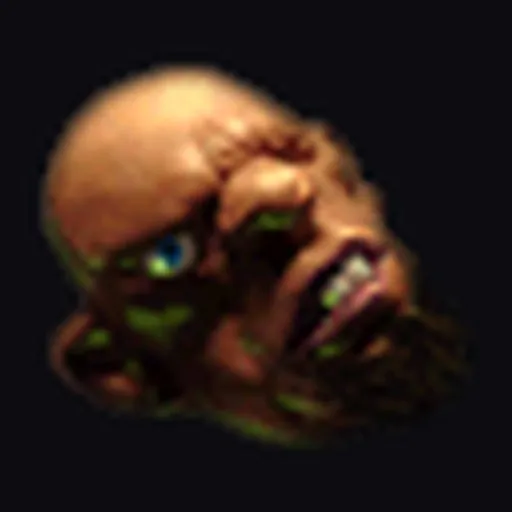
Leader of the Loonies — the psychotic criminal gang occupying Downtown. Elmo hires Claude for the city's maddest missions, from sabotage to sowing chaos, before he himself becomes a target when Claude switches to serving a rival gang.
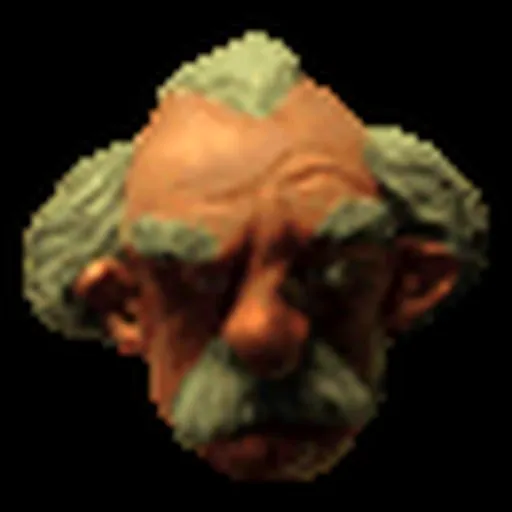
Dr. LaBrat and the SRS gang are GTA 2's clearest "science fiction" detail: an outwardly legitimate research institute, cloning an entire criminal army inside. He is proof of this game's very particular dark humor — every organization in Anywhere City, even science, is criminal in one way or another.
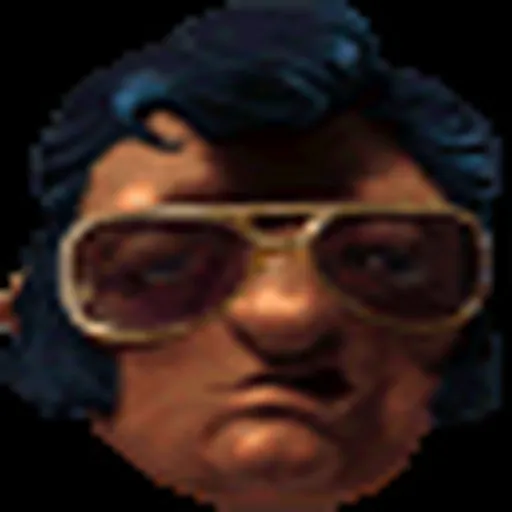
Billy Bob Bean is a quintessential representative of early GTA's unflinching satirical style: his Rednecks build bombs in their backyards, drive cannon-mounted trucks, and hate every other gang equally. Redneck missions are always among the most chaotic and funniest of GTA 2.
One of the senior leaders of the Zaibatsu Corporation in Anywhere City, running illegal operations in the Residential District. Like every other boss in the city, Red Valdez uses Claude as a tool then turns his back — and pays the price when Claude takes orders from his rival gang.
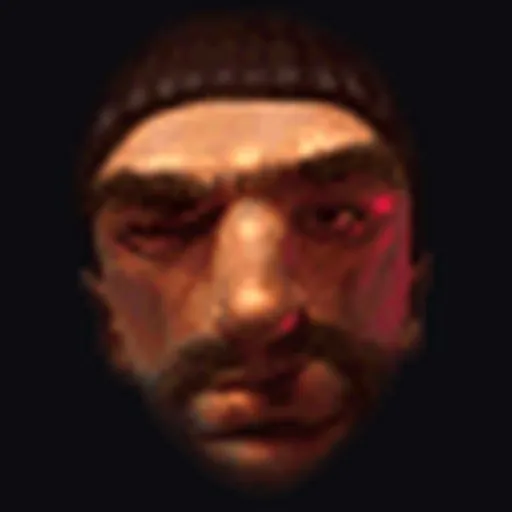
Leader of the Russian Mafia controlling Anywhere City's Industrial District, a ruthless man who runs his crime empire like a traditional family. Jerkov is one of the last bosses Claude serves — and like those before him, he does not escape this city's cycle of betrayal.
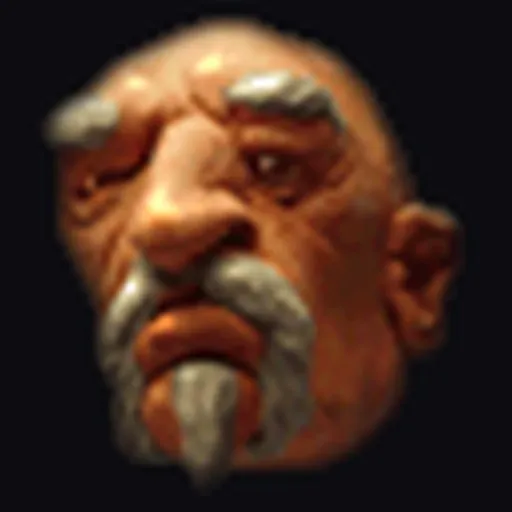
Cult leader of the Hare Krishna gang — the sect using religion as a front for crime in the Residential District. Sunbeam assigns Claude bizarre missions like "liberating" the souls of passers-by, and is ultimately dealt with by the very mercenary he once hired when the balance of power shifts.
Hare Krishna leader in the Industrial District, continuing Sunbeam's "mission" in the war against the Russian Mafia and the SRS scientists. Uno Carb is one of the last bosses of Anywhere City to hire Claude — and shares the fate of being betrayed by him when the times change.
📚 Read the Grand Theft Auto series in story order
- Grand Theft Auto: The 2D Era Explained: Where the Crime Empire Began — you are reading this one
- GTA III Story Explained: The Silent Man of Liberty City and the Final Gunshot
- GTA Vice City Story Explained: 15 Years in Prison, One Ambush, and the Dream of an Empire Under the Miami Sun

